
Forget store-bought pie crust! This 3-ingredient pie crust recipe is all you need for a flaky, buttery, homemade pie this season. It's the easiest and probably quickest pie crust and proves that the best results don’t need a long ingredient list or fancy equipment.
This all-butter pie crust comes together by hand in minutes and bakes up rich, golden, and wonderfully flaky. It’s incredibly versatile, too. Blind-bake it for custard and cream pies. Or, fill it and bake it straight away for fruit pies, quiches, and pot pies. Whether you’re making a sweet or savory pie, this homemade pie crust is the reliable, foolproof base you’ll want to master before the holidays.
Read what others said about this recipe

"What a well-written, delicious recipe that simply works!! Thank you so much." Tim
"Hands down the best pie crust on the internet! I wish I had found this years ago. It comes out flaky and buttery every single time, and it's the only crust I'm using from now." Tina
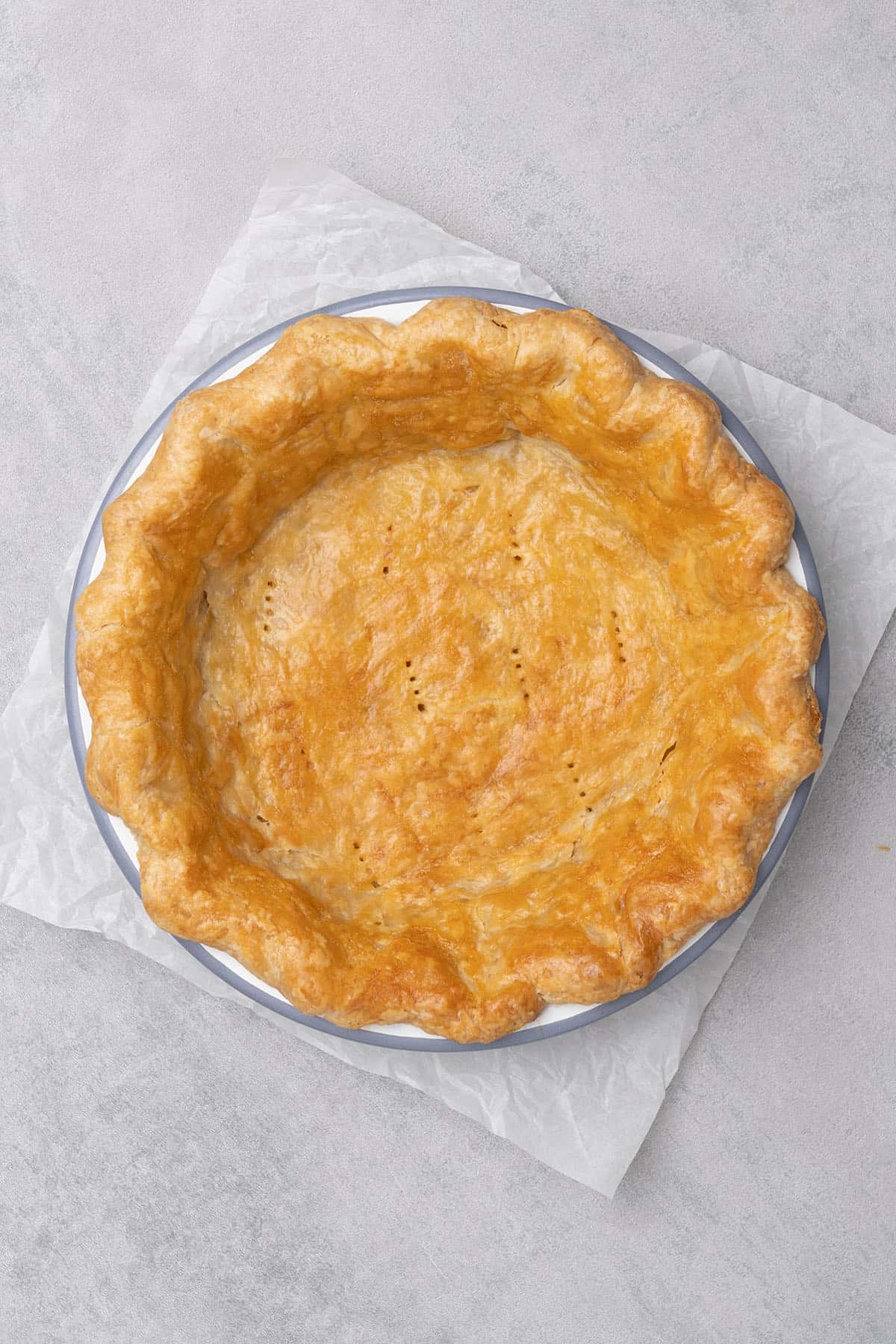
Why make this pie crust from scratch
Wondering how to make pie crust from scratch? It takes far less effort and skill than you might think, which makes this recipe the perfect introduction to pastry, even for complete beginners.
The pie dough comes together in just 5 minutes. The rest of the time, it chills in the fridge, then bakes. Honestly, you can make this homemade pie crust faster than driving to the store for a box of pie dough.
And because it’s made with only flour, cold butter, and ice water (plus a pinch of salt), with no shortening or preservatives, you get a rich, extra-buttery flavor and those flaky layers that store-bought dough never quite delivers.
This is the only pie dough recipe you’ll need for every pie on your list. I’ve included every tip and trick I know in this step-by-step tutorial, so your pie crust turns out golden, flaky, and perfect every time.
The recipe ingredients in the recipe card make a double crust (top and bottom). Perfect if you are making apple pie or blueberry pie.
Divide the ingredients in half if you only need a single crust, for example, for a pumpkin pie or a vanilla cream pie. Or, even better, if you freeze the other half, see the instructions below in the "Storage" section.
Katalin's key take on the 3 ingredients of this pie crust
Technically, this three ingredient pie crust recipe is a 4 ingredient pie crust if you count the dash of added salt. And ironically this small dash makes a big difference because it enhances the flavor of both the flour and butter.
Flour: All-purpose flour works perfectly, or use pastry flour for an even more tender crust. Learn more about choosing the right type in my flour guide.
Butter: Always use unsalted butter in pastry so you can control the salt. I use 82% fat butter for the best flavor and flakiness. It must be very cold: cut it into cubes and place it in the freezer for 10–15 minutes before you start. If you need an alternative, see my butter substitute guide, though butter is by far the best choice here.
Water: Water binds the dough together, and like the butter, it needs to be ice-cold. Fill a glass with ice and water, then measure out the cold water without the ice.
Make the pie dough in a few simple steps
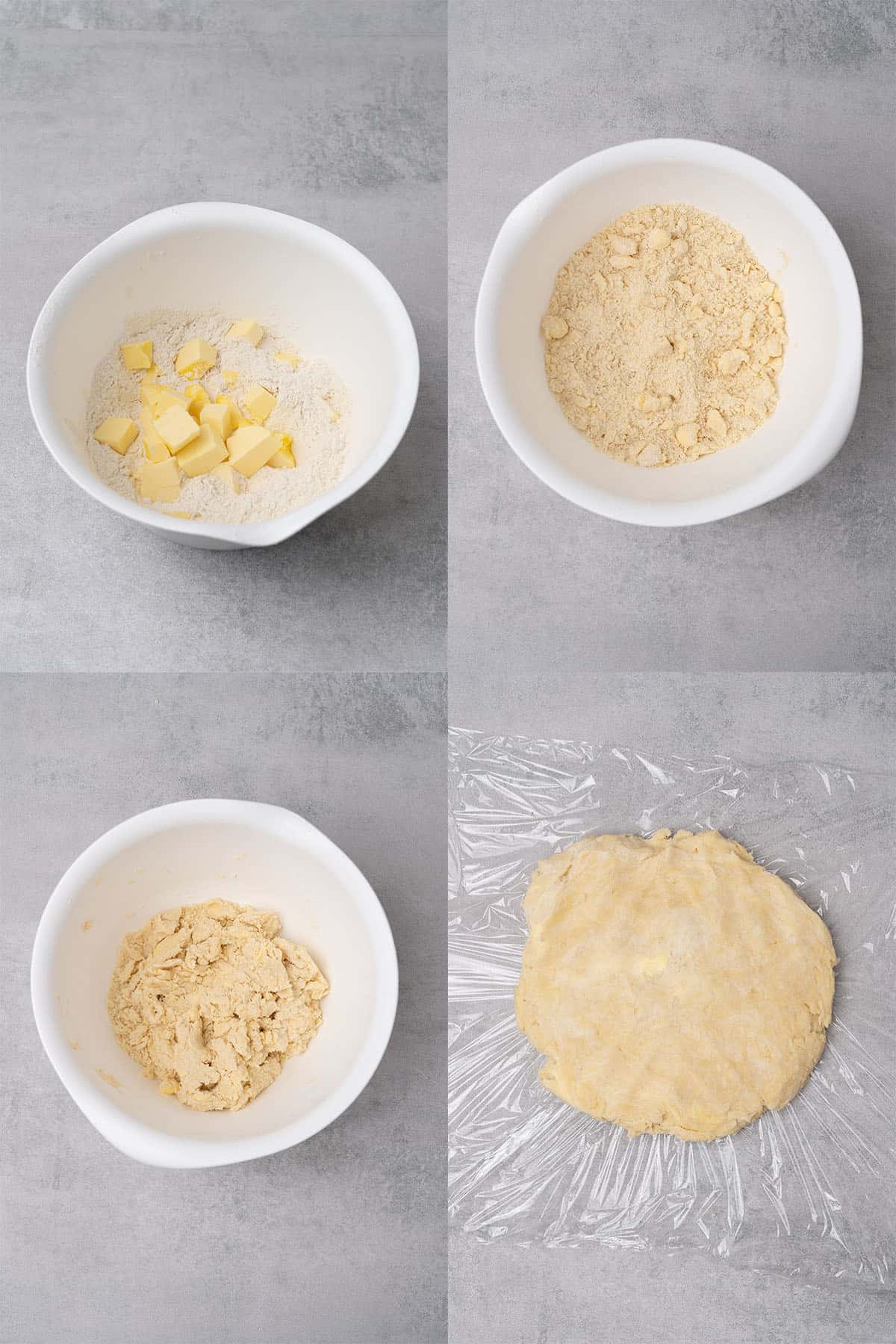
Start by whisking the flour and salt together in a large bowl, then place the bowl in the freezer for about 10 minutes. At the same time, cut the cold butter into small, evenly sized cubes and chill them in the freezer too. Everything needs to be very cold before you begin, as this is the secret to a flaky pie crust.
Add the chilled butter cubes to the flour and quickly rub them together between your fingertips until the mixture looks like coarse crumbs, with some pea-sized pieces of butter still visible. Don’t overdo it. Those larger chunks of butter are what make the crust flaky. In the hot oven, the water in the butter turns to steam and pushes the dough apart into delicate layers.
Work fast, because the warmth of your hands softens the butter. You can use a pastry blender if you prefer, but I find my hands work best.
Next, add the ice-cold water a little at a time, stirring with a spatula or wooden spoon after each addition. The goal is to hydrate the flour just enough to hold the dough together, without making it wet or sticky.
The dough is ready when a handful holds together when you squeeze it. Gently press it together with your hands. It will look crumbly at first but will come together within a couple of minutes.
Don’t knead the dough, as this develops gluten and makes the crust tough.
Shape the dough into a flat disk, wrap it tightly in plastic wrap, and refrigerate it for at least 2 hours. Don’t skip this step. Chilling firms up the butter again and lets the gluten relax, so the crust is easier to roll and won’t shrink in the oven.
How to roll out pie dough like a pro
When you’re ready to roll, take the dough out of the fridge and let it rest on the counter for a few minutes. It should still be cold, but not so firm that it cracks or tears when you roll it out.
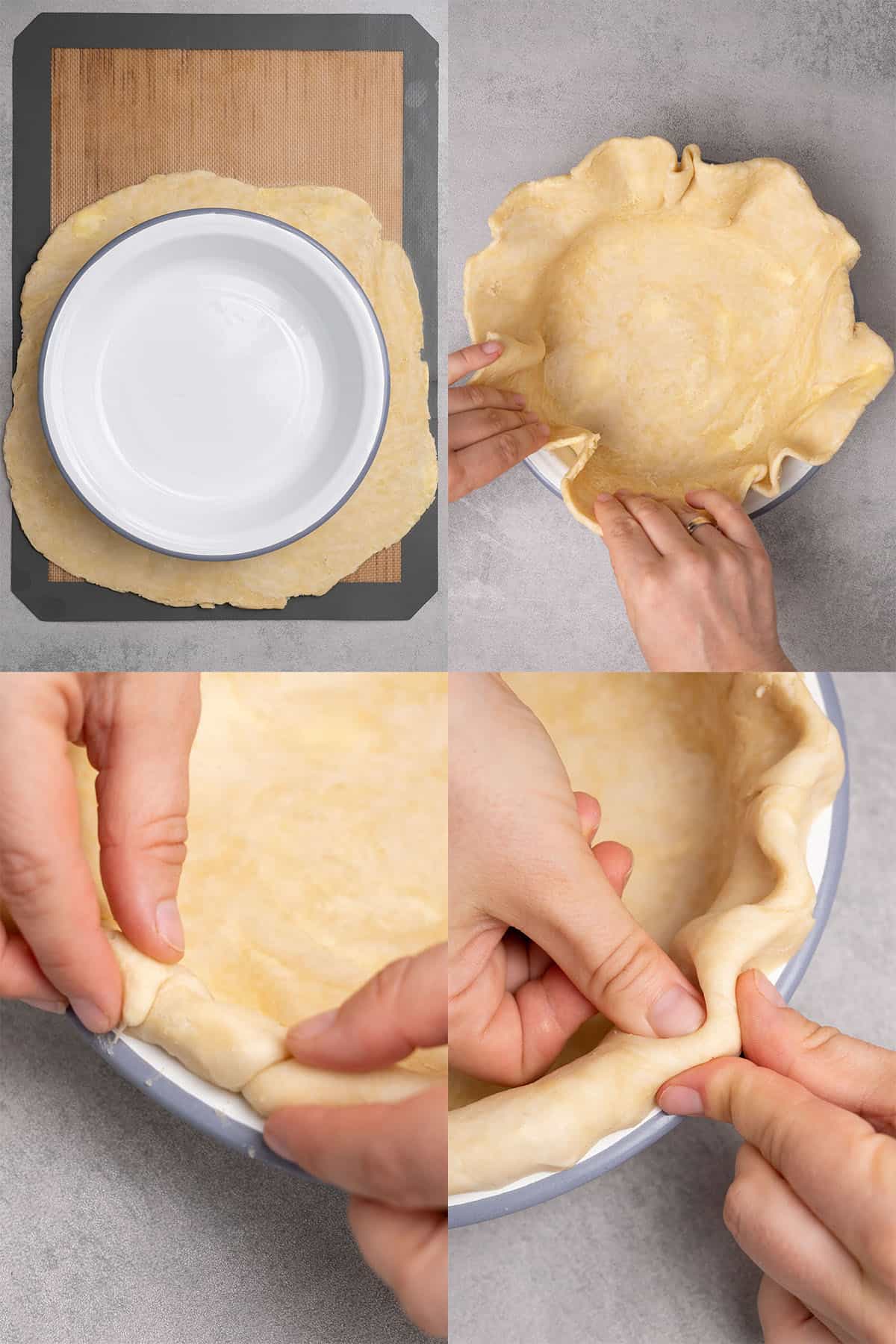
Place the dough disk on a lightly floured surface or between two silicone baking mats, which is my preferred method. Roll from the center outward, giving the dough a quarter turn after every few rolls to keep it round and evenly thick. Aim for about 3 mm / ⅛ inch thick. Use as little extra flour as possible, as too much makes the crust dry and tough.
For a standard 9-inch / 23 cm pie dish, roll the dough into a circle about 12 inches / 30 cm in diameter, so it covers the base and sides with a little overhang for the edge. To transfer it, loosely roll the dough around your rolling pin, then unroll it over the pie dish. Gently ease it into the corners without stretching or pulling it. Stretched dough tends to spring back and shrink as it bakes.
Trim the overhang to about 2.5 cm / 1 inch, fold the excess under itself along the rim, and crimp or flute the edge evenly with your fingers. Finally, chill the shaped crust in the freezer for 30 minutes before baking. This firms up the butter one last time, helps the crust hold its shape, and prevents it from shrinking in the oven.
Lastly, proceed with baking as instructed in the recipe. If you are making a double-crust pie, you will need to bake it with the filling. For other types of pies, you will need to pre-bake the crust before adding the filling. I explain how to do it in my how to blind bake pie crust tutorial.
Expert tips
- Some pie crust recipes use shortening or a mix of shortening and butter, because shortening is easier to handle and stays solid at warmer temperatures. But I never use it. Shortening has no flavor and can leave a waxy coating in your mouth. While butter gives you that rich, golden taste and beautifully flaky layers that make homemade pie crust worth it. With cold butter and the right technique, you don’t need shortening at all.
- You can add 1–2 tablespoons of granulated sugar to the flour if you prefer a slightly sweet. Leave it out for savory pies like quiche or pot pie.
- When hydrating the dough, here's a trick for you. As you add the water, some parts of the mixture will clump together and feel well hydrated, while others stay dry and crumbly. Take out the hydrated clumps and set them aside, then keep sprinkling water only over the dry, crumbly parts. This way, every bit of flour gets just the right amount of moisture.
- While hydrating the dough, you might not need to use all the water; watch the dough and "listen to it."
- As long as your pie dough has chilled for the full 2 hours and is still cold after resting briefly at room temperature, rolling it out should be easy. Getting the temperature right is the key. Dough that’s too cold will crack and crumble, while dough that’s too warm will stick and tear. Aim in between.
- If the dough starts sticking, it’s getting too warm; slide it into the freezer for a minute or two to firm up again. Small cracks around the edges are ok; simply press them back together with your fingers.
My foolproof method on how to make this pie crust even flakier
If you want to take this easy pie crust to the next level, try laminating the dough, the same technique used to make puff pastry.
Instead of rolling the chilled dough straight into a circle, roll it into a long rectangle first, then fold it: left half over the right half, then the bottom half over the top half, and once more, bottom over top.
These three simple folds turn the dough into eight thin layers of butter and pastry. Wrap it and chill it again for at least 2 hours before rolling it out for your pie dish.
Here’s why it works: every fold flattens the butter chunks into thin sheets sandwiched between layers of dough. In the hot oven, the water in the butter turns to steam and pushes those layers apart, creating a crust with visible, shatteringly crisp flakes.
The key is to work quickly so the butter stays cold and doesn’t melt into the flour. If the dough gets soft or sticky at any point, pop it into the freezer for a minute before continuing.
For the full step-by-step method, exact rectangle measurements, and photos of every fold, check out my flaky pie crust recipe.
Storage and Make-ahead
This pie dough is perfect for making ahead, especially during the busy holiday season. Wrap the disk of dough tightly in plastic wrap or place it in a sealed bag, and keep it in the fridge for up to 2 days. When you’re ready to bake, let it rest on the counter for a few minutes until it’s cold but pliable enough to roll without cracking.
To freeze, wrap the dough disk well and place it in a freezer bag, pressing out as much air as possible. Freeze for up to 2 months, then thaw it overnight in the fridge before rolling.
You can also freeze the crust already shaped in the pie dish. Wrap it tightly and bake it straight from frozen, adding a few extra minutes to the baking time.
If you blind-bake the crust ahead, let it cool completely, cover it, and store it at room temperature for up to 2 days before filling.
How to substitute the ingredients
With only three ingredients (plus salt), each one has a specific job in this pie crust, so I don’t recommend swapping anything. But if you must, here’s what works.
To make a gluten-free pie crust, replace the all-purpose flour with a gluten-free flour blend. The dough will be more delicate and harder to roll, and the texture won’t be quite as flaky, so handle it gently and keep it well chilled.
For the butter, only use another high-fat product close to the 82% fat content of the butter I use, such as margarine or vegan butter for a dairy-free or vegan pie crust. If you only have salted butter, leave out the added salt. For more options, see my butter substitute guide.
Keep in mind that any substitution can change the taste and texture of your crust. You may also need to adjust the water amount to get the right consistency.
Equipment notes
Always use a digital scale for accurate measurements. Your hands do all the work when making the dough, but you’ll need a good rolling pin to roll it out. I like to roll pie dough between two silicone baking mats, which stops it from sticking, means less mess, and avoids adding extra flour.
You’ll also need a 9-inch / 23 cm pie dish. Finally, check your oven with a digital oven thermometer.

Pie recipes to use this crust
This easy pie crust with one of my many delicious pie recipes:
You can also turn the recipe into mini pie crusts.

Have you tried this recipe?
Please leave a 5-star ⭐️⭐️⭐️⭐️⭐️ rating on the recipe card and consider leaving a comment as well!
3-Ingredient Pie Crust (Without Shortening)
Ingredients
Pie dough
- 375 g (3 cups) All purpose flour
- 225 g (1 cup) Unsalted butter 82% fat, use it very cold
- 120 g (½ cup) Water use it very cold
- ½ teaspoon Salt
US customary cup measurement is an indicative figure only. Measure the ingredients with a digital scale by weight (gram). Baking is art but also science which requires precision and accuracy.
Instructions
- In a large bowl mix flour and salt until fully combined and place it into the freezer for 5-10 minutes.
- Cut cold butter into small chunks and place it into the freezer for 5-10 minutes.
- Once all ingredients are nicely chilled, add very cold butter chunks into flour and rub the mixture between your fingers until it becomes a sand like consistency.
- Leave some bigger butter chunks in the mixture - this will encourage flaky pie texture on the pie crust - no need to fully incorporate the butter into the flour.
- Add very cold water into the dough, a small amount at a time, and stir with a spatula or wooden spoon after each addition.
- Start working the dough with your hands. First, it will look crumbly but it should come together in the next minute or so. Do not knead the dough, stop mixing, as soon as the dough comes together. Remember, leave in some butter chunks, do not overwork the dough, and do not use a mixer.
- Form a disk, cover it with plastic wrap and let it rest in the fridge for a minimum of 2 hours.
- After 2 hours, take the pie dough disk out of the fridge and let it rest few minutes on the kitchen counter. The dough should stay cold but slightly warmed up to be able to roll it out without breaking it.
- Transfer the disk to a silicone baking mat or a lightly floured surface and start rolling it out, make sure you turn the dough with your hands after each rolling so it will become even. No need to add too much flour while rolling, the pie dough should be cold enough not to stick to the kitchen counter. If at any point the dough gets too warm, pop it back into the freezer for a minute to chill then continue.
- If you are using a Pie dish 9 inch / 23 cm, roll the dough to 12 inch / 30 cm in diameter. Remember, do not force the dough, after rolling, it should stay smooth and cold, and easy to work with. The most common reason for pie crust shrinking is forcing and stretching it.
- Carefully place the dough into a Pie dish 9 inch / 23 cm.
- Fold the extra dough around under the crust then flute with your fingers.
- Chill pie dough again in the freezer. Then, proceed with baking, as explained in my tutorial: how to blind bake pie crust.
Notes
- All ingredients incl. butter, flour, and water should be very cold.
- Making this 3 ingredient pie crust will take less than 5 minutes. If you are assembling the dough for more than 5 minutes, then you are overworking it.
- Resting the dough in the fridge is a must - you won't be able to roll it out without appropriate resting time (min. 2h).
- Do not begin trying to roll the pie dough until it is at the proper temperature. If it's too cold it can crumble and if it's too warm it can tear.
- Egg wash will seal the bottom of the crust that contributes to no soggy pie.
- You can add 1-2 tablespoons of granulated sugar to this pie crust if you prefer it sweet.
Chris
Can I use salted butter in place of the salt?
Katalin Nagy
I do not recommend using salted butter; it is way more salted than using unsalted butter and the salt mentioned in the recipe.
Tina.M
Hands down the best pie crust on the internet! I wish I had found this years ago. It comes out flaky and buttery every single time, and it's the only crust I'm using from now.
ROBBIE
Is this recipe for a 9" Single Deep-Dish Pie crust or a 9" Double Pie crust?
Katalin Nagy
It is for a single layer as shown in the picture.
Pálma
Nagyon szépen köszönöm a receptet🥰
Egyszerű,jól követhető leírás😊
Szuper lett a végeredmény😊
További sikereket a munkádhoz🥰
Linda
I need ingredients in cups measurements. do not have scales. thanks
Kata
You can switch to US measurements in the recipe card. However, if you change your mind, a 10 dollar digital kitchen scale would be the best investment for your baking, that would solve 95% of the usual baking failures:)
Assia
Nice recipe thank you 🙏
Tim
What a well written delicious recipe that simply works!! Thank you so much