
Popular in French cuisine and a staple in the Louisiana city of New Orleans, these New Orleans-style homemade beignets are fun to make and hard to resist! Their light, sweet, and pillowy texture make them the perfect treat to enjoy any time of day: For breakfast, an afternoon snack, or dessert. Top them with sugar, fill them with cream, or dip them in your morning coffee.

Why this is the best recipe
- It is the most delicious - I use the most high-quality ingredients and techniques that result in the most flavorful, airy, and fluffy New Orleans style beignets.
- No fancy ingredients required - Everything you need to make these beignets are kitchen staples found in your local supermarket or your pantry.
- It is easy to follow - My New Orleans style beignets recipe is one of the most detailed, easy recipes that covers everything you need to know about how to make beignets. Just make sure to follow each step exactly as written and follow my expert tips below.
- It doesn’t take much time - This easy beignet recipe only takes 30 minutes to prepare and 30 minutes to cook, so you won’t have to spend all day in the kitchen! The longest part is waiting for the dough to be proven, which you can do overnight.
- It is versatile - You can easily customize your beignets with various toppings and fillings. See the Flavor Variations and Substitutions section below for several ideas!
📝 Ingredient notes
For the exact ingredient quantities and printable recipe card, visit the original beignet recipe at Spatula Desserts.
- Milk - Whole milk with a high fat content will give the best results. I use 3% whole milk in this recipe. The milk needs to be lukewarm.
- Sugar - Granulated sugar will help to sweeten the dough.
- Yeast - Fresh yeast is ideal, but you can substitute it with 1.5 teaspoons (5g) of instant yeast, if necessary. For more tips, see my guide on how to bake with yeast.
- Egg - You will need one whole egg and one egg yolk. Both need to be at room temperature before using them.
- Flour - Since this is essentially a sweet bread, a high-protein flour such as bread flour is ideal. You can also substitute with all-purpose flour if you do not have bread flour.
- Salt - Salt is an essential ingredient in baking. It helps to balance the sweetness and enhance the flavor. Do not skip it!
- Butter - Use unsalted butter to fully control the amount of butter in the recipe. Like the milk and egg, the butter must be at room temperature and soft enough to incorporate into the dough. Do not use melted butter.
- Oil - You will need oil to fry the dough, preferably a high-heat oil such as vegetable oil or canola oil.
- Powdered sugar - The powdered sugar is to dust the beignets after you fry them.

How to make this recipe
1. Step-by-step process of making beignets
- First, make sure your kitchen is nice and warm. A warm kitchen is necessary to activate the yeast. Mix the sugar with the lukewarm milk in a large bowl, then sprinkle the yeast on top. In approximately 10 minutes, you should see the yeast start to foam.
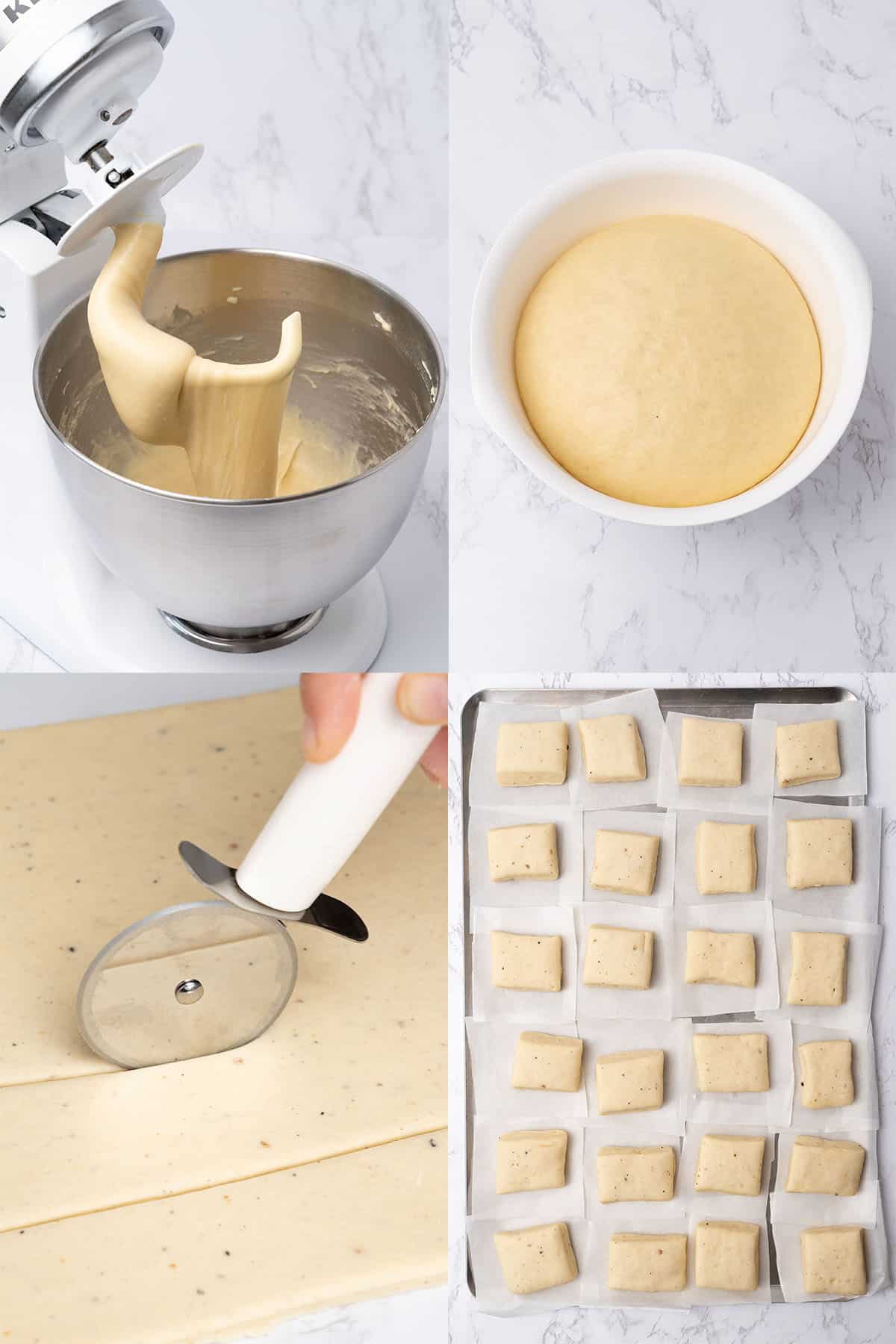
- Move the active fresh yeast mixture (or active dry yeast mixture) into the bowl of your stand mixer with the kneading hook attached. Add the whole egg and egg yolk and mix well.
- Mix in the flour and salt and continue to knead until the beignet dough comes together.
- One piece at a time, slowly add in the soft, room-temperature butter. Knead the dough on medium-high speed for an additional 10 minutes until the dough becomes elastic, shiny, and does not stick.
- Transfer the dough into a bowl and cover with a plastic wrap or kitchen towel. Ideally, you should let the dough rise in the fridge overnight. Or, let it rise at room temperature for 1-2 hours.
- After the dough rises, press the air out and gently knead it for a few seconds.
- Place the dough on a lightly floured surface and use a rolling pin to roll it into a ¼-inch (0.6mm). With the help of a pizza wheel, cut out approximately 2.5-inch (6cm) squares. Use a small amount of flour to help shape the dough, if needed.
- Move the dough pieces onto individual square sheets of baking paper. Depending on the thickness and size of the dough squares, you should yield approximately 20-25 small beignets.
- Proof the dough for a second time at room temperature, making sure your kitchen is nice and warm. Depending on the temperature of your kitchen, this can take 1-2 hours. Avoid placing the dough near direct heat or sunlight.
💡 Top Tip: Place the dough in the refrigerator overnight for the first rise for the best experience when working with the dough. Cold, firm dough is much easier to work with than warm, soft dough.
2. How to fry the beignets
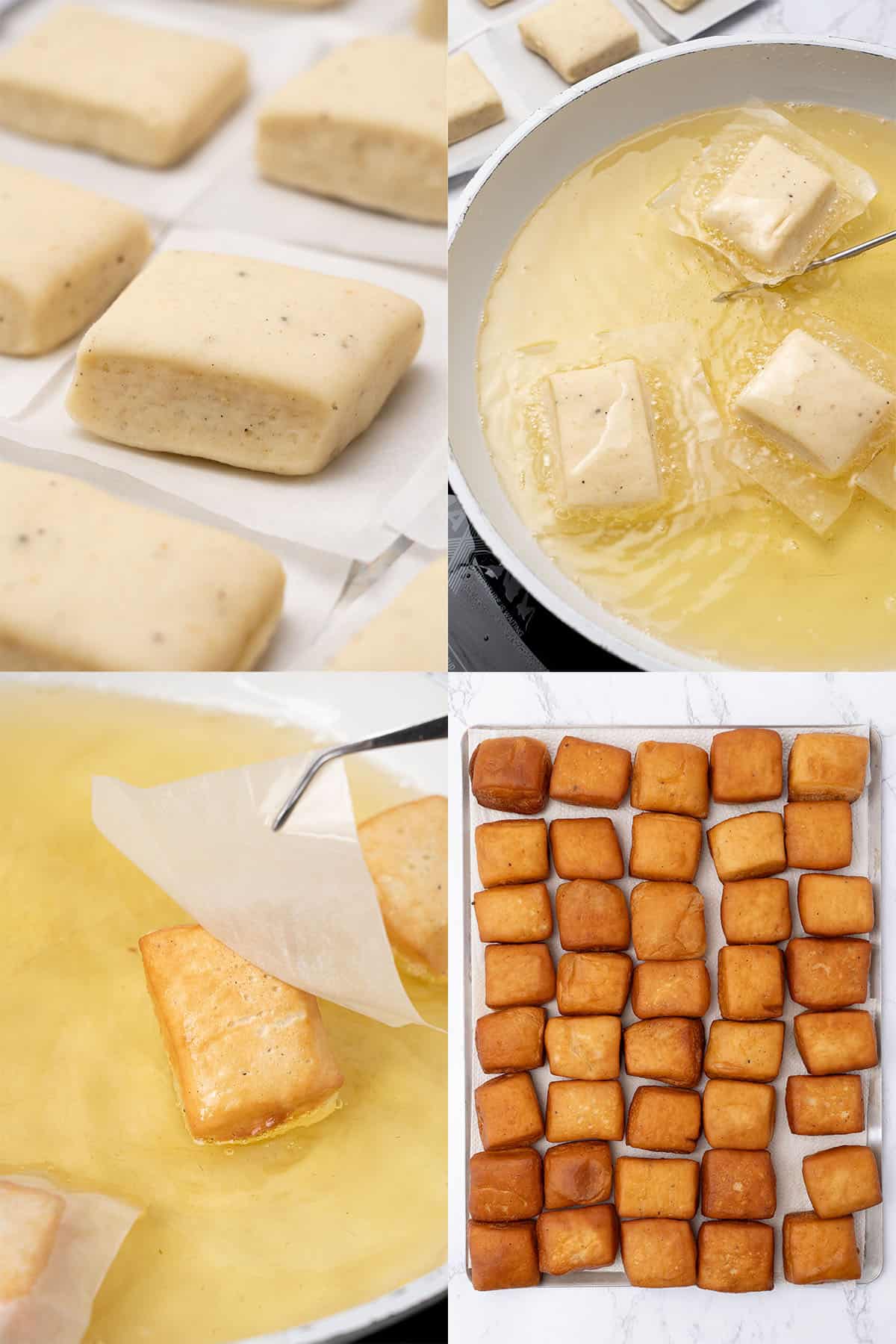
- Once the beignets are nice and puffy, heat the oil in a heavy-bottomed pan over medium heat. The oil temperature should be between 347-365F / 175-185C for the best results.
- Place 6-8 beignets in the oil, leaving enough space around them. The number of beignets can vary depending on the size of your pan. Use just enough oil to prevent the beignets from touching the bottom.
- Fry the beignets on each side for approximately 1.5 minutes or until the color turns nice and brown.
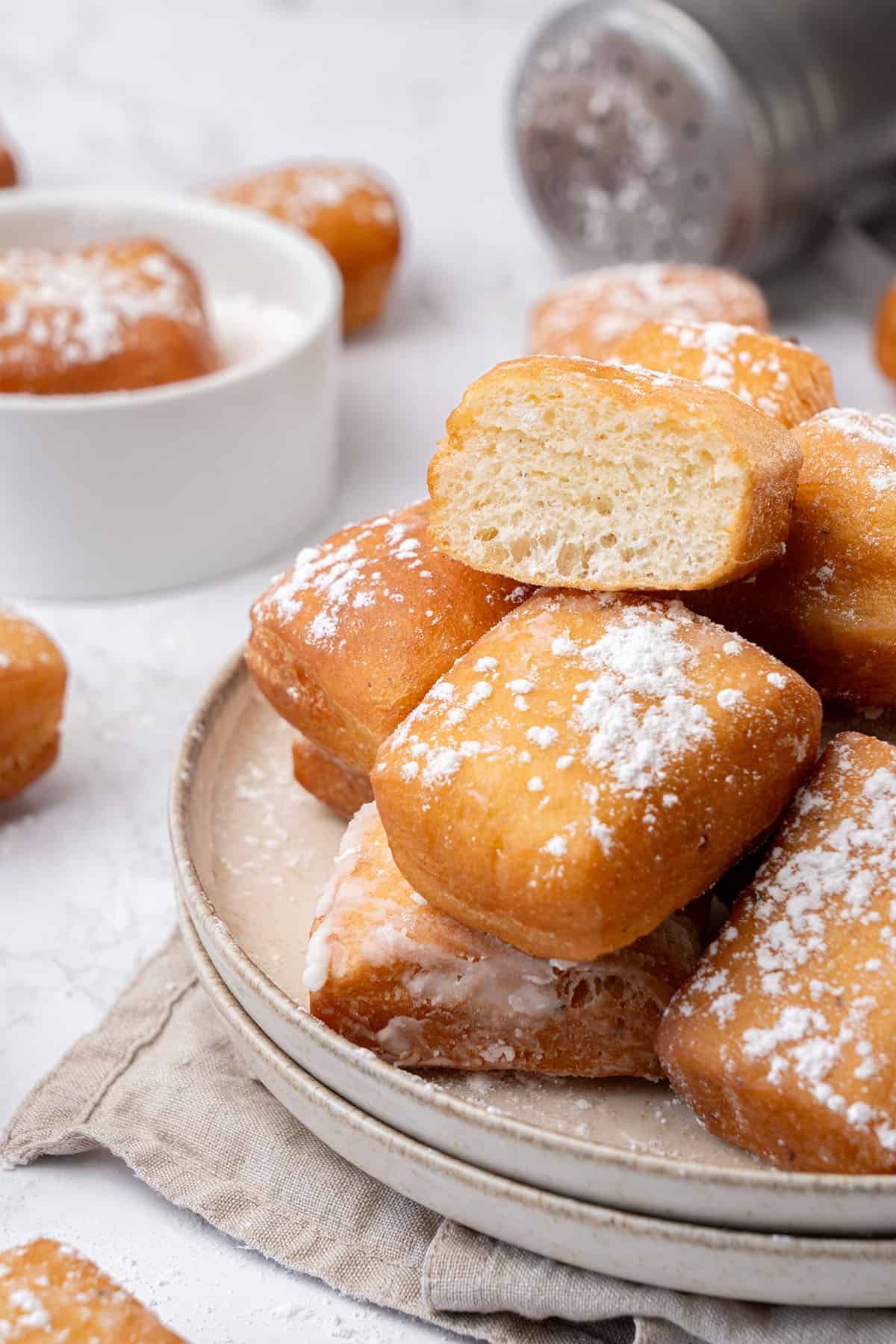
- Transfer the fried dough to a wire rack lined with paper towels to soak the excess oil. While still hot, toss them in the powdered sugar and coat them evenly. Serve fresh.
💡 Top Tip: Use a digital thermometer to check the temperature of the oil before frying the beignets. The perfect temperature for frying is 356F / 180C. Oil that is too hot will burn the beignets while the inside remains raw. Oil that is not hot enough will result in the dough soaking up too much oil while the inside remains raw.
📚 Flavor variations & Substitutions
This authentic beignet recipe is incredibly versatile and can be customized to your liking with different flavors, toppings, and fillings. Try your beignets with one or more of these many flavor variations or substitutions:
Different flavored dough - Give your beignets a different base flavor by adding vanilla extract, rosewater, orange or lemon zest, cocoa powder, cardamom, or espresso powder.
With different sugars - Replace the powdered sugar with decorating, muscovado, or brown sugar. You can also use cinnamon sugar for tasty cinnamon-flavored beignets. See my sugar guide for more about the various types and how to use them in baking.
With glaze - Swap out the sugar for a drizzle of sweet glaze. Try it with my chocolate glaze, raspberry glaze, or coffee glaze, as I use in my delicious cardamom cake.
With fillings - Yes, you can fill beignets! Try them with Bavarian cream or Nutella!
🥣 Equipment Notes
A digital scale is essential to ensure accurate and consistent ingredient measurements. Likewise, a digital thermometer is critical when frying the donuts to ensure you reach the proper temperature.
Although not 100% necessary, a stand mixer will make kneading the dough much more manageable. You will need a rolling pin to press the dough out after it rises.
🎓 Expert tips
- The milk, egg, and butter must always be at room temperature to emulsify correctly.
- A warm kitchen is necessary for the yeast to activate. However, always avoid placing the dough near direct heat or sunlight.
- Kneading the dough in the stand mixer will take approximately 10 minutes, although it may take longer. You will know the dough is ready when it is shiny, elastic, and no longer sticky. Do not attempt to speed up the process by adjusting the ingredients or adding more flour to the dough. Instead, continue kneading.
- For the best flavor and texture, do the first proofing overnight in the fridge. Do not skip the second proofing, as it is necessary to give the dough the perfect rise-and-fluffy texture.
- You can cut the dough into 4-inch / 10cm squares for larger beignets, in this case, fry them for about 2 minutes on each side.
- To get the most out of the flavor and texture, serve your beignets fresh and hot!
Leave a Reply