
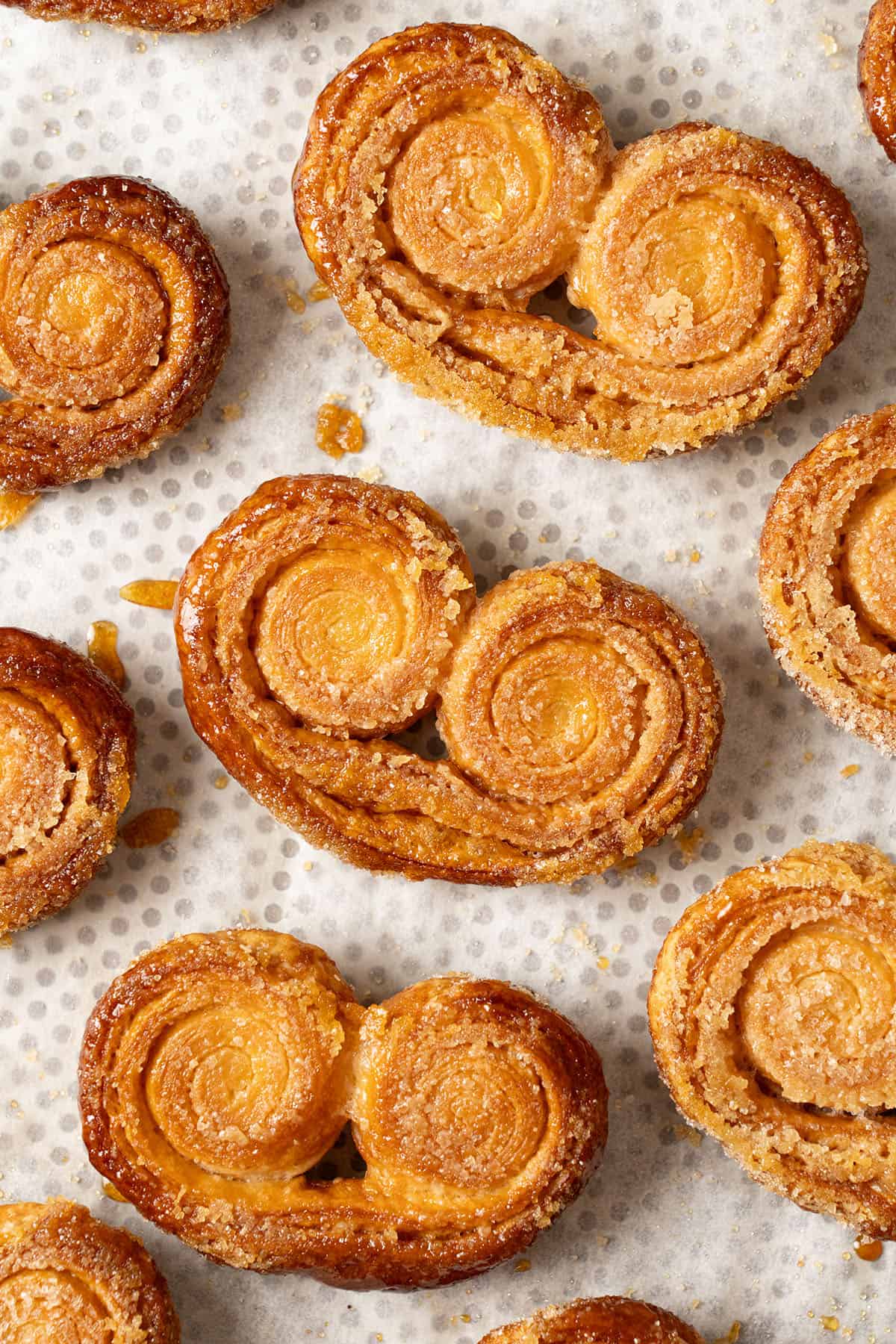
Palmiers — pronounced "pal-mee-ay" — are classic French pastry cookies made from just puff pastry and sugar. Also known as elephant ears, palm leaves, or pig's ears, they have a crisp caramelized exterior and light, flaky layers within. Their name literally translates to "palm trees" in English. Two ingredients, 40 minutes, results that look like they came from a boulangerie.
This recipe was first shared on the blog back in 2022. Since then, I've updated it with new photos, added helpful baking tips and a troubleshooting guide, and included several flavor options based on your questions.
Worth noting: in the US, "elephant ears" can also refer to large fried dough discs sold at state fairs, a completely different thing, same name.
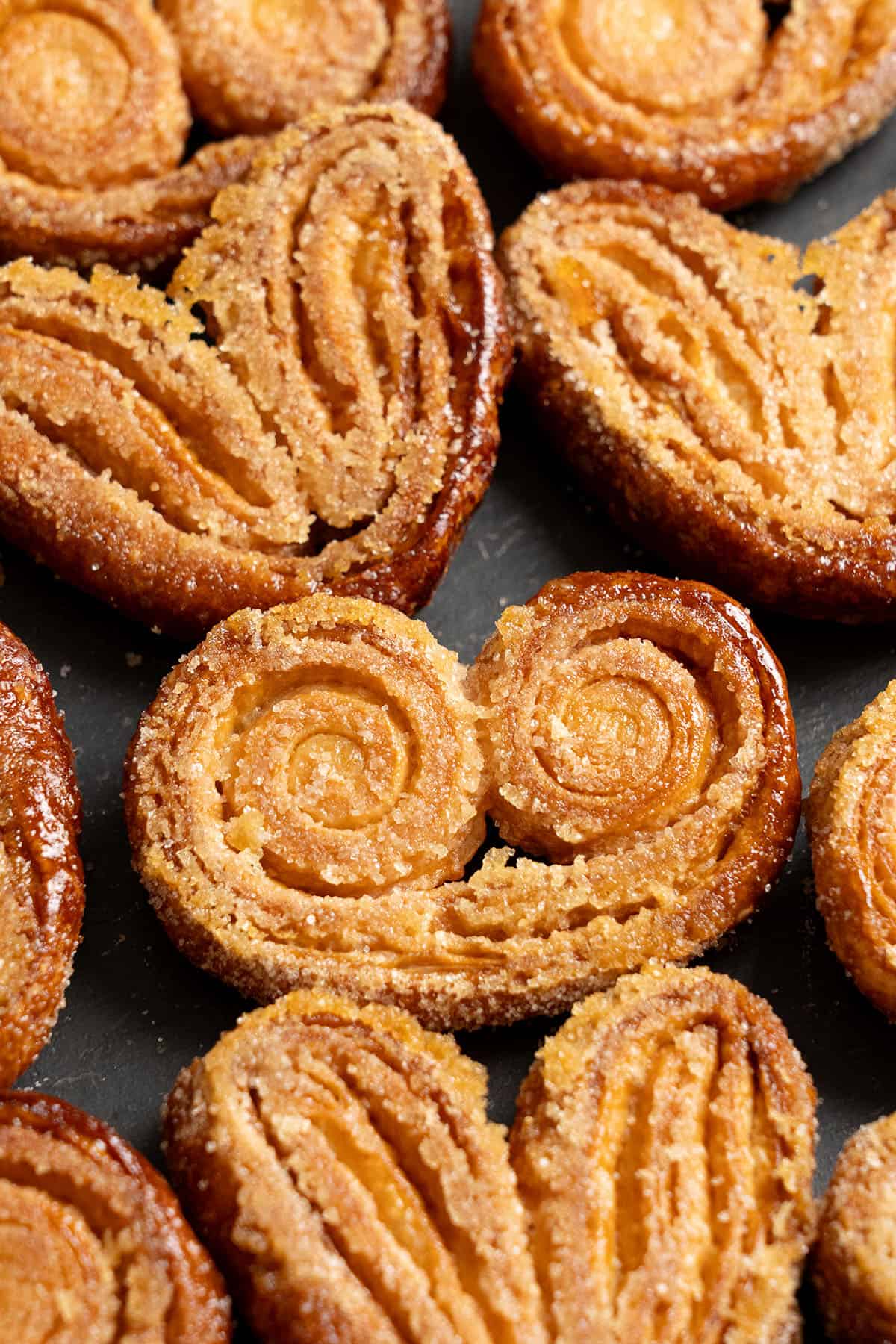
Katalin's key take on what makes palmiers perfectly crisp
Two things determine whether your palmiers come out crisp and caramelized or flat and greasy.
The first is temperature. Puff pastry is built from hundreds of alternating layers of dough and cold butter. When it hits a properly hot oven, that butter instantly converts to steam, forcing the layers apart and creating the rise and crunch. If the pastry is warm when it goes in, or the oven isn't fully preheated, the butter seeps out before it can do its job, and the cookies bake flat. Cold dough, hot oven — 200°C / 390°F, fully preheated. Always verify with a digital oven thermometer, as most home ovens run inaccurately.
The second is sugar placement. Rolling the pastry in sugar on both sides (not just sprinkling on top) means the sugar on the underside melts against the hot tray and sets into a glossy caramelized base. This is what gives palmiers their characteristic lacquered crunch. Use plain granulated white sugar; it caramelizes cleanly to a clear amber. Demerara adds texture but burns faster. Do not use powdered sugar; it absorbs into the dough instead of caramelizing on the surface.
What puff pastry to use
You have three options here. My traditional French puff pastry gives impressive results. My rough puff pastry is a much faster alternative that still delivers excellent flaky layers and a proper butter flavor, and it is what I reach for most often.
Store-bought frozen puff pastry is a perfectly valid shortcut and works well, just know that many supermarket brands are made with vegetable shortening rather than butter, which means the flavor is noticeably blander. If you can find an all-butter brand, choose that over a shortening-based one.
Dufour is the chef-recommended choice; it is all-butter, five-ingredient, noticeably richer in flavor, and is available at Whole Foods and some specialty stores. It is pricier but worth it for palmiers, where the pastry is the whole point. Pepperidge Farm is the easy-to-find supermarket option, made with vegetable shortening rather than butter. It bakes and crisps well, and the layers are good, but the flavor is milder. Trader Joe's all-butter puff pastry is an excellent middle-ground option. If you can find it, grab it.
One thing to note is that all-butter pastry, whether homemade or store-bought, caramelizes faster in the oven, so keep a closer eye on it. Whatever you use, it must go into the oven cold.
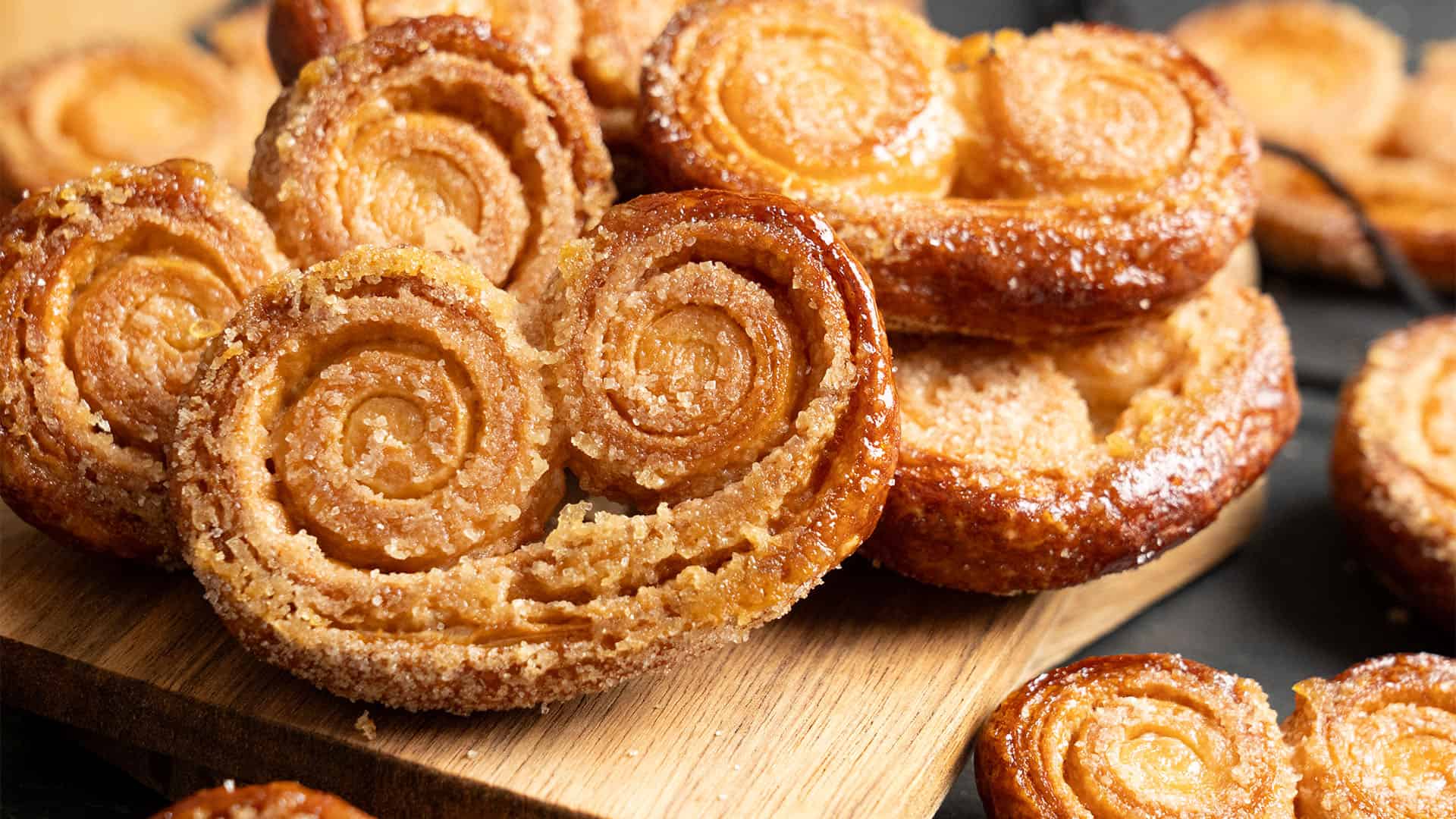
How to shape Palmiers: two methods that both work
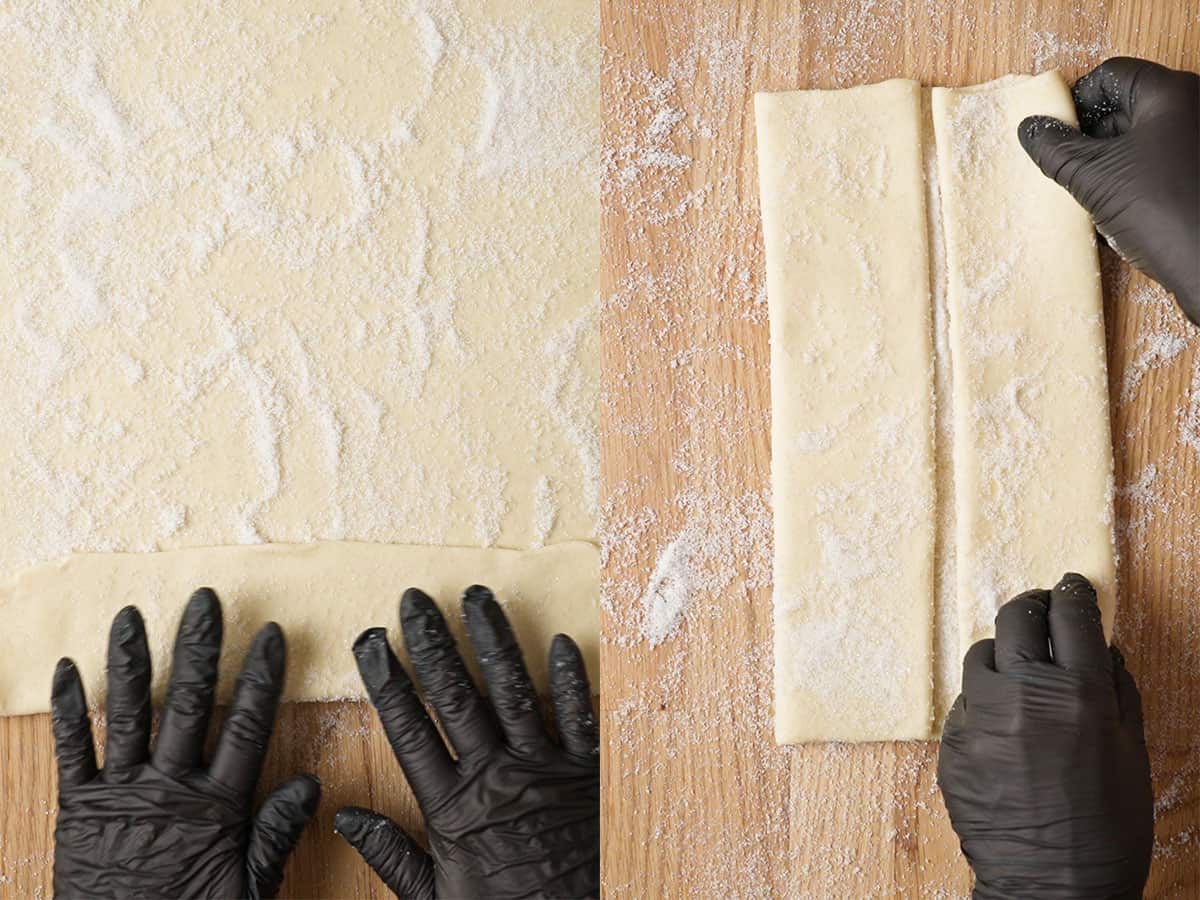
Lay the thawed or fresh (either way cold) puff pastry on a surface dusted with sugar rather than flour. This embeds sugar on both sides as you roll. Roll lightly with a rolling pin to press the sugar in, then sprinkle more sugar over the top.
I tested both classic shaping methods and genuinely cannot decide which is better. They both look fantastic and are equally easy.
The fold method — fold both long edges inward so they meet in the center, leaving a small gap of about 1 cm / half an inch. Fold each half inward again to the center gap. Finally, fold one half directly over the other like closing a book. You get a compact rectangular log of tight, flat layers.
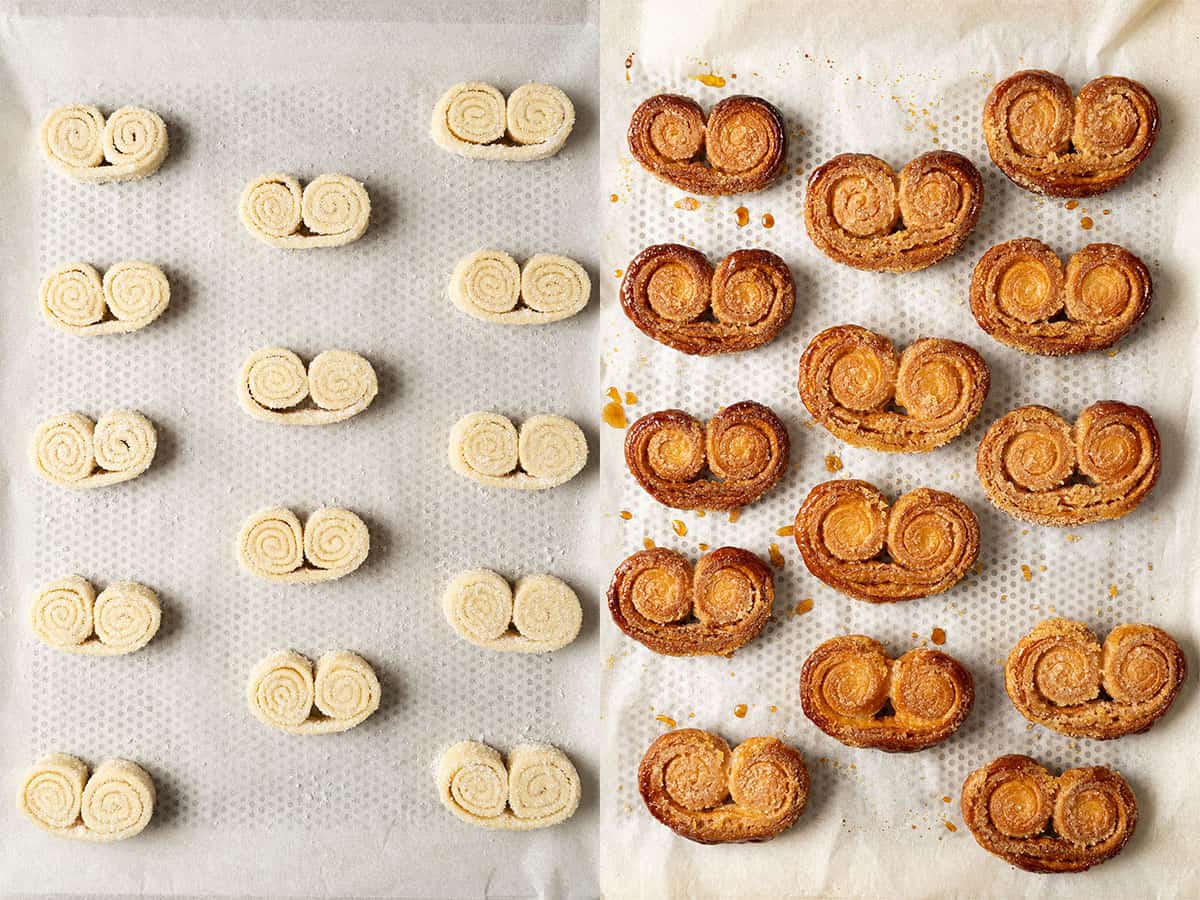
The roll method — starting from one short edge, roll the dough tightly toward the center and stop at the midpoint. Do the same from the opposite edge so both rolls meet in the middle, creating the classic double-scroll shape.
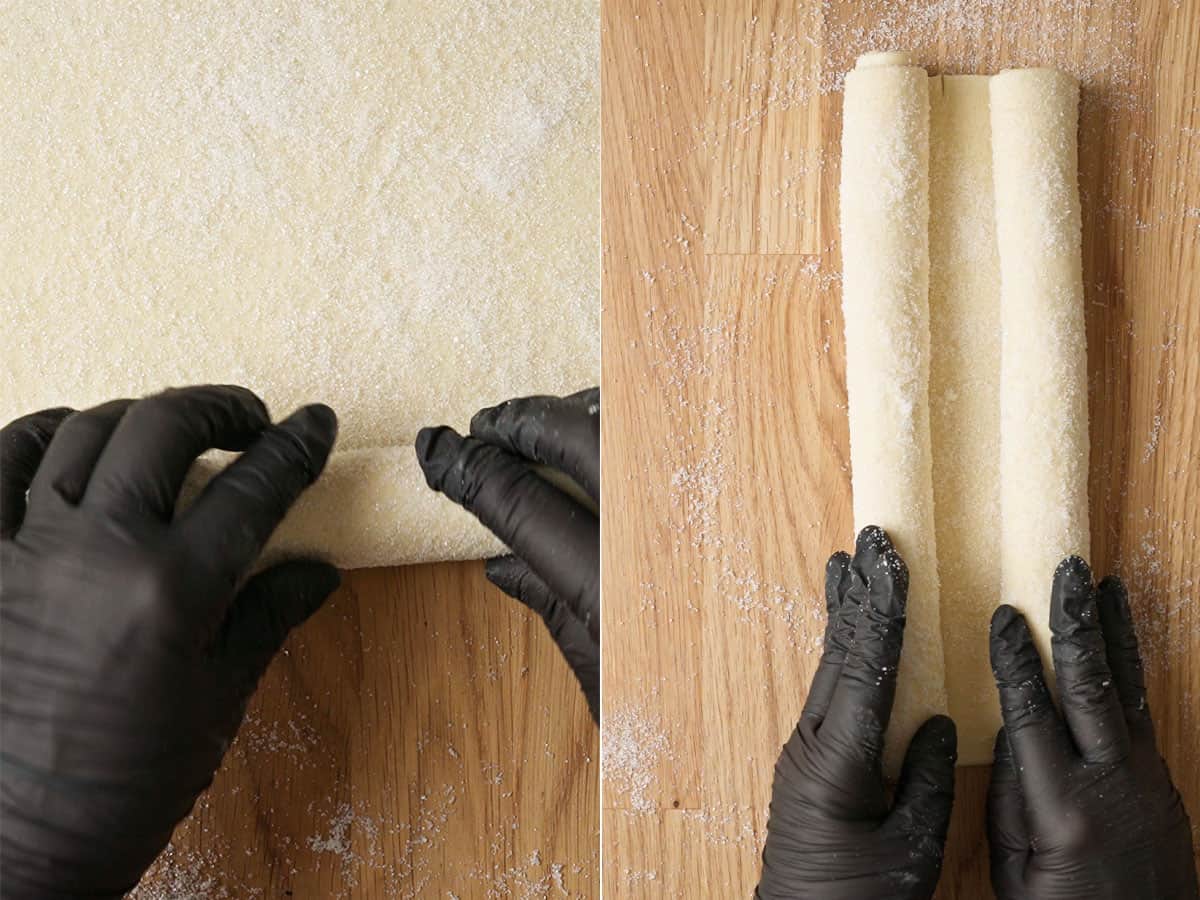
The fold method produces slightly more angular layers; the roll method produces a more rounded, open-heart shape. The difference is mostly visual. Both caramelize and crunch identically. Whichever you choose, keep the folds tight and work fast. Freeze the shaped log for at least 20 to 30 minutes before slicing. A warm or loosely shaped log is what causes palmiers to misshape during cutting and unroll in the oven.
Slicing and baking
Slice the chilled log into pieces about 1 cm / half an inch thick using a sharp knife with a single confident cut, not a sawing motion, which distorts the layers. Place cut-side up on a lined baking sheet with plenty of space between them; they spread significantly.
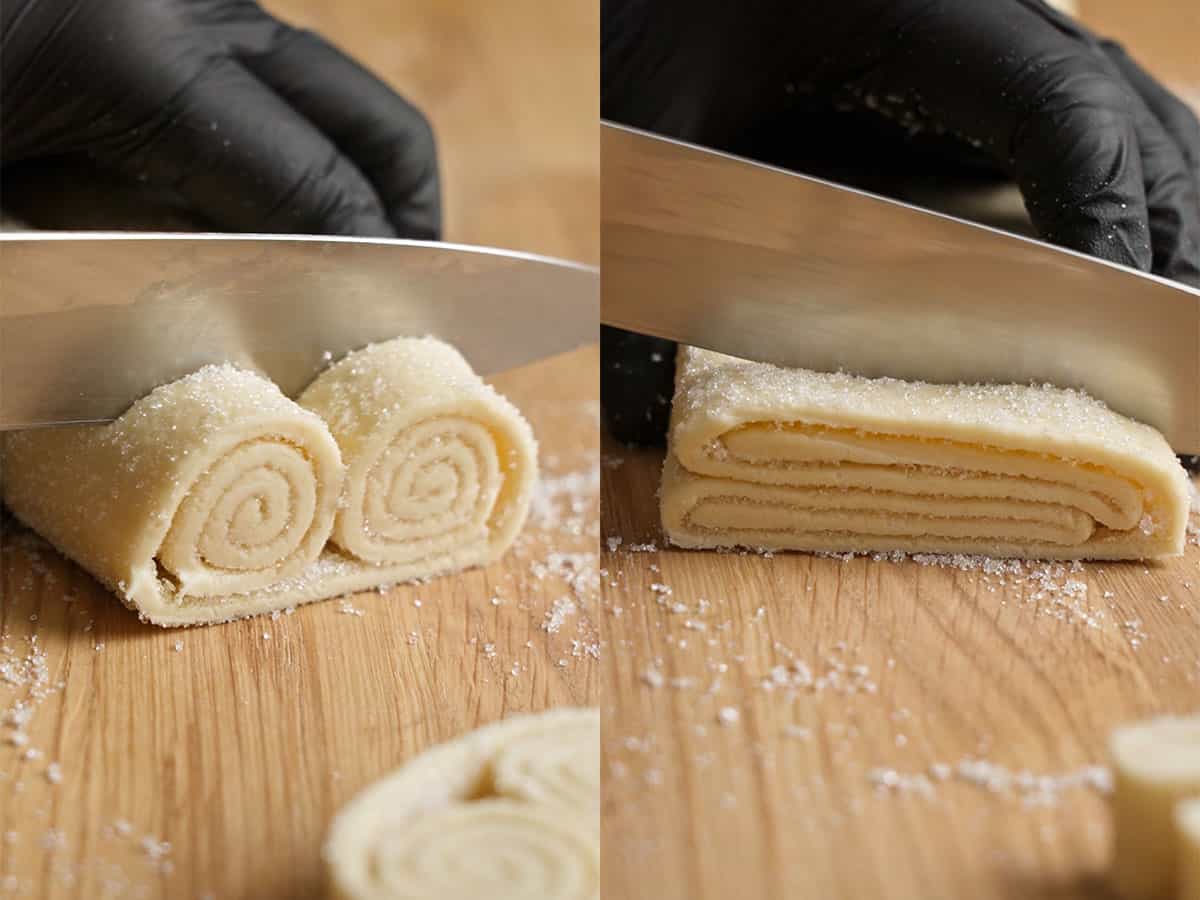
Keep the second tray refrigerated while the first bakes. Every tray should go into the oven cold.
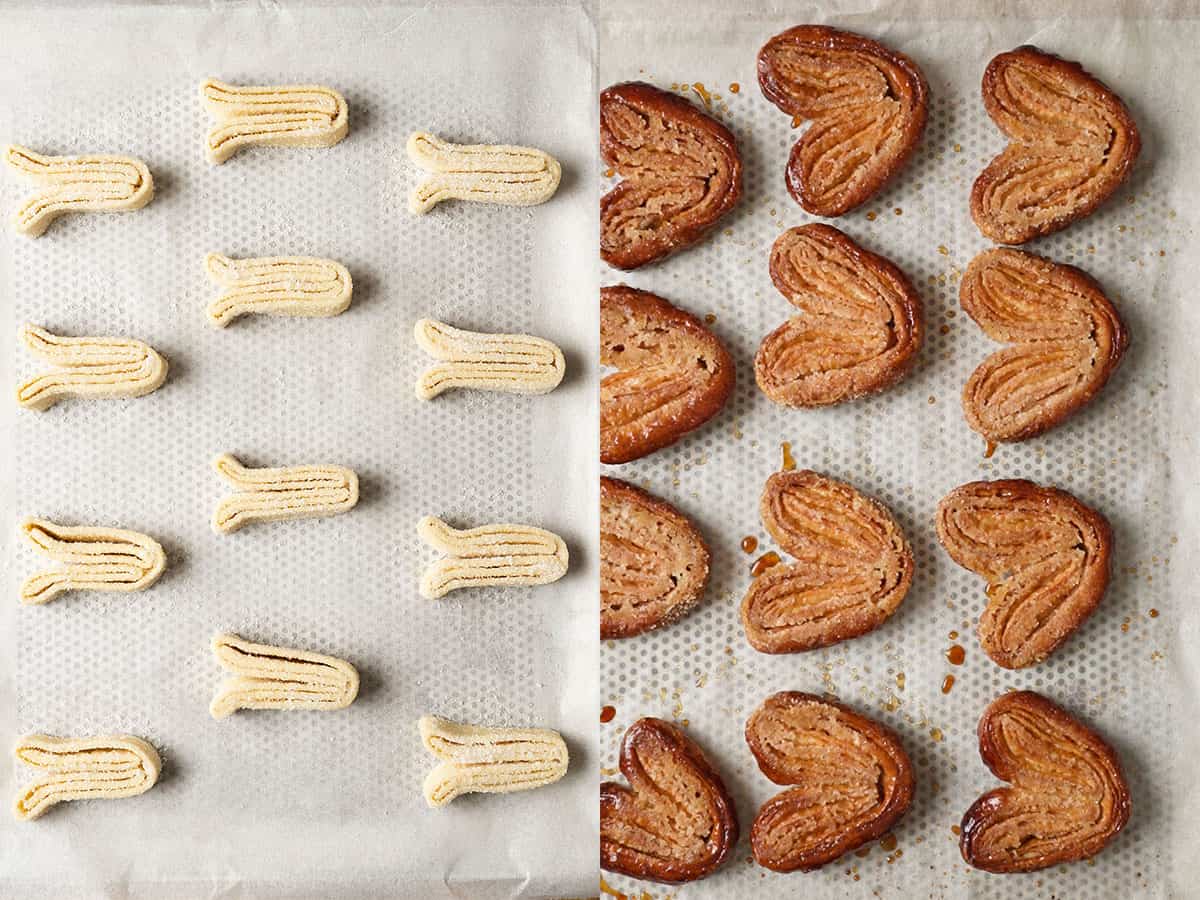
Bake at 200°C / 390°F (no fan) for 15 minutes on the first side until the sugar on the base is bubbling and the cookies look glossy underneath. Flip and bake for a further 10 minutes until deep golden brown. They will feel slightly soft when they come out, and they crisp up as they cool. Always check the base color, not just the top, before pulling them from the oven.
Troubleshooting
Came out flat — pastry was too warm before baking, or the oven was not hot enough. The butter melted out rather than creating steam.
Unrolled during baking — folds were not tight enough, or the log was not chilled long enough before slicing.
Burnt outside, raw inside — cut too thick. Keep slices to 1 cm / half an inch maximum.
Bottom pale, not caramelized — not enough sugar on the underside, or baked on a silicone mat instead of parchment. Parchment gives faster, more even caramelization.
Bitter flavor on the second batch — burnt sugar residue from the first batch. Replace the parchment or wipe the silicone mat between batches.
Expert tips
- Roll in sugar, not flour. Flour on the surface dilutes the caramelization and serves no purpose here.
- The puff pastry dough must stay cold at all times. If the dough becomes too warm to handle, put it in the freezer for a few minutes to chill.
- The dough must chill in the fridge or freezer while the oven is preheating. This helps them to maintain their shape and properly bake.
- Keep the second try of cookies in the fridge while baking the first.
- Check the bottom of the pastry before taking the palmier cookies out of the oven.
- Homemade all-butter puff pastry will bake faster in the oven than store-bought pastry. So you need to keep a close eye on them when baking.
Storage and make-ahead
These cookies are best on the day they are baked. Any leftover can be stored in an airtight container at room temperature for 2 to 3 days. Do not refrigerate, as humidity can quickly soften the caramel. To refresh, reheat in the oven at 160°C / 320°F for 5 minutes.
To make ahead, slice the raw log and freeze slices in a single layer on a tray. Once frozen, transfer to an airtight bag for up to 3 months. Bake straight from frozen at the same temperature, adding 2 to 3 extra minutes per side. This is the best way to have palmiers on demand. They bake perfectly from frozen.
Flavor variations
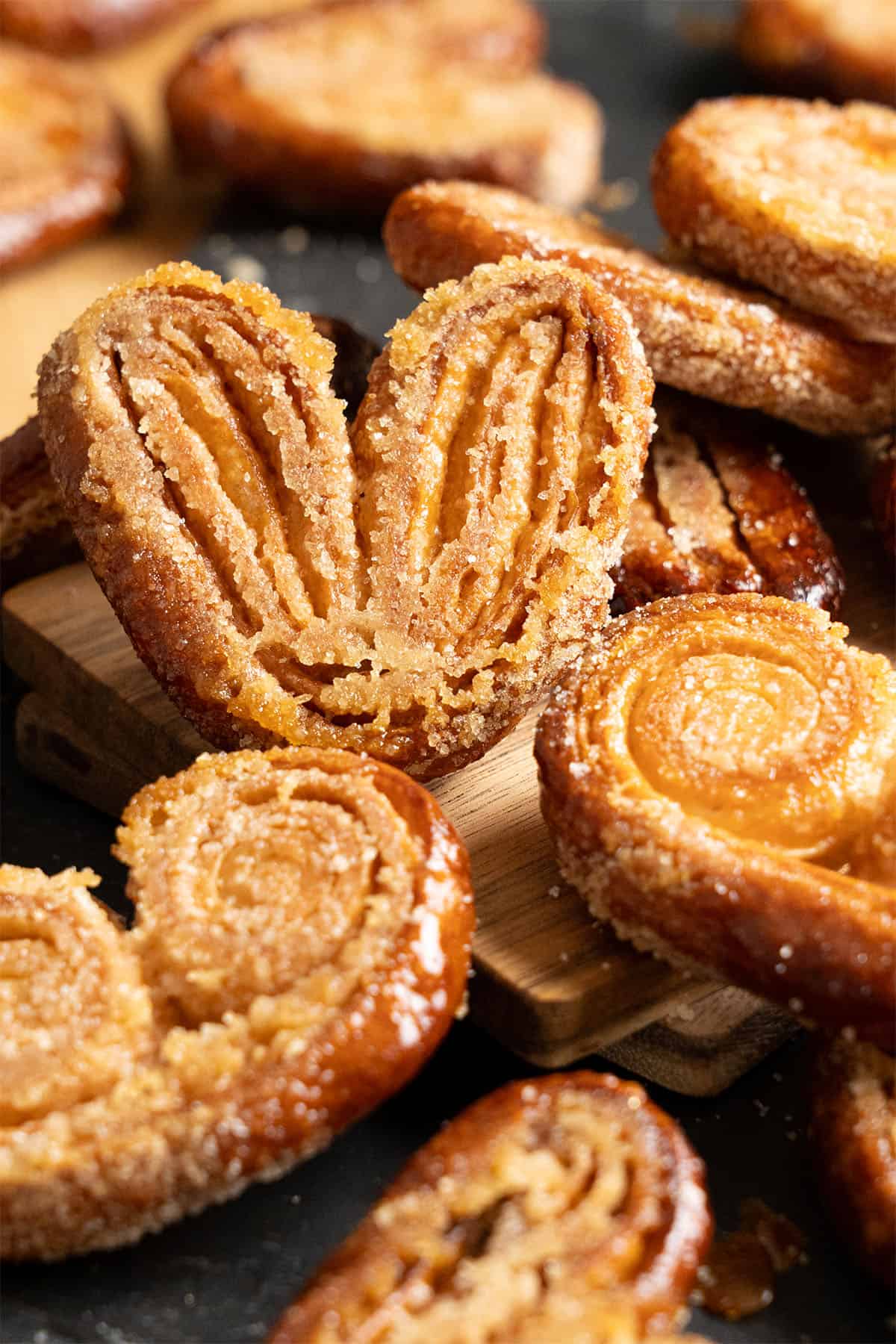
Cinnamon sugar — mix 1 to 2 teaspoons of ground cinnamon into the sugar before rolling. The most popular variation, and for good reason.
Chocolate-dipped — bake classic palmiers, cool completely, then dip one end in melted dark chocolate (60 to 70% cacao). Adding orange zest to the melted chocolate takes it even further. This is the German Schweineohren version, and it is excellent.
Jam-filled — spread a thin layer of apricot, raspberry, or blackberry jam over the pastry before rolling. Keep it thin or it will leak. The jam caramelizes into the layers and adds a tartness that cuts through the butter.
Savory — skip the sugar and spread with pesto and sun-dried tomatoes, or top with grated Parmesan and black pepper before rolling. Makes an excellent appetizer.
Equipment notes
Good news! You don't need any special equipment to make these cookies.
However, the two tools that I always use are my digital scale and digital oven thermometer. Because baking is a science, using a scale to properly measure your ingredients and a thermometer to double-check your oven's accuracy will always help you achieve the most professional results.
More sweet puff pastry recipes
- Pear Puff Pastry Tarts
- Nutella Puff Pastry Twists
- Puff Pastry Apple Turnovers
- Puff Pastry Cinnamon Twists
- Mille Feuille
Or why not check out my guide to 45+ sweet puff pastry desserts, featuring the most delicious treats, with trustworthy recipes and tutorials on how to make them yourself.
Have you tried this recipe?
Please leave a 5-star ⭐️⭐️⭐️⭐️⭐️ rating on the recipe card and consider leaving a comment as well!
Palmiers
Ingredients
Apple
- 1 pack Puff pastry store-bought or 1 portion of my homemade rough puff pastry
- 100 g (½ cup) Granulated sugar
US customary cup measurement is an indicative figure only. Measure the ingredients with a digital scale by weight (gram). Baking is art but also science which requires precision and accuracy.
Instructions
- Thaw puff pastry in the fridge until pliable but still cold, or make my easy rough puff pastry.
- Line 2 baking sheets with parchment paper; there's no need to grease them, as the puff pastry contains enough fat.
- Dust your work surface with sugar, not flour. Lay the pastry on top and sprinkle more sugar over the surface. Roll lightly with a rolling pin to press the sugar into both sides.
- Shape using one of two methods. Fold method: fold both long edges inward to meet in the center, leaving a small gap; fold inward again, then fold one half over the other like closing a book. Roll method: roll both short edges tightly toward the center until they meet in the middle. Keep folds tight throughout.
- Wrap the shaped log and freeze it for at least 20 to 30 minutes.
- Preheat oven to 200°C / 390°F (no fan).
- Slice the chilled log into 1 cm / ½ inch pieces using a sharp knife with a single confident cut. One by one, dip each slice into the remaining sugar on the work surface to coat, then place cut-side up on a parchment-lined baking sheet with plenty of space between each cookie.
- Bake the cold dough at 200°C / 390°F (no fan) for 12 to 15 minutes or until the base is bubbling and caramelized. Flip and bake for a further 8 to 10 minutes until deep golden brown. Check the base color before removing from the oven.
- Cool on the tray for 5 minutes, then transfer to a wire rack. They will crisp up as they cool.
- Store in an airtight container at room temperature for up to 3 days. To make ahead, freeze raw slices and bake straight from frozen, adding 2 to 3 minutes per side.
Notes
- If the pastry softens at any point during the rolling or folding, return it to the fridge for a few minutes before continuing.
- Check the bottom of the pastry - whether it is well baked - before taking the Palmiers out of the oven
- Try this palmiers recipe with cinnamon sugar for a lovely cinnamon palmiers
Denise Gravel
Love them !
Jos
In Germany, these usually had a chocolate dipped on the top half of the cookie. Do you know what chocolate is used for this? It was very delicious. And they call them schweineohren.
Katalin Nagy
Thanks for the interesting remark. I imagine good quality dark chocolate works best 🙂
Diane H
Do you put the egg wash on both sides or just one? Also my oven only can be set on certain numbers ie: 390/395, etc and not 392..should I set it at 390 degrees?
Thanks
Katalin Nagy
It is enough to egg wash the top, and in regards to your oven, yes choose 390F.
Diane
Thank you very much for the information
Nat
Love this recipe , excellent
A.H
Instructions aren't very clear.
"then using a sharp knife, cut the into 1 cm / ½ inch pieces " ?
Katalin Nagy
Please look at the process images for reference. There is also a recipe video under the table of content.