
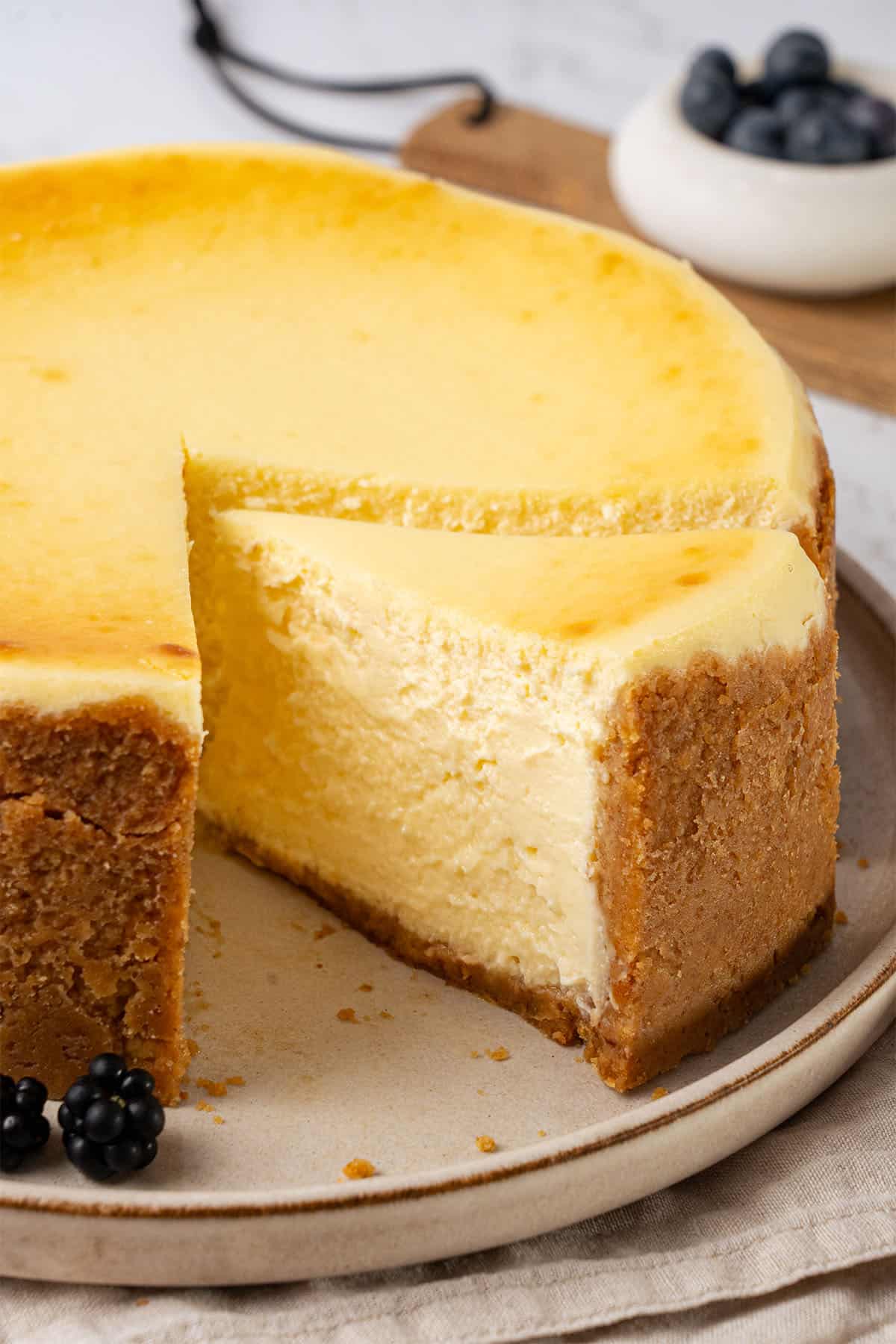
A classic New York cheesecake is one of the most iconic desserts around. A crisp Graham cracker crust is filled with the creamiest, richest vanilla cheesecake filling, with the perfect silky texture and just the right amount of tang.
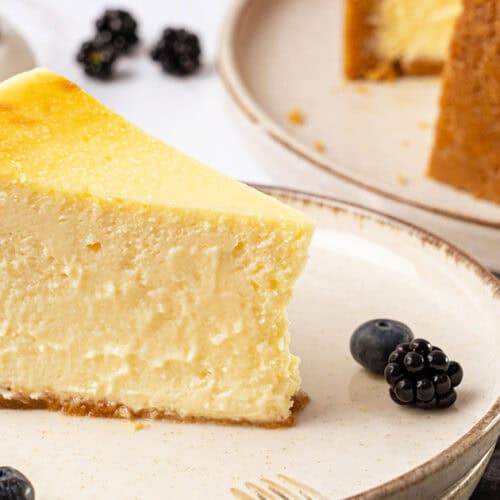
Many cheesecakes look dry, which usually means they were overbaked. A proper New York cheesecake should be dense without being airy, but still creamy rather than dry. This recipe strikes that perfect balance: smooth, rich, and velvety with just the right amount of firmness.
Read what others said about this recipe

"THIS!! I was always scared to try baking New York cheesecake, but with your recipe, everything went so smoothly, and it turned out perfect. Even my family was surprised about my baking skills they didn't know I had them :)" Irina
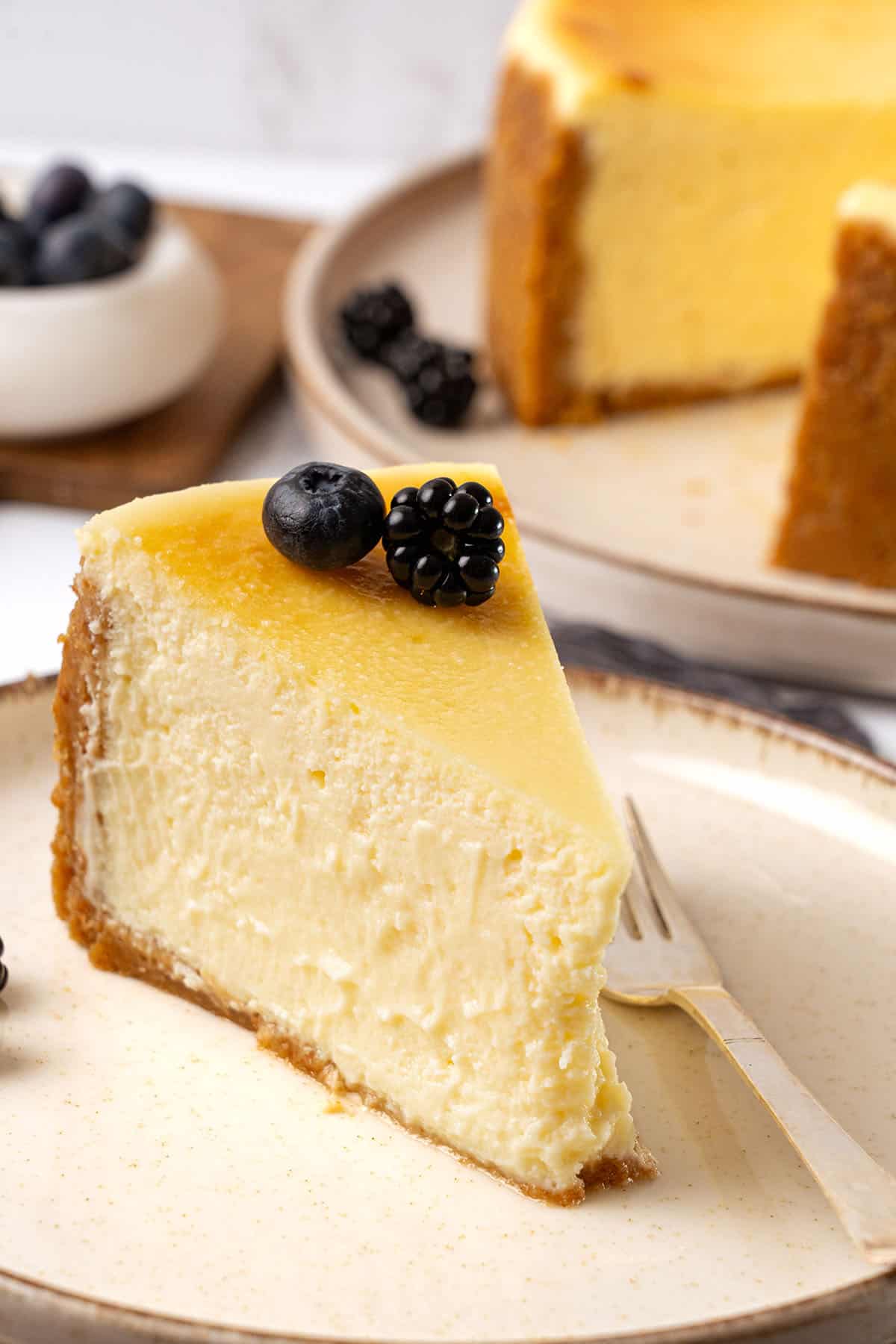
Best New York Cheesecake Recipe
New York cheesecake is elegant and no fuss, just like New Yorkers. It doesn't mess around! The batter comes together in a few minutes, and the crust is incredibly easy with only two ingredients. But don't be fooled into thinking there is no skill to it. Achieving the trademark dense (not airy) texture that is super rich and creamy, and never dry or cracked, takes a few pro tips and tricks.
I have tested many versions of this iconic American dessert recipe before developing my own, and I will show you exactly how to make it. I have broken it down into easy, step-by-step directions with all my pro-baker experience so that you'll never have a failed cheesecake again!
Katalin's Key Take On New York Cheesecake Mistakes & How to Avoid Them
Common problems with New York cheesecake include cracking, puffing up, and/or collapsing. These issues are usually caused by overmixing the batter (which creates too much air) or overbaking. Baking the cheesecake low and slow in a water bath and then letting it cool slowly and gently is the most foolproof method I have found.
While we can all agree that setting up a water bath (Bain-Marie) is more of a hassle, it really is necessary here. Some types of cheesecake don't need one, for example, a Basque cheesecake, but to bake the perfect New York-style cheesecake, you will need to use one. It ensures gentle, even heat, prevents cracks, and helps with the texture.
You will learn how to perfectly bake but also cool this cheesecake so that it has the right creamy texture. At the end of the baking, we want the cheesecake still jiggly in the middle, as it will further set as it cools. Then, the cooling procedure is just as important as the baking, trust me! We will cool the cheesecake inside the oven so it won't collapse due to a sudden temperature change.
And with that in mind, you will also need to have patience. It takes time to let the ingredients come to room temperature, and time to bake and cool the cheesecake properly. Ideally, you will start the day before you want to eat it, so that it can chill and set thoroughly in the fridge overnight. It is well worth the wait, I promise!
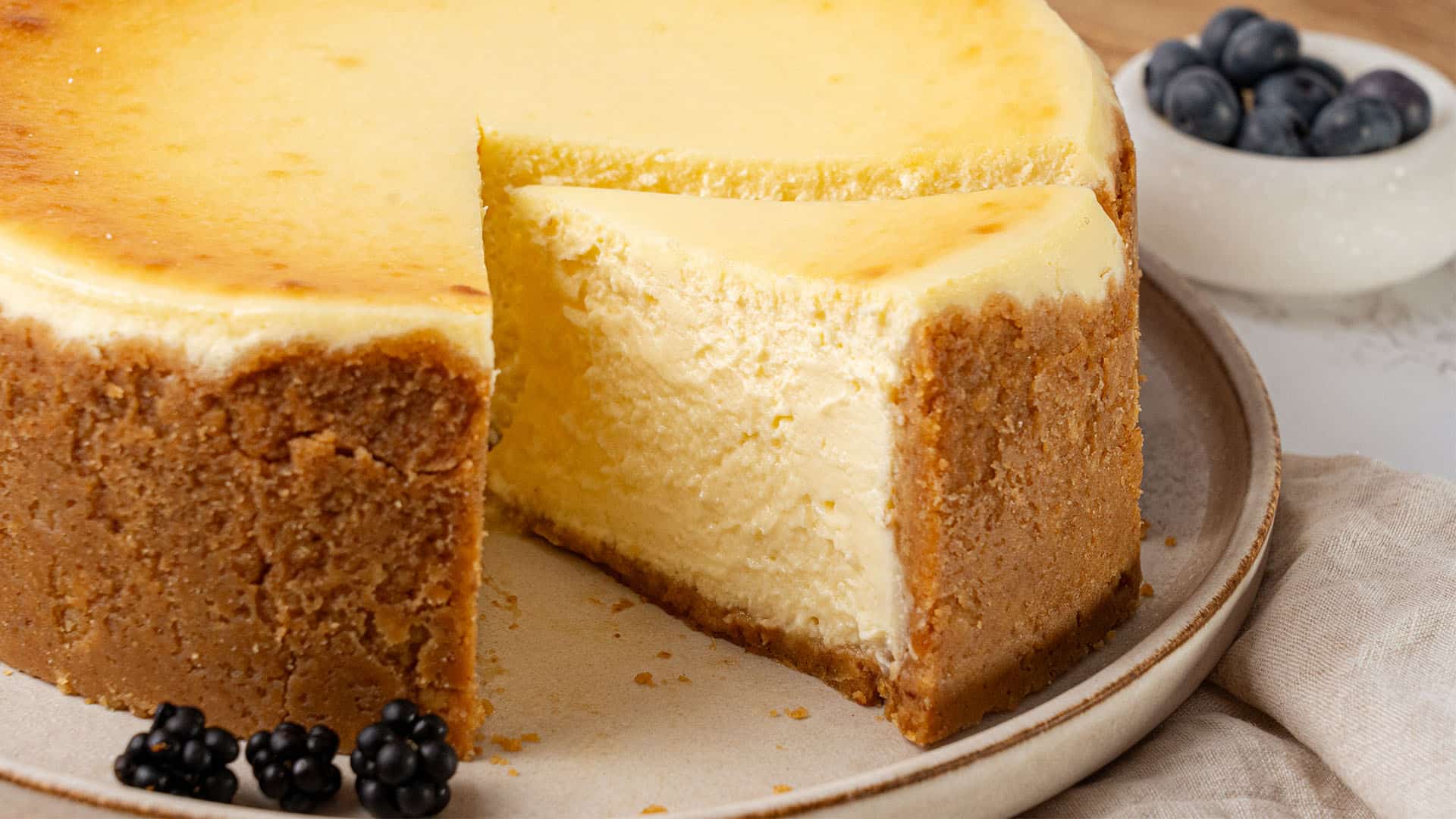
Ingredient notes you don't want to ignore
The Graham Cracker Cheesecake Crust only has two ingredients: butter and Graham crackers! Use good-quality European-style butter with a high fat content (mine has 82%) for the best results.
Always use good-quality full-fat cream cheese (e.g., Philadelphia) and full-fat sour cream in your New York cheesecake batter. You need sour cream as well as cream cheese for silkiness, so don't skip it. Take them both, as well as the eggs, out of the fridge so that they are all at room temperature before you begin.
Avoid vanilla essence, which has a synthetic flavor and will really impact your cheesecake. Use vanilla extract for the best authentic New York cheesecake flavor.
Start with the Graham cracker crust
Preheat the oven to 350°F (175°C).
Turn your Graham Crackers into crumbs either by blitzing in a food processor or placing them in a ziplock bag and hitting with a rolling pin. You need even-sized, fine crumbs. Then, weigh the crumbs and place them into a mixing bowl with a pinch of salt.
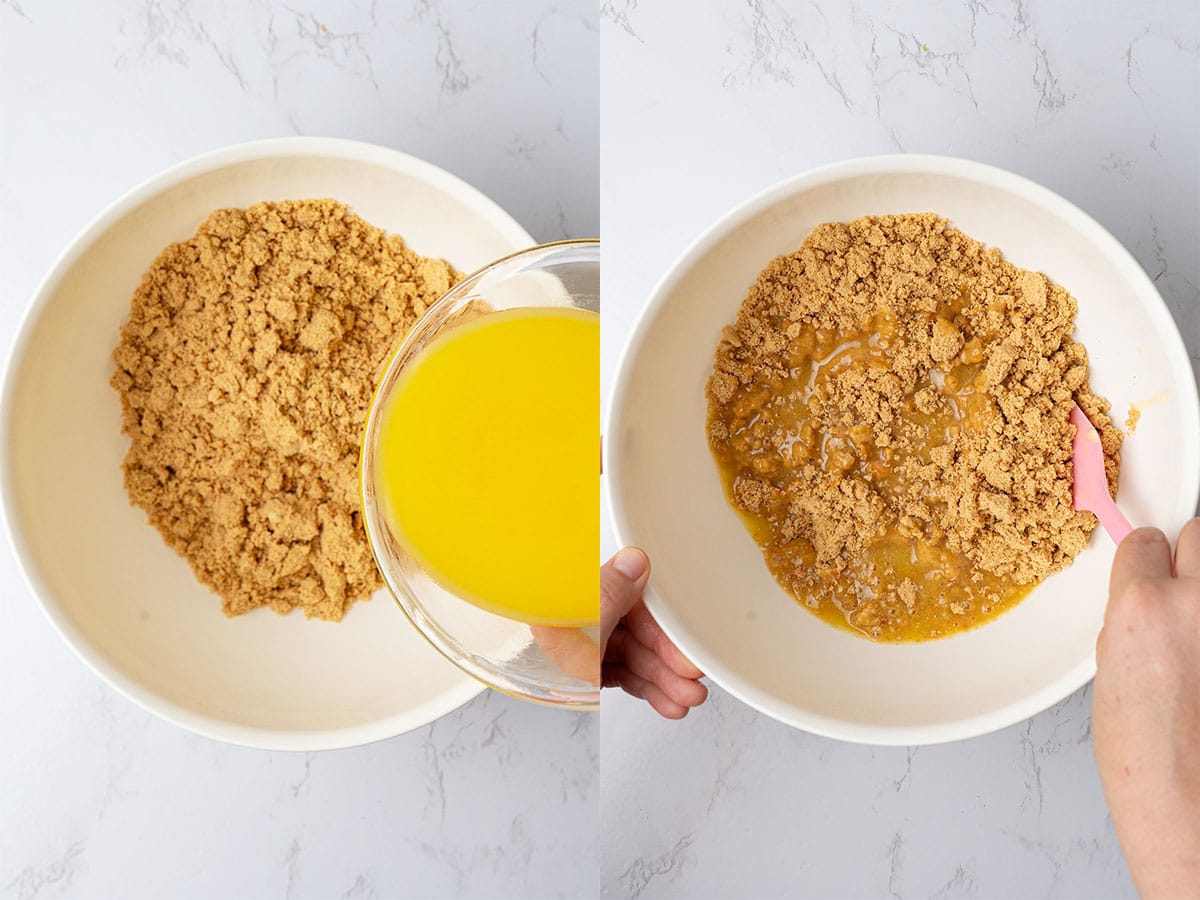
Melt the butter (gently, don't let it boil) and stir it into the cracker crumbs. Make sure the butter is evenly mixed in; don't be tempted to add more crumbs or more butter.
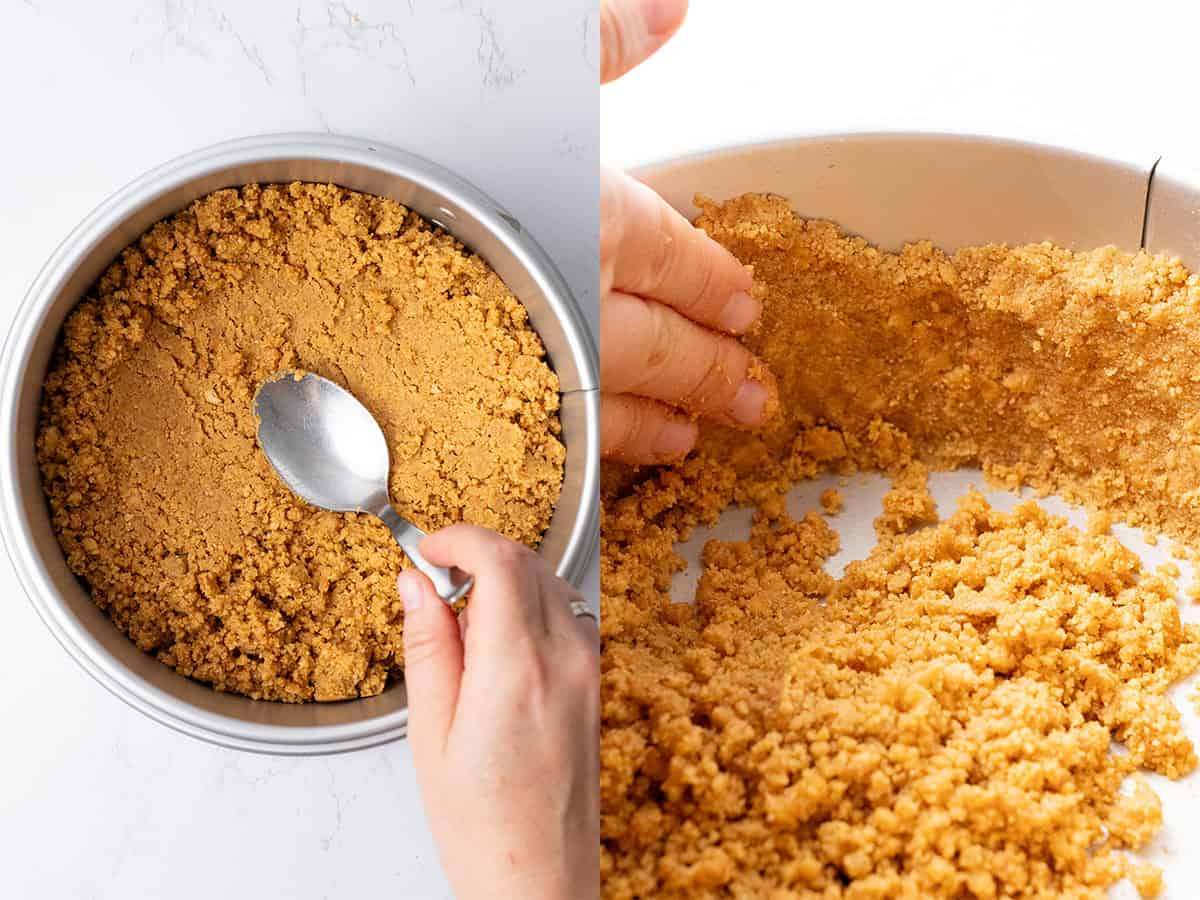
Pour the buttery crumbs into an ungreased 8 or 9-inch springform pan. I prefer an 8-inch for a taller cheesecake, but it works with both sizes. The important thing is that it has a springform base!
Use a flat-bottomed glass or mug, or a spoon, to really press the crumbs together and form the New York cheesecake crust. It helps to do the sides first, and then the base. You are aiming for an even thickness and pay particular attention to the corners where the base joins the sides. Chill it in the freezer while the oven finishes preheating.
Bake the crust in the preheated oven for 8–10 minutes, which will set it and give it a nice toasty flavor. Let it cool completely to room temperature; do not fill it while it is warm.
Read my in-depth post on making the best Graham cracker cheesecake crust for even more tips and tricks, as well as substitutions.
Prepare your tin and water bath
Your water bath will need to be ready to go as soon as the batter is ready, so be sure to prep it ahead of time!
Preheat the oven to 325°F (165°C). Avoid using the fan setting, as it circulates hot air and creates an uneven baking environment, causing the crust to brown in irregular patches.
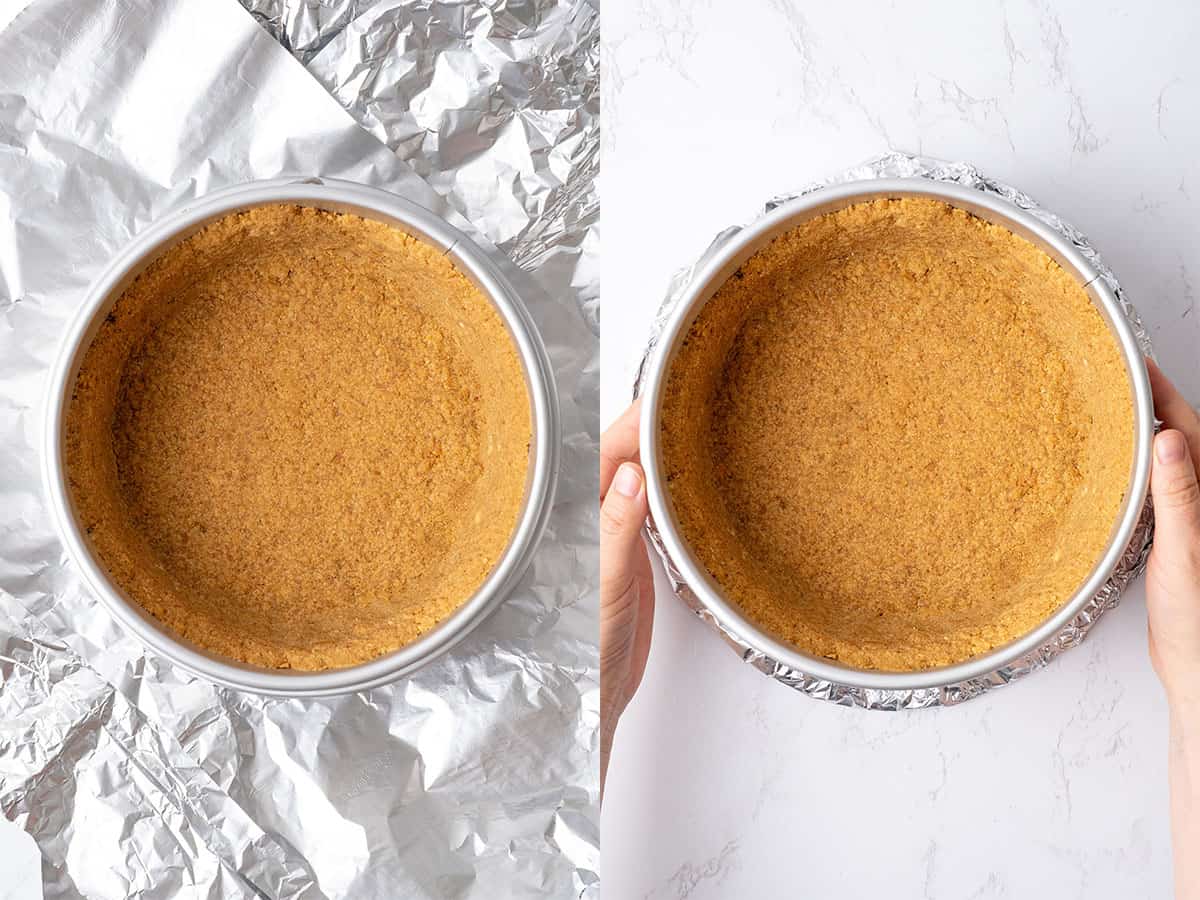
Prepare a deep roasting pan for the water bath. It needs to be able to fit your springform pan inside it. Now we need to make your springform pan with the baked crust in it completely watertight to prevent leaks and a soggy crust.
Wrap it in 5-6 layers of strong, heavy-duty aluminum foil, ensuring the base and sides are completely covered to prevent water from seeping in through the springform base. If you have an oven-safe bag, you can also place the wrapped pan inside it.
Make the cheesecake batter
We want to go low and slow with this batter because overbeating incorporates air, which leads to cracks. So keep the mixer speed on low-medium, scrape the sides and base of the mixer bowl down often, and don't be tempted to rush things and whip it!
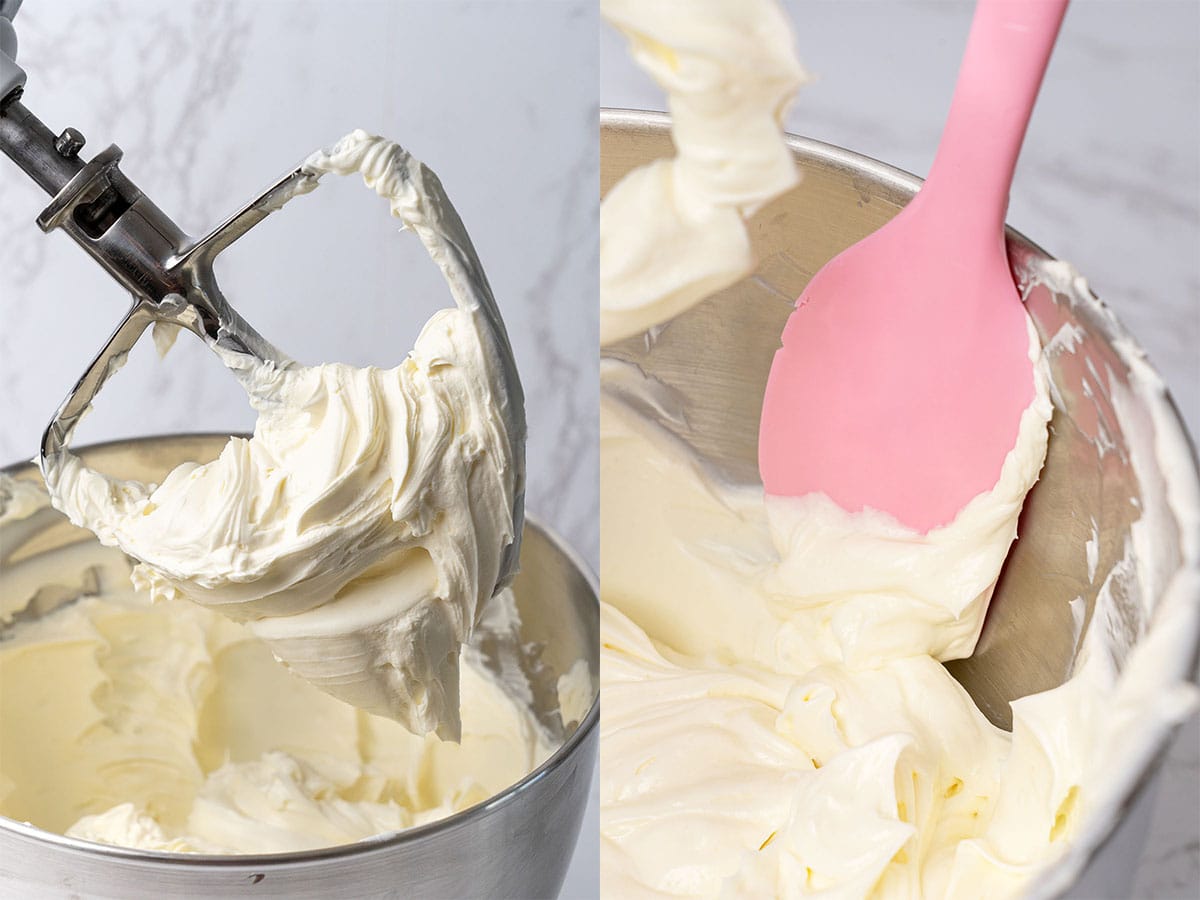
Place the room temperature cream cheese into the bowl of a stand mixer fitted with the paddle attachment, and turn it to medium-low speed.
Once it's lump-free (which will take around two minutes), scrape the bowl, add the sugar, and continue to mix for another two minutes. Scrape the bowl again once it is incorporated.
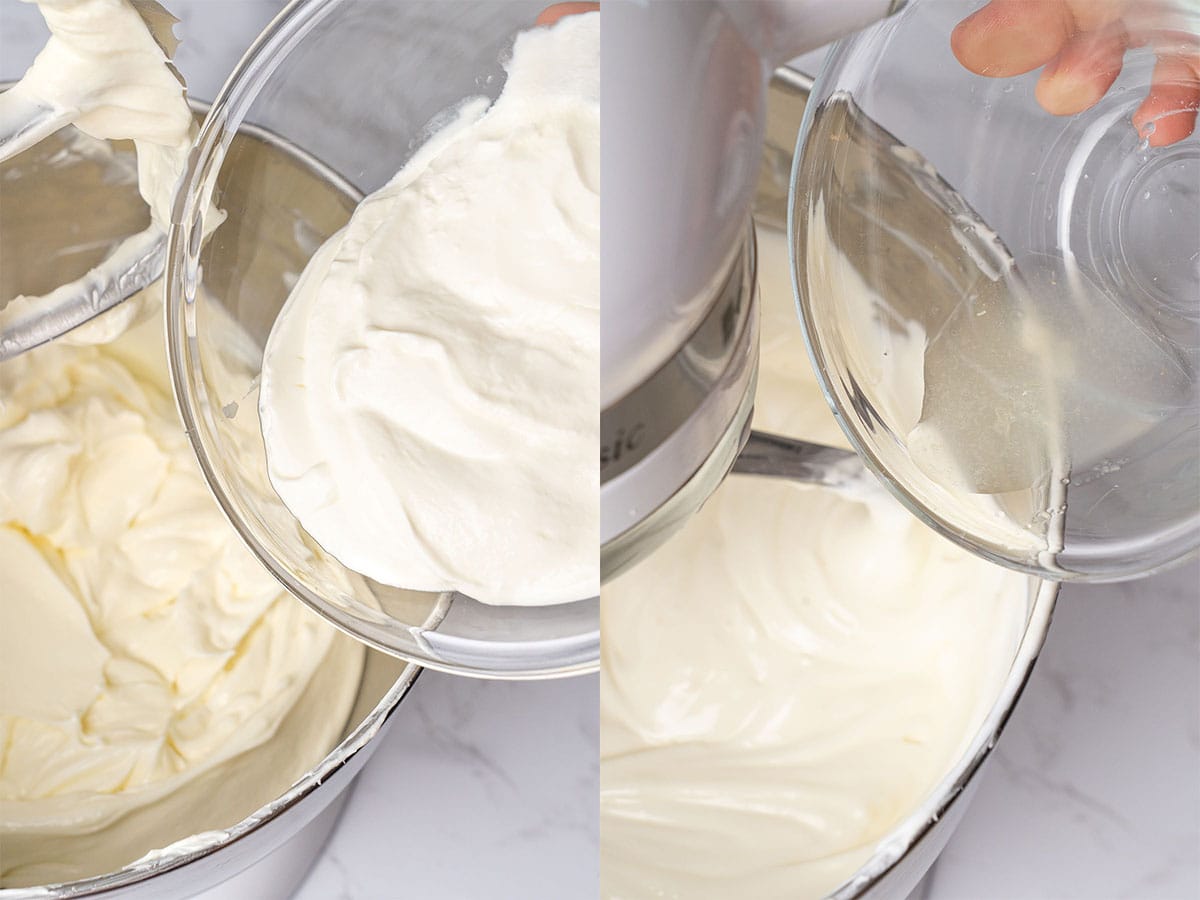
Add the freshly squeezed lemon juice, vanilla extract, and room-temperature sour cream, plus a pinch of salt to bring out the flavors. Mix again on low just until everything is combined, which will only take about 10 seconds.
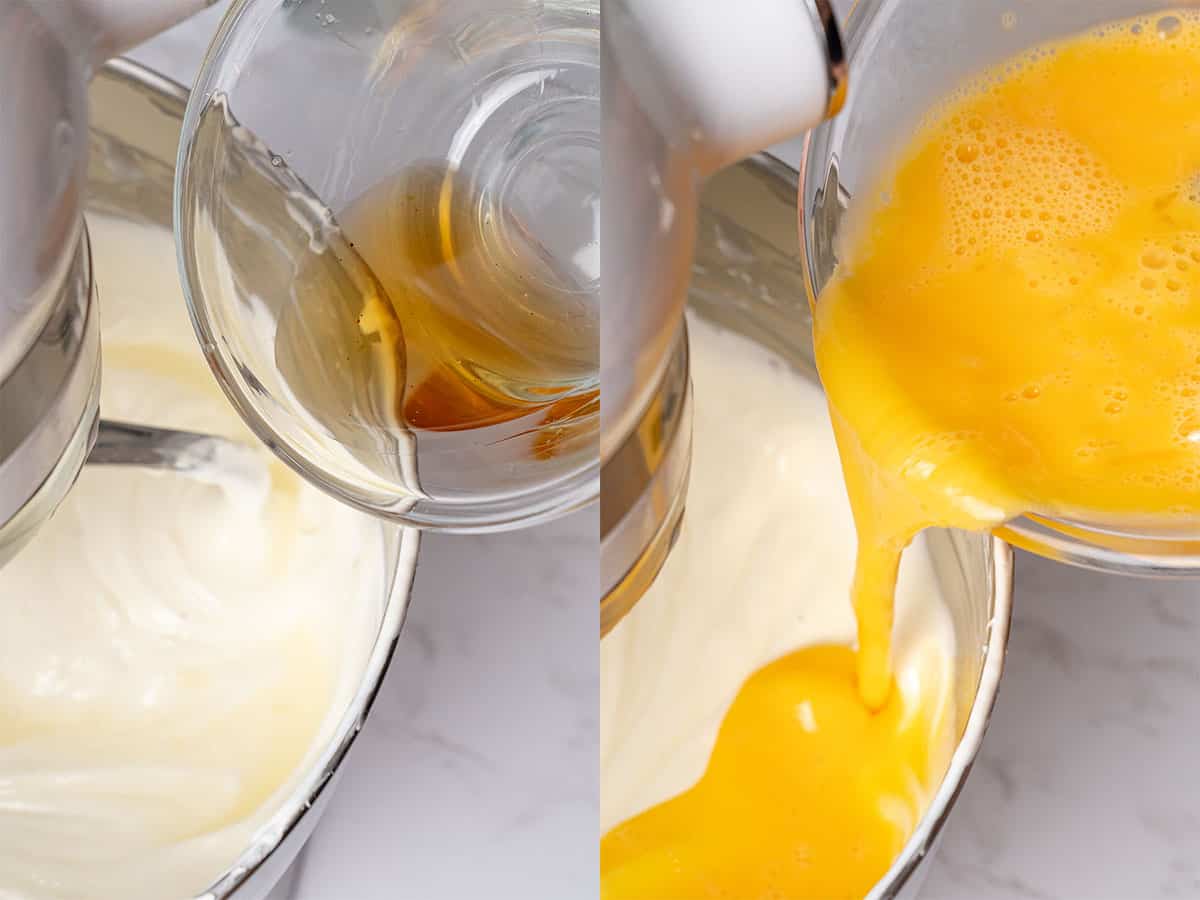
Finally, mix the room-temperature eggs together separately, then pour them into the batter with the mixer running slowly. It will take about 30 seconds to incorporate them, and then switch it off.
How Not to Overbake / Underbake Your Cheesecake
Bring a kettle of water to the boil for your water bath.
Pour the cheesecake batter into the cooled crust, and gently tap it on the counter to settle the surface and pop any air bubbles. Place the wrapped pan into your prepared water bath.
Pour the boiled water into the pan so that it is about a third of the way up the wrapped springform. Carefully place the waterbath and cheesecake into the preheated oven.
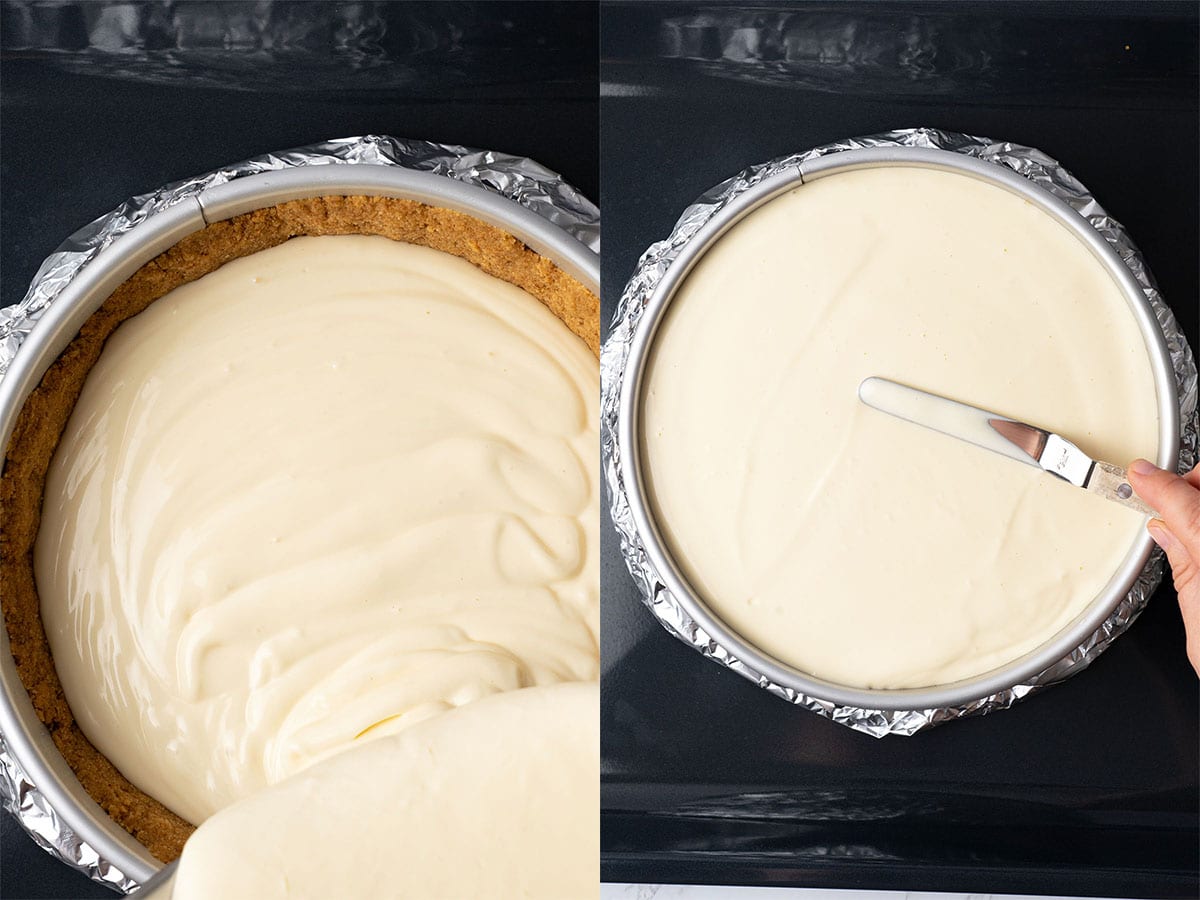
Bake the cheesecake at 325°F (165°C) for 60-75 minutes, without opening the oven door for the first 60. It is ready when the edges look firm, but the center is still slightly jiggly. When it reaches this point, turn the oven off but leave the cheesecake inside.
Allow the cheesecake to cool in the turned-off oven for a further 60 minutes. This gentle cooling helps prevent cracks.
Remove the waterbath and cheesecake from the oven and take the pan out of the waterbath. Carefully unwrap all the foil and place the springform on a cooling rack. Let it sit there for another 60 minutes, and do not remove the springform!
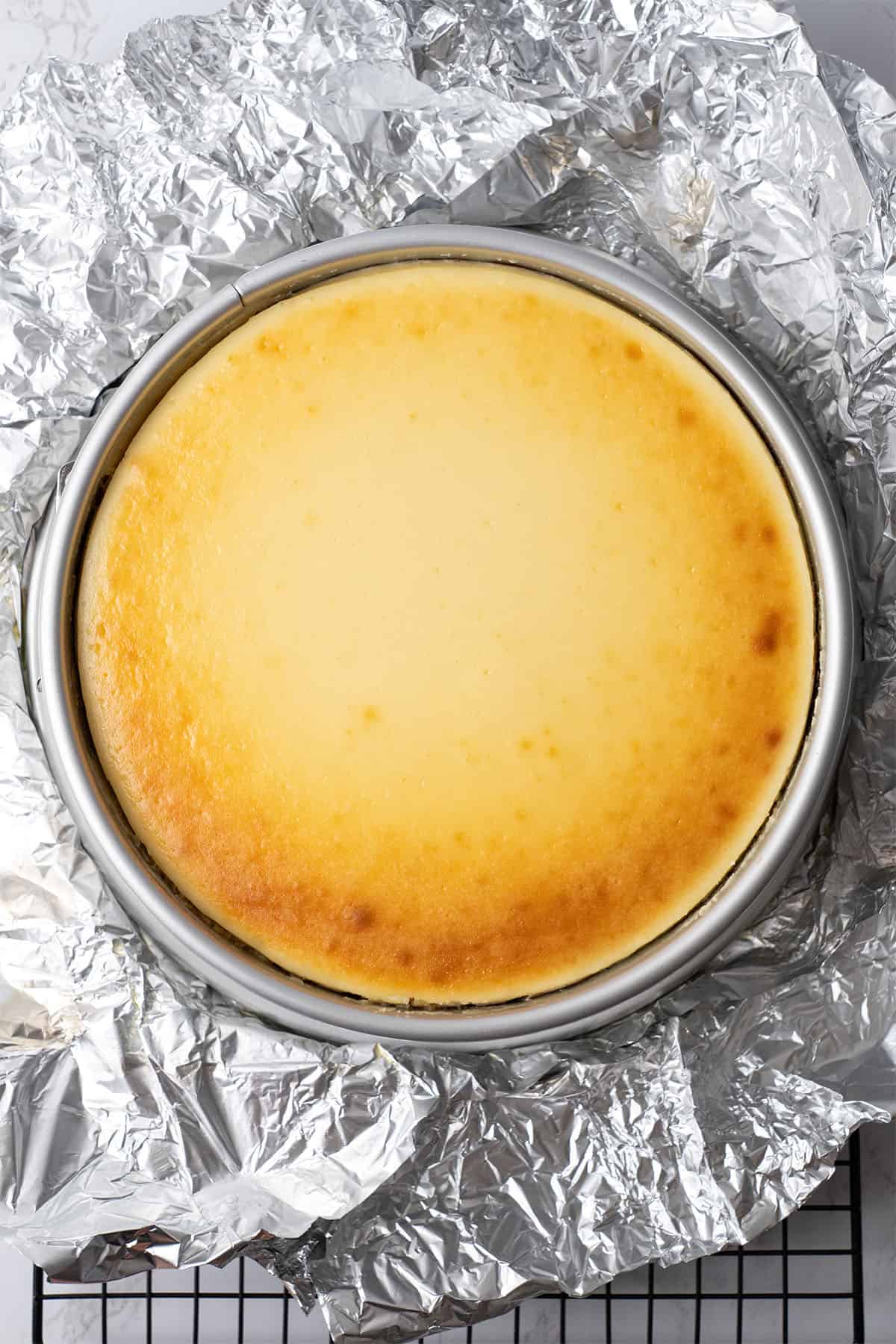
Once it is at room temperature, place the springform into the fridge with some plastic food wrap over the top. Chill the baked New York cheesecake for at least 6 hours or overnight to set fully.
Now it is time to enjoy it! Take it out of the fridge and release it from the springform pan. Use a hot knife to get clean slices.
Storing & Freezing
Leftover New York cheesecake can be stored in an airtight container or covered in the fridge for 2-3 days.
You can also freeze slices or a whole cheesecake! To freeze a whole New York cheesecake, keep it in its springform pan and wrap it in plastic food wrap. Wait for it to completely chill first. To freeze individual slices, double wrap them tightly in plastic wrap and aluminum foil.
They will last in the freezer for up to 2–3 months, and it is best to let them thaw overnight in the fridge when you're ready to enjoy.
Flavor Variations
I like to use ginger snaps mixed into the Graham crackers for a spicy hit in the crust that works particularly well during the holidays! Partially swap some crackers for walnuts, pecans, or even pretzels for added variety and crunch. You can also add more flavor and variety by using Oreos or Lotus Biscoff cookies in the crust.
To add some other flavors to the batter, try some ground spices. Create a chai spice New York cheesecake by combining cinnamon, cardamom, ginger, cloves, and black pepper with the sugar. This also works well with orange juice and zest instead of lemon.
Or, make a tropical variation by using lime zest in the batter and garnishing the cheesecake with some fresh coconut! Once you master the recipe, there are lots of ways to adapt it.
I like to serve cheesecake with fresh berries, strawberry compote, homemade blueberry pie filling, or sometimes a little bit of caramel sauce.
Ingredient Substitutions
If you cannot find Graham crackers, you can use other cookies like digestive biscuits or vanilla wafers. Swap any of these cookies for gluten-free options to make the crust gluten-free.
This crust will work with vegan butter or other plant-based options; however, it has to be a fat that is solid at room temperature.
In the cheesecake batter, you can partially substitute the cream cheese for mascarpone or ricotta, but it will make the result less tangy and dense. You can use Greek yogurt or crème fraîche in place of sour cream, but it has slightly more acidity, which will be reflected in the final taste. Heavy cream will also work as a substitute, but it will have far less tanginess, which is a key flavor in New York cheesecake!
Completely transforming this into a vegan cheesecake will be difficult, and I cannot provide exact measurements. I suggest experimenting with egg substitutes like silken tofu and vegan cream cheese.
Expert Tips To Make New York Cheesecake
- Don't overprocess the Graham cracker crumbs into a paste, or you will end up with cookie butter. Stop when there is a coarse sand-like consistency.
- Melt the butter gently in the microwave or on the stovetop, then let it cool slightly before mixing it into the crumbs; otherwise, it will become greasy.
- Take the cream cheese, eggs, and sour cream out of the fridge before you make this recipe so that they are all at room temperature. This allows for proper emulsification, and you'll get better results. If the cream cheese is too cold, you will get lumps.
- Lightly whisk the eggs with a fork before pouring them into the batter, or it will take too long to mix them in.
- There is no flour in this New York cheesecake recipe, because I have found it is not needed and can also be difficult to mix into the very liquid batter without going lumpy.
- Don't skip the salt in the crust or the batter! It is needed to balance sweetness and enhance flavors.
- Do not be tempted to crank the oven temperature higher; it needs to be low to bake evenly and prevent sinking or cracking.
- Right after taking the cheesecake out of the oven, run a thin knife around the inside edge of the pan to prevent the cheesecake from sticking as it cools=contracts. This will also make it easier to remove when the time comes.
What Equipment To Use
Always weigh your ingredients by the gram using a digital scale for precision rather than measuring by volume. Baking is a science and requires precision!
Blitz your crackers in a food processor to get a more even crumb. Or use a rolling pin, which can be excellent stress relief!
Combine ingredients in a stand mixer so that you can control the speed and keep it low.
I prefer an 8-inch springform to keep the cheesecake nice and tall, but you can use a 9-inch as well.
All ovens vary, so ensure you're baking at the right temperature by using a digital oven thermometer. If your oven is too hot, you risk the cheesecake overbaking.
Try Some Of My Other Cheesecakes
If you love cheesecakes as much as I do, try some of my other cheesecake recipes:
- Japanese cheesecake
- Baklava cheesecake
- Basque Burnt cheesecake
- Pistachio cheesecake
- No-bake strawberry cheesecake
And for even more delicious desserts to enjoy with friends and family, check out my roundup of the best unique desserts.
Have You Tried This Recipe?
Please leave a 5-star ⭐️⭐️⭐️⭐️⭐️ rating on the recipe card and consider leaving a comment as well!
New York Cheesecake
Equipment
Ingredients
New York Cheesecake
Crust
- 300 g (2½ cups) Graham Cracker Crumbs 300 g = 10.5 oz = approx. 20 sleeves
- 120 g (½ cups) Unsalted butter
- Pinch of salt
Cheesecake batter
- 900 g (4 cups) Cream cheese full fat Philadephia at room temperature
- 250 g (1¼ cups) Granulated sugar
- 230 g (1 cups) Sour cream full-fat at room temperature
- 1 tablespoon Lemon juice freshly squeezed
- 3 teaspoon Vanilla extract
- Pinch of salt
- 4 Eggs lightly whisked at room temperature
US customary cup measurement is an indicative figure only. Measure the ingredients with a digital scale by weight (gram). Baking is art but also science which requires precision and accuracy.
Instructions
Crust
- Melt the butter gently in the microwave or on the stovetop until fully liquid, then set aside to cool slightly. Crush the graham crackers into fine crumbs in a food processor or by placing them in a zip bag and rolling with a pin.
- Stir a pinch of salt into the crumbs, then add the melted butter and mix until the texture resembles wet sand.
- Press the mixture evenly into the bottom and sides of an ungreased 8- or 9-inch springform pan using the back of a spoon or measuring cup. Apply firm, even pressure without over-packing, then chill in the fridge/freezer while preparing the filling.
- Bake the crust in a preheated 350°F (175°C) oven for 8–10 minutes, until lightly golden and set. Remove it from the oven and let the crust cool completely in the pan before pouring in the cheesecake batter.
Water bath preparation
- Preheat the oven to 325°F (165°C), no fan, and prepare a roasting pan for the water bath that is bigger in size, than your springform pan. Set it aside.
- Wrap the outside of the springform pan containing the crust in a mininum of 4-5 layers of heavy-duty aluminum foil, covering the bottom and sides to prevent leaks. For extra protection, you can also place the foil-wrapped pan inside a large oven-safe bag.
Cheesecake batter
- Place the room temperature full-fat cream cheese into the bowl of a stand mixer fitted with the paddle attachment. Cream the cream cheese on medium-low speed for 2 minutes until smooth and lump-free. Scrape down the sides and bottom of the bowl.
- Add the granulated sugar and continue creaming on medium-low speed for 2 minutes until the mixture looks silky and no longer grainy. Scrape down the bowl again.
- Add the room temperature sour cream, freshly squeezed lemon juice, vanilla, and a pinch of salt. Mix on low speed just until combined, about 10 seconds. Scrape down the bowl once more.
- Lightly whisk the room-temperature eggs in a small bowl until just blended. With the mixer running on low speed, slowly add the eggs. Mix only until fully incorporated, about 30 seconds. Do not whip the batter.
Assemble the cheesecake
- Once the batter is smooth and uniform, stop mixing. Pour the batter into the baked crust, then tap the form on the counter a few times to release air bubbles, and then move it onto the roasting pan.
- Bring a kettle of water to a boil. Carefully pour the hot water into the roasting pan until it reaches about thirdway up the sides of the springform pan.
- Transfer the roasting pan with the cheesecake and water into the oven.
- Bake the cheesecake in the prepared water bath at 325°F (165°C) for 60–75 minutes, until the edges are set but the center is still slightly jiggly when gently shaken. Do not open the oven door during baking.
- After the baking time is over, turn off the oven but leave the cheesecake inside the closed oven for another 60 minutes. This gentle cooling step helps prevent cracks. After 60 minutes, remove the roasting pan from the oven and carefully lift the cheesecake out of the water bath. Unwrap the foil and place the pan on a wire rack. Let it cool at room temperature for about 1 hour.
- Once the cheesecake has cooled to room temperature, place it in the refrigerator to chill for at least 6 hours, or overnight, until fully set. Only after chilling, release the springform pan and remove the cheesecake carefully.
- Remove the cheesecake from the refrigerator and let it sit at room temperature for about 20–30 minutes before slicing. Use a sharp knife dipped in hot water and wiped clean between each cut for neat slices. Serve plain or with toppings such as fresh fruit, fruit compote, whipped cream, chocolate ganache, or caramel sauce.
- StoringOnce the cheesecake has chilled and set, cover any leftover with plastic wrap or aluminum foil, and store it in the refrigerator for up to 3–4 days to maintain freshness and prevent it from drying out.FreezingAfter the cheesecake has fully chilled, wrap the whole cake (still in the springform pan) or individual slices tightly in plastic wrap, then add a layer of aluminum foil for protection; freeze for up to 2–3 months, and when ready to serve, transfer to the refrigerator to thaw slowly overnight for the best texture.
Notes
- Measure your ingredients with a digital scale for accuracy.
- Do not skip the salt; it will balance the flavors.
- Use good quality 82% unsalted butter (European style).
- Feel fee to substitute Graham cracker with Digestive biscuits.
- The crust is sweet enough, but for people with an extra sweet tooth, feel free to add 1-2 tablespoons of granulated sugar to this recipe.
- For the cheesecake batter, use full-fat ingredients at room temperature.
- Freshly squeezed lemon juice gives better flavor than bottled.
- Good quality vanilla extract or paste makes a big difference.
- A pinch of salt balances the sweetness and enhances flavor.
- Make sure you read my step-by-step instructions in the post above with all the details of how to make this cheesecake crust. A short recipe alone is not able to cover all the necessary details and science behind baking.
- The butter should be fully runny so it mixes well with the crumbs, but not hot, otherwise it can make the mixture greasy.
- When processing graham crackers in a food processor, stop as soon as you have fine, sandy crumbs. If you overprocess, the crackers can release too much fat and turn pasty, almost like cookie butter.
- While preparing the crust, make sure that you press the crumbs firmly and evenly into the sides and the bottom of your springform.
- To avoid a crust that’s too hard, don’t over-pack the crumbs. Firm pressure is enough — pressing too tightly can make it difficult to cut clean slices later.
- Use the paddle attachment, not the whisk, to avoid whipping air into the batter.
- Mix on low speed and scrape down the bowl often for a smooth, lump-free texture.
- Do not overmix after adding eggs — this prevents excess air and cracks.
- Always bake the cheesecake in a water bath for gentle, even heat.
- Allow slow cooling in the oven before chilling to avoid sinking or splitting.
- Do not cut the cheesecake until it has fully set in the refrigerator.
Irina
THIS!! I was always scared to try baking New York cheesecake but with your recipe, everything went so smooth and it turned out perfect. Even my family was surprised about my baking skills they didn't know I have:) I will be forever thankful for your wonderful website.