
Japanese cheesecake is a light, fluffy, and slightly sweet dessert that is a cross between a traditional cheesecake and a sponge cake. Unlike regular cheesecake, which is rich and dense, Japanese cheesecake is airy and smooth, with a soft, jiggly texture.

Best Japanese cheesecake recipe
Japanese jiggly cheesecake (also known as a soufflé style cheesecake or cotton cheesecake) has a characteristically wobbly, airy texture similar to a soufflé when fresh out of the oven and a chiffon cake-like texture when chilled. We are also looking for a tall, evenly risen fluffy cake with no cracks on the top that holds its shape.
The best recipe for jiggly Japanese cheesecake will show you the secrets to getting this right and also how to avoid common mistakes. Baking is a science, and when making delicate pastries like Japanese cheesecake, eclairs, or macarons, there can be trial and error and adjustments for each baker in their home kitchen.
Keep reading for all my professional tips and tricks, plus the troubleshooting section!
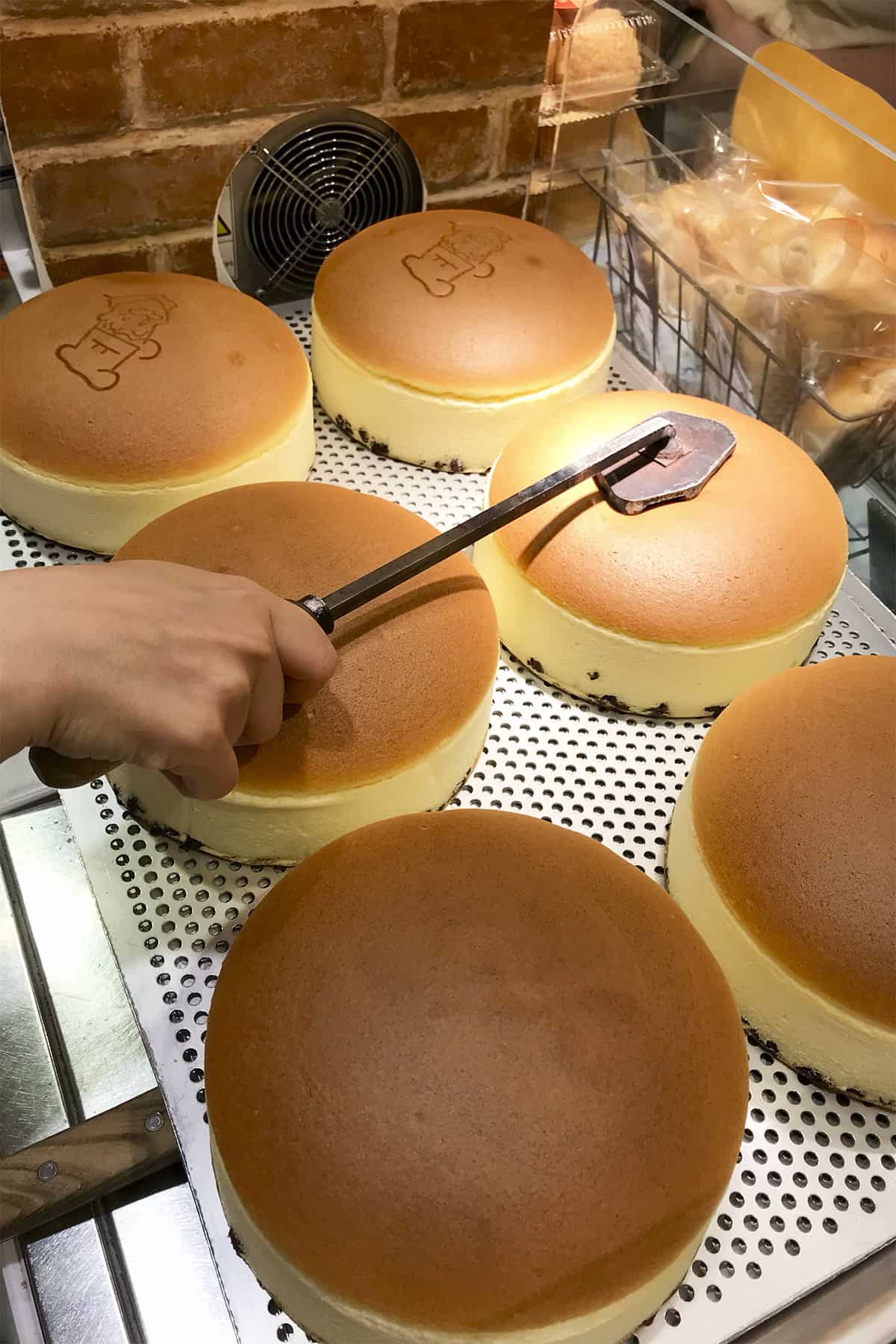
Katalin's experience trying the famous Ricuro's cheesecake in Japan
The recipe for Japanese jiggly cheesecake was first created by Japanese chef Tomotaro Kuzuno, inspired by käsekuchen cheesecake (a German variant) during a trip to Berlin in the 1960s.
When I visited Japan in 2019, I tried the famous Ricuro´s cheesecake in Osaka. I immediately decided to bring this fluffy Japanese cheesecake recipe to you so that you can make it at home no matter where you live in the world!
The original Ricuro cheesecake has raisins on the bottom, as you can see in my photo. However, it is not strictly necessary for this type of cheesecake from a baking technique point of view.
I´ve texted this recipe more times than I can count, using different ovens, different ingredient ratios, different baking times, and baking temperatures. Let´s start!

Ingredients
You'll need basic ingredients like cream cheese, butter, milk, flour, cornstarch, and eggs for this recipe.
For exact ingredient quantities, visit the original Japanese cheesecake recipe at Spatula Desserts.
Make the cheesecake batter
First, start with making a bain marie (a water bath, which is also used to make dishes like Crème brûlée, and promotes even baking and prevents cracks). I recommend using a baking tin a few inches larger than the one you will use for the cheesecake. Fill it to ⅓ with water.
Preheat your oven to 150C / 300F with the water bath inside. Prepare your cheesecake baking pan by lining it with parchment paper. I am using a 20cm / 8-inch cake tin.
Separate your room-temperature eggs and ensure no egg yolk is in the egg white. If your granulated sugar has a larger grain, pulse blend it to grind it down further, then measure it afterward.
Heat the cream cheese with the unsalted butter and milk in a saucepan over low heat. Stir just until the mixture is smooth, then remove it from the heat.

Sift the cornstarch, salt, and flour together (it is best to use low protein content pastry flour). Mix it into the cream cheese mixture until the batter is smooth with no lumps.
Then, one by one, add the egg yolks to the cream cheese mixture, mixing thoroughly after each addition.

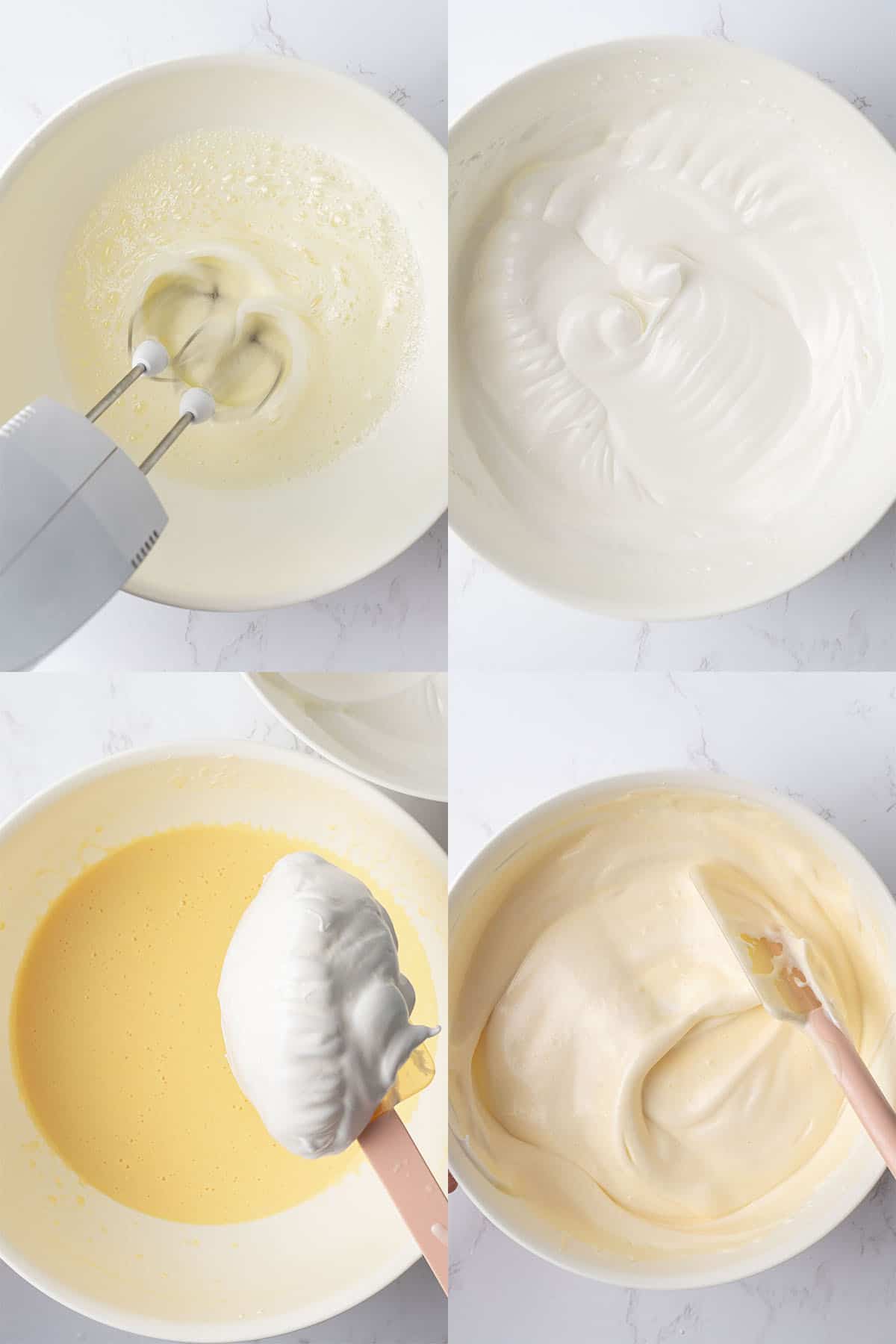
Whip the egg whites on low speed in a stand mixer or using an electric hand mixer. Increase the mixer speed and gradually add the sugar one tablespoon at a time.
Continue until the mixture forms soft peaks. Do not whip to a stiff peak stage, as this can cause the cheesecake to deflate.
Gently fold the whipped meringue into the cream cheese batter with a rubber spatula, ensuring the mixture stays light and fluffy.
For exact ingredient quantities, visit the original Japanese cheesecake recipe at Spatula Desserts.
Bake and pray
As you can guess based on the title of this section, baking is the most difficult part of making Japanese cheesecake.
Pour the jiggly Japanese cheesecake batter into the prepared cake pan and place it in the preheated water bath in the oven to bake.
The baking will happen in 3 stages;
Bake at 150°C (300°F) for 30 minutes with the oven door closed.
Then, continue baking at the same temperature for another 20 minutes but with the oven door slightly open.
Finish the baking for another 20 minutes at 150°C (300°F) with the oven door closed. Use a digital oven thermometer, if available, to confirm accuracy.
Monitor your cheesecake in the oven if you are baking it the first time. Aim for a gentle rise to avoid cracking on the surface, and look for a golden-brown top—fully colored but not burnt. Adjust the oven temperature if needed to achieve this.
The cheesecake is done when it has a golden-brown top, a slight jiggle in the center, and feels soft and springy to the touch.
Remove it from the oven once you are confident that the cheesecake is well baked. Flip it onto a plate, then flip it back onto another plate to keep its shape. Serve immediately while warm and jiggly.
Please note that with water inside the oven, you have to be super careful with the baking temperature. If it is lower than recommended, your cheesecake might stay raw even after 1,5h.
For exact ingredient quantities, visit the original Japanese cheesecake recipe at Spatula Desserts.

Storing and freezing
Jiggly Japanese cheesecake's airy texture is best enjoyed fresh. Any leftover cheesecake can be stored in an air-tight container in the fridge for 2-3 days. I do not recommend freezing Japanese cheesecake as this will affect the texture.

Expert tips to make Japanese cheesecake
- Use whole milk and ensure the cream cheese is full-fat and good quality. I recommend using Philadelphia (and try some of these other cream cheese desserts, too!)
- Use good quality, unsalted European-style butter with a high-fat content. I use 82% butter.
- Try to look for low-protein content pastry flour for the best results.
- While adding salt might seem strange, it brings out the flavor and balances the sweetness, so don't skip it!
- Work firmly but gently with a rubber spatula to fold the meringue into the cheesecake batter. Cut through the center of the mixture, then sweep along the sides of the bowl, lifting the batter gently and rotating the bowl. Avoid deflating the meringue to keep the Japanese cheesecake fluffy.
- The oven temperature is critical in this recipe. Preheat the oven with the water bath (bain-marie) inside to create a gentle and consistent heat around the cheesecake, and use an oven thermometer.
- Knowing when to take the Japanese cheesecake out of the oven is where you might need to experiment and run 1-2 tests. Practice makes perfect!
- Over time, as the cheesecake cools, it will further set into a chiffon cake-like consistency. It will lose its jiggly texture, and some wrinkles might appear on the top, which is normal and exactly how the Japanese cheesecake I tried in Osaka also behaved.
For exact ingredient quantities, visit the original Japanese cheesecake recipe at Spatula Desserts.

Troubleshooting
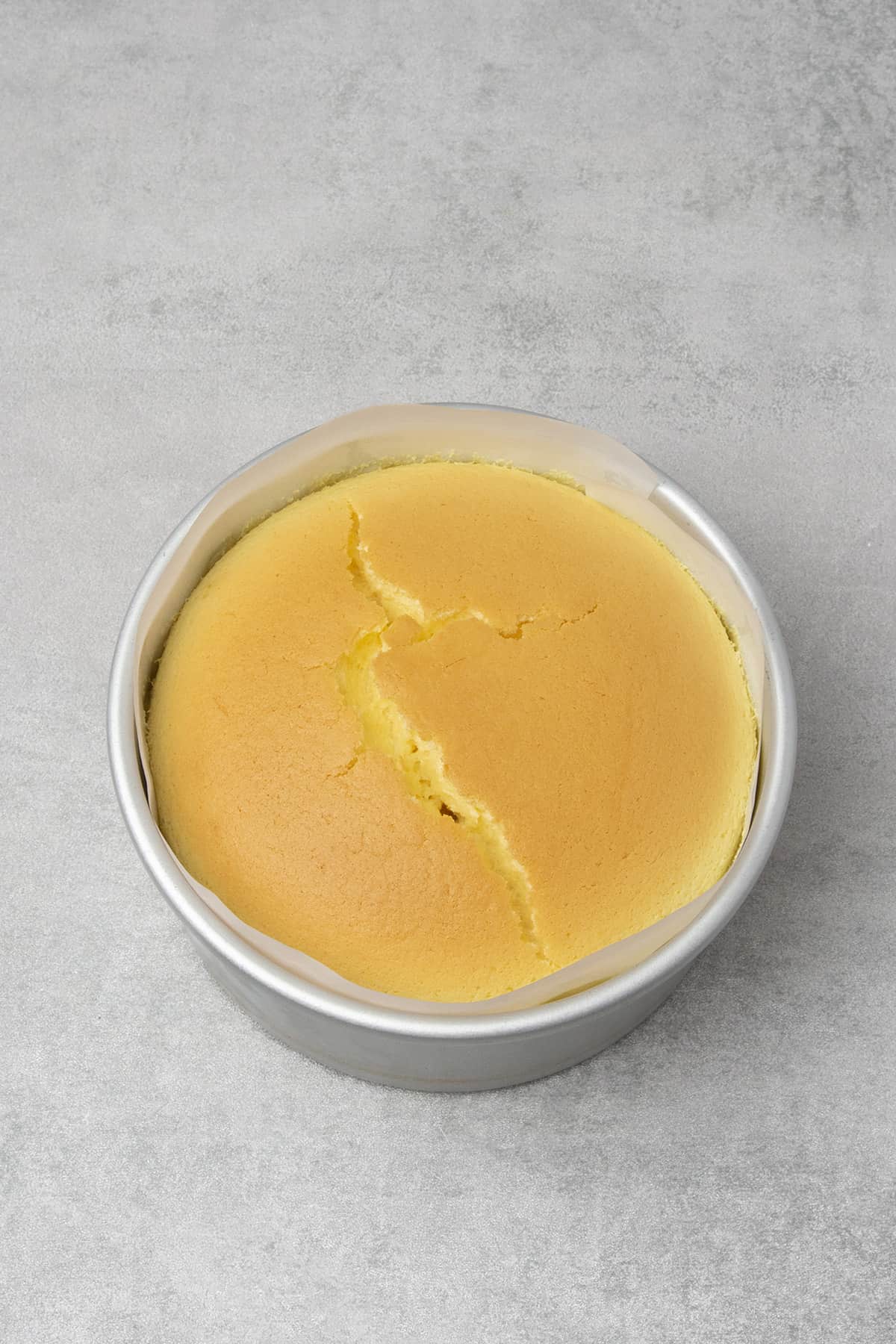
Your cheesecake cracked - The most common issue is Japanese cheesecake cracking; the main reason for cracks is the oven temperature being too high. This causes the cheesecake to rise too quickly and crack. Try baking your cheesecake at a slightly lower temperature next time.
The cheesecake is burnt on the top - This is also likely caused by the oven temperature being too high and fierce. Test your oven, and use an oven thermometer to ensure you are baking at the right temperature. Try baking your cheesecake at a slightly lower temperature next time, or move the cheesecake towards the bottom of your oven.
The cheesecake is raw in the middle - the cheesecake probably would have needed more time in the oven. Make sure you preheat the oven with the water bath inside. The cheesecake is done when the surface is golden brown, slightly jiggly in the middle, and soft and springy to the touch. Try baking your cheesecake longer next time, and make sure that your oven temperature is correct.
The cheesecake deflates - This issue is mainly caused by under-baked cheesecake, so see the points above. It can also be down to measuring the ingredients incorrectly, e.g., not adding enough flour. Make sure you weigh ingredients by the gram using a digital scale.
What equipment to use
I recommend using a lined 20 cm / 8-inch round cake pan. Avoid using a loose base spring form pan, as this can have issues with the water bath. If you do use a springform pan for the cheesecake - as I´ve done it - , wrap it thoroughly with aluminum foil to prevent water from getting into it.
Use an Electric hand mixer and a Rubber spatula to combine the ingredients.
Always weigh ingredients by the gram using a Digital scale for accuracy and consistency. I also recommend investing in a Digital oven thermometer, as the baking temperature for this jiggly Japanese cheesecake recipe is absolutely critical.
More cheesecake recipes
- Baklava cheesecake
- Burnt Basque cheesecake
- Pistachio cheesecake
- No-bake raspberry cheesecake
- Lemonade cheesecake
Get More Recipes

Secretly easy to make, beautiful desserts E-book is available now!
Get the recipes now: Yes, I want to bake beautiful desserts!
Leave a Reply