
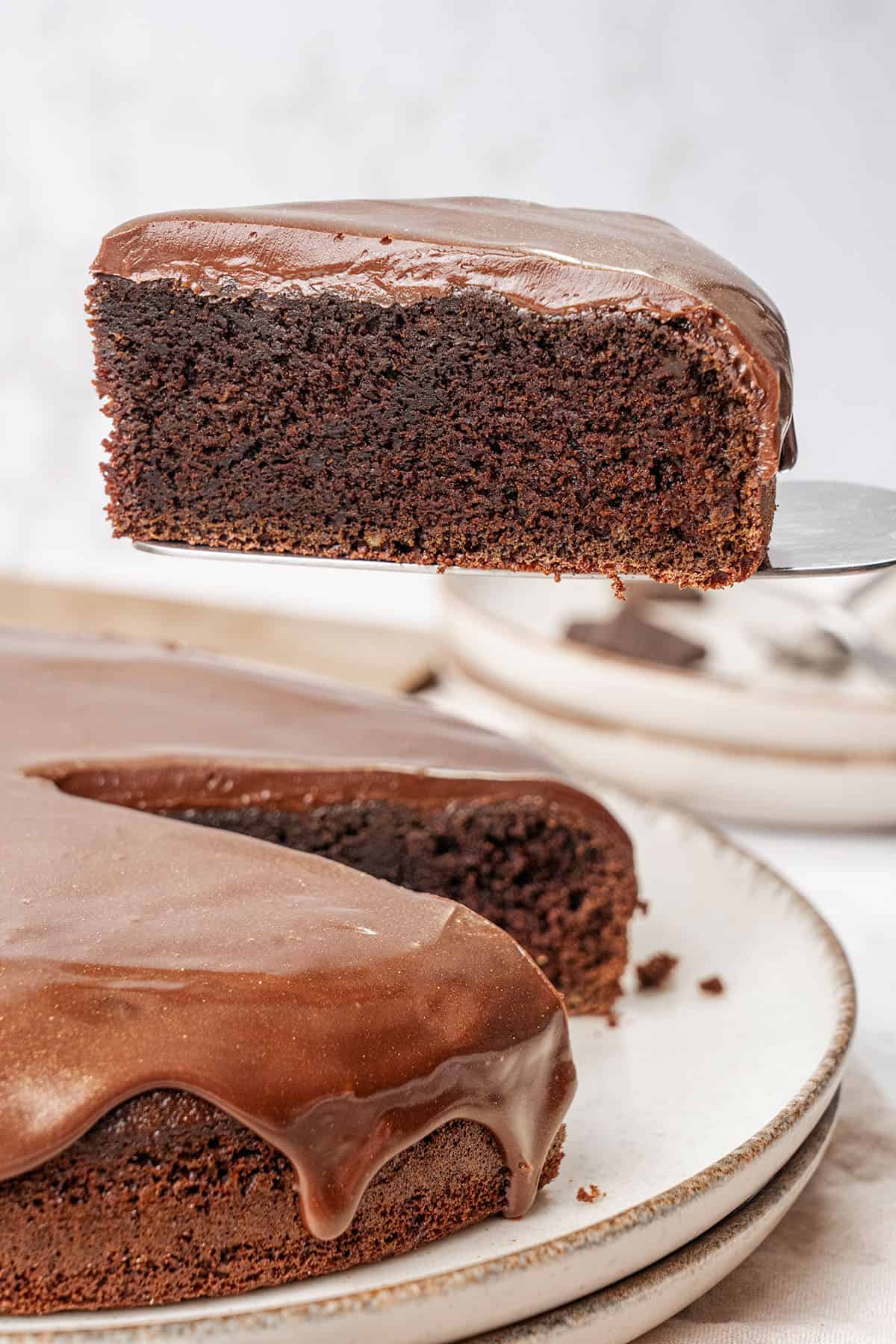
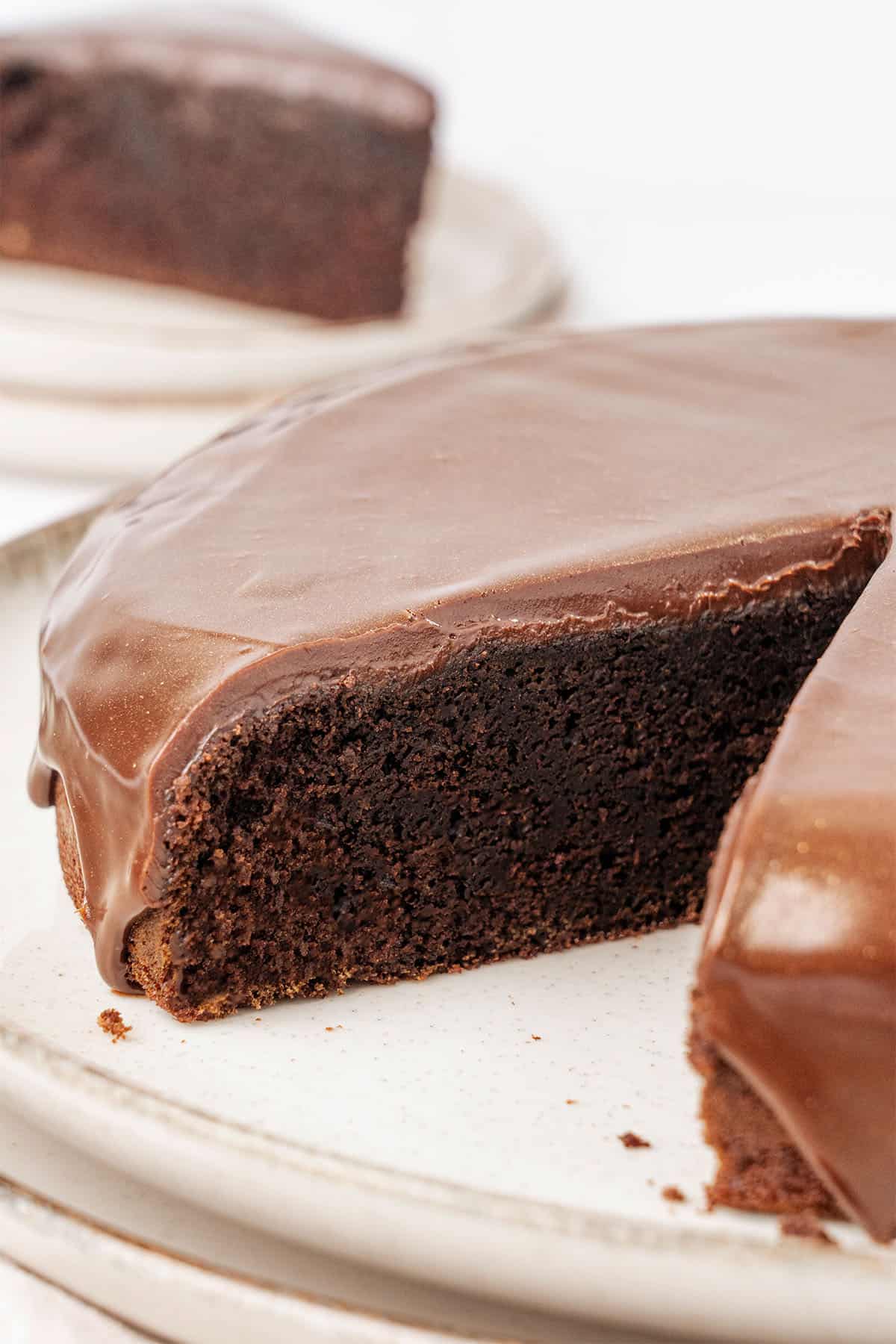
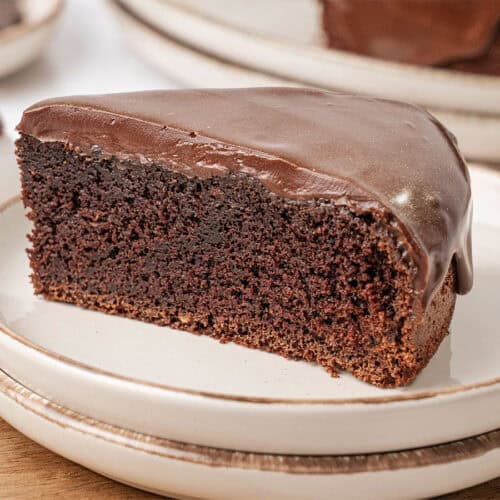
This easy chocolate ganache cake is a single layer of extra-moist chocolate sponge topped with a glossy, silky chocolate ganache. It comes together in about an hour, looks beautifully put together, and tastes far better than anything store-bought, which makes it my go-to for last-minute guests and busy weeknights.
This recipe has been on Spatula Desserts since 2022. Since then, I've updated the post with new photos, helpful baking tips, and ingredient substitution options based on your questions.
Best Chocolate Ganache Cake Recipe
This is not a towering showstopper, and it is not meant to be. It is the cake I make when guests are coming at short notice, or when I want a homemade dessert without spending the afternoon in the kitchen. It takes about 10 minutes of hands-on work, and the ganache is made while the cake bakes, so the whole thing comes together in about an hour.
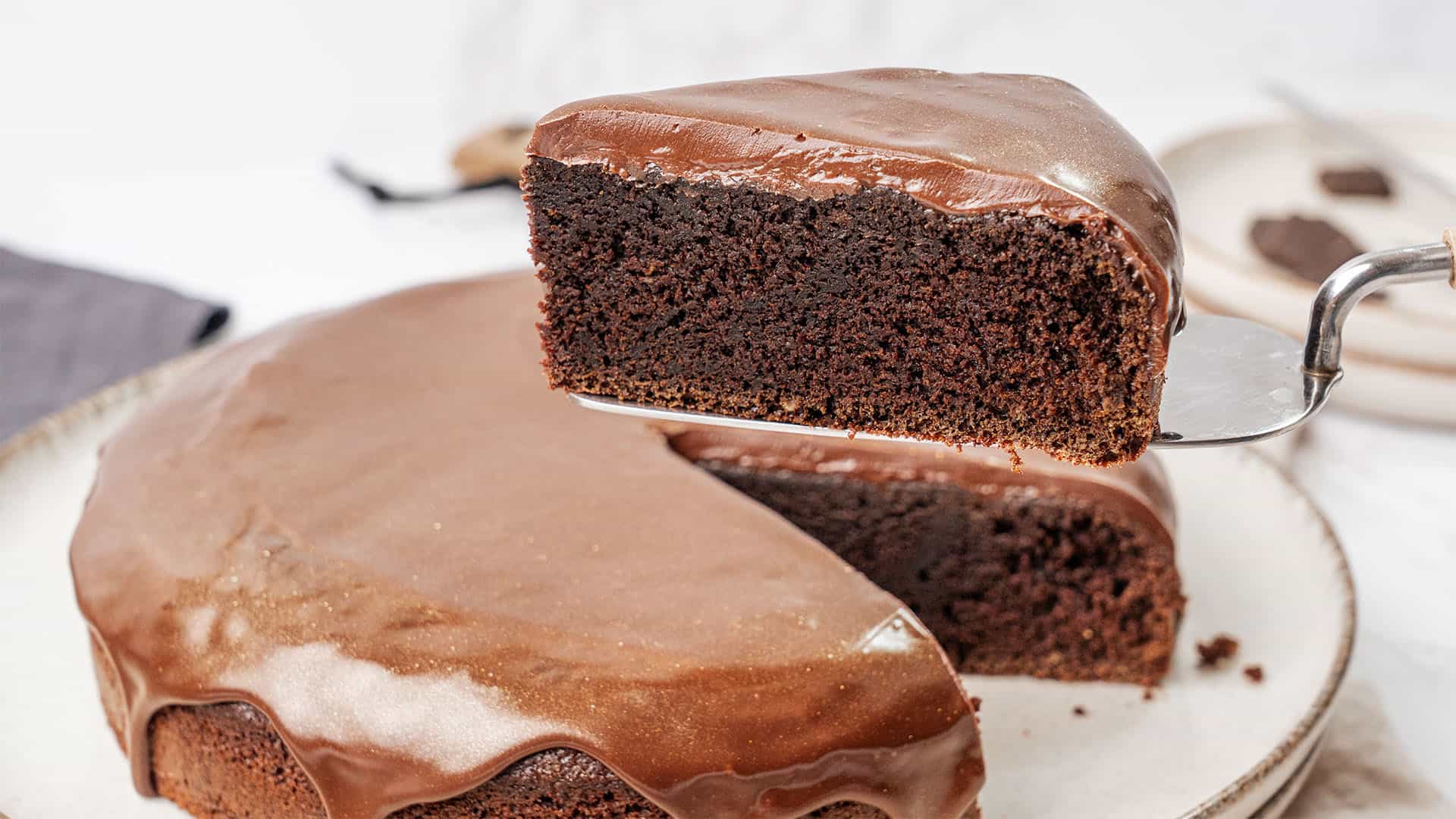
The sponge is my chocolate sponge cake, mixed in one bowl. It is extra moist, stays soft for days, and tastes deeply of chocolate. Instead of frosting, it is finished with a simple chocolate ganache that sets into a smooth, glossy layer with pretty drips down the sides.
Made from scratch with good chocolate, it's much more flavorful than a store-bought cake, yet just as easy as opening a box. For a taller, more celebratory version, see my triple chocolate cake.
Katalin's Key Take on Chocolate Frosting vs. Chocolate Ganache
People often use the two names interchangeably, but they are very different things.
Chocolate frosting is a sweet mix of butter, sugar, and cocoa powder or chocolate. It is whipped until fluffy and pipeable, and it comes in many forms, such as chocolate buttercream, chocolate fudge frosting, or chocolate whipped cream frosting. It is mainly used to fill, cover, and decorate cakes and cupcakes.
Chocolate ganache is simply chocolate and heavy cream, sometimes with a little butter for extra shine. It is richer and creamier, tastes of pure chocolate rather than sugar, and its thickness can be adjusted by changing the ratio of chocolate to cream: more cream for a pourable glaze or drip, more chocolate for a firm filling or truffles.
For this cake, a 1:1 ganache is the perfect choice. It needs no mixer, comes together in a few minutes while the cake bakes, sets into a smooth, glossy layer, and lets the chocolate flavor shine without extra sweetness. If you would rather have a fluffy, pipeable topping, try one of the above-mentioned options or my whipped chocolate ganache frosting instead.
Bake the Chocolate Sponge
Preheat the oven to 200°C / 390°F, without the fan, and line an 8-inch (20 cm) springform or round pan with parchment paper. Make sure the eggs, milk, and coffee are at room temperature.
In a large bowl, whisk the eggs, oil, both sugars, milk, and coffee with an electric hand mixer for one to two minutes. Sift the flour, Dutch-processed cocoa powder, baking powder, baking soda, and salt into the bowl, and fold everything together with a rubber spatula just until no flour is visible. The batter will be very thin; that is exactly right, so do not add more flour.

Pour the batter into the pan, place it in the oven, and lower the temperature to 175°C / 350°F. Bake for 40 to 50 minutes, checking at 40 minutes, until a skewer inserted in the center comes out clean and the sides start to pull away from the pan.

Why so long? This single 8-inch cake uses the same batter as three 6-inch layers, so it is taller than the layers in a layered cake. The hot start gives it a good rise, and the lower temperature lets the center bake through without drying the edges. The wet, oil-based batter keeps the thick crumb soft and moist all the way through.
Cool the cake on a rack, then chill it in the fridge until it is cold before applying the ganache.

Make the Ganache While the Cake Bakes
Make the ganache while the cake bakes, so it has time to cool to the right temperature.
Chop the semi-sweet chocolate finely, or use chocolate callets, and place it in a heatproof bowl. Heat the cream until it just begins to simmer, then pour it over the chocolate. Leave it for a minute without stirring, so the heat melts the chocolate evenly, then stir gently from the center outwards until smooth and glossy. Stir in the soft butter for extra shine.

Let the ganache cool to about 22°C / 72°F, a comfortable room temperature. To check it, drizzle a little onto a plate: it should flow slowly and hold a soft ribbon, neither watery nor stiff.
Glaze the Cake
Place the chilled cake on a serving plate. If the top has domed, turn the cake upside down so the flat base becomes the top; this gives the ganache an even surface and stops it running off one side.
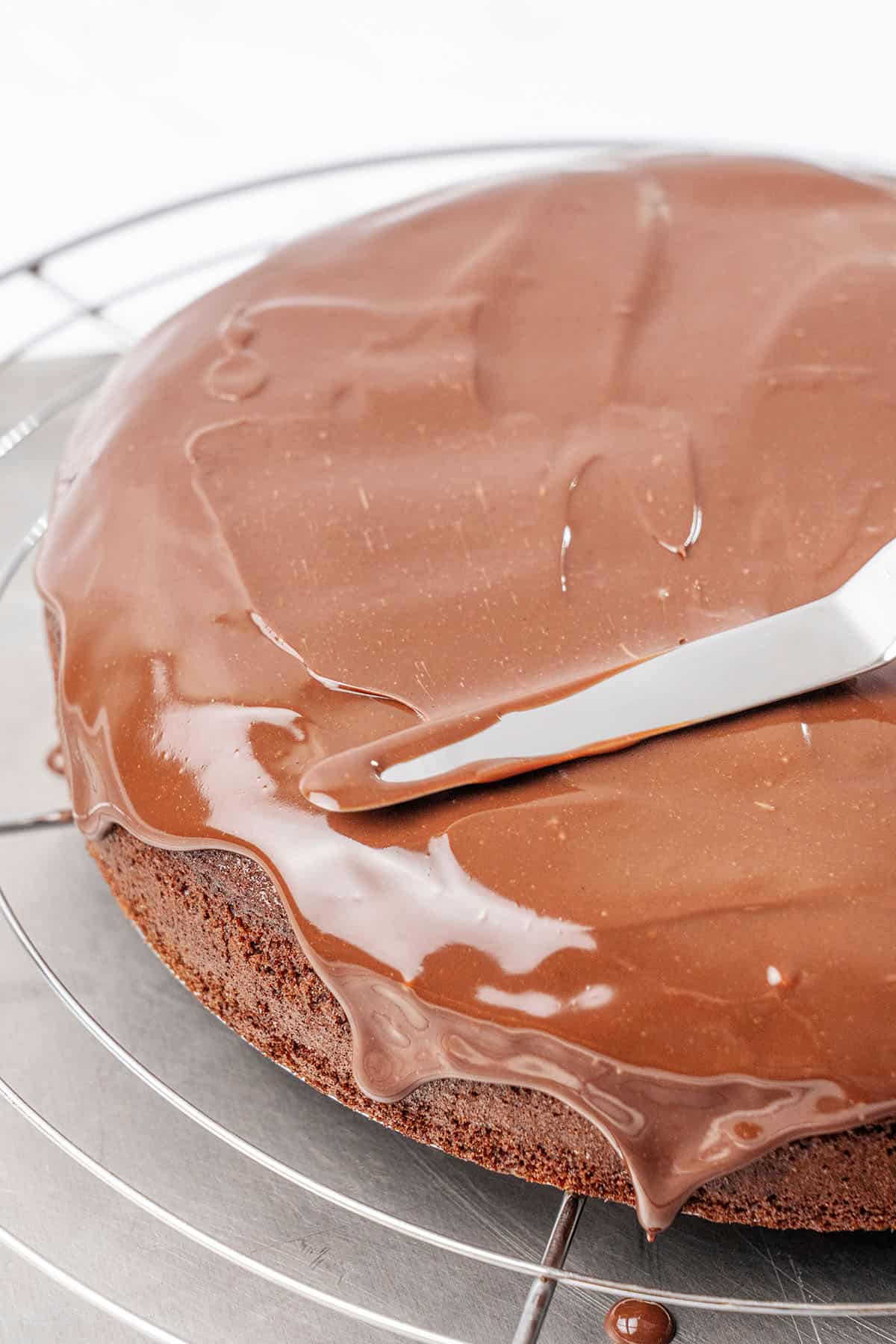
Pour the ganache onto the center of the cake and gently spread it towards the edges with an offset spatula, letting it drip down the sides. You can also use a piping bag for more controlled drips. Because the cake is cold, the drips set quickly and stay neat.
Leave it for 10 minutes for the ganache to set, then slice and serve.
Storage & Make-Ahead
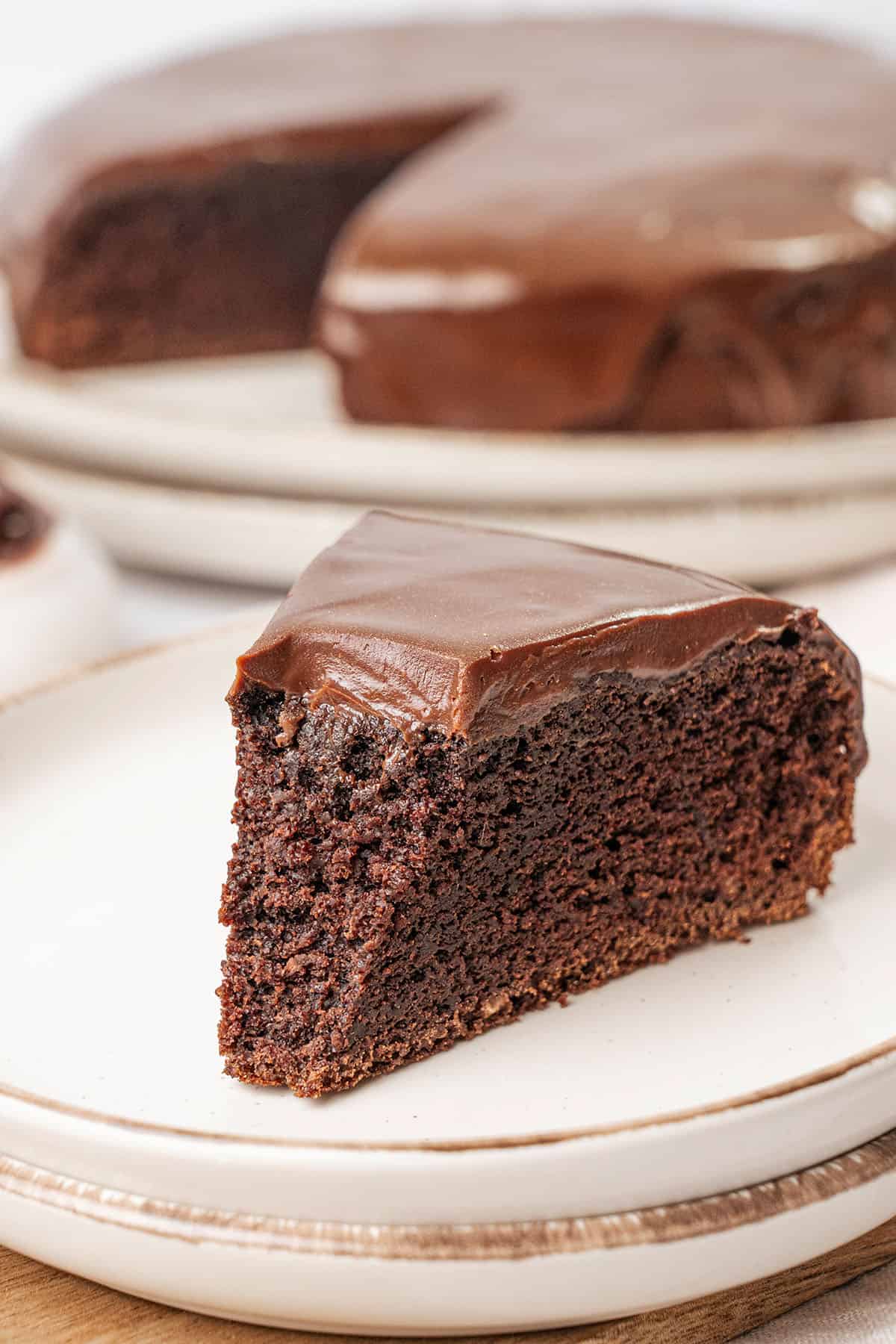
Store the cake covered at room temperature for 2 to 3 days, as long as your kitchen is cool. The dark chocolate ganache keeps well, and the cake keeps its shine.
If your kitchen is warm, or you want it to last longer, keep it in the fridge for up to 5 days and take it out 30 minutes before serving. The ganache sets firmer in the fridge but still slices cleanly; it will look slightly less glossy, so for the best shine, glaze the cake on the day you serve it.
The sponge can be baked ahead: wrap it tightly and keep it in the fridge for up to 5 days, or freeze it for up to 3 months. Thaw it, then glaze it on the day. I do not recommend freezing the glazed cake, as the ganache is at its best freshly poured.
Flavor Variations
For a sweeter, creamier topping, make the ganache with milk or white chocolate instead of dark. Both contain less cocoa butter, so use more chocolate to get the same consistency.
You can replace some part of the flour with almond or hazelnut flour, just as I do in my Ferrero Rocher cake.
Try making chocolate orange cake; add finely grated orange zest to the batter. For a warm, spiced version, add a little ground cinnamon or even a pinch of chili powder to the dry ingredients.
For a fruity twist, spread a thin layer of apricot or raspberry jam over the cake before pouring the ganache, in the style of my Austrian Sacher torte.
If you want to serve the cake with frosting instead of chocolate ganache, I have plenty of options in my frosting category.
Ingredient Substitutions
For a dairy-free cake, replace the milk in the sponge with oat milk or another plant-based milk. For the ganache, full-fat coconut cream is the most reliable replacement for heavy cream, used with dairy-free dark chocolate and vegan butter. The flavor will be slightly different, but the method is the same.
The eggs give the sponge its structure. You can try one of my egg substitutes, but expect a different texture and taste.
Any neutral oil can replace the vegetable oil; see my vegetable oil substitute guide. Replace the coffee with the same amount of water.
If you only have chocolate chips for the ganache, check their cocoa percentage. Chips usually contain less cocoa butter and make a thinner, duller ganache, so use a little less cream or a little more chocolate. Do not replace the heavy cream with sour cream; it will not make a proper ganache.
For a gluten-free cake, the sponge would need to be reformulated rather than simply swapping the flour. For any other ingredient, browse my substitute guides.
Expert Tips to Make Chocolate Ganache Cake
- To bring eggs to room temperature quickly, place them in a bowl of hot tap water for 5 minutes. The eggs, milk, and coffee must all be at room temperature, or the batter will not emulsify properly.
- Use freshly brewed coffee. It makes the chocolate taste deeper and richer, and you will not taste coffee in the finished cake.
- Use unsweetened, Dutch-processed cocoa powder and sift it. It gives a darker color and smoother flavor, and it reacts with the baking soda to help the cake rise.
- Keep the mix of brown and white sugar for a moister, more tender crumb, and use fine salt so it disperses evenly; do not skip it.
- Bake the batter as soon as it is mixed, and start checking at 40 minutes. Ovens vary, and an overbaked chocolate cake turns dry.
- For the ganache, use good-quality chocolate with a high cocoa butter content, such as Callebaut 811 callets. It melts smoothly and sets glossy.
- Never let the cream boil. Boiling cream can make the ganache split or turn grainy; a gentle simmer is just enough to melt the chocolate.
- If the ganache splits or looks grainy, stir in a spoonful of warm cream, or blend it briefly with a stick blender to bring it back together. If it is too thick, warm it gently for a few seconds; if it is too thin, let it cool a little longer.
- Pour the ganache at about 22°C / 72°F onto a cold cake. If it's too warm, it runs straight off; if it's too cold, it will not flow into smooth drips.
- For the glossiest finish, glaze the cake on the day you serve it.
What Equipment to Use
A digital scale is essential for accurate measuring, and a digital oven thermometer makes sure your oven is really at the right temperature.
Use an electric hand mixer for the wet ingredients, a rubber spatula for folding and stirring the ganache, a cooling rack, and an 8-inch (20 cm) springform pan. An offset spatula helps you spread the ganache towards the edges.
Try Some of My Other Chocolate Cakes
If you loved this chocolate ganache cake, here are more chocolate cakes to try next:
- Triple Chocolate Cake
- Nutella Cake
- Chocolate Cake with Cream Cheese Frosting
- Chocolate Poke Cake
- Chocolate Sheet Cake
And here are even more chocolate desserts for you to try!
Have you tried this recipe?
Please leave a 5-star ⭐️⭐️⭐️⭐️⭐️ rating on the recipe card and consider leaving a comment as well!
Chocolate Ganache Cake
Equipment
Ingredients
For the chocolate cake (Makes 1 x 8 inch /20cm sponge cake)
- 2 Eggs Room temperature
- 100 g (½ cup) Brown sugar
- 100 g (½ cup) Granulated sugar
- 70 g (⅓ cup) Vegetable oil
- 120 g (½ cup) Coffee Freshly brewed strong coffee, at room temperature
- 160 g (⅔ cup) Whole Milk at room temperature
- 185 g (1½ cups) All purpose flour
- 50 g (½ cup) Cocoa powder Unsweetened, dutch processed
- 1 teaspoon Baking soda
- 1 teaspoon Baking powder
- ½ teaspoon Salt
Chocolate ganache frosting
- 110 g (⅔ cup) Chocolate Good quality semi sweet chocolate eg. Callebaut 811 Dark chocolate callets
- 110 g (½ cup) Heavy cream 36% fat
- 10 g (1 tablespoon) Unsalted butter Room temperature
US customary cup measurement is an indicative figure only. Measure the ingredients with a digital scale by weight (gram). Baking is art but also science which requires precision and accuracy.
Instructions
Make the chocolate sponge
- Heat the oven to 200°C / 390°F (no fan) and line an 8-inch / 20 cm pan with parchment paper.
- Whip the room-temperature eggs, oil, both sugars, milk, and coffee with an electric hand mixer or a hand whisk for 1 to 2 minutes.
- Sift in the flour, cocoa powder, baking powder, baking soda, and salt. Fold with a rubber spatula until no flour shows.
- Pour into the pan, put it in the oven, and turn the heat down to 175°C / 350°F. Bake for 40 to 50 minutes, checking at 40 minutes, until a skewer comes out clean and the sides pull away from the pan. Cool on a rack, refrigerated.
Chocolate ganache
- While the cake bakes, put the finely chopped chocolate in a heatproof bowl. Bring the cream to a gentle simmer and pour it over the chocolate. Leave for 1 minute, then stir from the center until glossy. Stir in the butter.
- Cool to about 22°C / 72°F. A drizzle on a plate should flow slowly, neither watery nor stiff.
Glaze the Cake
- Set the cold cake on a serving plate, upside down if the top has domed. Pour the ganache onto the center and spread it outwards with an offset spatula, letting it drip down the sides. Leave for 10 minutes to set, then slice.
- Keep covered at room temperature for 2 to 3 days in a cool kitchen, or refrigerate for up to 5 days and take out 30 minutes before serving.
Notes
- Measure your ingredients with a digital scale for accuracy.
- All ingredients for the chocolate cake must be at room temperature to properly emulsify: eggs, milk, coffee, etc.
- Do not skip salt, which will balance the sweetness of this cake.
- Use high-fat content heavy cream (36%) and good quality chocolate (eg., Callebaut) for the chocolate ganache.
- Start the oven at 200°C / 390°F and turn it down to 175°C / 350°F as soon as the cake goes in. The hot start gives a good rise; the lower heat bakes the thick center through without drying the edges.
- Fold the dry ingredients in by hand and stop as soon as no flour is visible. The batter should be very thin, so don't add more flour.
- Start checking at 40 minutes; it is done when a skewer comes out clean, and the sides pull away from the pan. Overbaking dries it out.
- Chill the cake until fully cold before glazing. A cold surface sets the ganache drips quickly, so they stay neat.
- Pour the ganache at about 22°C / 72°F and test it on a plate first. If it is too runny, let it cool a little longer; if it is too thick, warm it gently for a few seconds and stir.
- For the glossiest finish, glaze the cake on the day you serve it, as the fridge dulls the shine.
Anna
The deep chocolate flavor is amazing, the texture is pure perfection, and the whole cake vanished within a day!
Lizzie
The cake turned out super moist and rose great, but definitely check on it early bc at 40 minutes mine was fully done! Also just a heads-up if you usually prefer sweet bakery cakes, the coffee and deep cocoa flavors are definitely the star of the show here. If you aren't huge on these strong notes, this recipe might lean a little too rich and intense for your taste (my personal experience!)
Linda O'Grady
I am now following you on Instagram!
I'm so happy to have found you.
Keep up the amazing work!
Linda O'Grady 😊
Dee
can I make this gluten free
Katalin Nagy
Yes you can but most probably you need to reformulate the recipe to compensate for the lack of gluten.
Giselle Iturregui
425 F?! I thought 200c was more like 390...
Katalin Nagy
I´ve just fixed, thanks for pointing out. The baking temp was right though so hope you will try this recipe!
scott sproat
can i another baking pan for this cake? are ghiradelli semi sweet chocolate chips ok to use?
Katalin Nagy
Yes you can use another pan, in this chocolate sponge cake recipe I have some conversions to different pans https://www.spatuladesserts.com/chocolate-sponge-cake/
Regarding the chocolate, check the one you want to use vs the one I used (https://www.callebaut.com/en-OC/chocolate-cocoa-nuts/811nv-120/darkchocolaterecipe811) in terms of cocoa % . The chocolate cocoa % is less it might produce a thinner ganache meaning you might want to use less cream or more chocolate to achieve the same texture.