
This Butterscotch Pie is a rich and comforting take on the classic custard-style pies. A flaky homemade crust is filled with silky butterscotch pudding, resulting in its golden color and creamy texture. This pie is a guaranteed crowd-pleaser. It’s a nostalgic dessert that feels both homely and refined.
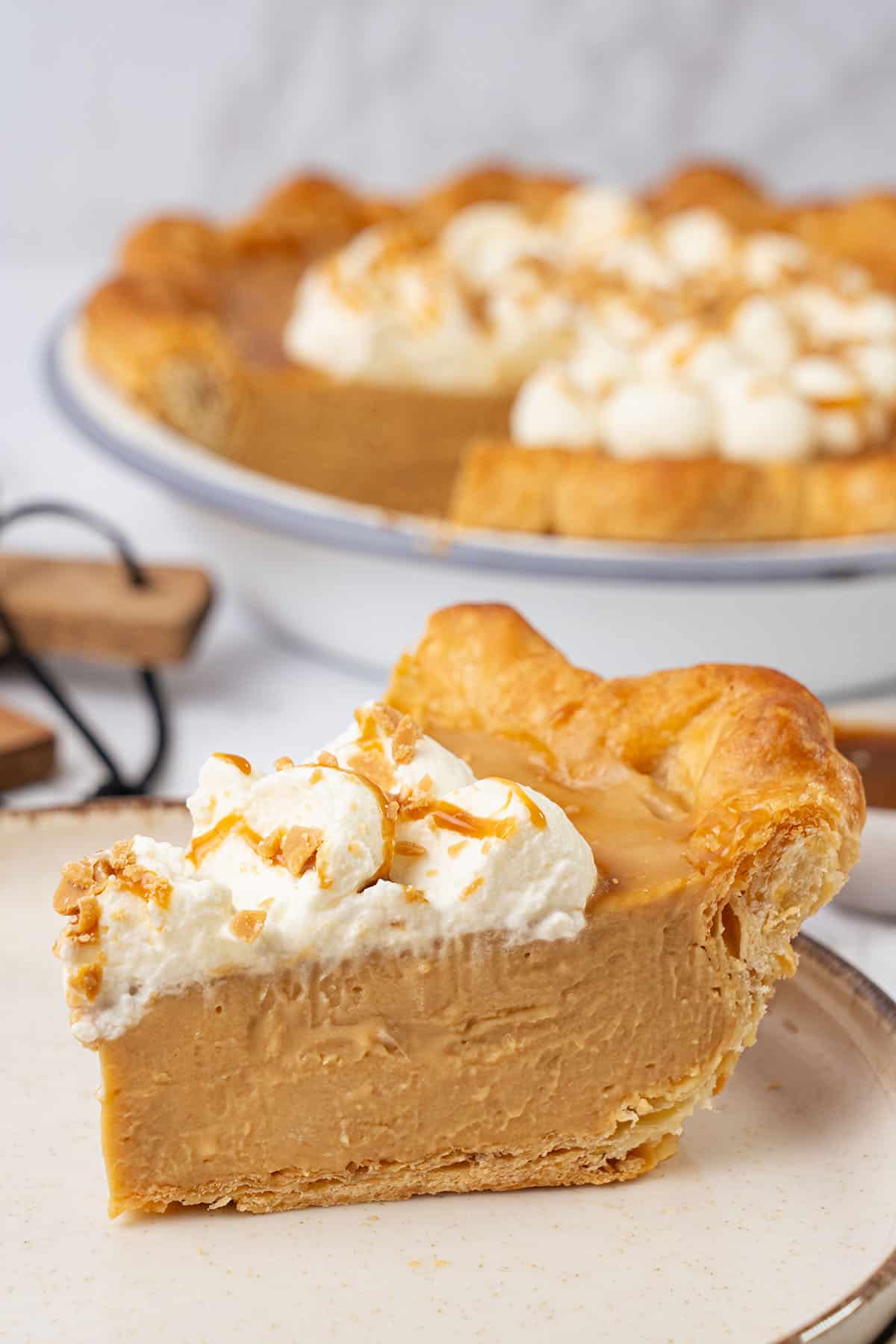
Best Butterscotch Pie Recipe
My Butterscotch Pie has been carefully tested and developed to set cleanly, slice beautifully, and deliver a deep, true butterscotch flavor.
The most important part of this pie is balance. I tested different butterscotch preparation methods and thickening levels to avoid the problems I often see in other recipes, such as runny filling, overly sweet flavor, or a texture that stays runny even after hours in the fridge. The final result is a smooth, stable butterscotch filling with a clean structure that sits perfectly inside the flaky crust.
This recipe emphasizes precision and technique over shortcuts. You’ll learn what affects the set, how the filling firms up as it cools, and why a fully baked crust is essential for keeping everything neat and crisp. With this method, you can trust that your Butterscotch Pie will hold together beautifully and taste like a true homemade pie.
If you love the flavor of butterscotch, why not try my butterscotch cookies too?
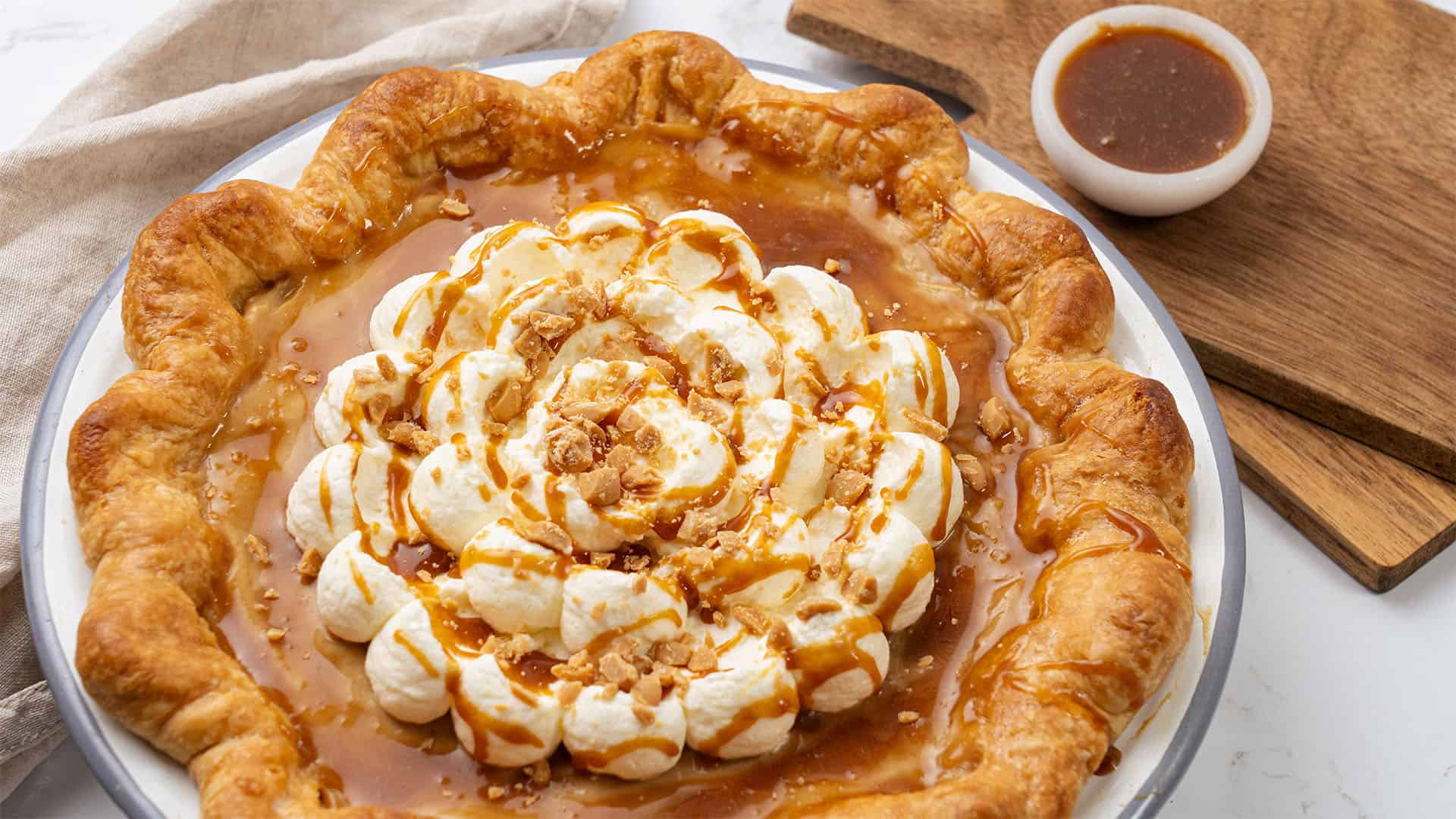
Katalin's key takeaways on the two key factors for succeeding with this recipe
The beauty of this pie comes down to two components that must each be done properly: a crisp, well-baked crust and a silky, perfectly thickened butterscotch pudding. When both are executed with care, you get that beautiful contrast of flaky pastry and smooth, glossy filling that defines this classic dessert.
First, the crust. For a custard-based pie like this, blind baking until the crust is fully golden brown is non-negotiable. A pale or under-baked crust will soften under the pudding and lose its structure, but a properly baked one stays crisp and sturdy enough to hold the creamy filling.
The second key is the pudding consistency. You’ll get the right texture by cooking the butterscotch slowly and tempering the eggs gradually so they don’t scramble. The pudding should be smooth, thick, and glossy before the butter is mixed in.
Once you have a crisp crust and a perfectly cooked pudding, everything else comes together effortlessly.
Make the pie dough
Place the flour, sugar, and salt into a large bowl, then chill the bowl in the freezer for a few minutes. Cut the butter into small cubes and keep it cold along with the water and vinegar. Cold ingredients help when working with the crust without melting the butter.
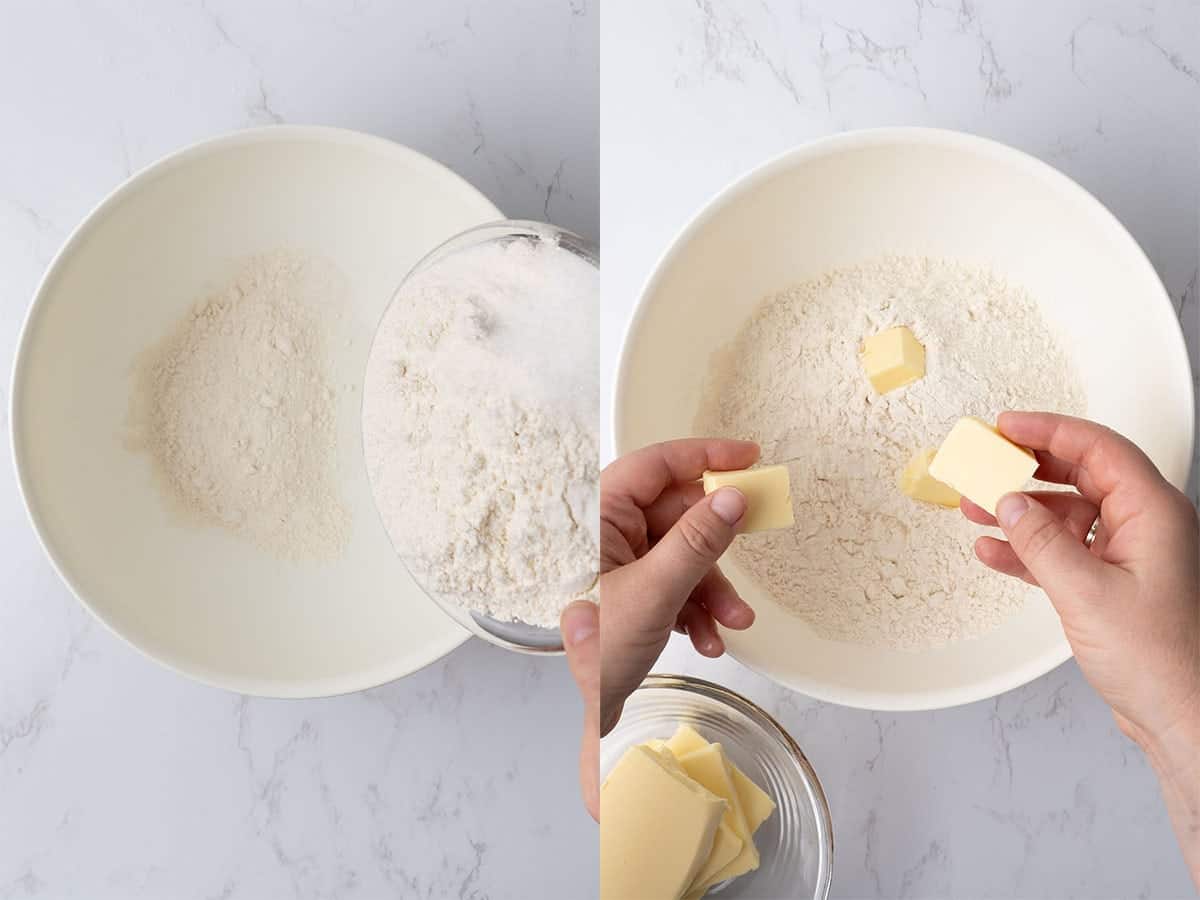
Add the cold butter to the flour mixture and rub it in gently with your fingertips until it resembles coarse sand. Leave a few visible butter pieces in the dough, as they help form layers when baked.
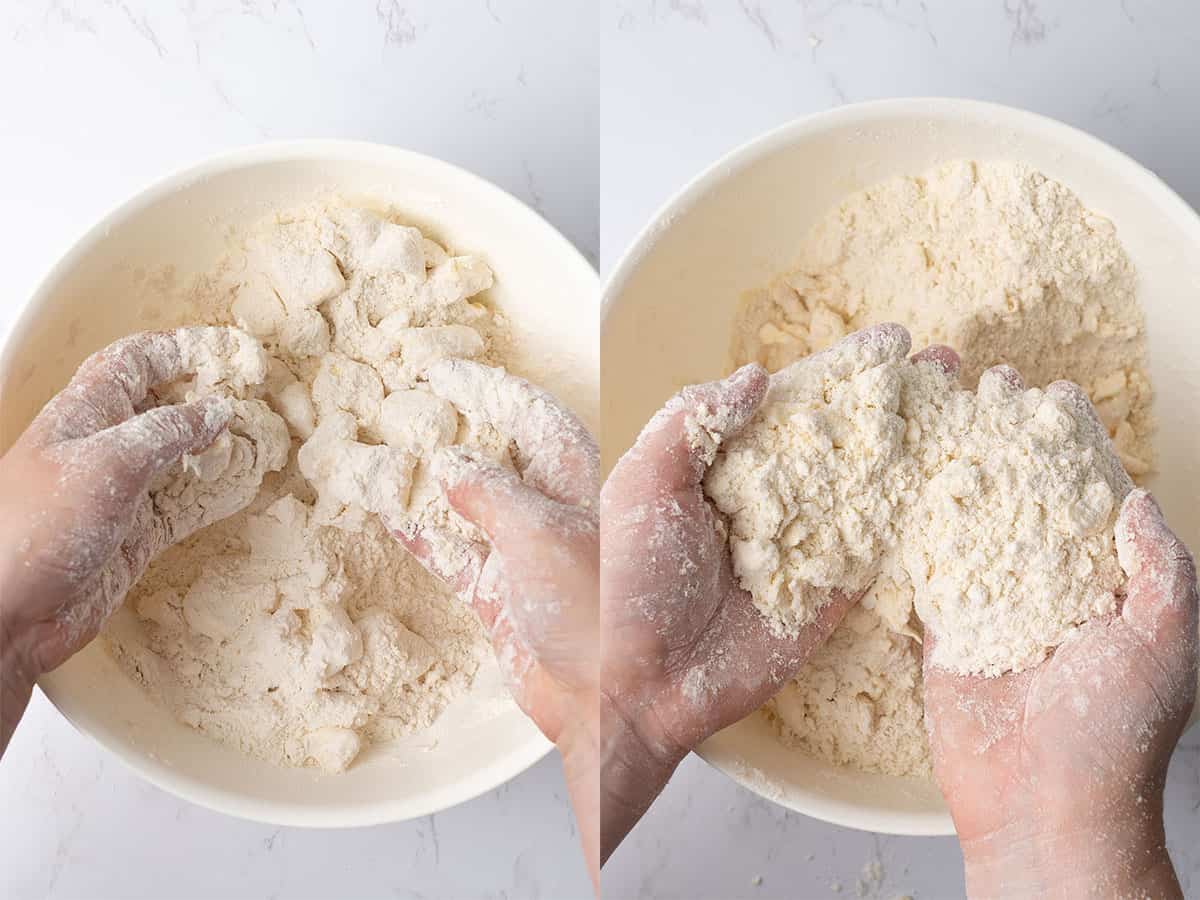
Drizzle in the cold water and vinegar a little at a time, mixing just until the dough begins to come together. It should feel hydrated but not sticky. Turn it out onto a lightly floured surface and bring it together gently with your hands. Form it into a disk, wrap it, and refrigerate for at least 2 hours.

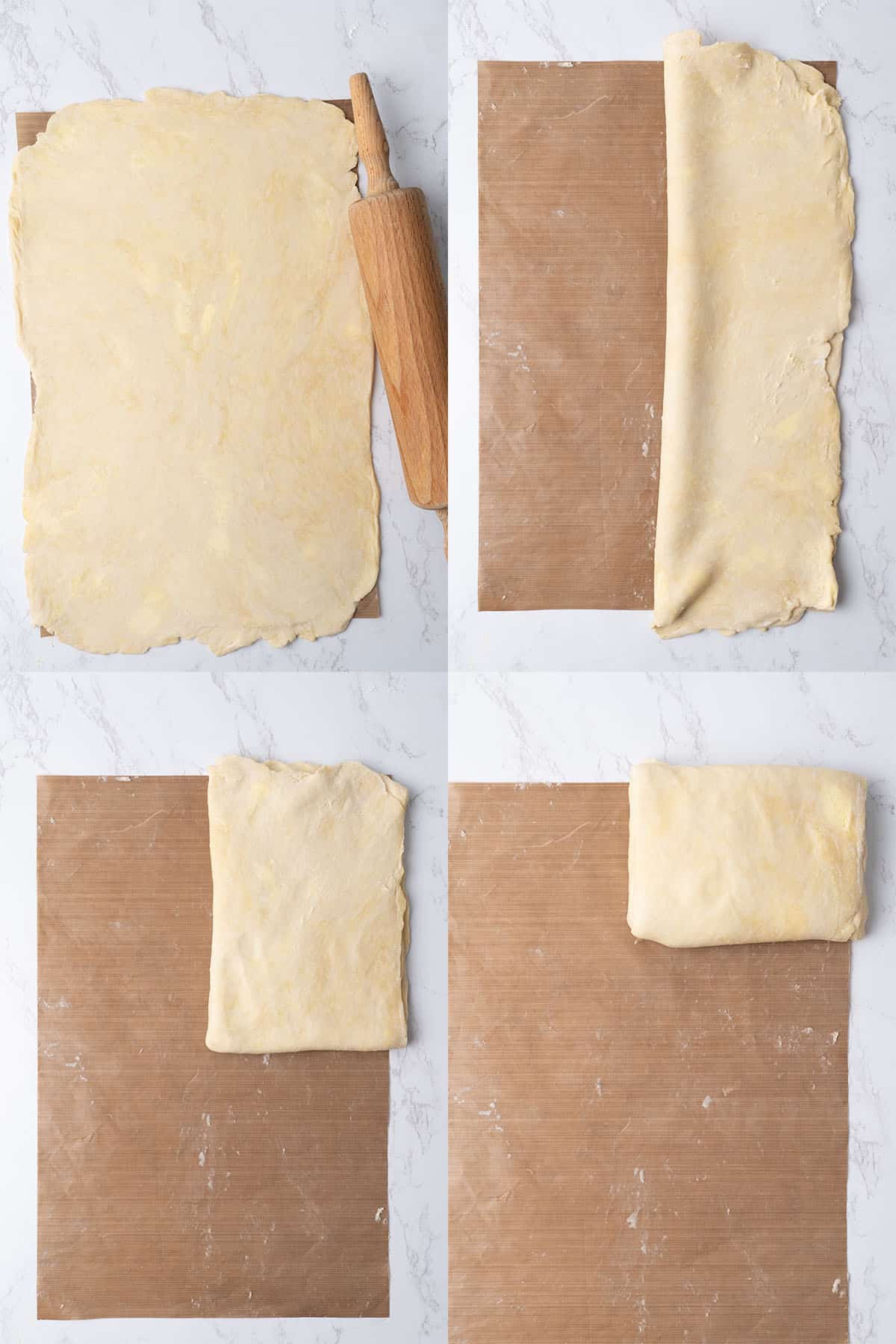
For extra flakiness, you can do a quick lamination. Roll the chilled dough into a rectangle, fold it in thirds, then fold again to create layers. Wrap and chill for another 2 hours before rolling. For more details, read my flaky pie crust recipe.
Roll the dough into a 10-inch (26 cm) circle to fit a 9-inch (23 cm) pie dish.
Fit the rolled dough into the pie dish, pressing it lightly into the bottom and sides. Trim any excess, then chill the crust for 15 minutes so it holds its shape.
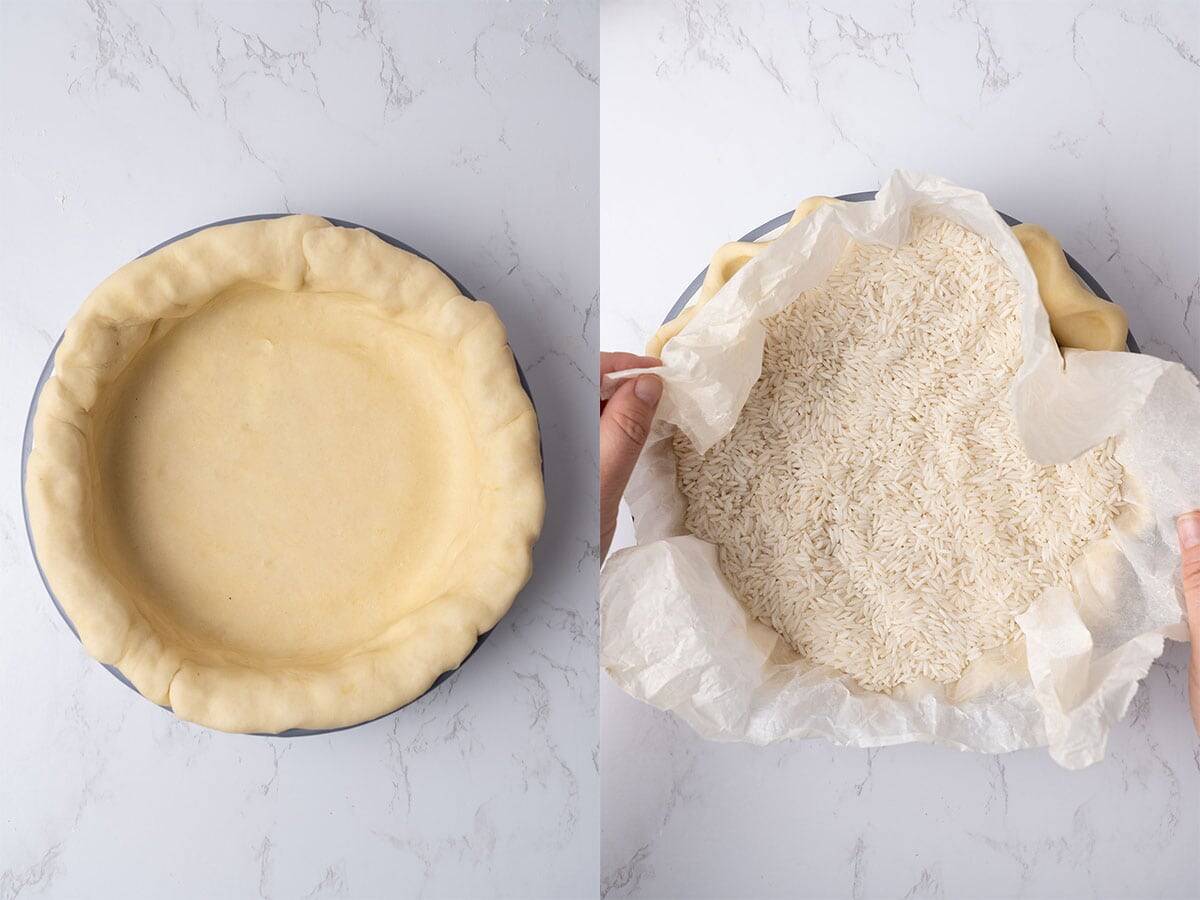
Handle it gently to avoid shrinkage during baking, then continue with the blind baking as per my detailed instructions in the 'How to blind bake pie crust' article.
Allow the crust to cool completely before adding the filling.
Continue with the butterscotch sauce
Add the brown sugar and butter to a medium saucepan and warm them over medium heat. Stir as the mixture melts so it becomes smooth and glossy. Cook for about 3 minutes until it bubbles gently and develops a soft caramel aroma. Keep the heat steady and avoid boiling.

Warm the heavy cream in a separate pan. Slowly pour the hot cream into the butterscotch while whisking. Let it cook for another 2 to 3 minutes until smooth and slightly thickened. Remove it from the heat and stir in the salt and vanilla.
This sauce forms the base of the pudding. If you want to save a little for decorating the pie later, set aside a few spoonfuls now.
Now make the butterscotch pudding
Whisk the egg yolks in a large bowl, then add the cornstarch and whisk until smooth. This step is identical to making pastry cream.
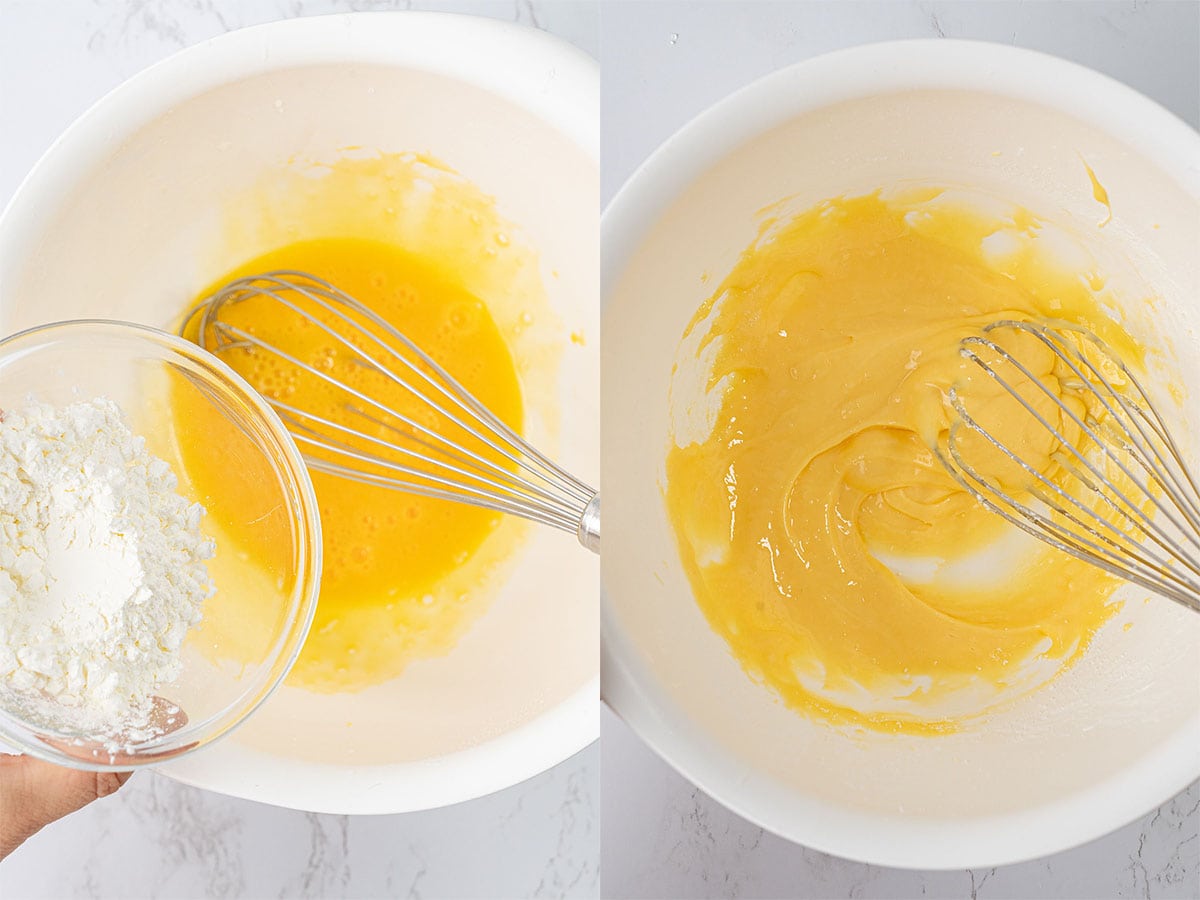
Heat the milk in a saucepan until steaming. Add the warm butterscotch and whisk until fully combined, then bring it just to a gentle simmer. Remove it from the heat.
Slowly pour the warm butterscotch milk into the egg mixture while whisking to temper the yolks. Pour everything back into the saucepan and cook over medium heat. Continue whisking until the pudding thickens, usually about 1 minute after it starts to bubble. If you see any small lumps, keep whisking until they become smooth and glossy again.
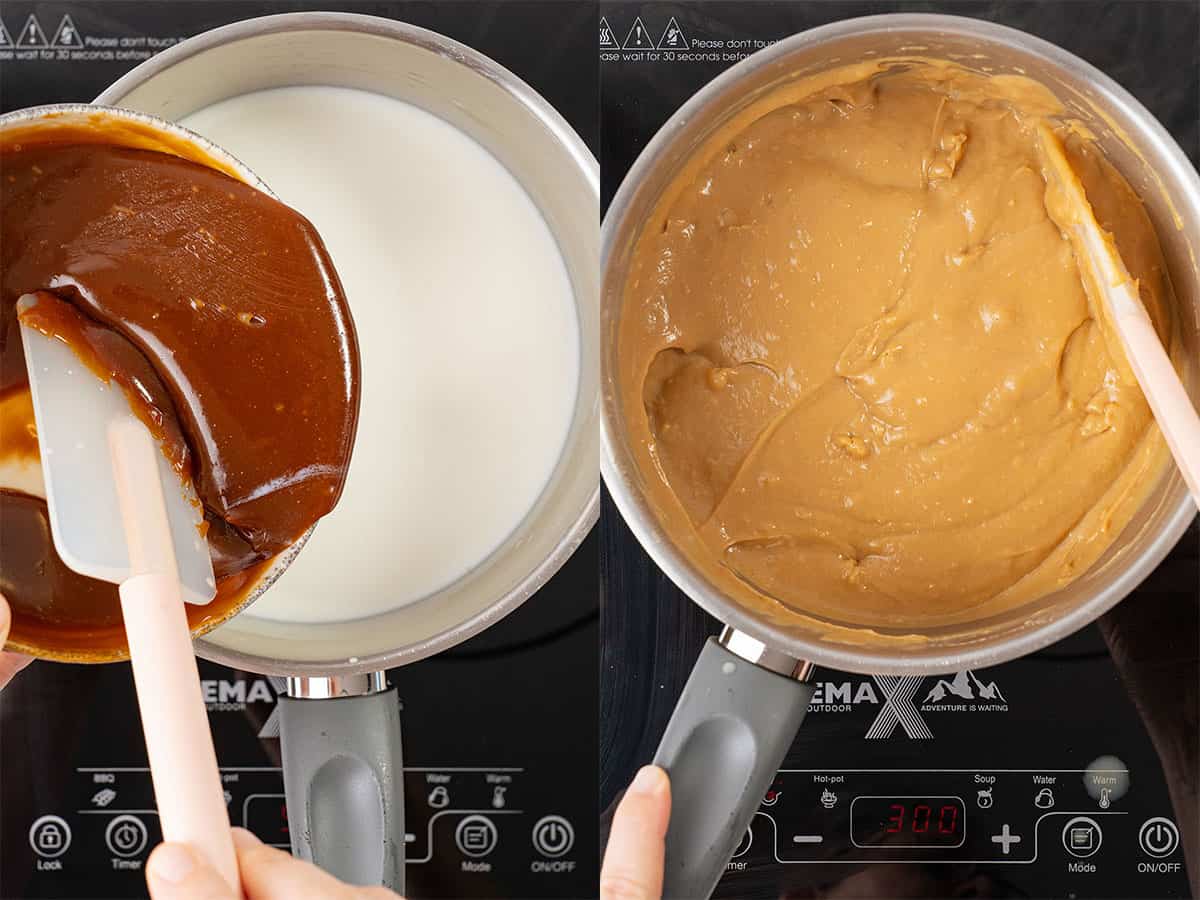
You can strain the hot pudding at this point if worried about egg bits curdling. Add the softened butter while the mixture is still warm and stir with a rubber spatula until creamy and fully incorporated.
For more tips and step-by-step photos, visit my original Butterscotch pudding recipe.
Assemble and decorate
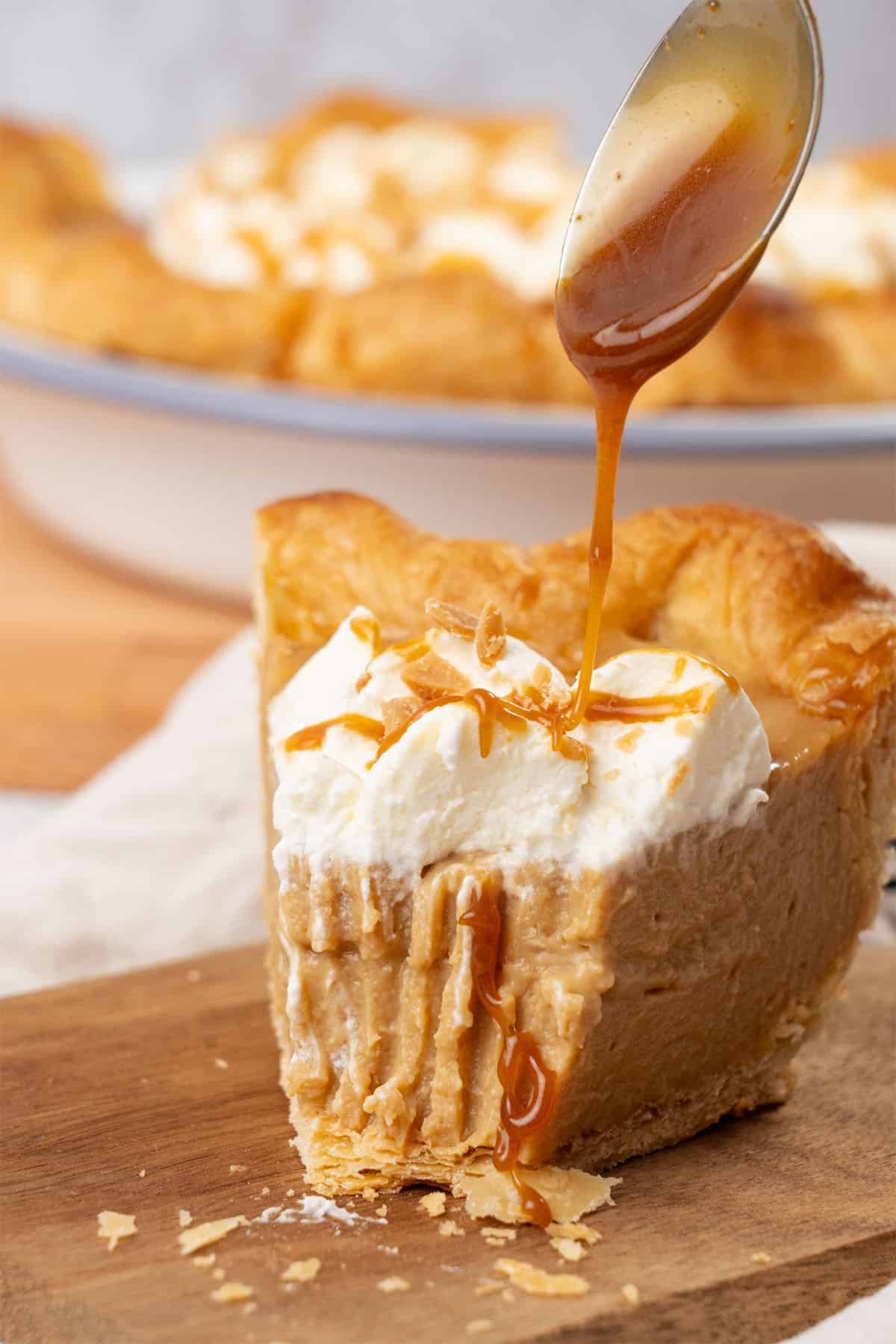
Pour the warm butterscotch pudding into the cooled pie crust and smooth the top. Cover the pie and refrigerate for 3 to 4 hours until the filling is set. Chilling is required for the pudding to slice cleanly and hold its shape.
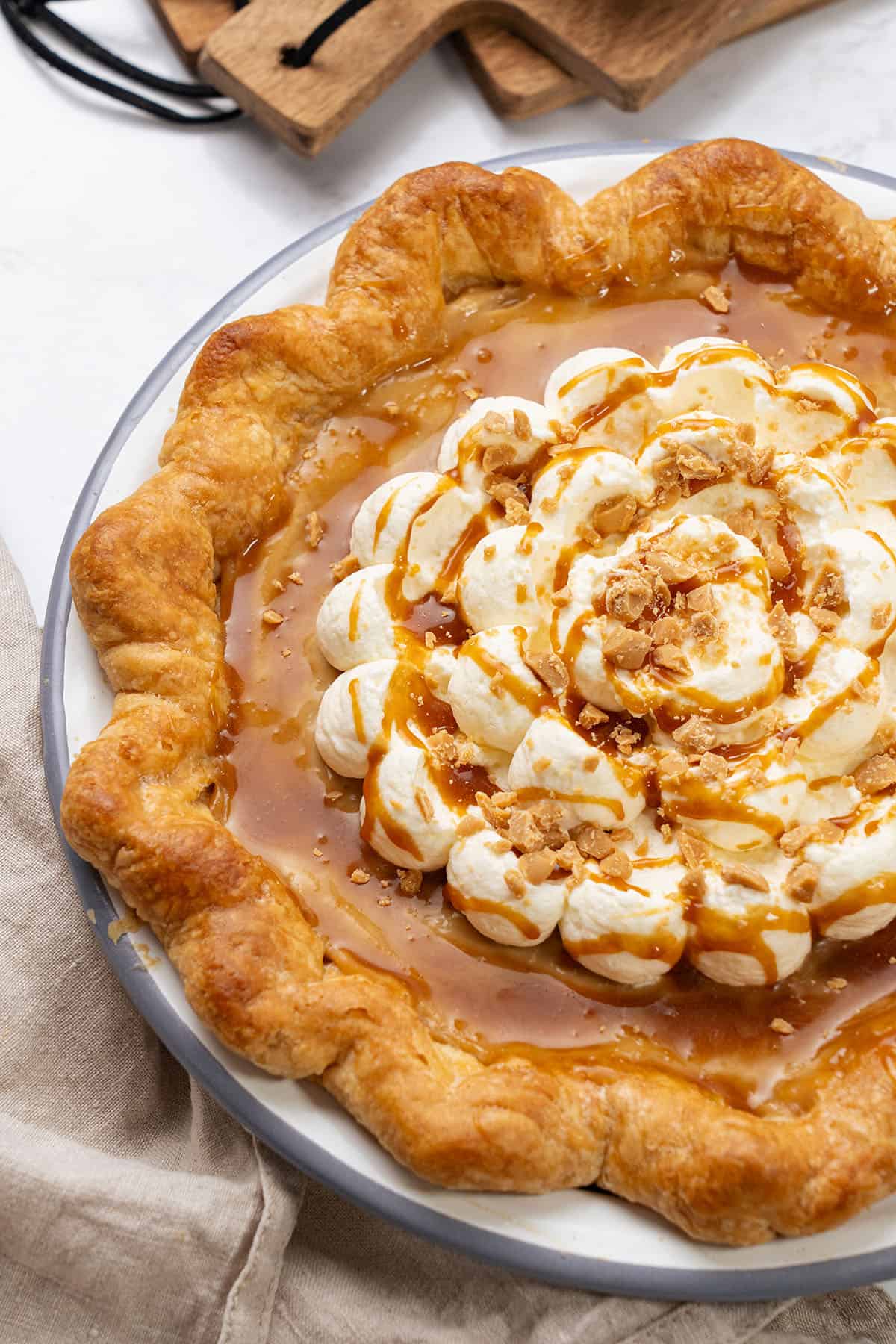
Before serving, top the pie with Chantilly cream, a drizzle of the reserved butterscotch, and shaved chocolate.

Storing & Freezing
Leftover butterscotch pie can be stored covered in the refrigerator for up to 3 days. Keep it in the pie dish or transfer slices to an airtight container to maintain the creamy texture. Before serving, let it sit at room temperature for 20–30 minutes so the filling softens slightly and slices cleanly.
Because the filling is a delicate, custard-style pudding, freezing is not recommended. The texture may separate and lose its smoothness once thawed.
However, you can freeze the baked pie crust on its own. Once cooled, wrap it tightly in plastic wrap and aluminum foil and freeze for up to 2 months. Thaw in the refrigerator or at room temperature, then refresh it in a 350°F (175°C) oven for 5–8 minutes before filling.
Flavor Variations
You can adapt this Butterscotch Pie by changing both the crust and the flavor profile of the filling. Try using a Biscoff or chocolate cookie crust instead of a classic pie dough for a sweeter, more dessert-style base. A graham cracker crust also works beautifully and pairs naturally with the caramel flavor.
For subtle variations in the filling, infuse the warm milk with Earl Grey tea or chai spices before combining it with the butterscotch. Both add gentle aromatics without overpowering the caramel. A spoonful of maple syrup blended into the pudding also enhances the butterscotch’s natural richness.
On the finishing side, layering the chilled pie with sliced bananas creates a banoffee-style version, while toasted coconut on top of the whipped cream adds a lighter, more tropical note. For a more elegant finish, drizzle the top with melted dark chocolate or sprinkle with flaky sea salt to highlight the caramel flavor.
Ingredient Substitutions
For the pie crust, you can replace the all-purpose flour with a good gluten-free blend if needed. The texture may be a bit more delicate, but it still bakes into a crisp shell. If you’re out of butter or need alternatives, see my butter substitute guide for options that maintain flakiness. Vegan butter and margarine usually work well.
If you don’t have apple cider vinegar, you can use white vinegar or lemon juice instead.
Light or dark brown sugar both work well in the butterscotch filling. Light brown sugar gives a softer caramel flavor, while dark brown sugar creates a deeper, richer taste. If you’ve run out, you can make your own by combining white sugar with honey; more ideas are in my brown sugar substitute guide.
Cornstarch can be replaced with arrowroot or potato starch in a pinch, but the pudding may set a little softer. Because both dairy and eggs are essential to the structure, this recipe doesn’t adapt well to a fully vegan or egg-free version.
Expert Tips To Make Butterscotch Pie
- When you prepare the crust, don't overwork the pie dough. Stop when it comes together and do not knead it.
- When making the butterscotch, cook the mixture until the brown sugar caramelizes, but keep an eye on the color and scent so it doesn't burn.
- When you pour the hot pudding into the crust, tap the pie dish gently on the counter a few times. This releases hidden air pockets so the surface sets perfectly smooth without bubbles.
- Cover the pudding surface directly with plastic wrap as soon as it is in the crust. Pressing the wrap onto the custard stops a skin from forming, so the filling stays silky from edge to center.
- Chill the pie on a flat shelf, not stacked near other foods. An uneven fridge surface can tilt the filling slightly and cause the top to set at an angle, which makes slicing less clean.
- For the neatest slices, dip a sharp knife into hot water, wipe it dry, and cut in slow, single strokes. Rewarm and wipe the knife between cuts to keep the custard edges sharp.
- Add the Chantilly and final garnishes right before serving. Whipped toppings left on overnight can weep and dull the glossy top, while a fresh finish keeps the pie looking polished.
What Equipment To Use
Always weigh your ingredients using a digital scale and don’t rely on cups, as precision is key for both pastry and custard-based fillings.
Roll out your pie dough with a rolling pin on a lightly floured surface, taking care not to stretch or overwork the pastry.
Use a 9-inch pie dish to bake the crust.
A hand whisk is all you need to bring the pudding base together smoothly, while a rubber spatula helps finish the custard with a creamy, glossy texture.
Try Some Of My Other Pie Recipes
If you love pies as much as I do, try some of my other recipes:
- Apple crumble pie
- Brownie pie
- Pumpkin cream cheese pie
- Apple hand pies
- Pumpkin pie with sweetened condensed milk
And for even more pie recipes, check out my roundup of the 50+ Thanksgiving pie recipes.
Have You Tried This Recipe?
Please leave a 5-star ⭐️⭐️⭐️⭐️⭐️ rating on the recipe card and consider leaving a comment as well!
Butterscotch Pie
Ingredients
Pie crust
- 190 g (1½ cups) All purpose flour
- ¼ teaspoon Salt
- ½ tablespoon Granulated sugar
- 113 g (½ cups) Unsalted butter 82% fat, use it very cold
- 60 g (¼ cups) Water very cold
- 15 g (1 tablespoon) Apple Cider vinegar
Butterscotch pudding
- 220 g (1 cups) Brown sugar
- 55 g (¼ cups) Unsalted butter 82% fat at room temperature, use it to make the butterscotch
- 230 g (1 cups) Heavy cream 36% fat
- ½ teaspoon Salt
- 1 teaspoon Vanilla
- 480 g (2 cups) Whole milk 3% fat
- 4 Egg yolks room temperature
- 45 g (⅓ cups) Corn starch
- 55 g (¼ cups) Unsalted butter 82% fat, use it at room temperature to add to the pudding as the last step
US customary cup measurement is an indicative figure only. Measure the ingredients with a digital scale by weight (gram). Baking is art but also science which requires precision and accuracy.
Instructions
Pie crust
- This dough makes one 9-inch (23 cm) single-crust pie, exactly what you need to make this recipe.
- In a large bowl, mix the flour, sugar, and salt, then place the bowl in the freezer for 5–10 minutes. Cut the butter into small chunks and chill them, along with the measured water and vinegar.
- Add the cold butter to the flour and rub it between your fingers until the mixture resembles coarse sand, leaving a few larger butter pieces for a flaky texture.
- Gradually add the cold water and vinegar, stirring after each addition. Use just enough liquid to form a dough that’s evenly hydrated but not sticky or dry.
- Turn the dough onto a lightly floured surface and gently bring it together without kneading. Shape into a disk, wrap in plastic, and refrigerate for at least 2 hours before rolling.
- For extra flakiness, consider applying this very easy lamination technique: Remove the pie dough from the fridge and let it rest on the counter for a few minutes until slightly softened but still cold. Roll it out on a lightly floured surface into a rectangle shape. Fold the left half over the right, then fold the bottom half over the top. Fold once more in half to create — this gives you eight layers.Wrap the dough in plastic and refrigerate for at least 2 hours before using.
- For a 9-inch (23 cm) pie dish, roll the dough into a 10-inch (26 cm) circle. Handle the dough gently; avoid stretching or forcing it, as that can cause the crust to shrink during baking. The dough should remain smooth, cold, and pliable.
- Once rolled out, continue with the next step as described in my tutorial on how to blind bake pie crust. Then, let the pie crust come to room temperature before filling.
Butterscotch pudding
- To make the butterscotch, melt the butter and brown sugar in a saucepan over medium heat, stirring constantly. Let it cook slowly for about 3 minutes until the mixture turns glossy, bubbly, and slightly thickened with a rich caramel aroma. Keep the heat moderate, avoid letting it boil.
- Meanwhile, warm the cream in a separate saucepan until it just starts to simmer. Once the butterscotch is smooth and thickened, slowly pour in the hot cream in a steady stream while stirring continuously. Cook for another 2–3 minutes, stirring constantly, but avoid boiling.
- Stir in the salt and vanilla, and let it rest while preparing the pudding base. If you’d like to save some butterscotch for decoration, set aside 2–3 tablespoons before mixing.
- Now, continue with turning the butterscotch sauce into pudding. In a large bowl, whisk the egg yolks with a hand whisk for 1–2 minutes until slightly fluffy. Whisk in the cornstarch until smooth.
- Heat the milk in a saucepan over medium heat until it’s hot but not boiling. Pour in the prepared butterscotch and stir until fully combined. Continue heating until the mixture reaches a gentle simmer, then remove from the heat.
- Slowly pour the warm milk-butterscotch mixture into the egg mixture while whisking continuously to temper the yolks. The mixture will start to thicken slightly.
- Return the mixture to the saucepan and cook over medium heat, whisking constantly, until it thickens, about 1 minute after it begins to boil. If any lumps form, continue whisking until the cream becomes smooth and glossy again.
- For an extra smooth texture, consider straining this butterscotch pudding.
- Lastly, add the softened butter, mixing with a rubber spatula until fully incorporated and creamy.
- Pour the butterscotch pudding into your room-temperature pie crust, and smooth the top. Refrigerate until set, about 3-4 hours.
- Decoration: Before serving, top it with freshly whipped Chantilly cream, the leftover butterscotch sauce, and shaved chocolate.
- Refrigerate for up to 3 days. For the best texture, let it sit at room temperature for about 20–30 minutes before serving. Avoid freezing, as the creamy filling may separate and lose its smooth consistency once thawed. However, you can freeze the baked pie crust: Let the crust cool completely after baking, then wrap it tightly in plastic wrap, followed by a layer of aluminum foil to prevent freezer burn. Freeze for up to 2 months. When ready to use, thaw the crust in the refrigerator overnight or at room temperature for about an hour before filling. To refresh its crispness, bake it at 350°F (175°C) for 5–8 minutes before adding the filling.
Notes
- Measure your ingredients with a digital scale for accuracy.
- Do not skip the salt; it will balance the flavors.
- For the pie crust, all ingredients, including butter, flour, and water, should be very cold.
- For the pudding, use full-fat milk and cream, high-fat butter, and high-quality vanilla extract.
- Assembling this pie dough will take less than 5 minutes. If you are making the dough for more than 5 minutes, you are overworking it and risking warming the ingredients up too much with your hands.
- Resting the dough in the fridge is a must—you won't be able to roll it out without an appropriate resting time (minimum 2 hours).
- When it comes to rolling, again, it can be done when the dough is at the right temperature. If it's too cold, it can crumble. If it's too warm, it can tear and stick.
- When making the butterscotch, cook the mixture until the brown sugar caramelizes, but keep an eye on the color and scent so it doesn't burn.
- Control the heat carefully while making the butterscotch; medium heat gives you more control, prevents burning, and still allows the sugar to caramelize evenly.
- Warm the cream before adding it to the caramelized sugar to prevent the mixture from seizing and splattering.
- Use a small/medium-sized saucepan with good heat distribution to avoid burning the milk when making the pudding.
- Make sure you wait for the pudding to set for a nice slice.
Denise
My husband and I loved this pie so rich and smooth creamy, the Butterscotch flavor is just right not over powering. I will be making this pie often! Wonderful recipe!
Shivanthi
Hi, for how long should the pie crust need to be,
- blind baked and at what temperature?
- baked and at what temperature after the blind bake?
Katalin Nagy
The blind baking process is explained in the recipe "then continue with the blind baking as per my detailed instructions in the https://www.spatuladesserts.com/how-to-blind-bake-pie-crust/ article.)
You do not need to bake it once again. Once the pie crust is fully baked, you fill it with the butterscotch pudding and let it chill / set.
Good luck:)