
Popular in French cuisine and a staple in the Louisiana city of New Orleans, these New Orleans-style homemade beignets are fun to make and hard to resist! Their light, sweet, and pillowy texture makes them the perfect treat any time of the year, particularly in the carnival season.

What are Beignets
Translated to mean “fritters” in French, beignets (pronounced ben-yay) are light and airy square-shaped donuts made with yeast, flour, sugar, milk, eggs, and butter. They are typically deep fried, topped with powdered sugar, and served hot. You can also find beignets with different toppings as well as made with various fillings.
The New Orleans recipe for beignets is very similar to brioche and sugar donuts, using the same ingredients but with a different quantity of butter. However, authentic French beignets are typically a choux pastry, relying on moisture versus yeast to rise.
Although beignets have a French history, they are a staple in New Orleans, Louisana, primarily served as a dessert or alongside coffee. New Orleans beignets are especially popular during Mardi Gras.

Why this is the best recipe
- It is the most delicious - I use the most high-quality ingredients and techniques that result in the most flavorful, airy, and fluffy New Orleans style beignets.
- No fancy ingredients required - Everything you need to make these beignets are kitchen staples found in your local supermarket or your pantry.
- It is easy to follow - My New Orleans style beignets recipe is one of the most detailed, easy recipes that covers everything you need to know about how to make beignets. Just make sure to follow each step exactly as written and follow my expert tips below.
- It doesn’t take much time - This easy beignet recipe only takes 30 minutes to prepare and 30 minutes to cook, so you won’t have to spend all day in the kitchen! The longest part is waiting for the dough to be proven, which you can do overnight.
- It is versatile - You can easily customize your beignets with various toppings and fillings. See the Flavor Variations and Substitutions section below for several ideas!
Ingredients
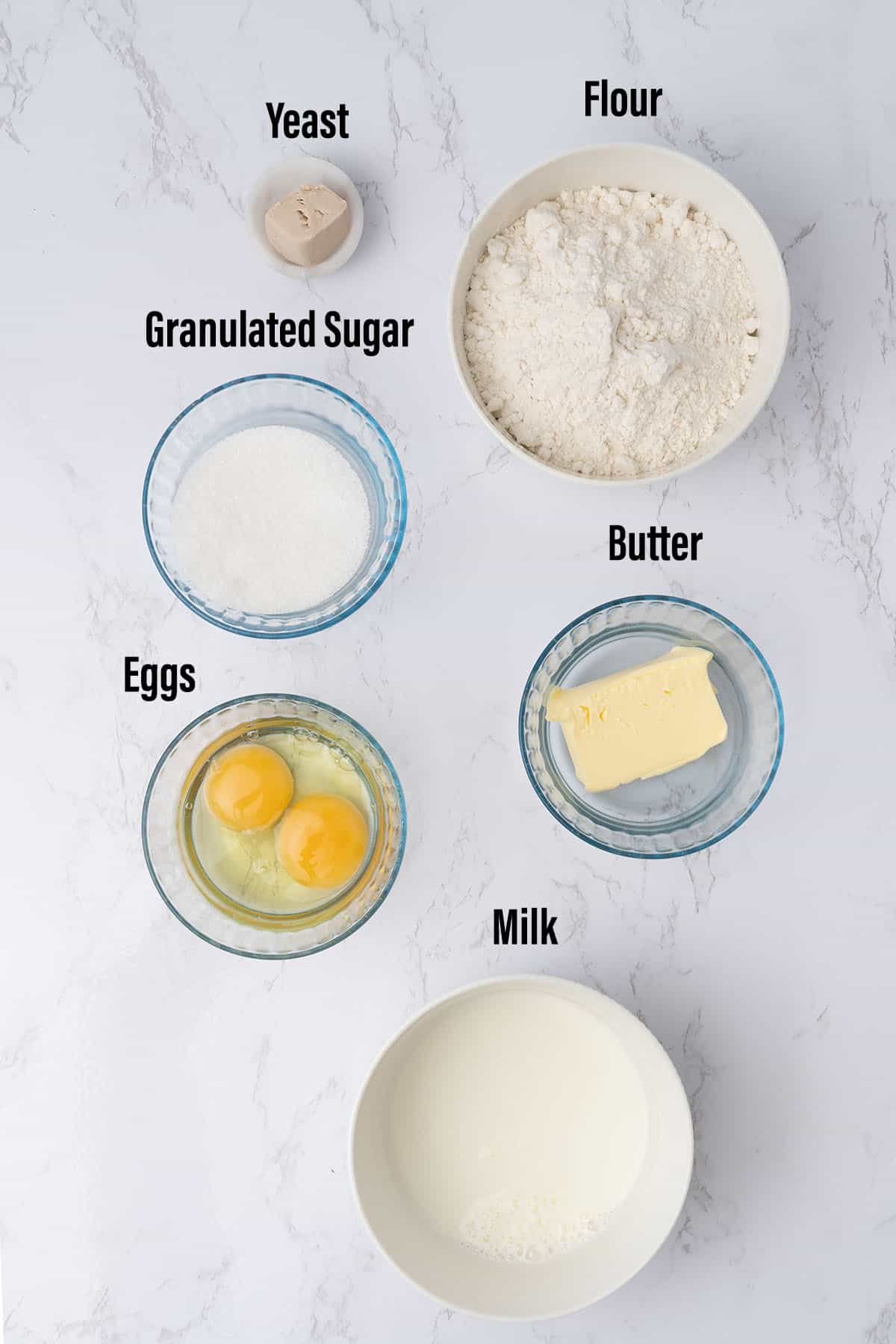
- Milk - Whole milk with a high fat content will give the best results. I use 3% whole milk in this recipe. The milk needs to be lukewarm.
- Sugar - Granulated sugar will help to sweeten the dough.
- Yeast - Fresh yeast is ideal, but you can substitute it with 1.5 teaspoons (5g) of instant yeast, if necessary. For more tips, see my guide on how to bake with yeast.
- Egg - You will need one whole egg and one egg yolk. Both need to be at room temperature before using them.
- Flour - Since this is essentially a sweet bread, a high-protein flour such as bread flour is ideal. You can also substitute with all-purpose flour if you do not have bread flour.
- Salt - Salt is an essential ingredient in baking. It helps to balance the sweetness and enhance the flavor. Do not skip it!
- Butter - Use unsalted butter to fully control the amount of butter in the recipe. Like the milk and egg, the butter must be at room temperature and soft enough to incorporate into the dough. Do not use melted butter.
- Oil - You will need oil to fry the dough, preferably a high-heat oil such as vegetable oil or canola oil.
- Powdered sugar - The powdered sugar is to dust the beignets after you fry them.
For the exact ingredient quantities and more information on substitution options, visit the original Beignet recipe at Spatula Desserts.
How to make this recipe
1. Step-by-step process of making beignets
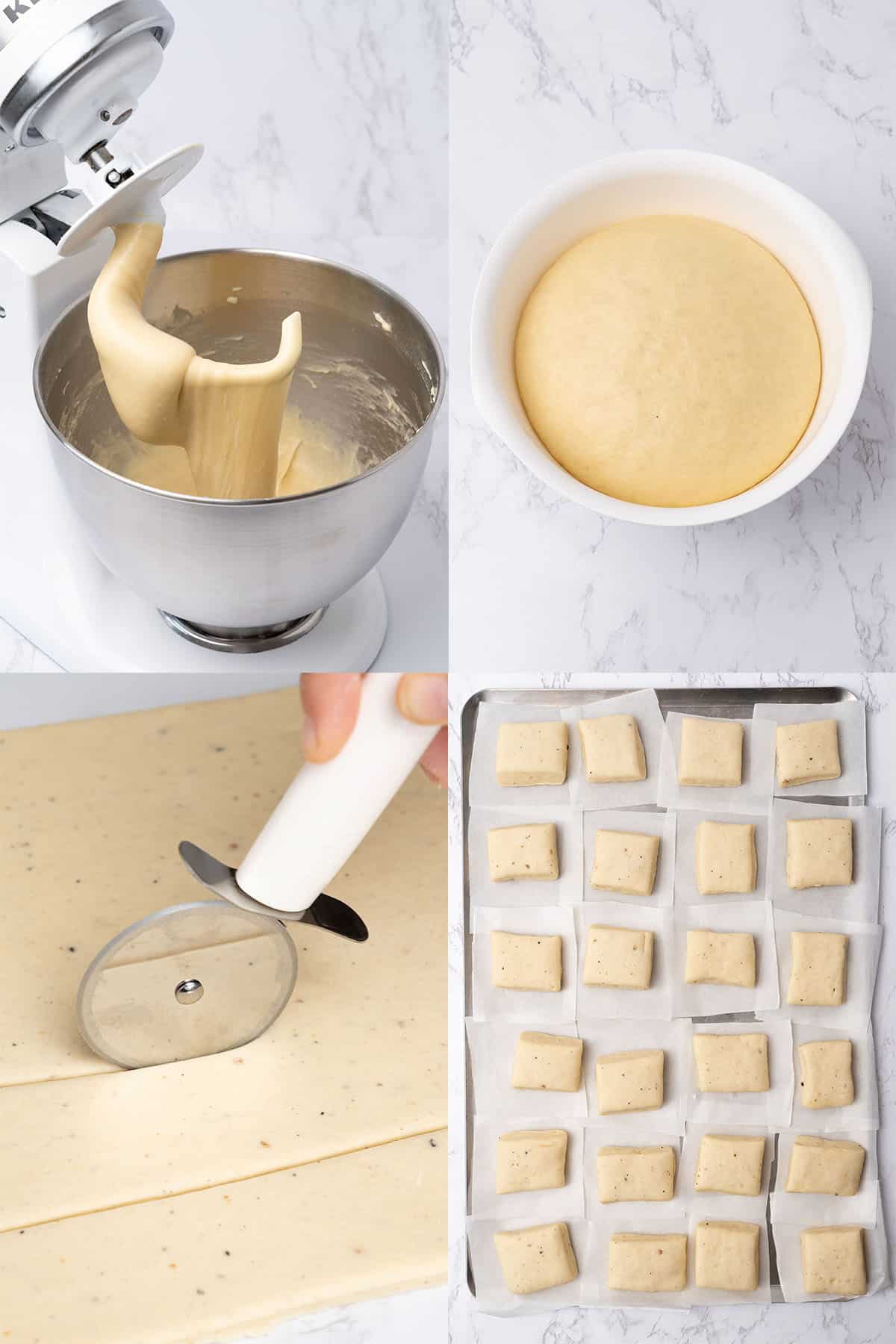
- First, make sure your kitchen is nice and warm. A warm kitchen is necessary to activate the yeast. Mix the sugar with the lukewarm milk in a large bowl, then sprinkle the yeast on top. In approximately 10 minutes, you should see the yeast start to foam.
- Move the active fresh yeast mixture (or active dry yeast mixture) into the bowl of your stand mixer with the kneading hook attached. Add the whole egg and egg yolk and mix well.
- Mix in the flour and salt and continue to knead until the beignet dough comes together.
- One piece at a time, slowly add in the soft, room-temperature butter. Knead the dough on medium-high speed for an additional 10 minutes until the dough becomes elastic, shiny, and does not stick.
- Transfer the dough into a bowl and cover with a plastic wrap or kitchen towel. Ideally, you should let the dough rise in the fridge overnight. Or, let it rise at room temperature for 1-2 hours.
- After the dough rises, press the air out and gently knead it for a few seconds.
- Place the dough on a lightly floured surface and use a rolling pin to roll it into a ¼-inch (0.6mm). With the help of a pizza wheel, cut out approximately 2.5-inch (6cm) squares. Use a small amount of flour to help shape the dough, if needed.
- Move the dough pieces onto individual square sheets of baking paper. Depending on the thickness and size of the dough squares, you should yield approximately 20-25 small beignets.
- Proof the dough for a second time at room temperature, making sure your kitchen is nice and warm. Depending on the temperature of your kitchen, this can take 1-2 hours. Avoid placing the dough near direct heat or sunlight.
For the exact ingredient quantities and more information on substitution options, visit the original Beignet recipe at Spatula Desserts.
💡 Top Tip: Place the dough in the refrigerator overnight for the first rise for the best experience when working with the dough. Cold, firm dough is much easier to work with than warm, soft dough.
2. How to fry the beignets
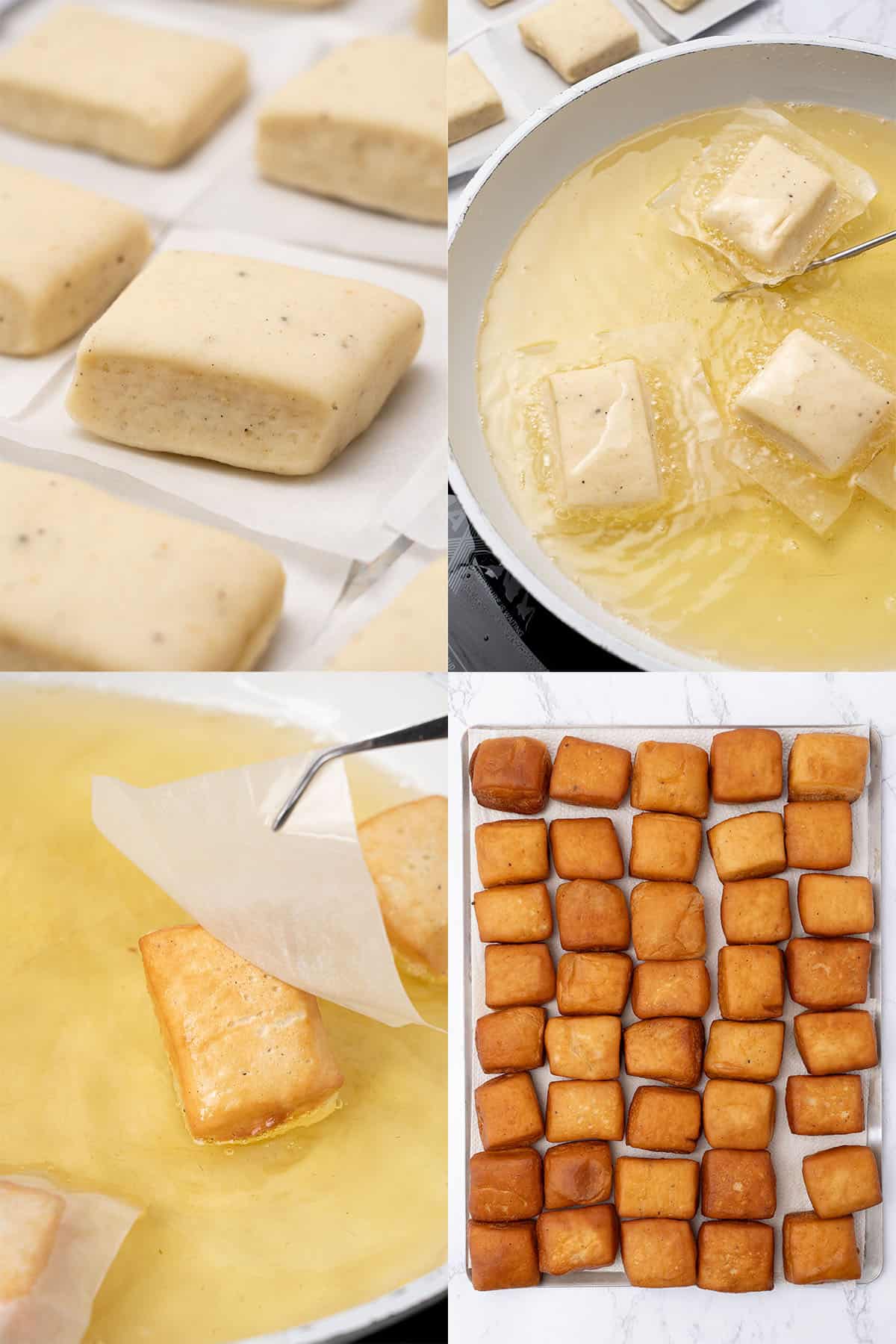
- Once the beignets are nice and puffy, heat the oil in a heavy-bottomed pan over medium heat. The oil temperature should be between 347-365F / 175-185C for the best results.
- Place 6-8 beignets in the oil, leaving enough space around them. The number of beignets can vary depending on the size of your pan. Use just enough oil to prevent the beignets from touching the bottom.
- Fry the beignets on each side for approximately 1.5 minutes or until the color turns nice and brown.
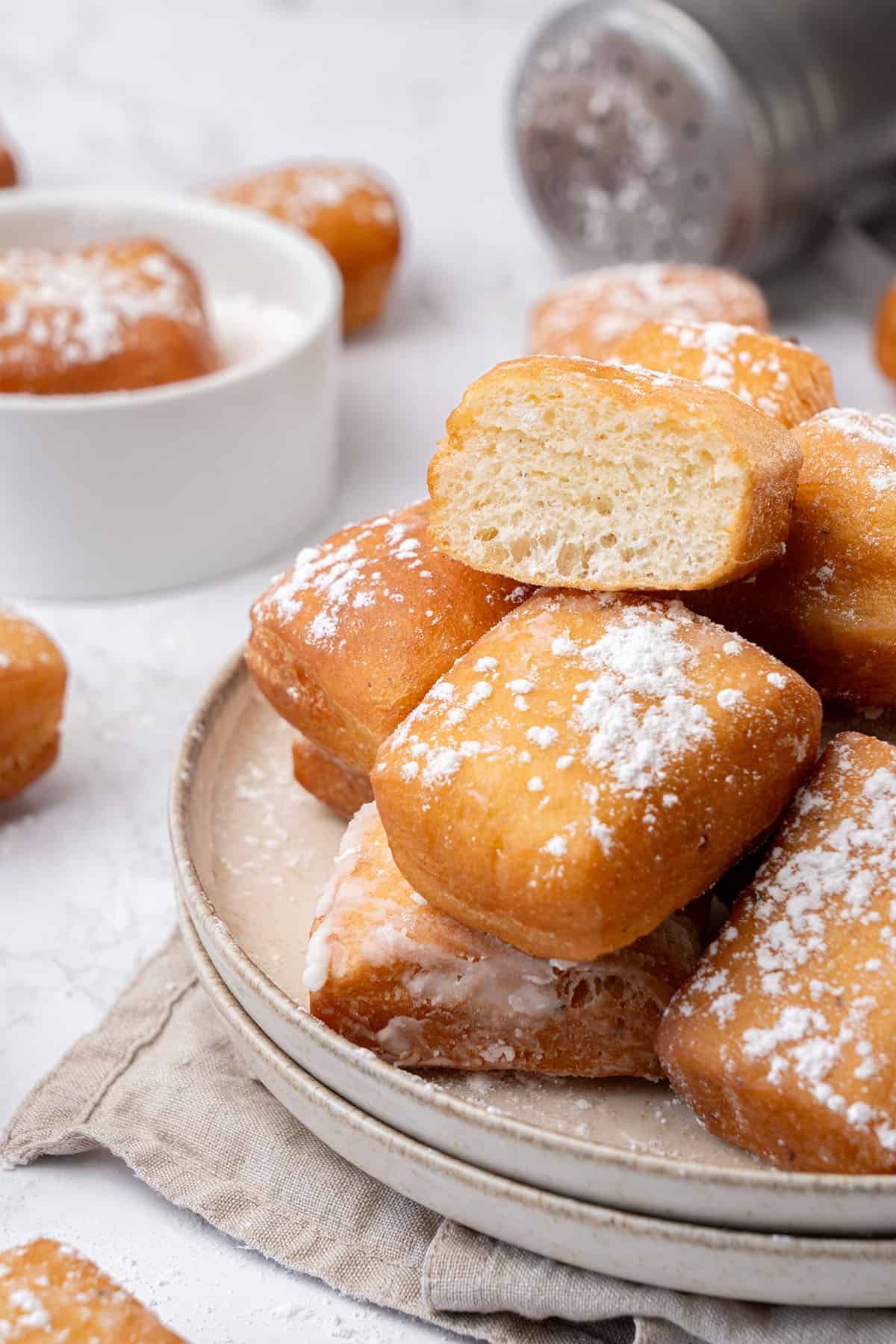
- Transfer the fried dough to a wire rack lined with paper towels to soak the excess oil. While still hot, toss them in the powdered sugar and coat them evenly. Serve fresh.
💡 Top Tip: Use a digital thermometer to check the temperature of the oil before frying the beignets. The perfect temperature for frying is 356F / 180C. Oil that is too hot will burn the beignets while the inside remains raw. Oil that is not hot enough will result in the dough soaking up too much oil while the inside remains raw.
Flavor variations
This authentic beignet recipe is incredibly versatile and can be customized to your liking with different flavors, toppings, and fillings. Try your beignets with one or more of these many flavor variations or substitutions:
Different flavored dough - Give your beignets a different base flavor by adding vanilla extract, rosewater, orange or lemon zest, cocoa powder, cardamom, or espresso powder.
With different sugars - Replace the powdered sugar with decorating, muscovado, or brown sugar. You can also use cinnamon sugar for tasty cinnamon-flavored beignets. See my sugar guide for more about the various types and how to use them in baking.
With glaze - Swap out the sugar for a drizzle of sweet glaze. Try it with my chocolate glaze, raspberry glaze, or coffee glaze, as I use in my delicious cardamom cake.
With fillings - Yes, you can fill beignets! Try them with Bavarian cream or Nutella!
For the exact ingredient quantities and more information on substitution options, visit the original Beignet recipe at Spatula Desserts.
Katalin´s expert tips to make beignets
- The milk, egg, and butter must always be at room temperature to emulsify correctly.
- A warm kitchen is necessary for the yeast to activate. However, always avoid placing the dough near direct heat or sunlight.
- Kneading the dough in the stand mixer will take approximately 10 minutes, although it may take longer. You will know the dough is ready when it is shiny, elastic, and no longer sticky. Do not attempt to speed up the process by adjusting the ingredients or adding more flour to the dough. Instead, continue kneading.
- For the best flavor and texture, do the first proofing overnight in the fridge. Do not skip the second proofing, as it is necessary to give the dough the perfect rise-and-fluffy texture.
- You can cut the dough into 4-inch / 10cm squares for larger beignets, in this case, fry them for about 2 minutes on each side.
- To get the most out of the flavor and texture, serve your beignets fresh and hot!
What is the difference between a donut and a beignet?
On a broader level, there are two types of donuts: cake donuts, leavened with baking soda or baking powder, and yeast donuts.
While yeast donuts and beignets (they are also made with yeast) are very similar, these two delicious pastries have a few significant differences, including their appearance, quantity of ingredients, texture, and overall taste.
In the United States, a donut (also commonly spelled “doughnut”) is known as a round pastry with a hole in the middle (just like these sugar donuts), typically decorated with glaze, frosting, fillings, or other decorative toppings such as sprinkles. On the other hand, a beignet is known as a fried, square-shaped doughnut dusted with powdered sugar.
Also, classic American donuts typically use less yeast and more eggs than beignets, making them denser, softer, and less puffy, however, it can vary and there is no set recipe that everyone has to follow.
Are beignets French or New Orleans?
Beignets have long been a part of French cuisine and are one of the most popular pastries during Carnival and Mardi Gras. Beignets are said to have been introduced to Louisiana in the 18th century when French colonists migrated from Canada to New Orleans. In 1986, the beignet was named the official state donut. It has since become one of the most popular delicacies that New Orleans’ French Quarter is known for, although you can also find them worldwide.
Try Some Of My Other Donut Recipes
Sugar Donut
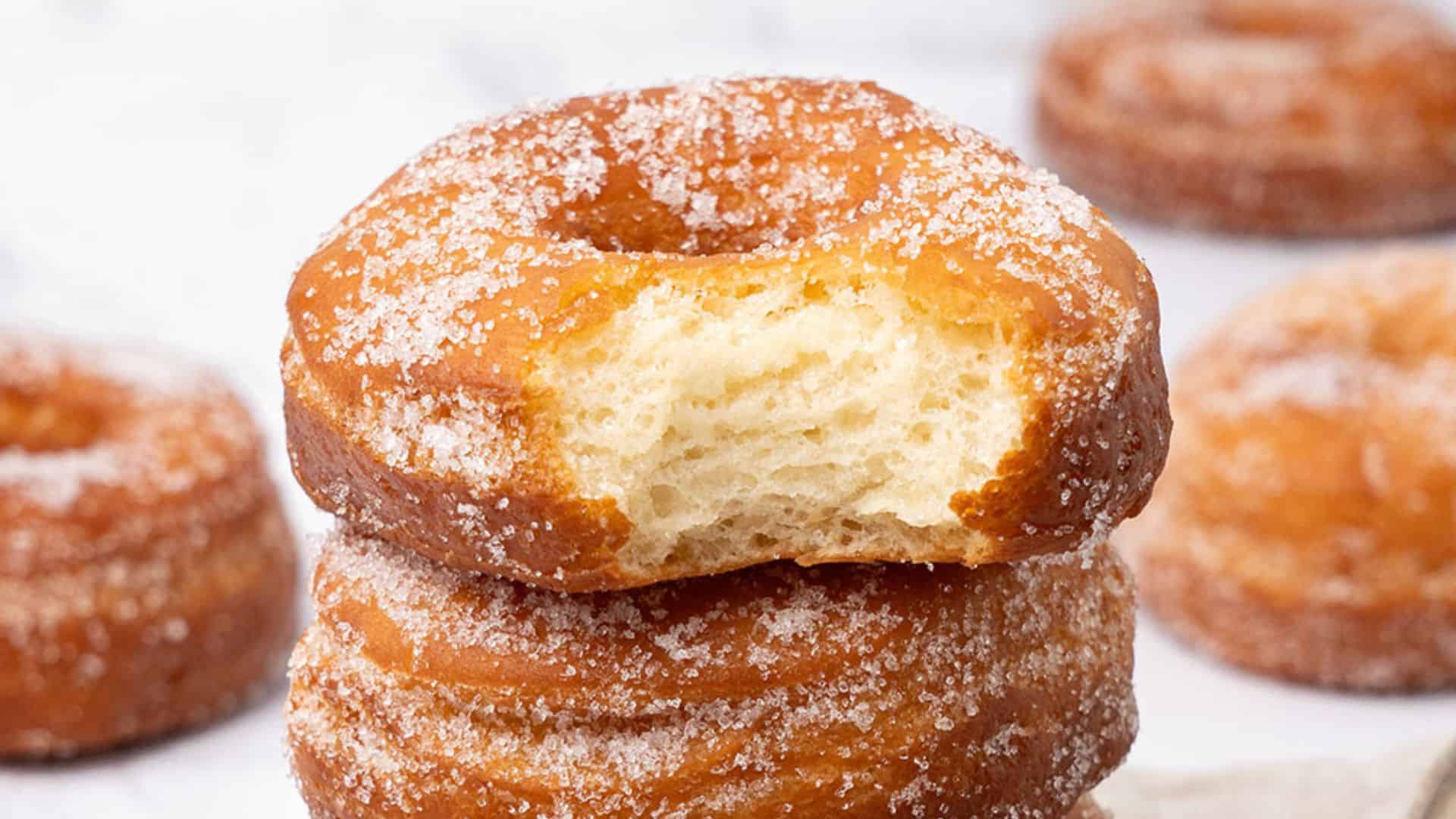
Sweet, crunchy, and hard to resist, these homemade sugar donuts are the perfect mid-day treat alongside coffee or tea or as a post-dinner dessert. This easy sugar donuts recipe is a breeze, requiring only eight ingredients and 30 minutes of your time. You’ll be craving another the very moment you sink your teeth into one of them!
Go to the recipe: Sugar Donuts
Baked Raspberry Donuts

These easy, baked raspberry donuts with raspberry glaze and juicy, fresh raspberries have an exceptionally moist texture and delicious flavor that will impress everyone and have them asking for more. Baked donuts are effectively cake doughnuts that are super easy to make, even if you are less experienced in the kitchen.
Go to the recipe: Baked Raspberry Donuts
Mochi Donuts

Mochi donuts, well known as Pon-de-ring In Japan, are delicious mochi-like ring-shaped donuts with a signature bouncy and chewy texture and colorful chocolate ganache glazings on top. Apart from their fun shape and versatility in flavoring them (that will mainly come from the glaze), I love them because of their texture: crisp outside with a bouncy, chewy, soft mochi-like inside.
Go to the recipe: Mochi Donuts
Chocolate Donuts

These are the Ultimate baked chocolate donuts with a chocolate glaze that is simply out of this world! This crazy, delicious, must-try homemade doughnut recipe uses chocolate in the dough, the glaze, and the decoration (which might remind you of Brigadeiros)!
Go to the recipe: Baked Chocolate Donuts
Baked Cinnamon Sugar Donuts

These are the best baked cinnamon sugar donuts to make when you want light and fluffy donuts but without the hassle of deep frying. Whether you enjoy donuts with coffee, for breakfast, or as a delicious dessert, this is the recipe for you.
Go to the recipe: Baked Cinnamon Sugar Donuts
Bavarian Cream Donuts

There are many delicious types of cream-filled donuts out there, but these delightful bavarian cream donuts are hands down a treat that everyone will love! Made with buttery brioche donuts and then filled with a creamy, rich French vanilla cream, they are super light, flavorful, and perfect for breakfast or dessert! The vanilla-flavored cream is light and creamy, made with a Crème Anglaise base combined with gelatin and whipped heavy cream.
Go to the recipe: Bavarian Cream Donuts
Leave a Reply