
Slow-simmered in a sweet syrup infused with cinnamon, cloves, and orange peel, these easy poached pears are the perfect elegant yet simple dessert for your next gathering! They can be served hot or cold as a dessert or as part of another sweet or savory dish. This impressively quick, easy 20-minute recipe works with or without alcohol!
Read what others said about this recipe

"I didn't know what to do with so many pears. I saw your recipe and really enjoyed how easy it was, so I made them, and they were delicious. Not too sweet, just the right dessert." Nancy
"I have made this a few times with no adjustments. It is very good & not overly sweet." Marilyn

What are poached pears?
Poached pears are a classic French dessert, created in Burgundy and Lyon to keep fruit from going to waste.
Basically, they are fresh peeled pears that have been immersed in a flavorful spiced liquid and then slowly cooked on the stovetop until tender. In most cases, the cooking liquid is a mixture of sugar, water, and wine. And the most common spices used tend to be cinnamon, cloves, and orange peel.
However, pears can be poached with or without alcohol, and any spices can be added to the poaching liquid. It's a wonderful dessert that presents beautifully and is both easy to make and customize.
Which pears are best for poaching
You want a pear variety that stays firm and holds its shape when cooked. I find the best choice to be Bosc pears, which are a touch sweet but still nice and crisp. My runner-up is Anjou, which is not quite as flavorful but still poaches perfectly. Both varieties of pears will keep their shape and are wonderful choices.
However, it's just as important to mention which pears not to use. I strongly advise you to stay far away from Comice and Bartlett pears. These pears are too soft and will fall apart in the poaching liquid, leaving you with sweet pear soup.
Also, never use overly soft or ripe pears, as they'll turn to mush in the saucepan. Choose pears that are just ripe or slightly underripe. Choose pears that are just ripe or slightly underripe.
What kind of liquid is best for poaching pears?
For this simple poached pears recipe, I used a mix of water and sugar as the base for my poaching liquid, plus a few of my favorite warm spices for flavor. One great thing about poaching pears is that you can customize the poaching liquid any way you like to make it your own. Many people like poached pears in red wine, white wine, tea, or fruit juice and add spices like star anise and cardamom.
This recipe is just a template to show you how to poach pears and how I flavor mine. Here are some more poaching liquid ideas:
- Liquid: white wine, red wine, grape juice, apple juice, tea, water
- Sweetener: white sugar, brown sugar, honey, agave, maple syrup
- Spices: cinnamon sticks, cloves, ginger, cardamom, star anise, vanilla bean, lemon zest, orange peel
How to make poached pears step-by-step
Prepare the poaching liquid by bringing the water, sugar, cinnamon sticks, whole cloves, and orange peel to a boil in a large saucepan. Stir them together a few times. Make sure the pan is large enough to hold both the liquid and the pears comfortably.
In the meantime, peel the pears. Then you can either leave them whole or cut them in half. Keep in mind that whole pears take a little longer to cook than halves.
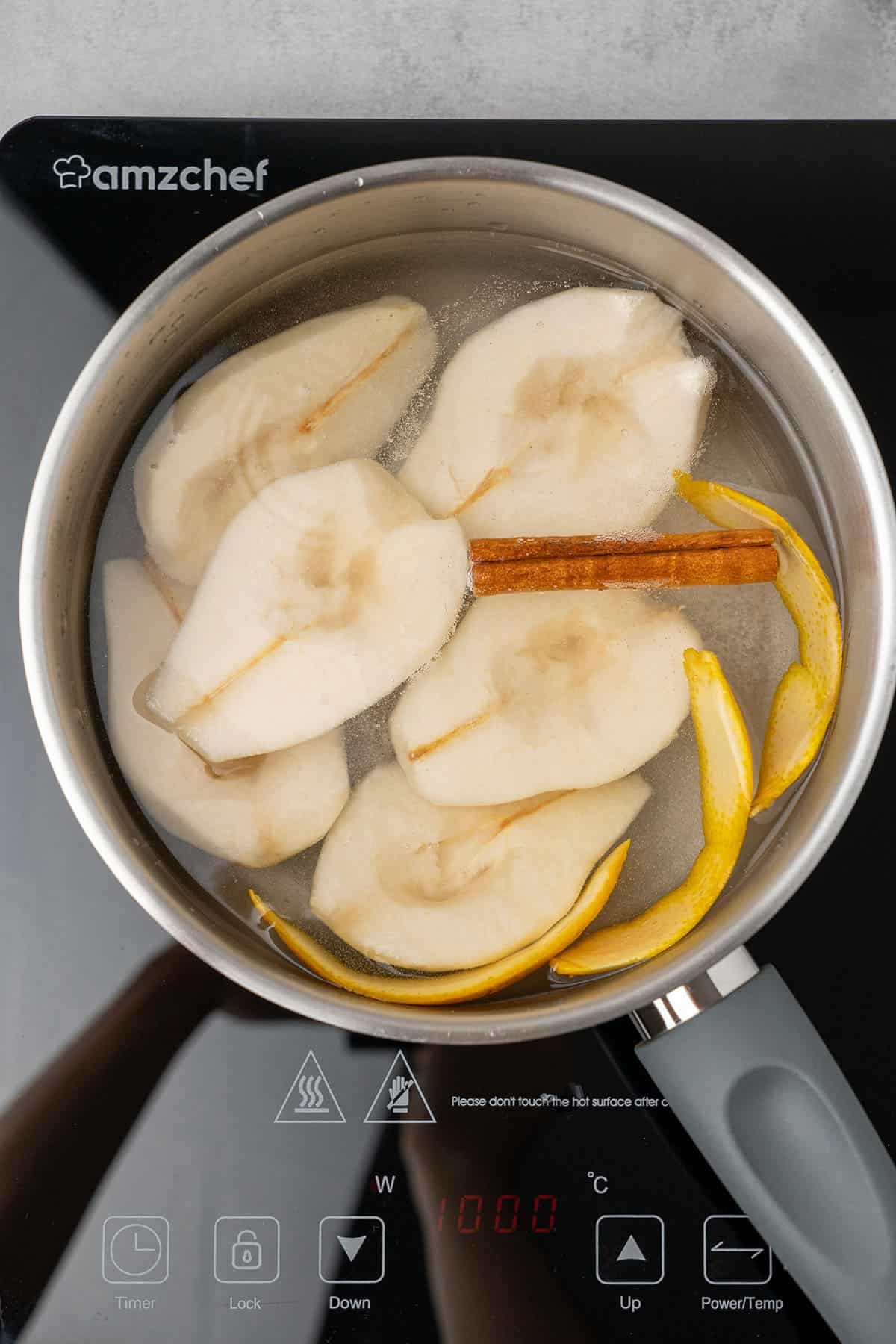
Place the pears in the saucepan and add them to the hot poaching liquid. Then turn the heat down to medium and cook them for about 10 to 15 minutes, or until just tender. It's better to undercook the pears a little rather than overcook them. Simmering on medium heat is key; do not boil it!
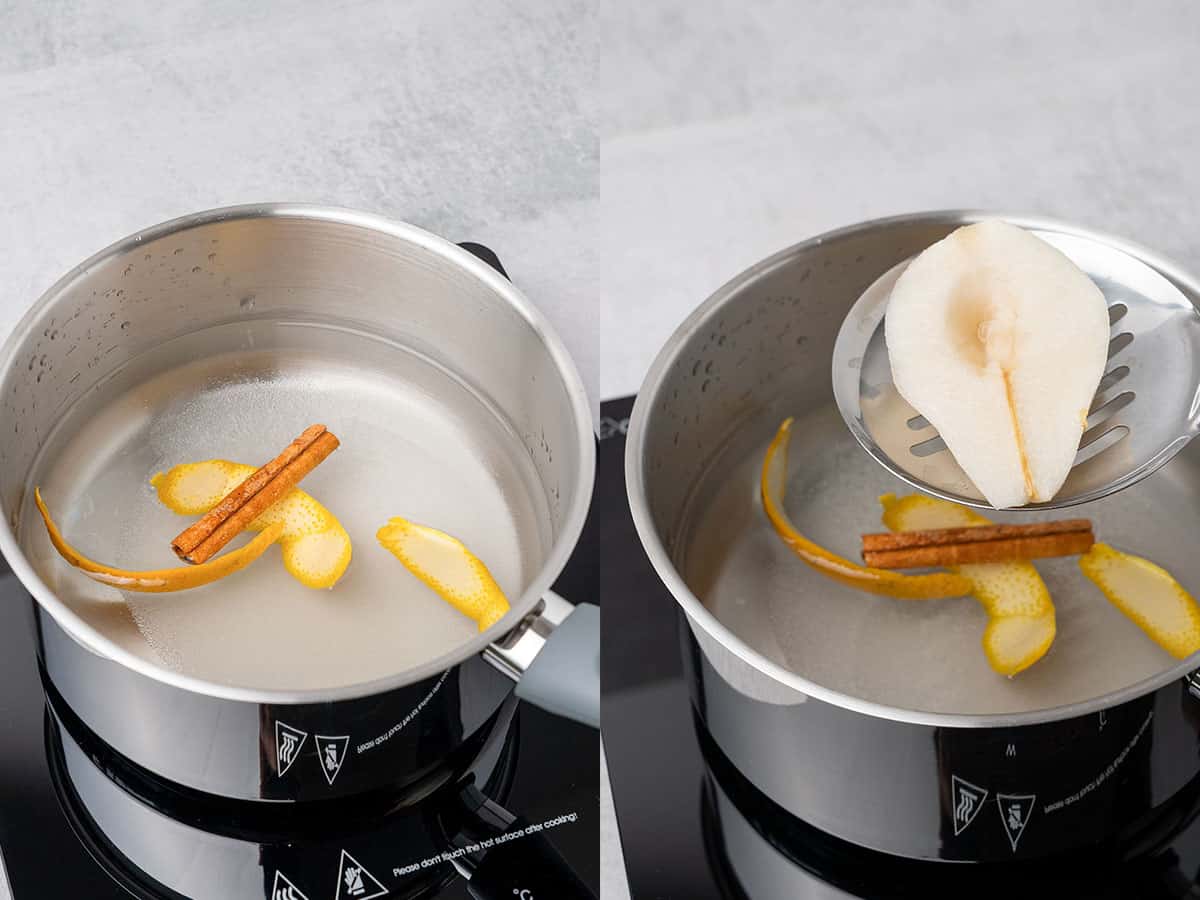
How to tell when they're done? Try the paring knife test; it should slide in with little resistance, like a cooked potato.
A slotted spoon is useful for removing the pears from the poaching liquid. Serve the finished pears warm or cold as a dessert on their own with some mascarpone, whipped cream, or ice cream. Or serve them as part of another recipe or savory dish.
Should I use alcohol to poach pears
Whether or not you decide to use alcohol to poach your pears is completely up to you! It's just a matter of taste and personal preference. Remember when adding alcohol to the poaching liquid you need to dilute it with water to balance the flavors.
If you use wine, it adds a lovely touch of acidity to the pears that contrasts beautifully with the fruit's natural sweetness and the added spices. Wine-poached pears are the most classic way, but not the only way. For red wine pears: let them sit in the liquid overnight, turning occasionally, for that even ruby color.
And talking about alcohol, it's also possible to use rum, bourbon, brandy, or really most any alcohol you like to poach pears. It's not as common as wine, but you will find pear-poaching recipes that call for spirits. They're also a wonderful addition to the poaching liquid, and the cooking process is exactly the same.
How to poach pears without wine? It is exactly the same process. For example, you can use grape juice, apple juice, water, or even a bit of fresh lemon juice in your poaching liquid. These are all fantastic options for making alcohol-free, flavorful pears.
How to serve poached pears
Now we have perfectly cooked pears! But more importantly, how do you eat poached pears?
For a simple yet elegant dessert, serve them with a scoop of vanilla ice cream. Hot pears will melt cold ice cream, so keep that in mind when planning your menu. You may want to serve them at room temperature instead.
Don't throw away the poaching liquid! Simmer it until it reduces to a glossy syrup, then spoon it over the pears just before serving. It adds flavor, shine, and makes the whole plate look restaurant-worthy.
For a classic French dessert, try Poire Belle Hélène: poached pears served with vanilla ice cream and warm chocolate sauce. It's one of the most famous pear desserts for a reason.
This easy mascarpone whipped cream frosting is another delicious and simple serving option. Top it with a sprinkle of toasted nuts like walnuts, almonds, or pistachios for crunch. Or serve the pears alongside a slice of cake or a simple crème anglaise.
Poached pears also pair beautifully with other creamy desserts. Serve them on top of panna cotta, rice pudding, or a spoonful of thick Greek yogurt. For breakfast, slice them over oatmeal or yogurt, then top with granola and a drizzle of the reduced syrup.
Many recipes call for poached pears, like this pear galette. In fact, many restaurants top salads with poached pears or include them on cheese platters. They're especially good with blue cheese, brie, or aged cheddar, plus a handful of nuts and a drizzle of honey. These are all ways you can use this cooking technique in both sweet and savory dishes.
Poached pears also make a lovely savory side dish. Cook them in red or white wine with less sugar and a few savory aromatics like black peppercorns, bay leaf, or a sprig of thyme or rosemary. Serve them alongside roast pork, pork tenderloin, duck breast, or roast chicken, where their gentle sweetness balances the rich meat, just like applesauce or cranberry sauce would.

Expert tips
- Use pears that are all about the same size and equally ripe for even cooking and the best outcome.
- Use a proper vegetable peeler to peel the pears rather than a knife. You just want to remove the pears' skin while keeping their shape, rather than cutting into them.
- The pears must be fully immersed in the liquid as they simmer to cook evenly. So if you double the number of pears, you also need to double the liquid.
- Watch the pears closely as they cook. How long they take to poach depends on their size and ripeness.
- Do not boil the pears. They must simmer slowly, which helps them keep their shape and absorb the spiced poaching liquid.
- To avoid overcooking the pears, remove them from the liquid as soon as they are tender. They will continue to cook in the hot liquid if they sit in the saucepan.
- Do not toss out the poaching liquid. You can use it to store the pears or as part of the dessert. It's full of sweet, spiced goodness, and the longer the pears sit in it, the more flavorful they become.
- Feel free to adjust the spices and amount of sugar used. You can even omit the sugar to make healthy poached pears or add more depending upon how you want to use them.

Storage & Make Ahead
Store leftover poached pears in an airtight container in the refrigerator for up to 4–5 days. Keep them fully submerged in their poaching liquid to prevent drying out or browning and to keep them soft and flavorful.
To serve, enjoy them cold, bring them to room temperature, or reheat gently in their liquid in a saucepan over low heat until just warmed through. Avoid boiling them again, as they can turn mushy.
You can also freeze poached pears in their syrup for up to 3 months. Thaw them overnight in the fridge. They'll be slightly softer after freezing, so they're best used in desserts like yogurt bowls, cakes, or with ice cream rather than served whole as a showstopper plate. In general, I advise against using the freezer for this type of dessert, especially since it takes only 20 minutes to make.
Poached pears are the perfect make-ahead dessert, and they actually get better with time. Poach them 1–2 days before serving and let them cool in the liquid, then refrigerate.
More Apple and Pear dessert recipes
If you love this poached pears recipe, here are more apple and pear dessert recipes to try next.
Here are even more pear desserts.

Have you tried this recipe?
Please leave a 5-star ⭐️⭐️⭐️⭐️⭐️ rating on the recipe card and consider leaving a comment as well!

20-Min Poached Pears (With or Without Alcohol)
Ingredients
- 3 Pears firm varieties like Bosc and Anjou
- 1 liter (4¼ cups) Water optionally replace half of the water with red or white wine
- 150 g (¾ cups) Granulated sugar
- 1 large Cinnamon stick
- 1 Orange peel
- few Cloves
US customary cup measurement is an indicative figure only. Measure the ingredients with a digital scale by weight (gram). Baking is art but also science which requires precision and accuracy.
Instructions
- Add the water, sugar, cinnamon sticks, cloves, and orange peel to a saucepan large enough to hold the liquid and the pears in a single layer without crowding. Bring to a boil over medium-high heat, stirring until the sugar dissolves completely.
- While the liquid heats, peel the pears with a vegetable peeler, keeping their natural shape. Leave the stems on for presentation. Either keep them whole (slice a thin piece off the bottom so they stand upright) or cut them in half lengthwise and scoop out the core with a small spoon or melon baller. Place the peeled pears in a bowl of cold water with a squeeze of lemon juice to prevent browning.
- Lower the pears into the hot liquid and reduce the heat to medium-low so it gently simmers, never boils. Make sure they're fully submerged; if they float, cover the surface with a round of parchment paper or a small plate. Cook halves for 10–12 minutes and whole pears for 15–20 minutes, turning them occasionally for even color.
- Insert the tip of a paring knife into the thickest part of a pear. It should slide in with just a little resistance. It's better to undercook them slightly, as they keep softening in the hot liquid. Remove the pears with a slotted spoon as soon as they're tender.
- For a glossy sauce, bring the remaining liquid back to a simmer and reduce it by about half, until slightly syrupy.
- Serve warm, at room temperature, or chilled as an individual dessert with whipped mascarpone, vanilla ice cream, or the reduced syrup. If using them in another recipe, let them cool and proceed according to that recipe.
- Store leftovers in an airtight container in the refrigerator for up to 4–5 days, fully submerged in the poaching liquid.
Notes
- Use Bosc or Anjou pears that are just ripe or slightly underripe. Avoid Comice and Bartlett, which fall apart.
- Choose pears of a similar size and ripeness so they cook evenly.
- Swap part or all of the water for red or white wine, apple or grape juice, or brewed tea. Add star anise, cardamom, vanilla bean, or lemon zest to vary the flavor.
- Adjust the sugar to taste, or replace it with honey or maple syrup.
- Never boil the pears. A gentle simmer keeps their shape and lets them absorb the spices.
- If you double the pears, double the liquid so they stay submerged.
- For red wine pears, let them cool in the liquid overnight, turning occasionally, for a deep, even color.
- Don't discard the poaching liquid. Use it to store the pears, reduce it into a syrup, or add it to cocktails and sparkling water.
Marilyn
I have made this a few times with no adjustments. It is very good & not overly sweet. I may trying replacing sugar with maple syrup next time since maple syrup is much better for diabetics.
Nancy Ponce
I didnt know what to do with so much pears. I saw your recipe and really enjoyed how easy it was. I made them and delicious. Not too sweet just the right dessert.
Leila
I love your site , you make the recipes look so easy. I am wanted to try poached pears and they came out delicious. Thanks