
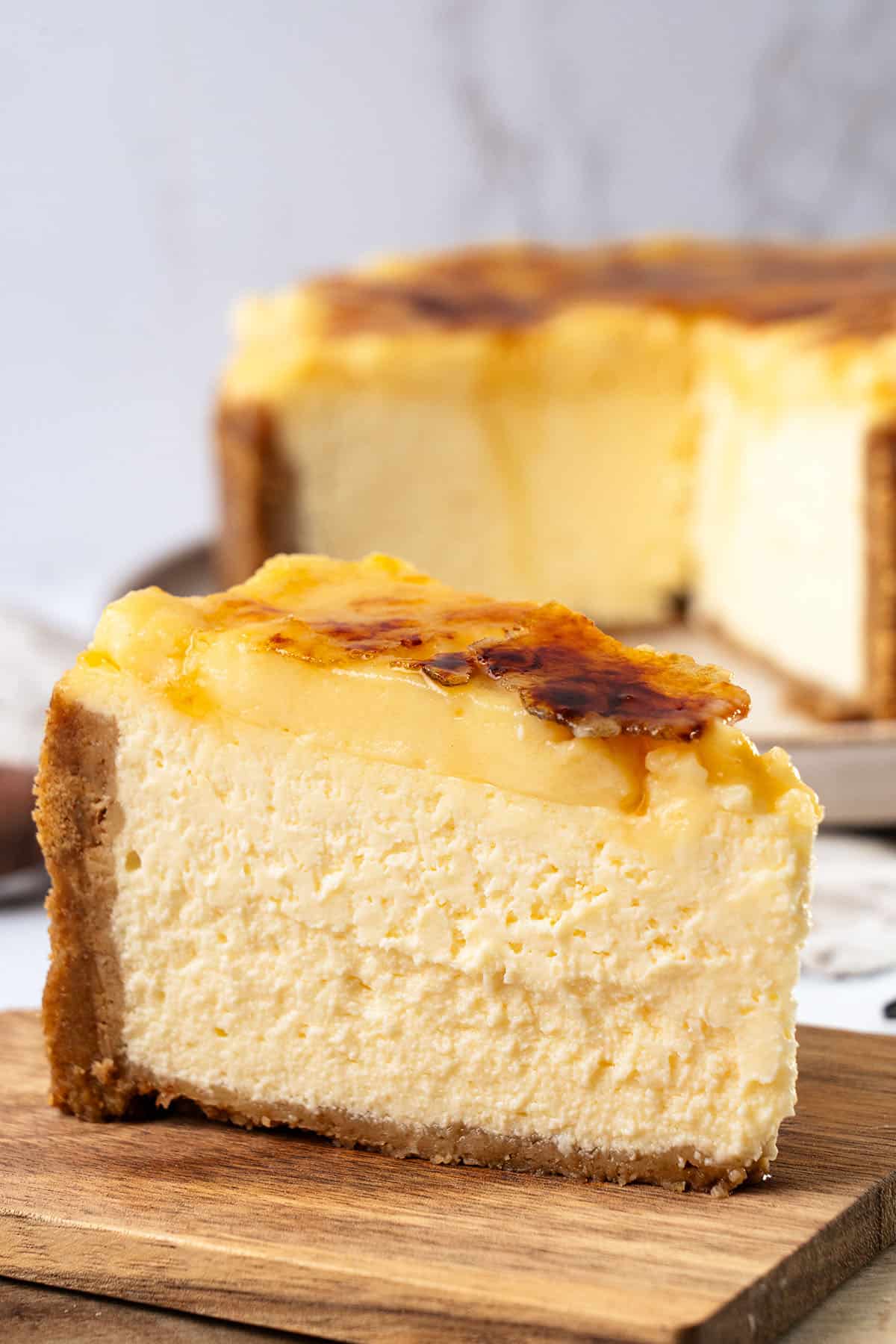
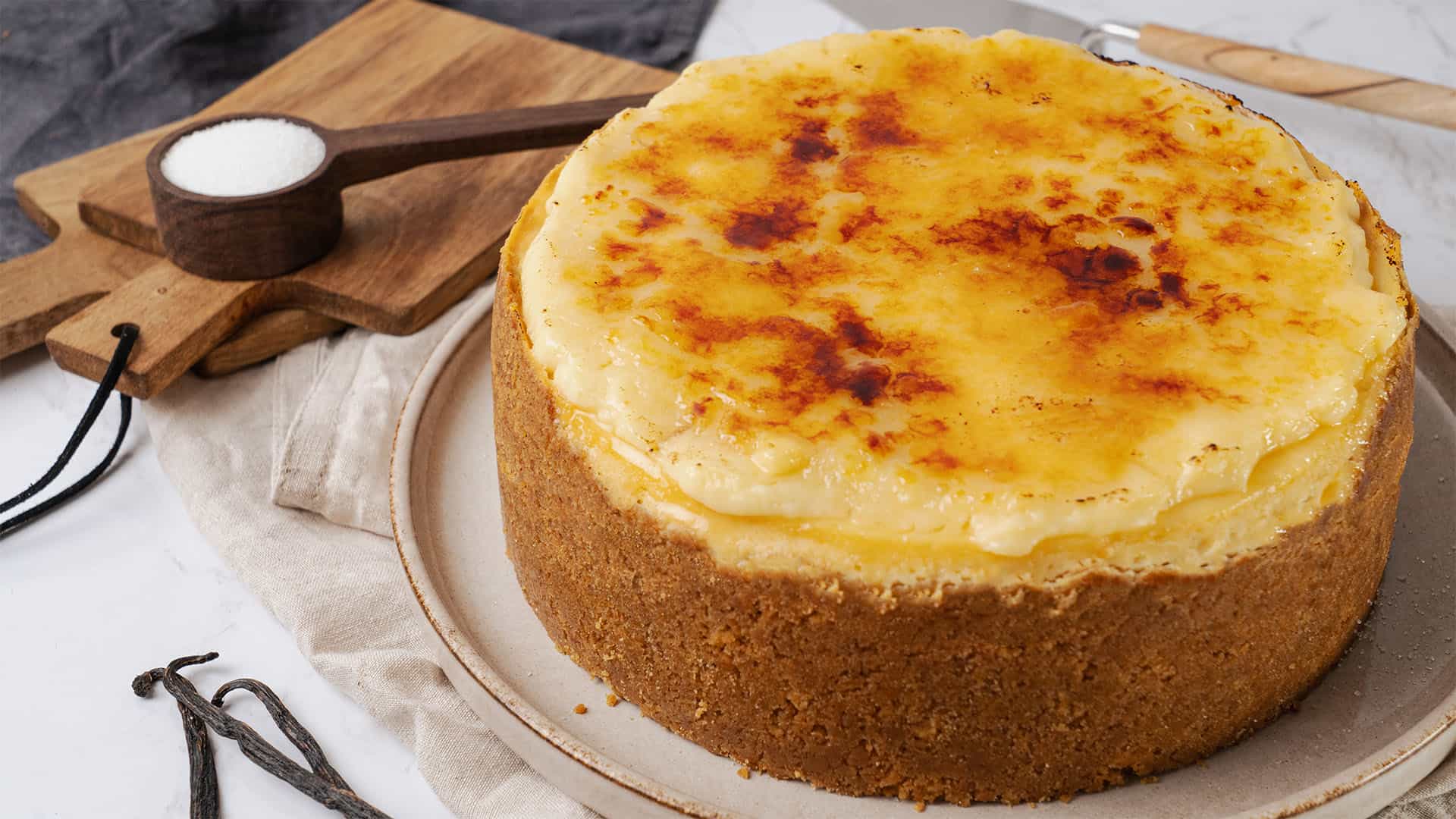
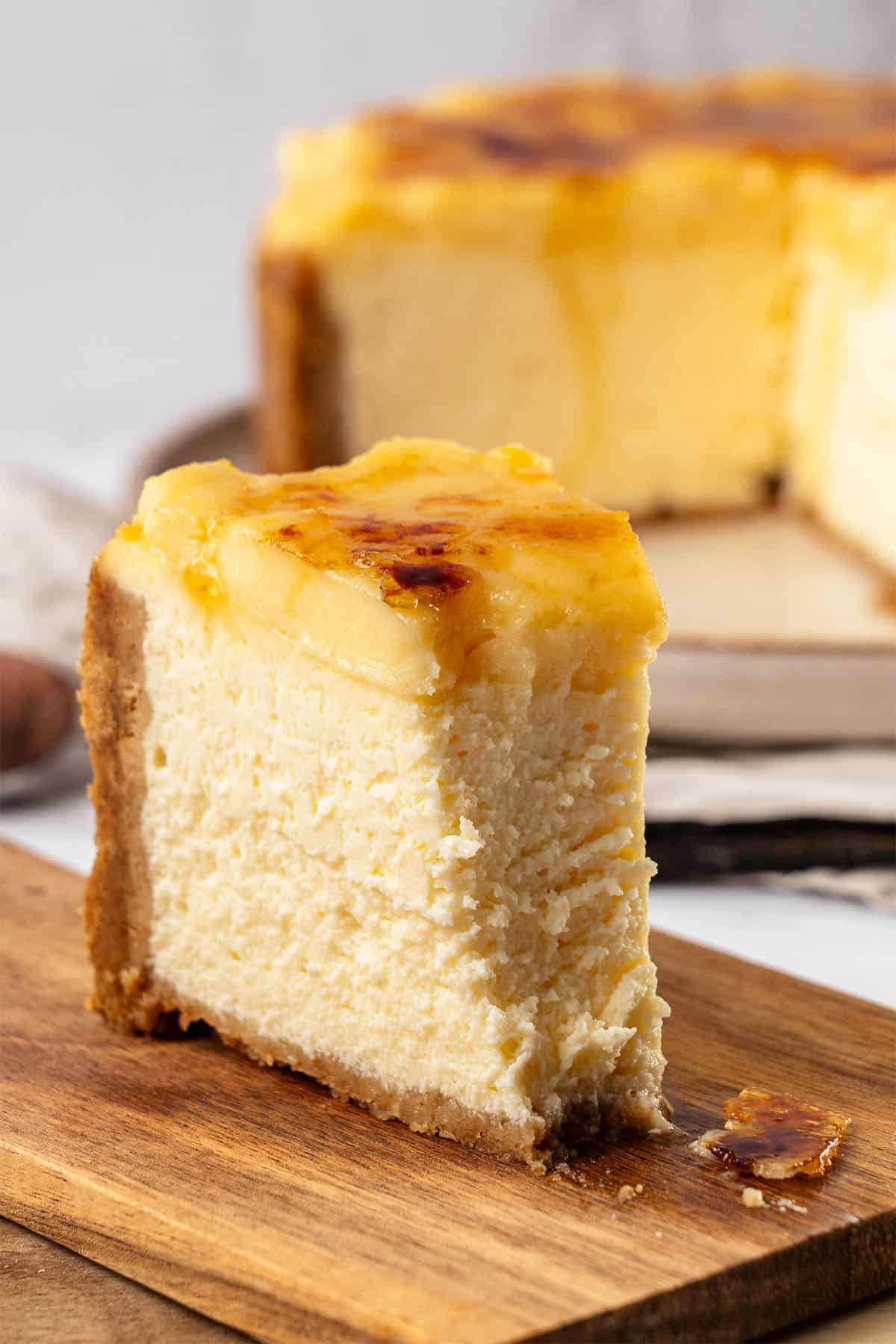
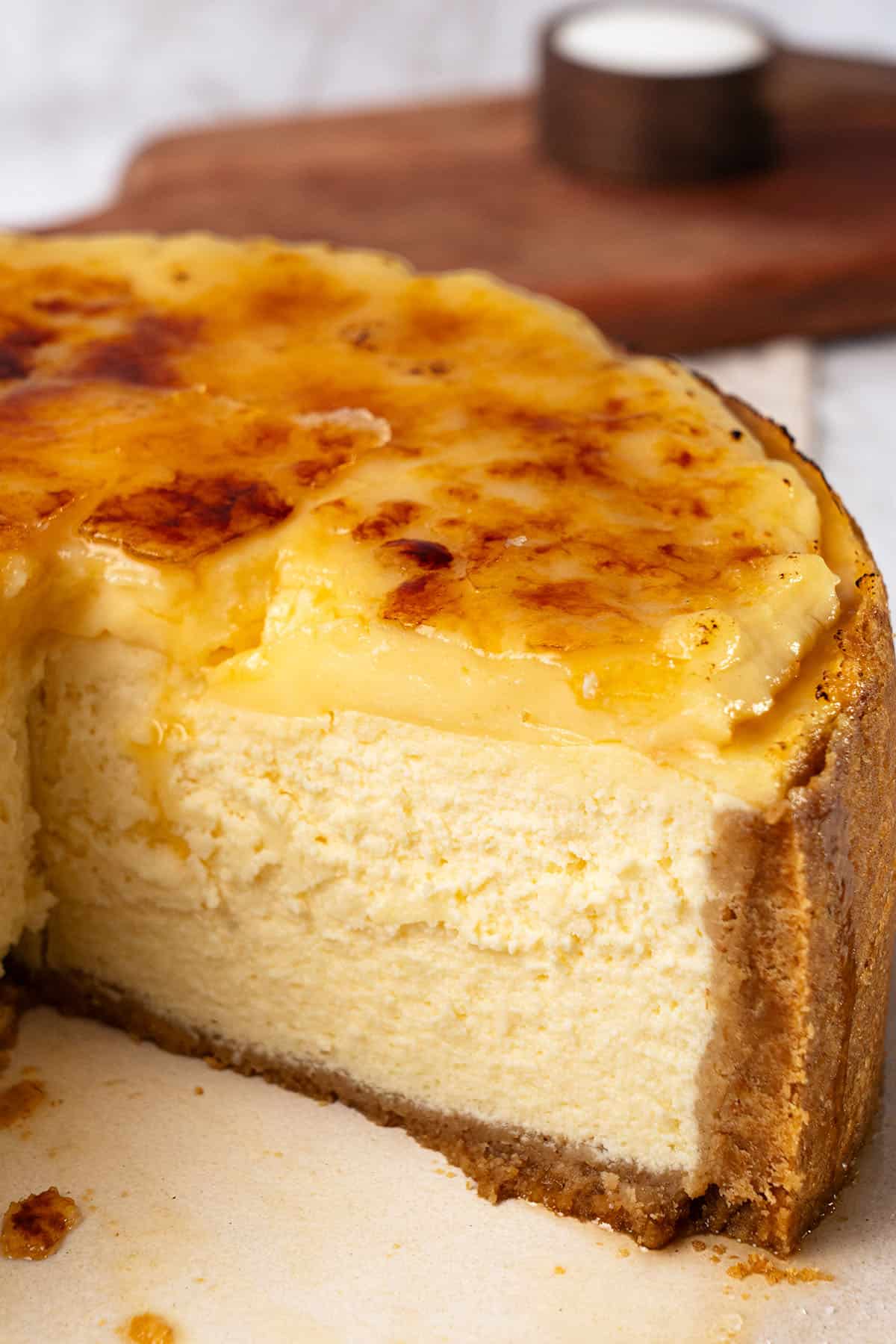
Crème Brûlée Cheesecake perfectly combines the smooth richness of classic cheesecake with silky vanilla pastry cream and the caramelized sugar topping everyone loves from crème brûlée. It’s an elegant dessert that feels special enough for holidays and any occasion that calls for a true showstopper.
Best Crème Brûlée Cheesecake Recipe
This Crème Brûlée Cheesecake recipe delivers bakery-quality results without guesswork. Every step has been tested to create the right balance for a smooth cheesecake base and the signature crackly sugar topping that defines a true crème brûlée.
What sets this recipe apart is the level of detail in every step. It walks you through everything, from building the ultimate graham cracker crust to baking a cheesecake that stays silky and creamy. It also explains how to make homemade vanilla cream and finishes with practical tips on caramelizing sugar properly.
For example, overbaking can dry out a cheesecake and cause cracks on the surface. These small but important details make a noticeable difference in the final result.
It’s a recipe that teaches technique and delivers a bakery-style dessert you can serve for celebrations, or anytime you want something truly impressive.
Katalin's key take on whether a water bath is needed for making Crème Brûlée Cheesecake?
Using a water bath is one of those behind-the-scenes techniques that often gets overlooked, yet it plays a big role in how a cheesecake turns out.
This recipe will still work without it, especially since the topping disguises any surface imperfections. That said, if your goal is a cheesecake with a refined, bakery-quality consistency that is smooth, rich, and evenly set, this step is strongly worth considering.
The water bath works by adding moisture to the baking environment. Instead of being exposed to harsh temperature changes, the cheesecake cooks slowly and steadily. This prevents the filling from drying out, rising too quickly, or developing cracks. The result is a custard-like interior that stays dense, creamy, and luxuriously smooth.
Don't skip it!
Start with the Graham cracker crust
Begin by melting the butter, then let it cool slightly so it doesn’t soak the crumbs too quickly. Crush the graham crackers in a food processor or seal them in a bag and roll them evenly. You want a sandy texture, not a powdery one. If the crumbs are too fine, the crust can become dense rather than crisp during baking.
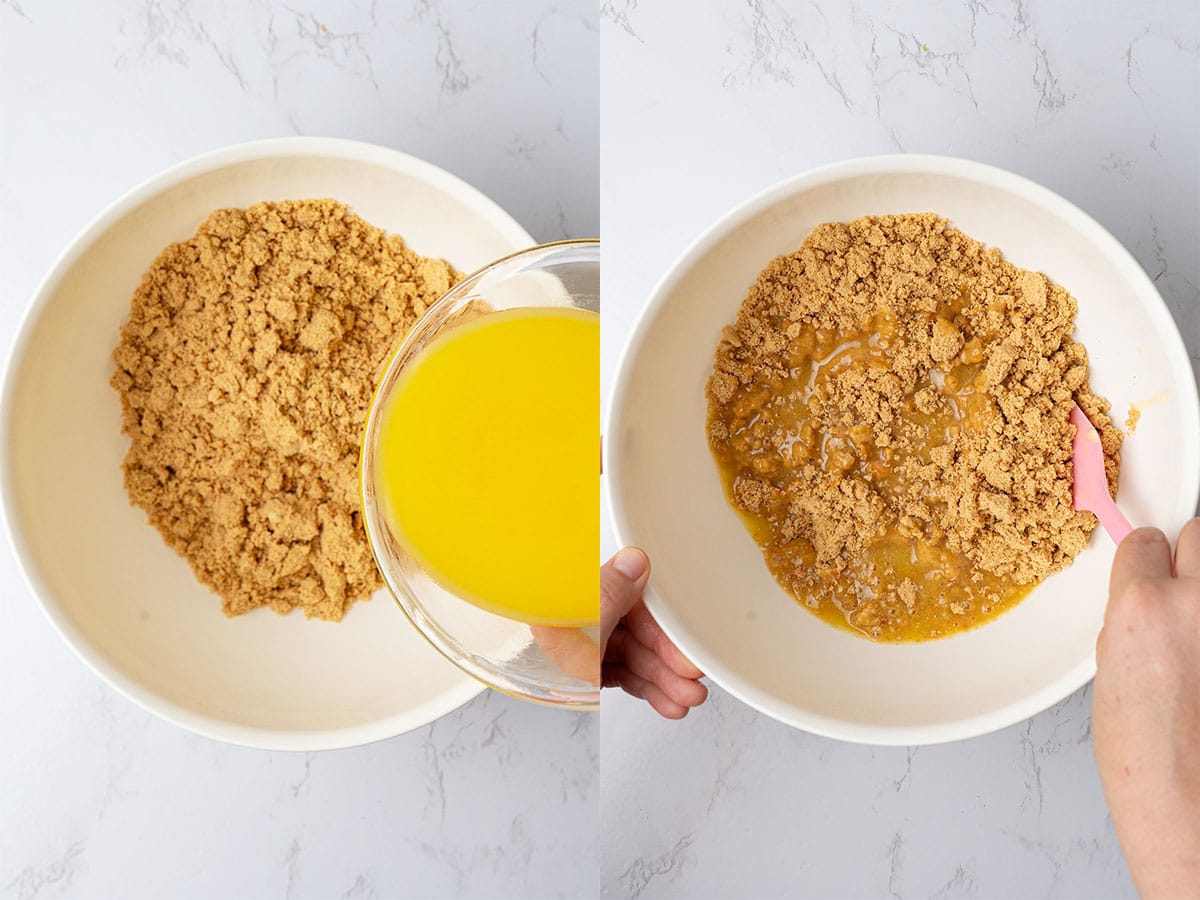
Season the crumbs with a small pinch of salt to balance the sweetness, then drizzle in the melted butter while mixing. The mixture should clump lightly when pressed. If it looks wet or shiny, it’s over-buttered and will bake greasy.
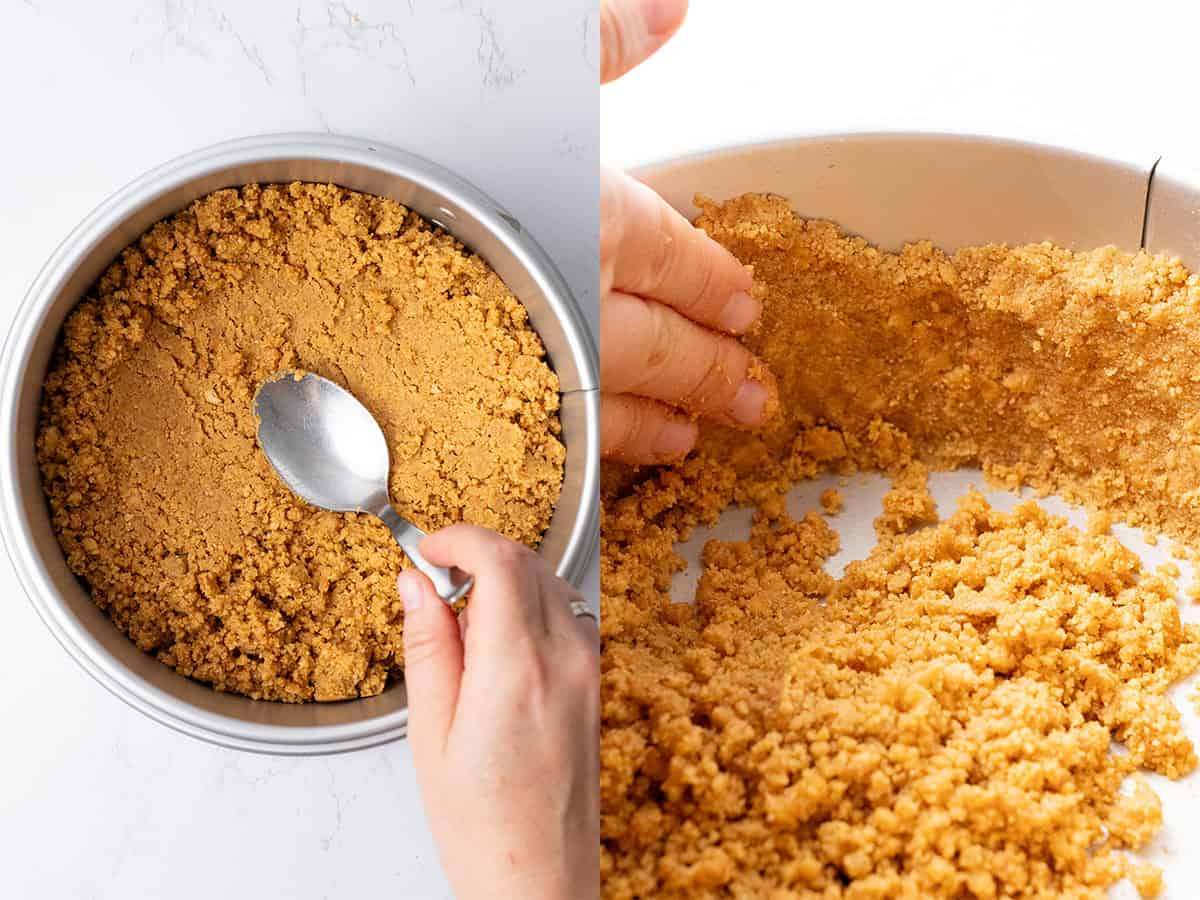
Press the crust into the pan using even pressure. Use the flat bottom of a measuring cup or a spoon to press and smooth the surface without compressing it too tightly. You can also wash your hands and use your fingers to press in the bottom and up the sides.
Bake the crust for 8-10 minutes at 350°F (175°C), then let it cool completely before adding the cheesecake filling.
Be sure to look at my Graham cracker cheesecake crust recipe, where I share all my professional tips on how to make the perfect crust.
Water bath preparation
Pick a deep roasting pan that allows at least an inch of space around the springform pan on all sides. This spacing helps the hot water circulate evenly and keeps the cheesecake insulated from direct oven heat.
Wrap the outside of the springform pan to create a watertight seal. Use multiple layers of heavy-duty foil, pressing it around the base and up the sides. I like to use 5-6 layers to ensure it's watertight. If you think the foil is too thin, it likely is. Overlap and crimp seams and edges, and layer as needed.
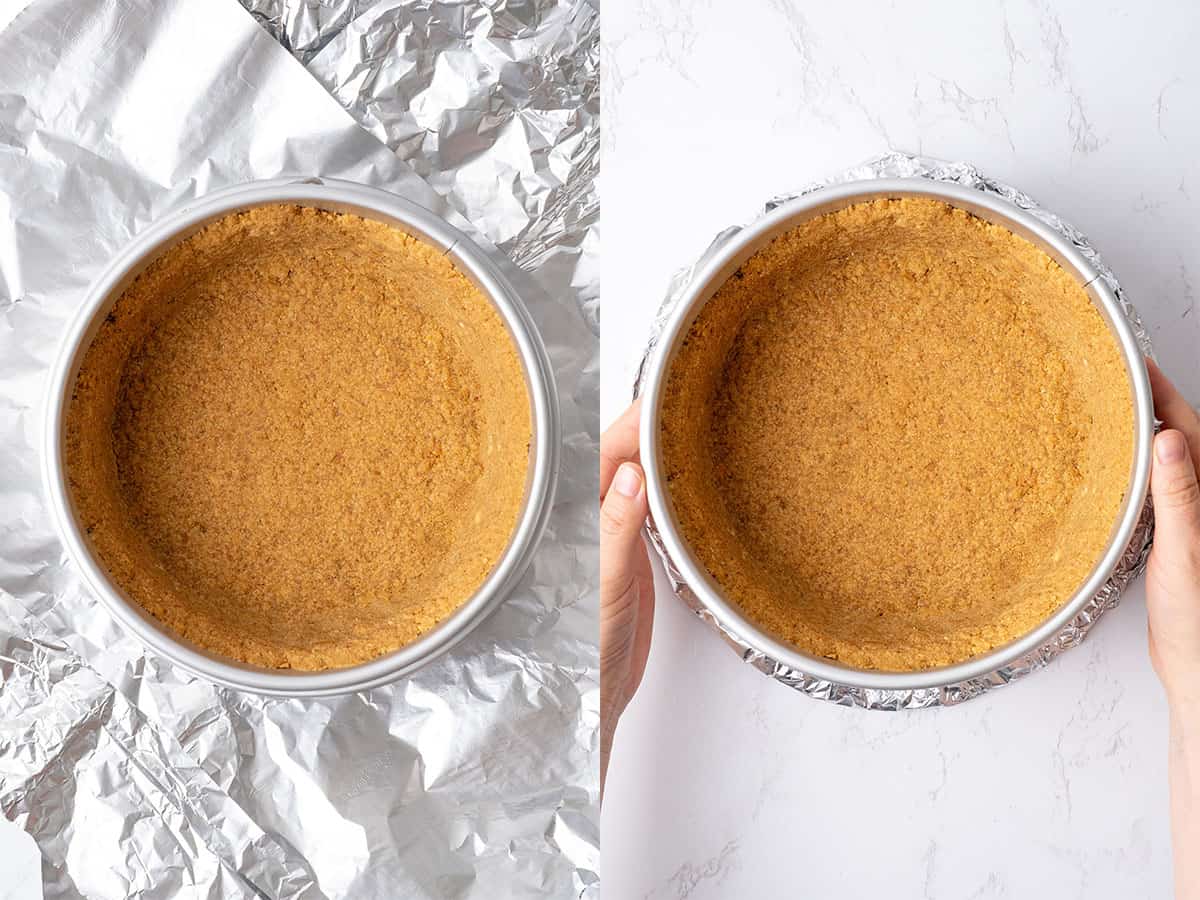
Make the creamiest cheesecake batter of your life
Add the room-temperature cream cheese to the bowl of a stand mixer with the paddle attachment. Mix on low to medium-low speed. This step is about removing lumps, not whipping. It should be low and slow. Stop mixing once the cream cheese looks smooth. Grab a subber spatula, then scrape the sides and bottom of the bowl.
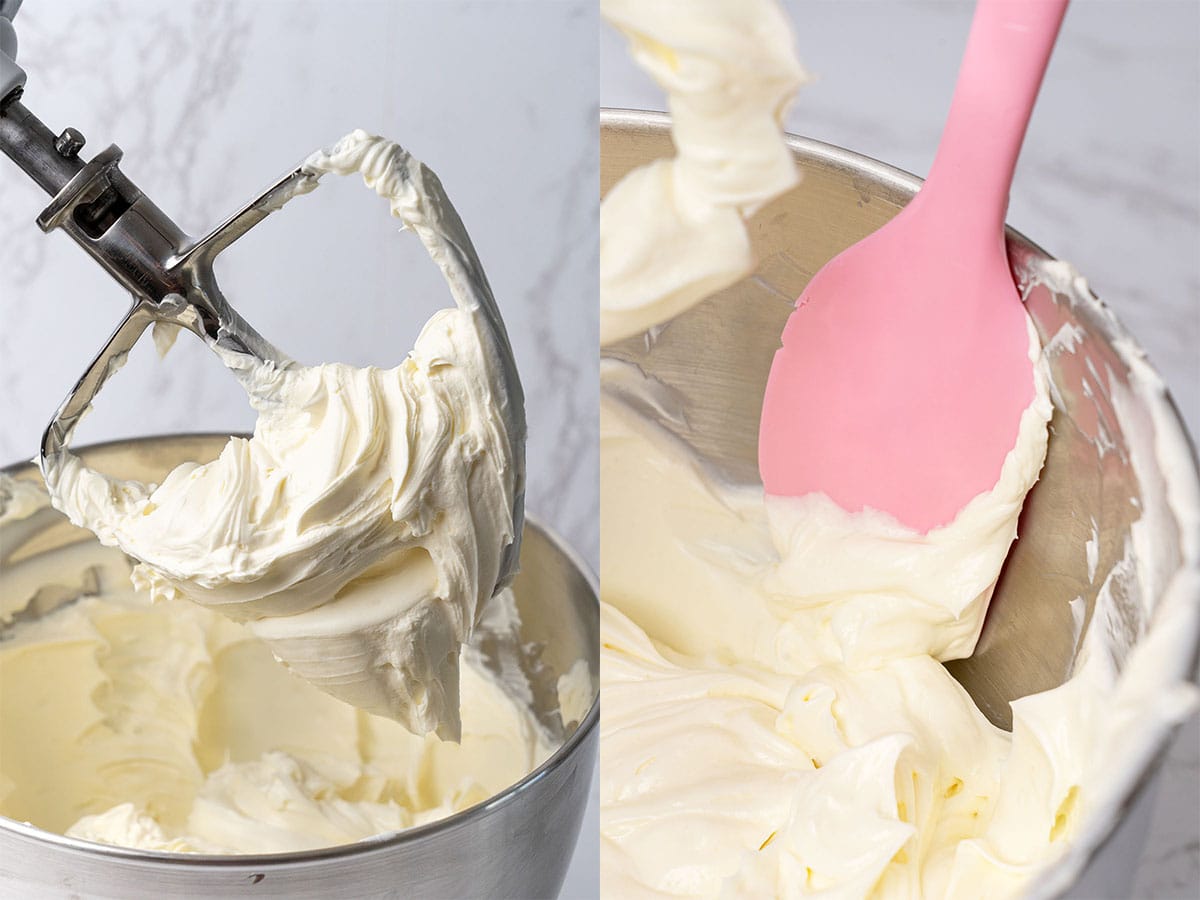
Add the sugar next and continue mixing on low speed. Let it blend until the mixture looks glossy and uniform. Scrape the bowl again. The sugar helps loosen the cream cheese, but rushing this step can leave gritty pockets that show up later in the baked cheesecake. Low and slow is best.
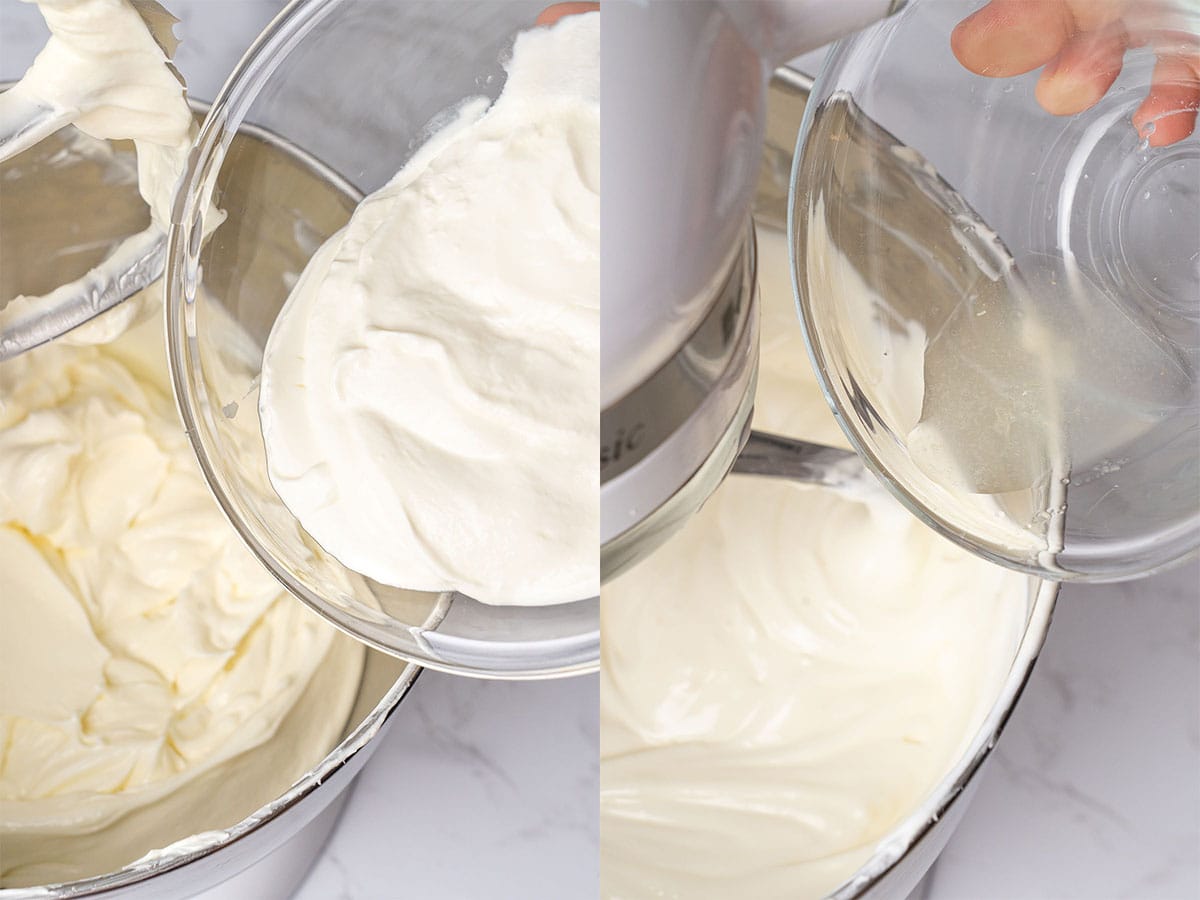
Next, add the flavoring ingredients: fresh lemon juice, high-quality vanilla extract, and sour cream. Keep the mixer on low and stop as soon as the mixture is blended. Overmixing here can thin the batter too much, making it runnier than it should be.
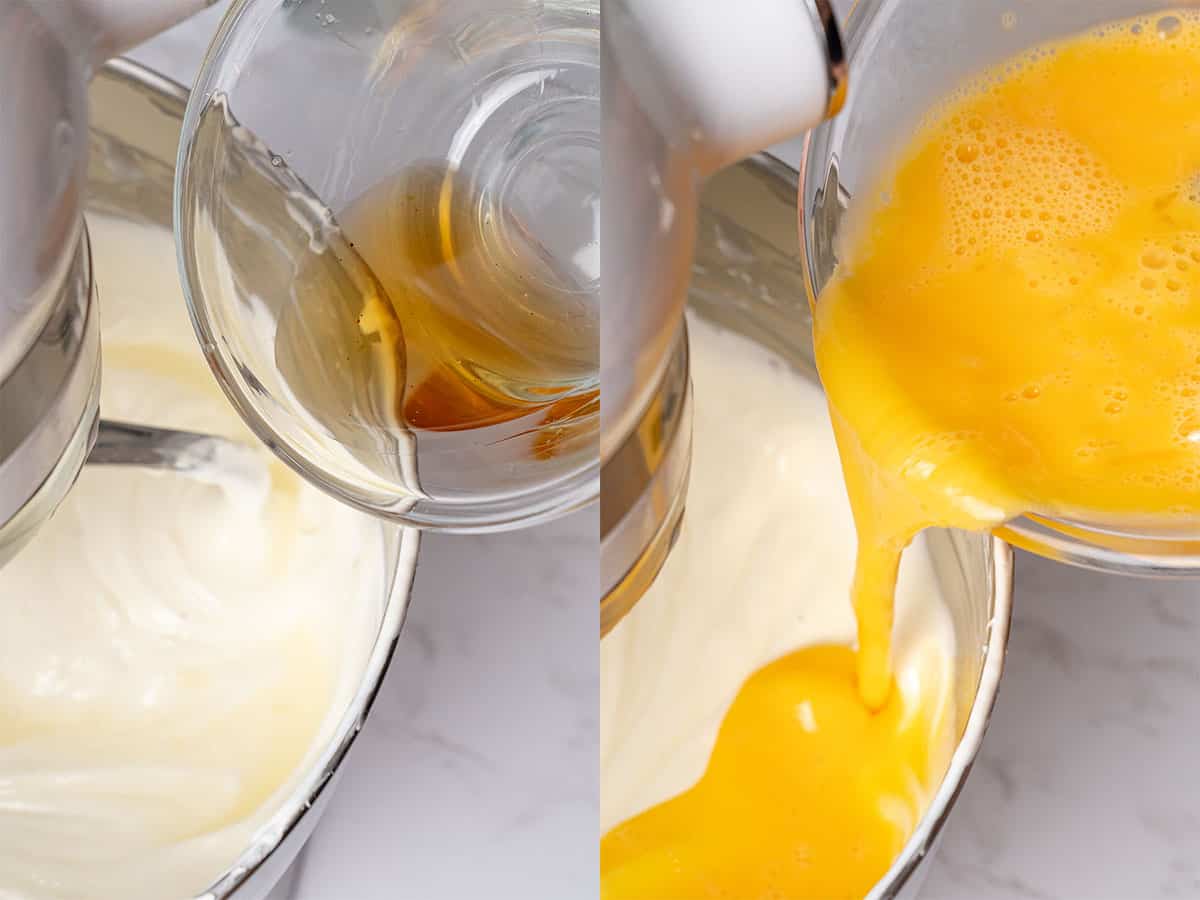
Before adding the eggs, whisk them together in a separate bowl. This helps them incorporate evenly without overworking the batter. Pour the eggs in slowly and mix on low speed until just combined. Once it looks smooth, stop mixing.
How to bake cheesecake without overbaking
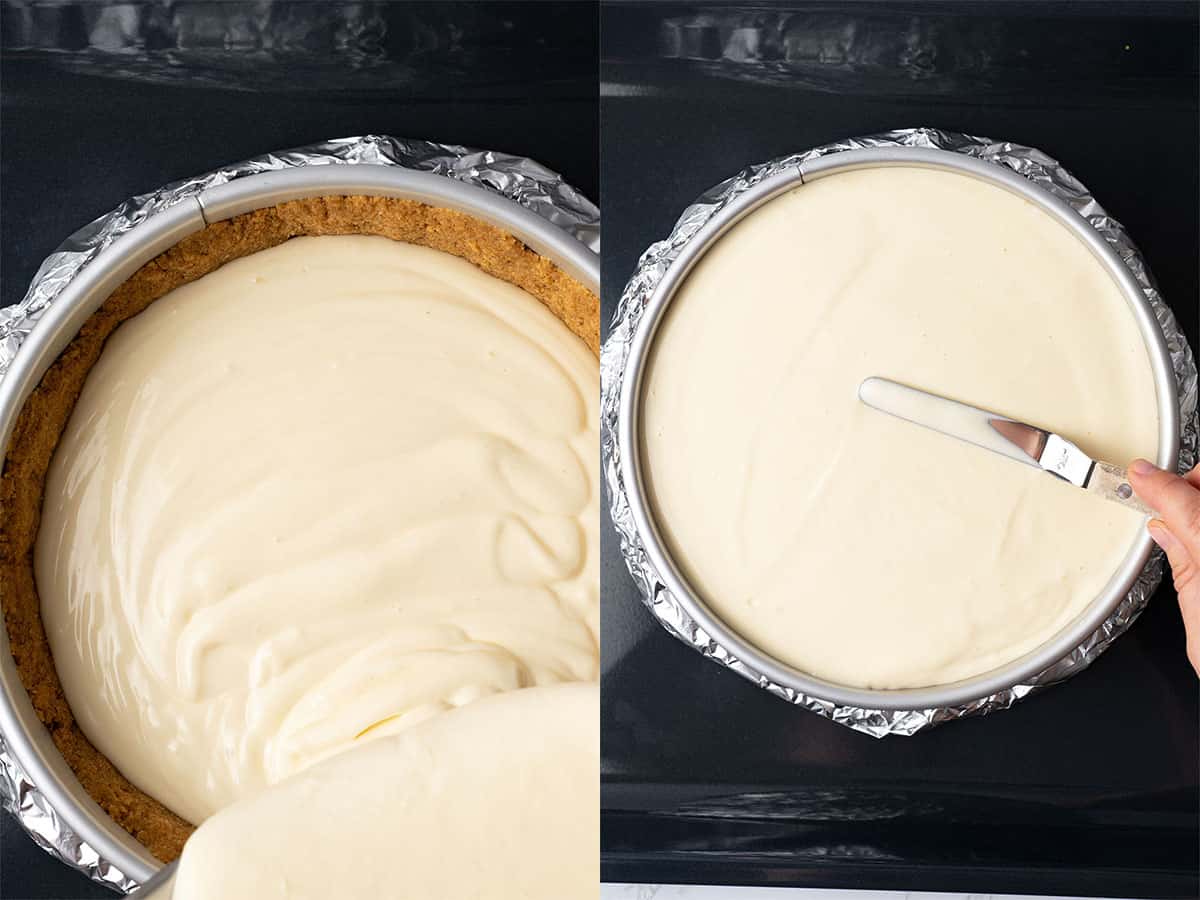
Pour the cheesecake batter into the cooled crust, then place the springform pan into the prepared water bath. Add hot water to the roasting pan until it reaches roughly ⅓ of the way up the side. This heat protects the cheesecake from sudden temperature changes and keeps the creamy center soft as it bakes.
Bake the cheesecake at 325°F (165°C), fan off. Do not open the oven door during baking, as a drop in temperature can cause the cheesecake to collapse.
The cheesecake will need to bake for 60-75 minutes, but be sure to check for visual cues as well. The outer edges should appear set and slightly puffed, while the center should still move gently when the pan is nudged. The wobble isn't anything to worry about and just means the cheesecake will finish setting as it cools without becoming dry. The cheesecake should stay light in color.
When the baking time is done, turn off the oven and leave the cheesecake inside. Don't open the oven door. This time helps stabilize the internal temperature, reducing the risk of cracks and sunken centers. After an hour, remove the cheesecake from the water bath, peel off the foil, and let it cool to room temperature before chilling in the fridge for at least 6 hours. If you can chill overnight, this gives the cleanest slices and best texture.
Make the pastry cream topping and caramelize the top
While the cheesecake chills, it's time to focus on the pastry cream. Begin by whisking the egg yolks and sugar together in a large bowl until the mixture looks lighter in color. It should also be slightly thickened. Add the cornstarch, flour, and vanilla, whisking until the mixture forms a lump-free paste.

Warm the milk in a saucepan over medium heat. Do not let it boil. Pour the warm milk into the egg mixture while whisking constantly to temper the yolks. This gradual process prevents the eggs from cooking.

Pour the mixture back into the saucepan and cook over medium heat, whisking constantly. As it heats, the cream will thicken quickly. Once it reaches a gentle boil, continue whisking for about a minute until it becomes glossy and fully thickened. If you notice any small lumps, don’t panic. Keep whisking!

Take the pan off the heat and add the butter in small pieces, folding them in. Adding the butter in stages helps it emulsify evenly and creates a velvety texture. The finished pastry cream should be smooth and spoonable. For even more tips, be sure to visit my Classic Crème Pâtissière recipe.
Put the pastry cream into a shallow bowl and cover it with plastic wrap, pressing it directly against the surface to prevent a skin from forming. Let it cool completely before using. Warm pastry cream will melt into the cheesecake, ruining the clean layers.
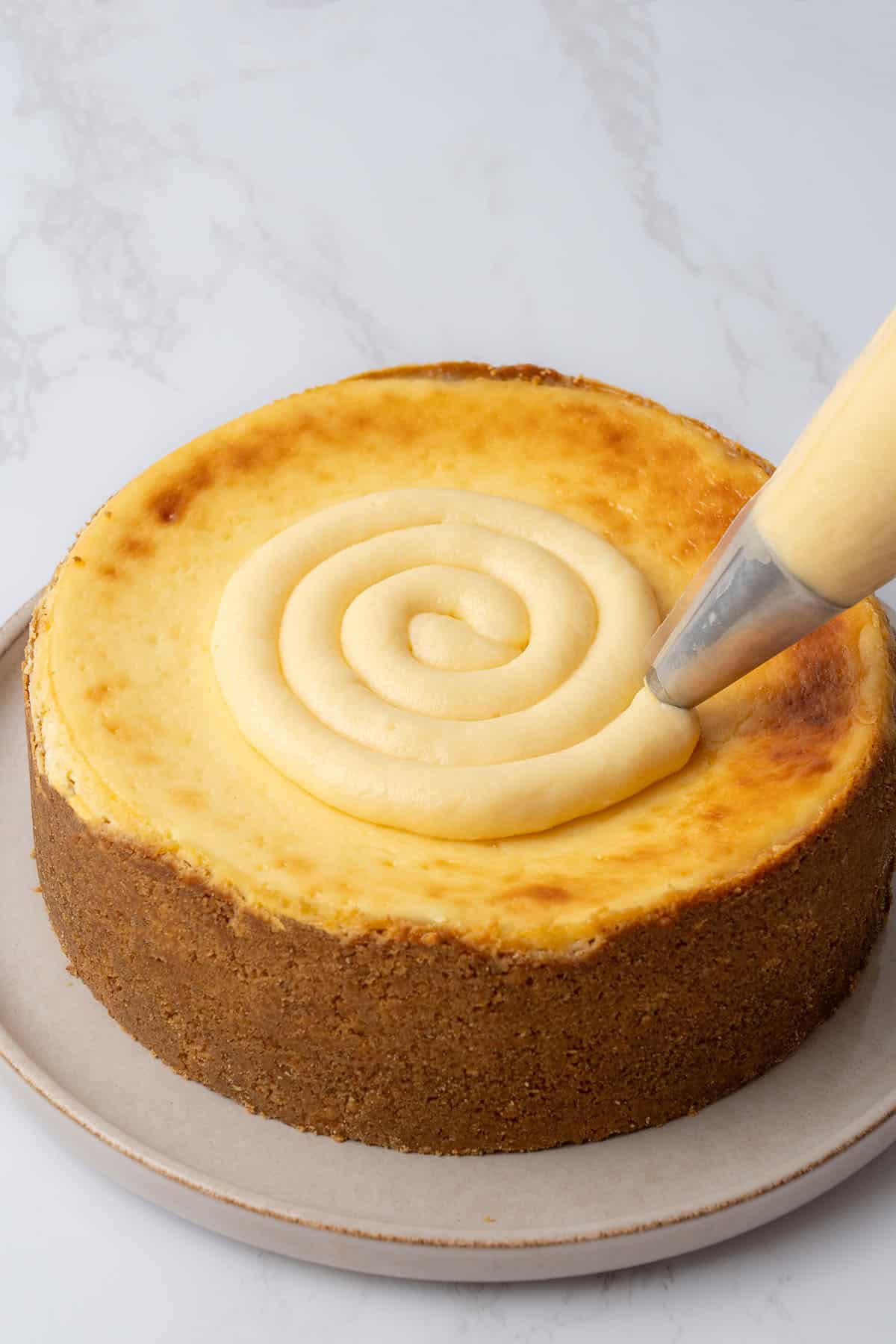
Once the cheesecake has chilled, add the pastry cream on the top using an offset spatula. Keep the layer level and smooth, as this will affect how evenly the sugar caramelizes.
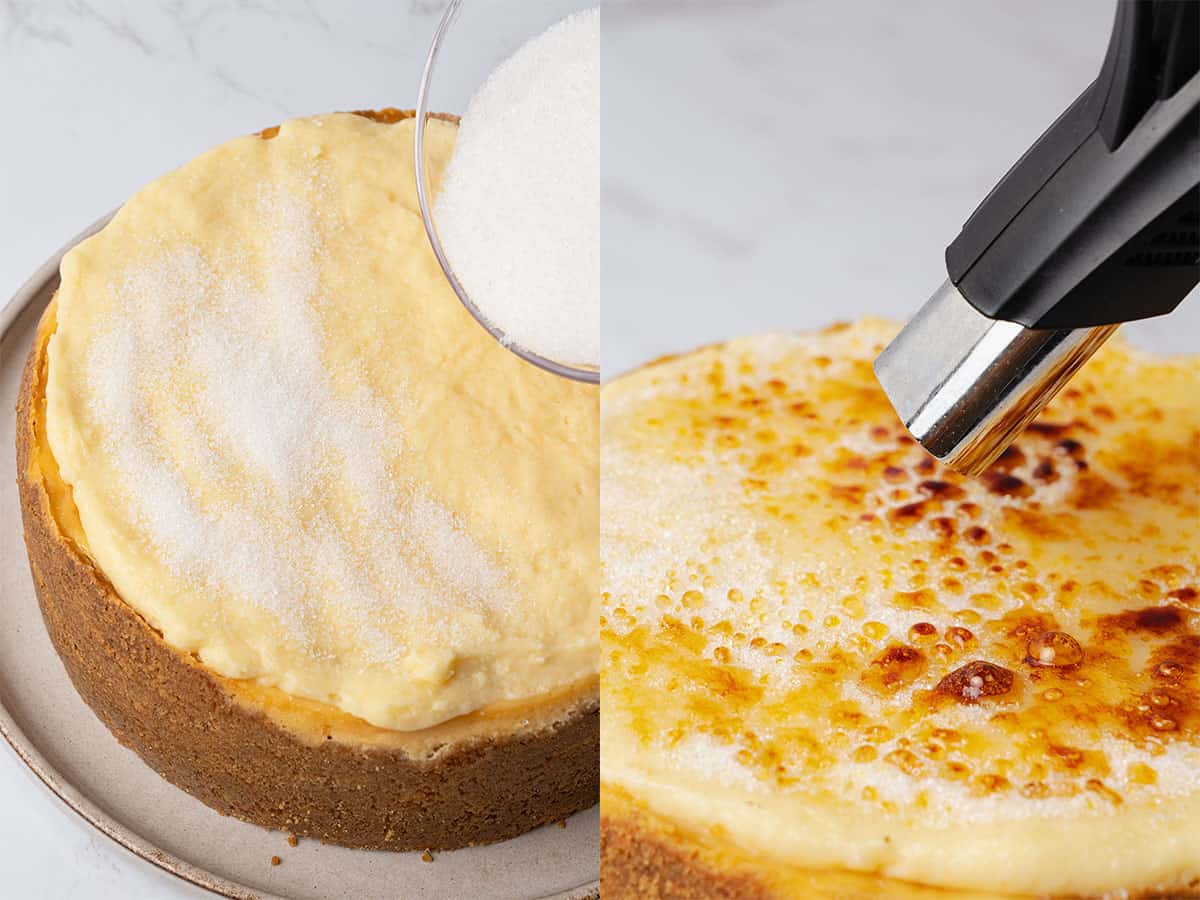
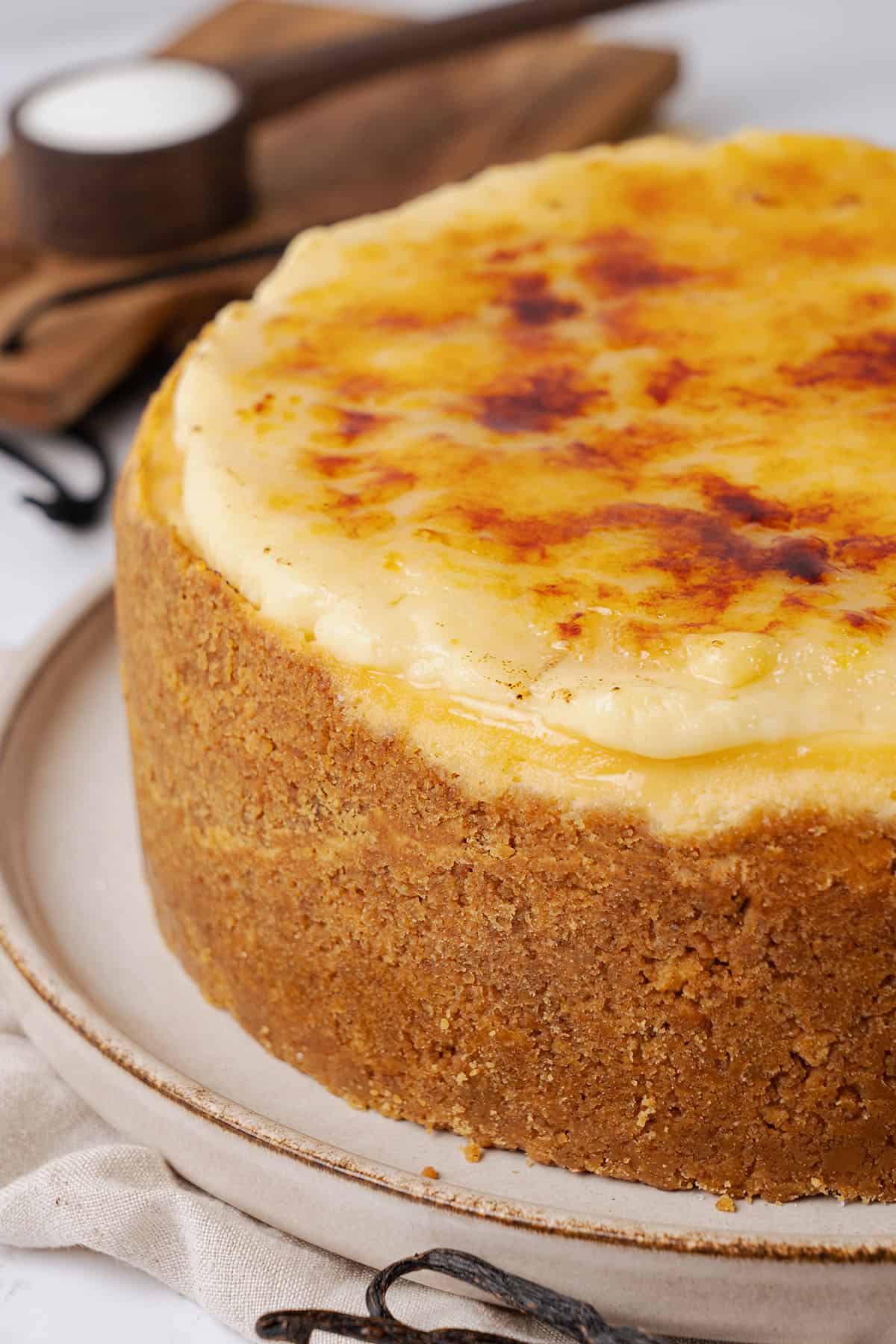
Right before serving, sprinkle a light coating of granulated sugar over the pastry cream. Use a kitchen torch to caramelize the sugar, moving the flame across the surface until the sugar melts and turns golden. Avoid lingering in one spot to prevent scorching or burning.
Do not caramelize the sugar until just before serving, as the crackly top will soften as it sits.
Storing & freezing
For refrigeration, keep the cheesecake covered or in an airtight container and chilled for up to 3–4 days. Add individual slices to a container for simple single servings. If the pastry cream topping is already added, press plastic wrap gently against the surface to prevent drying.
Freeze the cheesecake before adding the pastry cream and brûléed sugar. Once the cheesecake has fully chilled, wrap it tightly in plastic wrap, then cover it with a layer of foil to protect it from freezer burn. It will keep well for up to 2 months.
Individual slices can also be frozen using the same double-wrapping method. Thaw overnight in the refrigerator, then add the pastry cream and torch the sugar fresh before serving.
Flavor Variations
Instead of graham crackers for the crust, use crushed up cookies of any kind. Gingersnaps or Biscoff would be a great holiday crust option.
The top of the cheesecake is the star, but that doesn't mean that you can't add more. A drizzle of raspberry sauce over the caramelized top would add a nice pop of flavor. You could drizzle caramel sauce or fudge, too.
Instead of vanilla extract, an almond or rum extract would be a fun and unique swap.
Ingredient Substitutions
You can replace Graham crackers with digestive biscuits, speculoos (Biscoff) cookies, or any gluten-free alternatives. Each alternative will slightly change the flavor profile, but the method stays the same. Just make sure the cookies are dry and crisp so the crust holds together properly.
For the cheesecake layer, mascarpone or ricotta can be used as substitutes, but the texture will differ noticeably.
Eggs are essential for making this cheesecake. While it is possible to make egg-free cheesecake-style desserts, it requires a fully reworked recipe with different ratios and stabilizers.
For the pastry cream component, I often prepare this layer with nut milk when baking for my mom, who cannot have dairy. When using nut milk, the recipe needs more structure, so I increase the thickening agents by about 50 percent. That means using more egg yolks, along with more cornstarch and flour. Eggs are non-negotiable in the pastry cream.
Expert tips to make Crème Brûlée Cheesecake
- Room temperature isn’t optional. Cold ingredients are the fastest way to a lumpy batter and uneven bake. Read these tips on how to soften cream cheese.
- Scrape constantly. Most cheesecake lumps hide at the bottom of the bowl. Scraping after every addition ensures a truly smooth cheesecake filling.
- Trust the wobble, not the clock. The center should move like soft gelatin when gently shaken. A firm center in the oven means it’s already overbaked.
- Use a hot, clean knife for slicing. Wipe between cuts for clean, bakery-style slices.
- Less sugar is more. A thin, even sugar layer brûlées better than a thick one and gives a clean crack instead of a chewy top.
What equipment to use
A digital scale is the only way to ensure you're using the exact measurements for the ingredients.
Crushing the graham crackers in a food processor is fast and simple. You can also use a rolling pin in a pinch.
Let a stand mixer do all the hard mixing work for you.
I use an 8-inch springform because I like the height, but a 9-inch works, too.
Invest in a digital oven thermometer so you can be certain that it's cooking your cheesecake and other bakery items at the correct temperatures.
Try some of my other cheesecakes
If you love cheesecakes as much as I do, try some of my other recipes:
- Japanese cheesecake
- Baklava cheesecake
- Basque Burnt cheesecake
- Apple crumble cheesecake
- No-bake strawberry cheesecake
And check out my roundup of the best cheesecakes.
Have You Tried This Recipe?
Please leave a 5-star ⭐️⭐️⭐️⭐️⭐️ rating on the recipe card and consider leaving a comment as well!
Crème Brûlée Cheesecake
Equipment
Ingredients
Crème Brûlée Cheesecake
Crust
- 300 g (2½ cups) Graham Cracker Crumbs 300 g = 10.5 oz = approx. 20 sleeves
- 120 g (½ cups) Unsalted butter
- Pinch of salt
Cheesecake batter
- 900 g (4 cups) Cream cheese full fat Philadephia at room temperature
- 250 g (1¼ cups) Granulated sugar
- 230 g (1 cups) Sour cream full-fat at room temperature
- 1 tablespoon Lemon juice freshly squeezed
- 3 teaspoon Vanilla extract
- Pinch of salt
- 4 Eggs lightly whisked at room temperature
Pastry cream
- 240 g (1 cup) Whole milk 3% fat
- 50 g (¼ cup) Granulated sugar
- 40 g Egg yolk approx. yolk of 2 eggs
- 12 g (1½ tablespoon) Cornstarch
- 12 g (1½ tablespoon) All-purpose flour
- 1 teaspoon Vanilla extract
- 30 g (2 tablespoons) Unsalted butter 82% fat, room temperature soft butter
Caramelized top
- 50 g (¼ cup) Granulated sugar
US customary cup measurement is an indicative figure only. Measure the ingredients with a digital scale by weight (gram). Baking is art but also science which requires precision and accuracy.
Instructions
Crust
- Slowly melt the butter on the stovetop or in the microwave until fully melted, then set it aside to cool slightly. Break the graham crackers down into fine crumbs using a food processor, or seal them in a zip-top bag and crush them evenly with a rolling pin.
- Stir a pinch of salt into the crumbs, then add the melted butter and mix until the texture resembles wet sand.
- Transfer the mixture to an ungreased 8- or 9-inch springform pan and press it evenly across the base and up the sides using the back of a spoon or a measuring cup. Use steady, gentle pressure to compact the crust without overpacking it, then refrigerate or freeze it while you prepare the filling.
- Bake the crust in a preheated 350°F (175°C) oven for 8–10 minutes, until lightly golden and set. Remove it from the oven and let the crust cool completely in the pan before pouring in the cheesecake batter.
Water bath preparation
- Preheat the oven to 325°F (165°C), no fan. Select a roasting pan large enough to hold the springform pan for the water bath and set it aside.
- Wrap the outside of the springform pan with the crust in at least 4–5 layers of heavy-duty aluminum foil, fully covering the bottom and sides to prevent water from leaking in. For added protection, the foil-wrapped pan can also be placed inside a large oven-safe bag.
Cheesecake batter
- Add the room-temperature, full-fat cream cheese to the bowl of a stand mixer fitted with the paddle attachment. Cream on medium-low speed for about 2 minutes, until completely smooth with no lumps, then scrape down the sides and bottom of the bowl.
- Add the granulated sugar and continue creaming on medium-low speed for 2 minutes until the mixture looks silky and no longer grainy. Scrape down the bowl again.
- Add the room-temperature sour cream, freshly squeezed lemon juice, vanilla, and a pinch of salt. Mix on low speed for about 10 seconds, just until incorporated, then scrape down the bowl again.
- Lightly whisk the room-temperature eggs in a small bowl until just blended. With the mixer running on low speed, slowly add the eggs. Mix only until fully incorporated, about 30 seconds. Do not whip the batter.
Assemble the cheesecake
- Once the batter is smooth and fully uniform, stop mixing. Pour it into the baked crust, tap the pan gently on the counter a few times to release any trapped air bubbles, then place the springform pan into the roasting pan.
- Bring a kettle of water to a boil. Carefully pour the hot water into the roasting pan until it reaches about thirdway up the sides of the springform pan.
- Transfer the roasting pan with the cheesecake and water into the oven.
- Bake the cheesecake in the prepared water bath at 325°F (165°C) for 60–75 minutes, until the edges are set but the center is still slightly jiggly when gently shaken. Do not open the oven door during baking.
- When the baking time is complete, turn off the oven and leave the cheesecake inside with the door closed for 60 minutes. This gradual cooling helps reduce the risk of cracking. After an hour, remove the roasting pan from the oven and carefully lift the cheesecake out of the water bath. Remove the foil and transfer the pan to a wire rack, then let it cool at room temperature for about 1 hour.
- Once the cheesecake has cooled to room temperature, place it in the refrigerator to chill for at least 6 hours, or overnight, until fully set. Only after chilling, release the springform pan and remove the cheesecake carefully.
Pastry cream
- While the cheesecake is chilling, prepare the pastry cream. In a large bowl, whisk the sugar and egg yolks by hand for 1–2 minutes, until slightly pale and fluffy. Whisk in the cornstarch, flour, and vanilla until fully incorporated and a smooth paste forms.
- Heat the milk in a saucepan over medium heat and remove it as soon as it reaches a gentle simmer, making sure it does not boil. Slowly pour the warm milk over the egg yolk mixture while whisking vigorously by hand to temper the yolks; the mixture should begin to thicken slightly.
- Return the mixture to the saucepan and cook over medium heat, whisking constantly, until thickened—about 1 minute after it comes to a boil. The cream may appear lumpy at first; continue whisking until it becomes smooth and glossy. For an extra-smooth result, strain the pastry cream if needed.
- Add the softened, room-temperature butter in chunks, folding it in with a rubber spatula until fully incorporated. Add the butter in three stages, mixing well after each addition, until the pastry cream is smooth and silky.
- The pastry cream needs to be completely cool before being used on top of the cheesecake. Place the cream in a shallow bowl and cover the entire surface with plastic wrap to avoid skin forming on top.
Assemble the Crème Brûlée Cheesecake
- Remove the cheesecake and pastry cream from the refrigerator. Using an offset spatula, spread an even layer of pastry cream over the top of the cheesecake.
- Caramelize the top straight before serving.Sprinkle a thin, even layer of granulated sugar over the surface, then caramelize it with a kitchen torch just until the sugar melts and turns golden. Avoid holding the flame in one spot too long to prevent burning.
Serving
- Use a sharp knife dipped in hot water and wiped clean between each cut for neat slices. Serve plain or with toppings such as fresh fruit, fruit compote, whipped cream, chocolate ganache, or caramel sauce.
- StoringOnce the cheesecake has chilled and set, cover any leftovers with plastic wrap or aluminum foil and store them in the refrigerator for up to 2-3 days to maintain freshness and prevent drying out. You might need to re-caramelize the top before serving, as it tends to melt in the fridge after a few hours.FreezingDo not freeze the cheesecake after the pastry cream is on top, but you can freeze the base cheesecake easily.After the cheesecake has fully chilled, wrap the whole cheesecake (still in the springform pan) or individual slices tightly in plastic wrap, then add a layer of aluminum foil for protection; freeze for up to 2–3 months, and when ready to serve, transfer to the refrigerator to thaw slowly overnight for the best texture.
Notes
- Measure your ingredients with a digital scale for accuracy.
- Do not skip the salt; it will balance the flavors.
- Feel free to substitute Graham crackers with Digestive biscuits.
- The crust is sweet enough, but for people with an extra sweet tooth, feel free to add 1-2 tablespoons of granulated sugar to this recipe.
- For the cheesecake batter, use full-fat ingredients at room temperature.
- Freshly squeezed lemon juice gives better flavor than bottled.
- Good quality butter and pure vanilla extract are the heart of making pastry cream. Use high-quality 82% fat content European butter and the best quality vanilla you can access.
- Fresh, farm eggs will provide bright yellow colored pastry cream, while cheaper supermarket eggs will result in a pale cream.
- Make sure you read my step-by-step instructions in the post above with all the details of how to make this cheesecake crust. A short recipe alone is not able to cover all the necessary details and science behind baking.
- The butter should be fully runny so it mixes well with the crumbs, but not hot, otherwise it can make the mixture greasy.
- When processing graham crackers in a food processor, stop as soon as you have fine, sandy crumbs. If you overprocess, the crackers can release too much fat and turn pasty, almost like cookie butter.
- While preparing the crust, make sure that you press the crumbs firmly and evenly into the sides and the bottom of your springform.
- To avoid a crust that’s too hard, don’t over-pack the crumbs. Firm pressure is enough — pressing too tightly can make it difficult to cut clean slices later.
- Use the paddle attachment, not the whisk, to avoid whipping air into the batter.
- Mix on low speed and scrape down the bowl often for a smooth, lump-free texture.
- Do not overmix after adding eggs — this prevents excess air and cracks.
- Always bake the cheesecake in a water bath for gentle, even heat.
- Allow slow cooling in the oven before chilling to avoid sinking or splitting.
- Do not cut the cheesecake until it has fully set in the refrigerator.
- Use a small/medium sized saucepan with good heat distribution to avoid burning the milk when making pastry cream.
- Let the cream set in the fridge before using. It will further set as it cools into a silky, pipeable consistency.
- Caramelize the top only just before serving, as the brûléed layer tends to soften over time.
Susan
Absolute 10/10! I never thought crème brûlée and cheesecake would work so well together. The flavor and textures are unreal. Came out absolutely delicious. I will definitely make it again.