
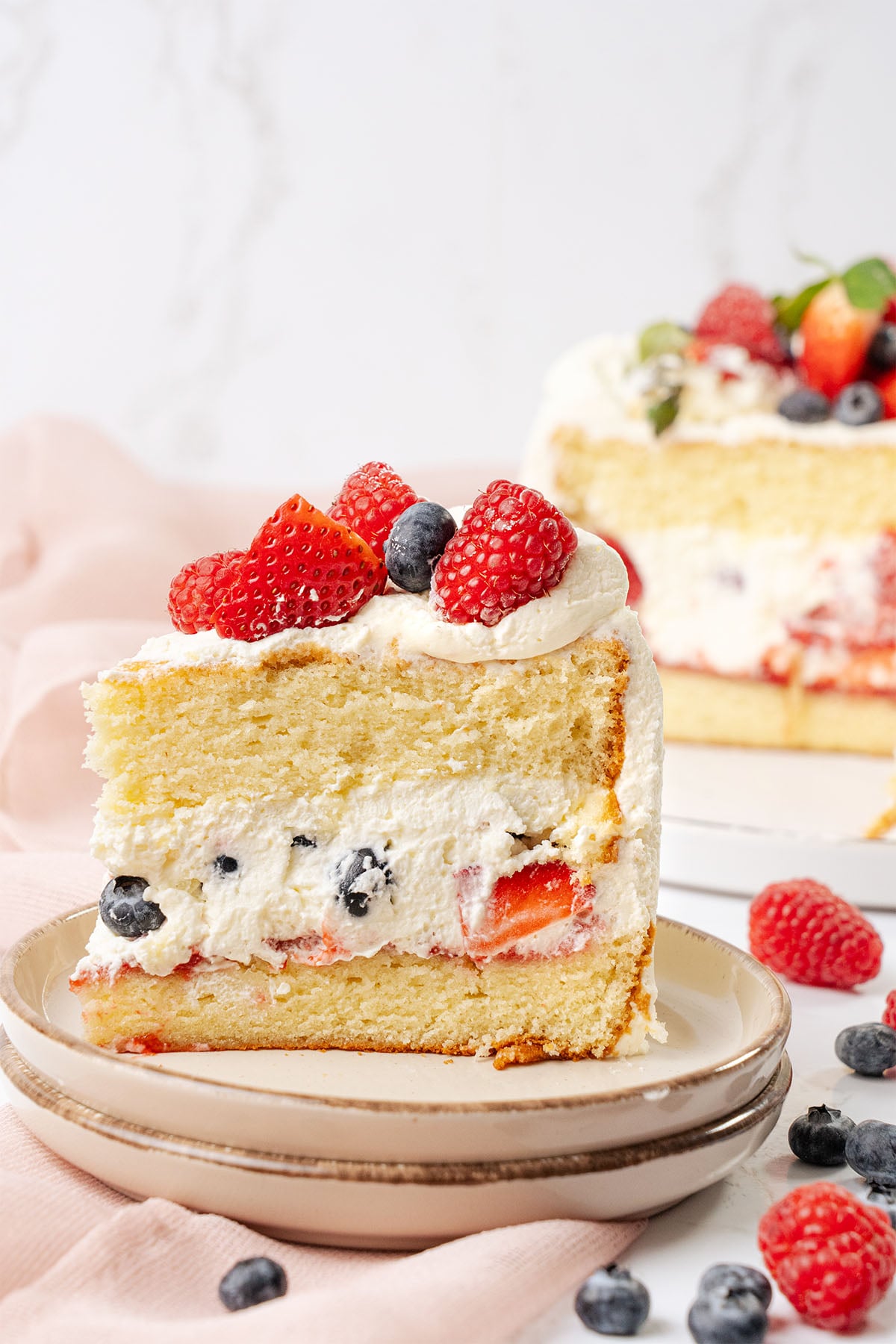
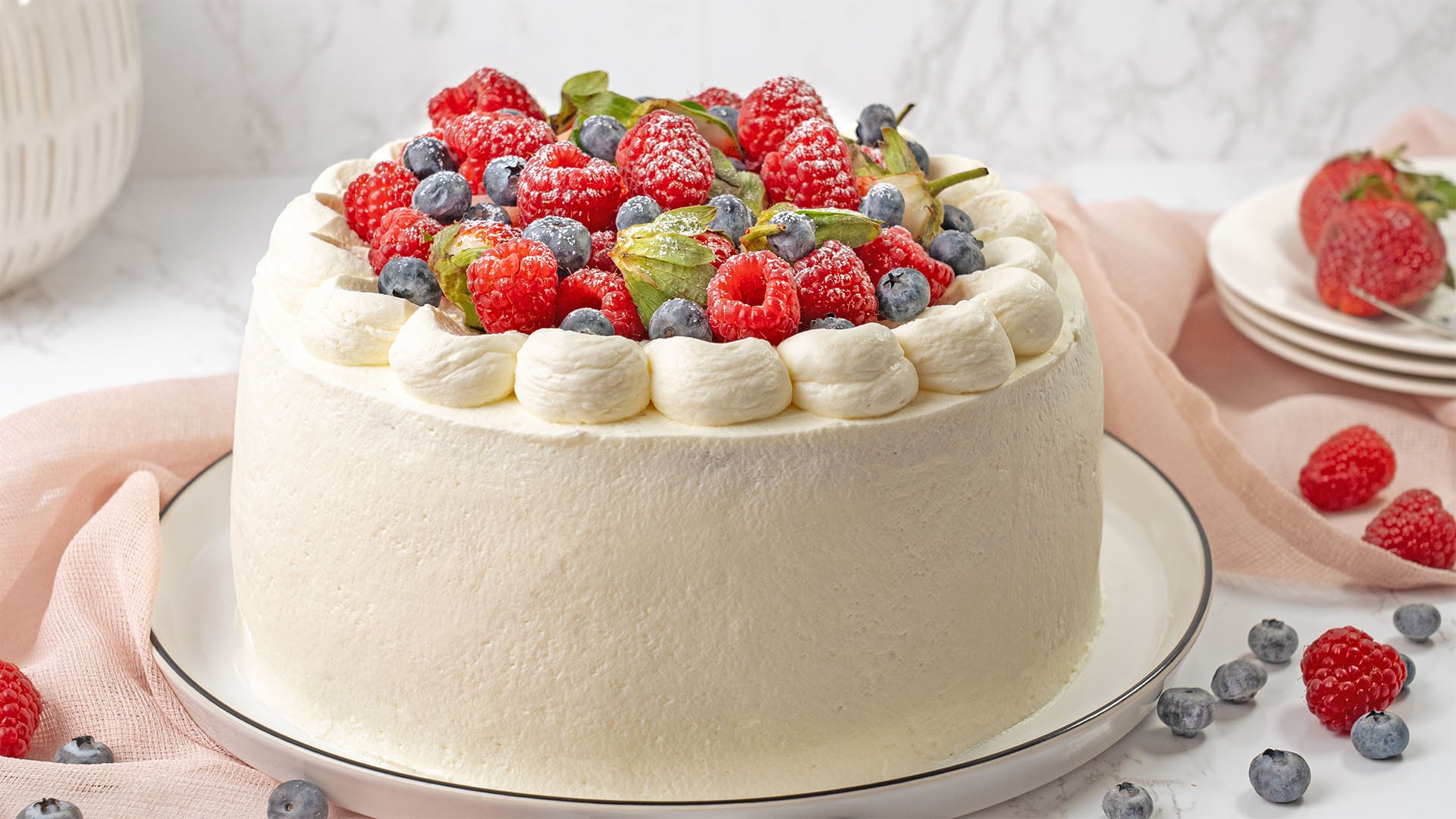
This Berry Chantilly cake is a light and elegant layer cake made with an ultra-moist oil-based sponge, fresh berry coulis, and a soft mascarpone Chantilly cream. It delivers a bakery-style texture that stays fluffy and tender while layering bright fruit flavor with a smooth, creamy finish. Perfect for celebrations, this cake is fresh, airy, and designed to slice beautifully with clean, defined layers.
Katalin's key take on how to make this Berry Chantilly Cake extra moist
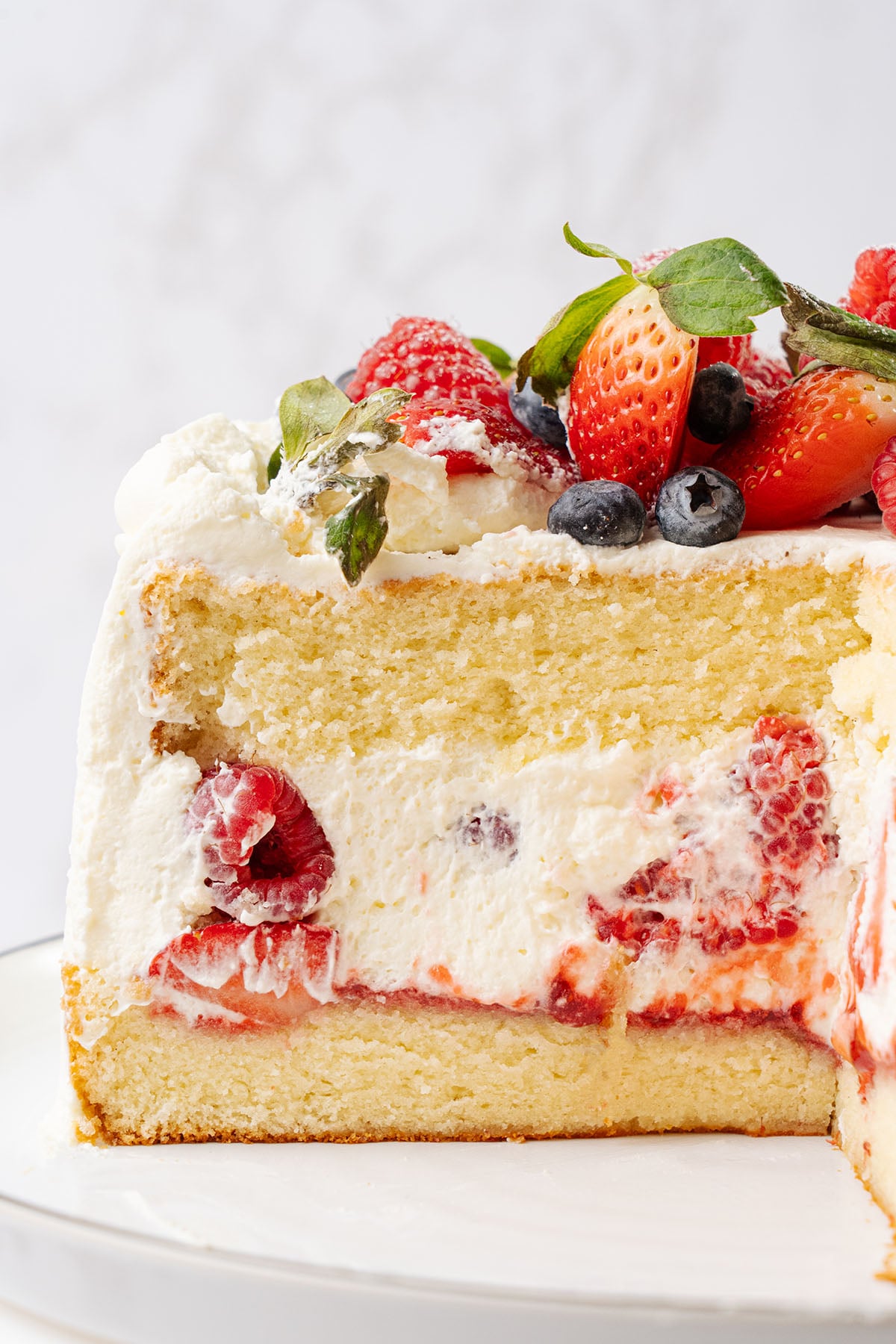
This sponge is intentionally designed to be extra moist, light, and tender. It differs from traditional butter-based cakes in a very deliberate way. Instead of butter, it uses oil, which stays liquid at room temperature, keeping the crumb soft for longer. Combined with the high level of aeration from properly whipped eggs, the result is a sponge that feels almost weightless but still holds its structure beautifully when sliced and layered.
The frosting follows the same philosophy of softness. Because it is a Chantilly-style cream made with mascarpone and heavy cream, and contains no butter, it never sets hard or crusts like a traditional buttercream. Instead, it stays soft, airy, and cloud-like even after chilling. This means every bite remains delicate and creamy.
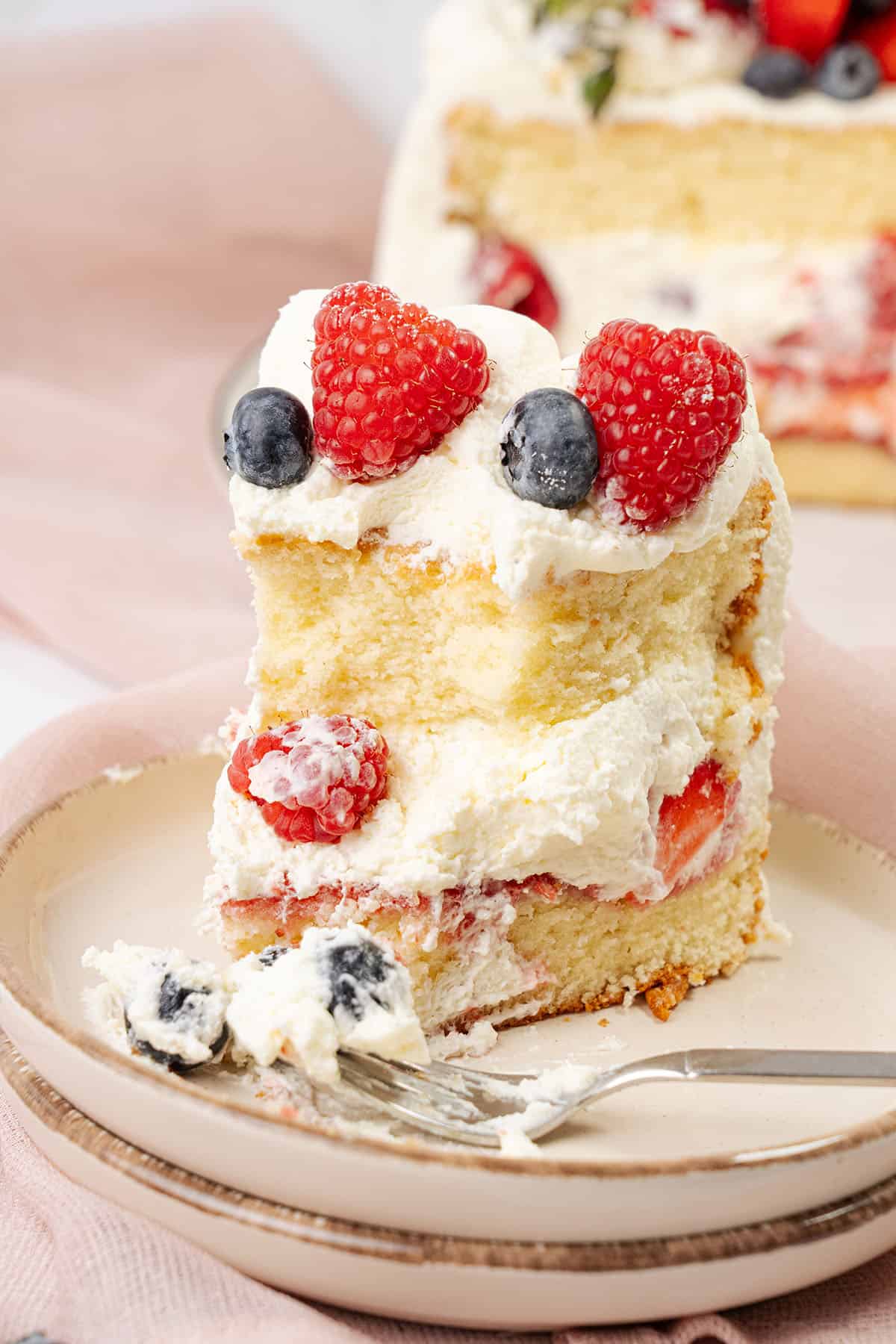
Together, this creates what is essentially a “cloud cake” experience: an ultra-soft sponge paired with a light cream that melts in the mouth. It’s a cake designed to feel fresh and airy!
My signature vanilla sponge cake technique
To make this layered cake, I am using my signature super-moist sponge cake recipe, made with oil and without butter. It is designed to give you a tall, light 8-inch cake that’s ideal for clean, horizontal slicing into two even layers.
Start by preheating the oven to 170°C / 340°F (no fan) and prepare your cake pan(s) by lining the bottom and sides with parchment paper. If using, wrap a soaked cake strip around the outside to promote even baking and a flat top.
In a mixing bowl, whip the eggs, sugar, and vanilla extract on high speed for at least 5 minutes, until the mixture is very pale, thick, and voluminous.
Whip the mixture until it reaches a true ribbon stage, where it falls in thick trails and holds its shape briefly on the surface. Don’t rush this step; it is the foundation of the sponge’s height and softness. A short additional whip on a lower speed helps stabilize the foam and reduces large air pockets that can create uneven holes in the crumb.

Then, sift the flour directly over the whipped egg mixture, and gently fold it in using a spatula. The goal is to preserve as much trapped air as possible. Once the flour is almost incorporated, add the milk and oil and continue folding carefully using a cut-and-fold motion* until the batter is smooth and uniform. This technique ensures tenderness without deflating the structure.

*The cut-and-fold motion is a gentle mixing technique where you use a spatula to cut down through the center of the batter, then sweep along the bottom of the bowl and fold the mixture over itself. This minimizes deflation by incorporating ingredients without knocking out the air you’ve built into the batter.
Bake the sponge cake
Finally, pour the batter into the prepared pan and bake at 170°C / 340°F (no fan) for approximately 40 minutes, or until a skewer inserted into the center comes out clean. Do not open the oven for the first 30 minutes, as this can cause the sponge to collapse from temperature shock.
Once baked, immediately invert the cake onto a wire rack and allow it to cool upside down. Cool completely before slicing or assembling.

Continue with the berry coulis
Start by placing the strawberries, raspberries, and blueberries into a blender or food processor and blending until completely smooth. Once smooth, pass the purée through a fine-mesh sieve, pressing firmly with a spatula to extract as much liquid as possible while leaving seeds and skins behind.
Transfer the strained purée into a saucepan and add the sugar along with freshly squeezed lemon juice. The lemon juice is not just for flavor. It also sharpens the berry profile, helps balance the sweetness, and naturally enhances the fruit’s color.
Place the pan over medium heat and stir constantly to prevent the sugar from burning. Bring the mixture to a gentle simmer rather than a hard boil, as aggressive boiling can dull the fresh fruit flavor.
Continue cooking until the coulis thickens enough to coat the back of a spoon. This usually takes about 15 minutes, but timing can vary depending on your berries' water content. Rely on texture rather than the clock. Then remove it from the heat and let the coulis cool completely at room temperature before using.
As it cools, it will naturally thicken further, so avoid over-reducing it on the stove. Once chilled, it should be thick enough to spread between cake layers without running excessively, while still remaining spoonable.
This is how to make Chantilly whipped cream frosting
Use cold heavy cream and cold mascarpone straight from the fridge, ideally with at least 36% fat content in the cream, as the higher fat level is what gives Chantilly its stability and structure. The mascarpone should also be full-fat and properly chilled, since temperature control is key here.
Unlike many other frostings, this frosting does not rely on a high sugar load for structure. Only a moderate amount of sifted powdered sugar is used. This keeps the flavor light and allows the vanilla and dairy to remain the focus rather than becoming overly sweet.
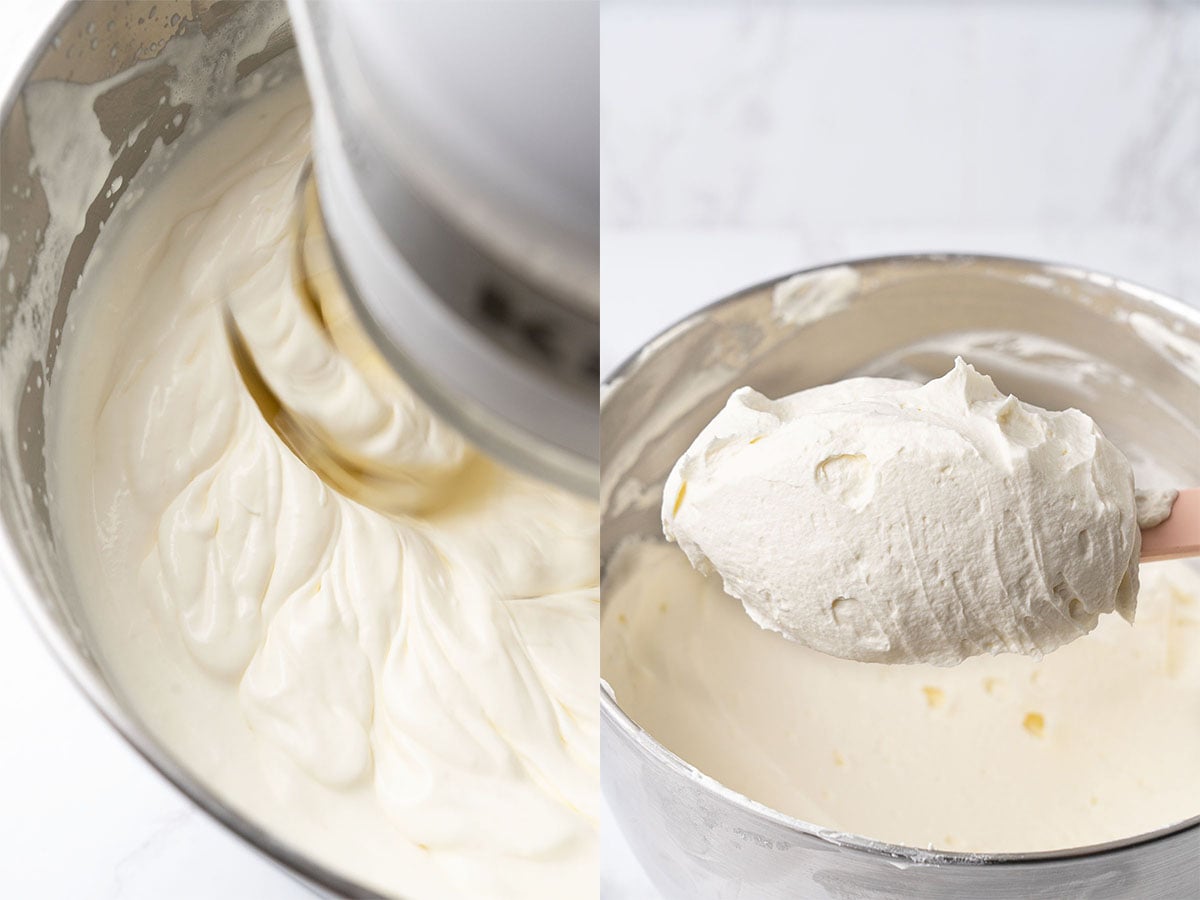
Place the cold heavy cream, cold mascarpone, and sifted powdered sugar into a mixing bowl. Whip with an electric hand mixer on medium-high speed for about 1 minute. Once the mixture starts to thicken slightly, add the vanilla extract. Continue whipping for 2–3 more minutes until the cream is thick, fluffy, and holds its shape. Stop at early stiff peaks (early hard peaks); this means the cream should hold its form but still look smooth and slightly soft rather than grainy or dry.
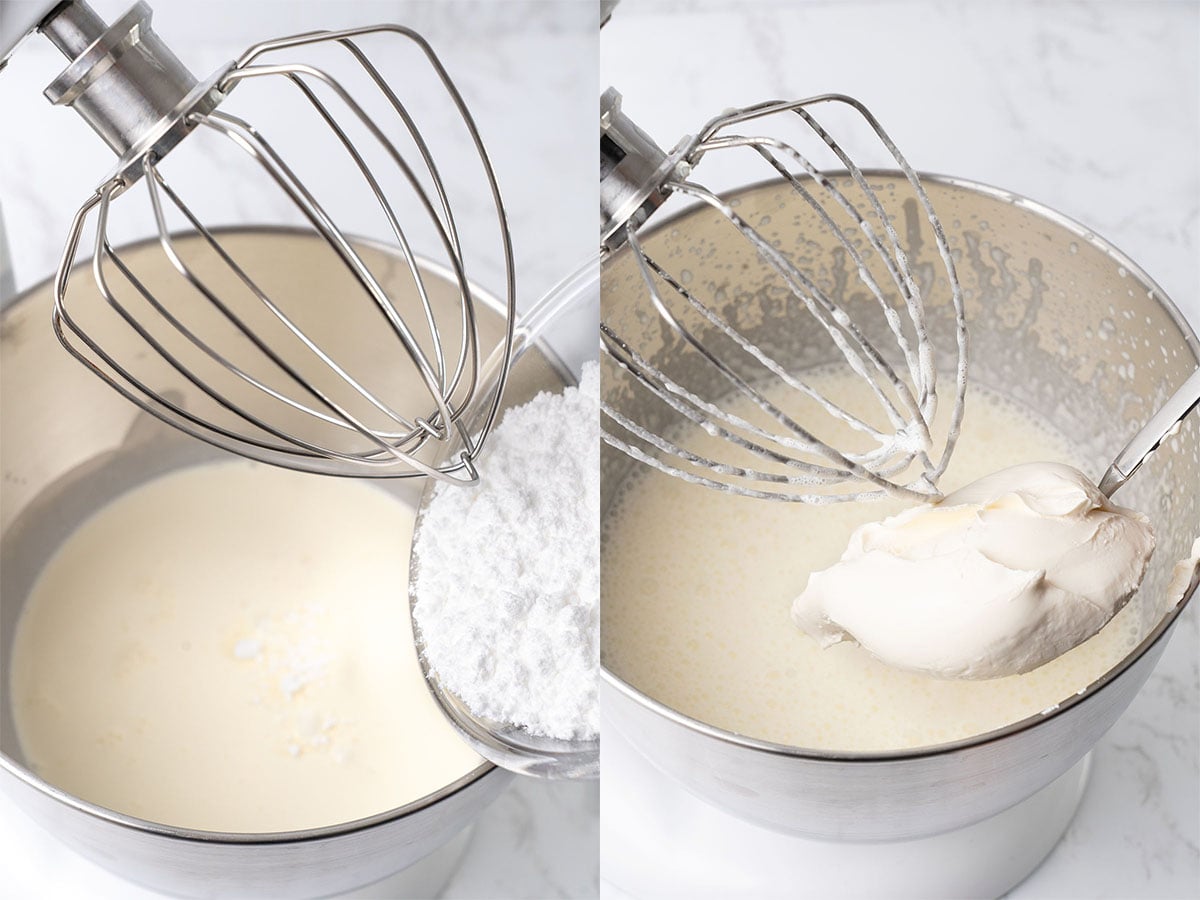
Once ready, transfer the frosting to a piping bag fitted with a large round nozzle.
Assemble the Berry Chantilly Cake
Once the sponge is completely cooled, use a long serrated knife or cake leveler to slice it horizontally into two even layers.
Place the bottom sponge layer onto a cake board or serving plate. Then, spread an even layer of berry coulis across the surface. The key here is balance: the coulis should enhance moisture and flavor without soaking the sponge. Always leave a small border (about 1–2 cm / ½ inch) around the edge, as the filling will naturally spread when the second layer is added, and you want to prevent overflow.
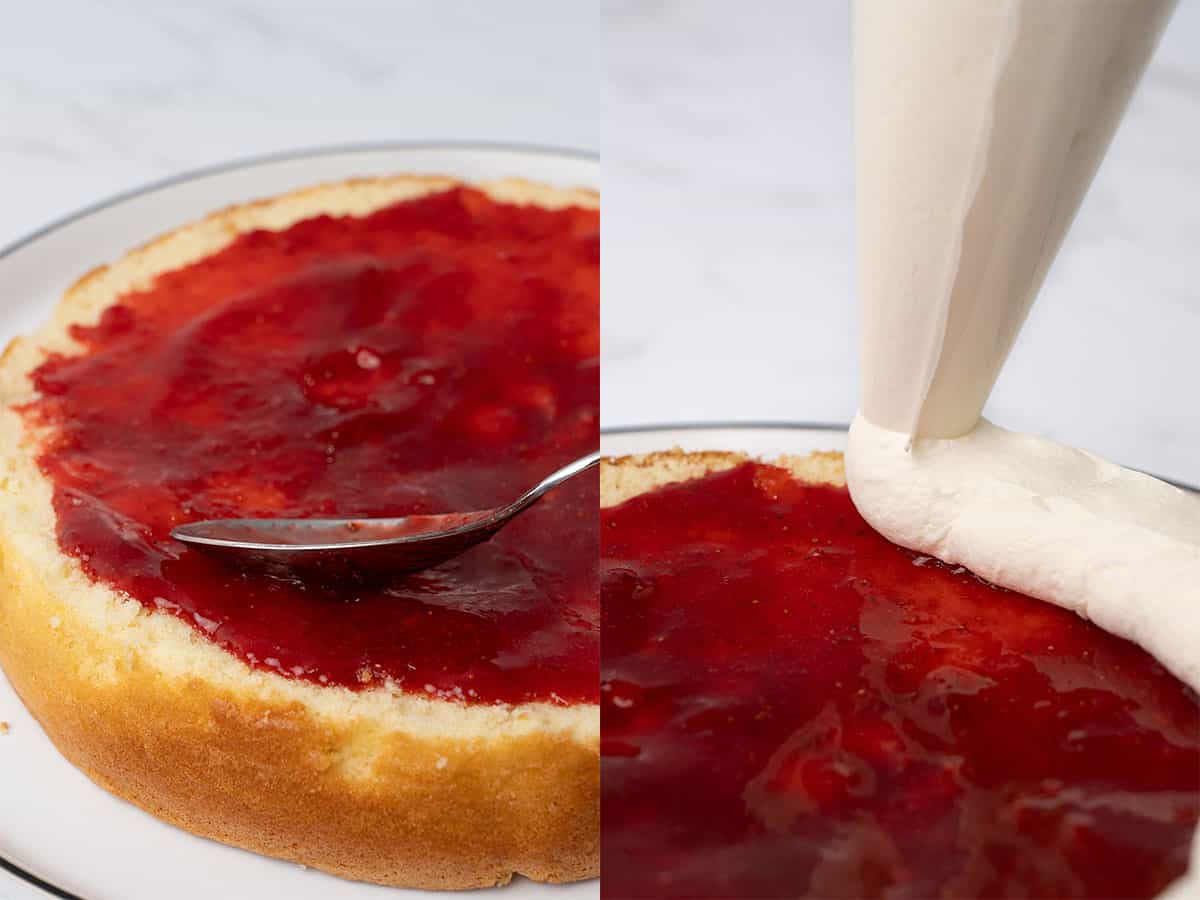
Pipe a generous layer of Chantilly cream over the coulis using a piping bag. Once the cream is in place, add a layer of fresh berries. Chopped fresh strawberries, raspberries, and blueberries work best. Gently press them into the cream so they “lock” into position.
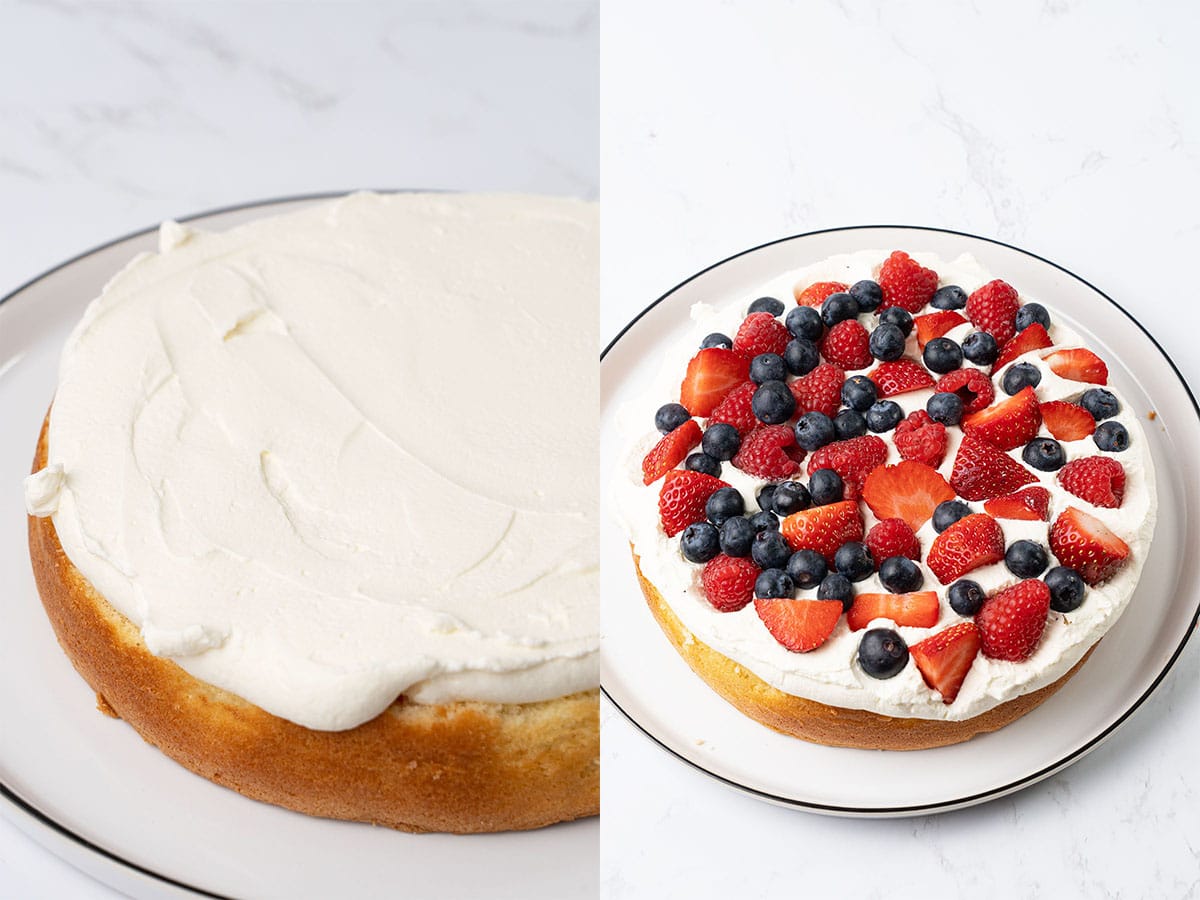
Pipe another layer of Chantilly cream over the fruit, filling in any gaps and creating a level surface. If needed, lightly smooth it with an offset spatula, but avoid overworking it. Chantilly is delicate and can lose volume if handled too much. Carefully place the second sponge layer on top, making sure it is perfectly centered. Once positioned, gently press down just enough to secure contact between layers.
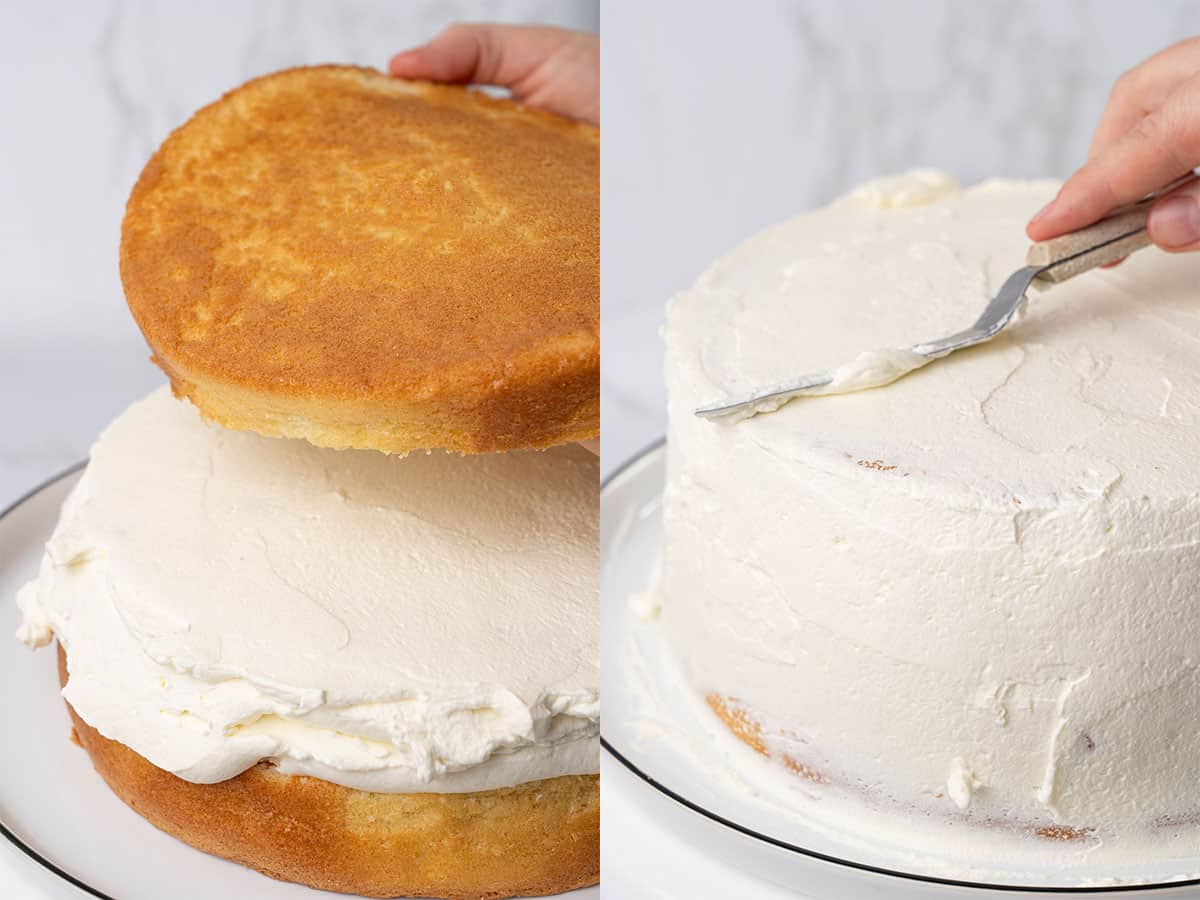
Chill the assembled cake for about 30 minutes to allow everything to firm up and stabilize. This resting time is essential for clean frosting and sharp edges later.
Apply a thin crumb coat of Chantilly cream over the entire cake, focusing on sealing in any loose crumbs and locking the layers in place. Chill again for another 30 minutes until set.
Then, finish with a smooth, even final layer of Chantilly cream around and on top of the cake, and arrange berries on top. Dust with powdered sugar before serving.
Storing: fridge vs freezer
This Berry Chantilly Cake is best stored in the refrigerator due to its fresh Chantilly cream and fruit layers. Once fully assembled, keep it in an airtight cake container or lightly covered to prevent it from drying out or absorbing fridge odors. The texture is at its best within 2–3 days.
For longer storage, you should not freeze the fully assembled cake, as Chantilly cream does not freeze well. However, the sponge layers themselves freeze very well. Wrap them tightly in plastic wrap (and ideally a second layer of foil or an airtight bag) to protect against freezer burn and moisture loss, then freeze for up to 2 months.
When ready to use, thaw the sponge slowly in the refrigerator while still wrapped, so condensation forms on the outside rather than soaking into the cake. Once fully defrosted, you can proceed with the assembly.
Make-ahead instructions
The sponge can be baked 1–2 days ahead and stored tightly wrapped at room temperature once fully cooled, or refrigerated if your kitchen is warm.
The berry coulis can also be made ahead and is even better after resting. Prepare it up to 3–4 days in advance and store it in an airtight container in the refrigerator.
The Chantilly cream, however, is best made fresh on the day of assembly for maximum volume and stability.
For best results, assemble the cake on the day you plan to serve it, or at most the day before.
Flavor variation ideas
This cake is one of the best berry desserts I can imagine, but you can, of course, play with the flavors.
For the sponge, you can easily introduce flavor without changing the base method. Add finely grated lemon or orange zest to the egg mixture for a fresh citrus note that works especially well with berries. For a more aromatic version, a small amount of almond extract can be used instead of vanilla. You can also infuse warmth by adding a pinch of cardamom or finely ground tonka bean, which pairs beautifully with cream and red fruits.
For a chocolate variation, replace a small portion of the flour with unsweetened cocoa powder, though this will create a slightly denser crumb.
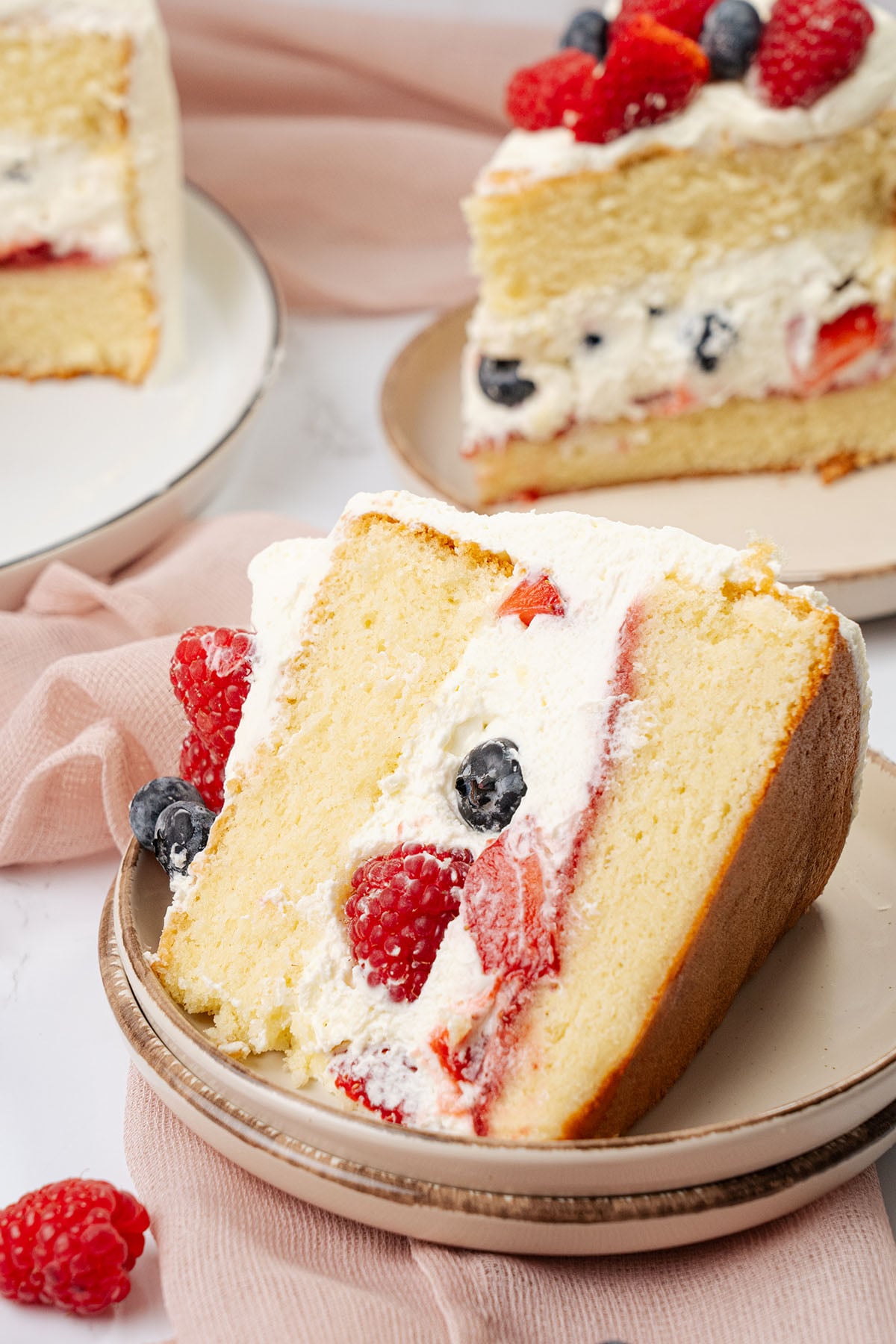
The Chantilly cream can also be flavored very simply without affecting its structure. Citrus zest (lemon, lime, or orange) can be whipped directly into the cream for a fresh, fragrant finish. For a floral twist, a very small amount of rose or elderflower syrup works well, but use sparingly to avoid loosening the cream. You can also add unsweetened cocoa powder to the frosting to turn this recipe into a Chocolate Berry Chantilly Cake.
For the fruit layer, the classic mix of strawberries, raspberries, and blueberries can be adapted to the season and preferences. Blackberries add deeper, more intense berry notes, while cherries bring richness and slight tartness. In warmer months, sliced peaches or nectarines pair beautifully with vanilla or citrus sponge.
For a more tropical variation, mango and passion fruit create a brighter, more exotic profile, especially when paired with lime-zest Chantilly. You can also keep it simple with just one fruit, e.g., a pure raspberry or strawberry version.
Some potential ingredient substitutes
This sponge cake recipe contains only a handful of essential baking ingredients, and I do not think any can be substituted without compromising taste or texture.
You can replace cake flour with all-purpose flour, but this recipe will be best with low-protein flour. Read more about the best flour to use in cakes and baking.
I do not recommend substituting anything in the Chantilly frosting, as the balance of cream, mascarpone, and sugar is key to its texture and stability. However, if necessary, high-fat cream cheese can be used in place of mascarpone.
Dairy-free alternatives are also possible, but they will likely affect both the flavor and texture of the final frosting.
My expert tips
- If you prefer to bake two separate sponges, you can divide the batter between two 8-inch pans. Just be aware that thinner layers bake faster, so start checking early (around 20–25 minutes, depending on your oven).
- Temperature and aeration are the two critical factors to make this kind of sponge cake. Make sure everything is at room temperature before you begin. This helps the eggs whip to maximum volume and prevents the batter from collapsing later. Then, whip the egg mixture to the ribbon stage, where the batter falls in thick trails and holds briefly.
- Be very careful not to overwhip the frosting. Chantilly can quickly turn grainy and then split into butter once it passes the correct stage.
- When cutting the sponge cake horizontally, work slowly and rotate the cake rather than forcing the knife, which helps maintain straight, bakery-clean layers. If the sponge feels too soft, you can briefly chill it to make slicing cleaner and reduce crumbs.
- Chilling the cake between assembly, crumb coat, and final coat is not optional because it allows the cream to set and stabilize the structure. Without this rest, the soft Chantilly filling can slide.
Helpful equipment
A digital scale is essential for baking. A digital oven thermometer also ensures you bake your cake at the right temperature.
Using an electric hand mixer to mix the ingredients and a rubber spatula to fold and scrape the bowl are two of my top picks.
To bake the cake, you'll need one 8 inch / 20 cm round cake pan (tall). Check out my cake pan conversion guide for other options.
To decorate, I am using an offset spatula as well as a piping bag with round-tipped nozzles.
Try some of my other layered cake recipes
If you're a fan of layered cakes, here are some other delicious homemade recipes to try:
- Victoria sponge cake
- Strawberry Icebox cake
- Chocolate Eclair cake
- Carrot cake
- Cherry Heaven on Earth Cake
Have you tried this recipe?
Please leave a 5-star ⭐️⭐️⭐️⭐️⭐️ rating on the recipe card and consider leaving a comment as well!
Berry Chantilly Cake
Equipment
Ingredients
Vanilla sponge cake
- 5 Eggs at room temperature
- 200 g (1 cup) Granulated sugar
- 3 teaspoon Vanilla extract
- 45 g (3 tablespoons) Whole milk at room temperature
- 70 g (⅓ cup) Vegetable oil
- 160 g (1⅓ cups) Cake flour sifted, all-purpose flour works too
- ¼ teaspoon Salt
Berry coulis
- 60 g (⅓ cup) Pureed mix of fresh berries measure after pureeing
- 40 g (⅕ cup) Granulated sugar
- 1 tablespoon Lemon juice fresh
Fresh berry filling
- 260 g (2 cups) Mix of fresh berries strawberries, raspberries, blueberries, chopped into identical pieces
Chantilly frosting
- 690 g (3 cups) Heavy Cream 36% fat, use it cold
- 230 g (1 cup) Mascrpone high fat, use it cold
- 120 g (1 cup) Powdered sugar sifted
- 2 teaspoon Vanilla extract
- 130 g (1 cup) Mix of fresh berries for decoration: strawberries, raspberries, blueberries
US customary cup measurement is an indicative figure only. Measure the ingredients with a digital scale by weight (gram). Baking is art but also science which requires precision and accuracy.
Instructions
Vanilla sponge cake
- This recipe makes one tall 8-inch sponge cake, which is then sliced horizontally into two layers. Alternatively, you can divide the batter evenly between two prepared 8-inch pans and bake as two separate sponges. If doing this, reduce the baking time significantly (start checking around 20 minutes, depending on your oven), as thinner layers bake faster.
- Preheat the oven to 170°C / 340°F (no fan). Bring all ingredients to room temperature. Line a 20 cm / 8-inch cake pan with parchment on the bottom and sides, and prepare a soaked cake strip.
- In a mixing bowl, whip eggs, sugar, and vanilla extract on high speed for at least 5 minutes until very pale, thick, and fluffy, reaching the ribbon stage. Reduce speed and continue whipping for 1–2 more minutes to refine the air bubbles.
- Sift in the flour, then gently fold it into the egg mixture with a spatula, taking care not to deflate the batter.
- Add milk and oil at room temperature, then fold using a cut-and-fold motion just until fully incorporated.
- Pour the batter into the prepared pan and bake at 170°C / 340°F (no fan) for about 40 minutes, or until a toothpick inserted into the center comes out clean. Do not open the oven for the first 30 minutes. Once baked, invert the sponge onto a wire rack, cool completely.
Berry coulis
- Place strawberries, raspberries, and blueberries in a blender or food processor and blend until completely smooth. Pass the purée through a fine-mesh sieve to remove seeds and skins, pressing well with a spatula to extract as much liquid as possible.
- Transfer the strained purée to a saucepan and add sugar and freshly squeezed lemon juice. Cook over medium heat, stirring constantly, until the mixture comes to a gentle simmer. Let it simmer until it thickens enough to coat the back of a spoon; this will take about 15 minutes, but focus on texture, not time.
- Remove it from the heat and cool completely. The coulis will thicken further as it chills.
Chantilly frosting
- Whip the cold heavy cream, cold mascarpone, sifted powdered sugar with an electric hand mixer for about 1 minute, then add vanilla extract. Continue whipping for 2–3 minutes until fluffy and pipeable, stopping at early hard peaks. Do not overwhip. Transfer the frosting to a piping bag fitted with a large round nozzle.
Assemble the cake
- Once the sponge is completely cooled, use a long serrated knife (or a cake leveler) to cut the sponge horizontally into two even layers.
- Place the bottom sponge layer on a cake board or serving plate. Spread the berry coulis over the surface. Leave a small border around the edge to prevent filling from spilling out when stacked.
- Pipe a generous but even layer of Chantilly cream over the coulis using a piping bag. This helps maintain structure and keeps the filling level. Add a layer of fresh berries (a mix of strawberries, raspberries, and blueberries works well), gently pressing them into the cream so they stay stable.
- Pipe another layer of Chantilly cream over the fruit, smoothing it lightly with an offset spatula if needed. Carefully place the second sponge layer on top, making sure it is centered and level. Gently press down to secure the structure without squeezing out the filling.
- Chill the assembled cake for about 30 minutes to allow the layers to set. Apply a thin crumb coat of Chantilly cream over the entire cake to trap any loose crumbs and stabilize the structure. Chill again for 30 minutes, then finish with a final smooth layer of Chantilly cream.
Decoration
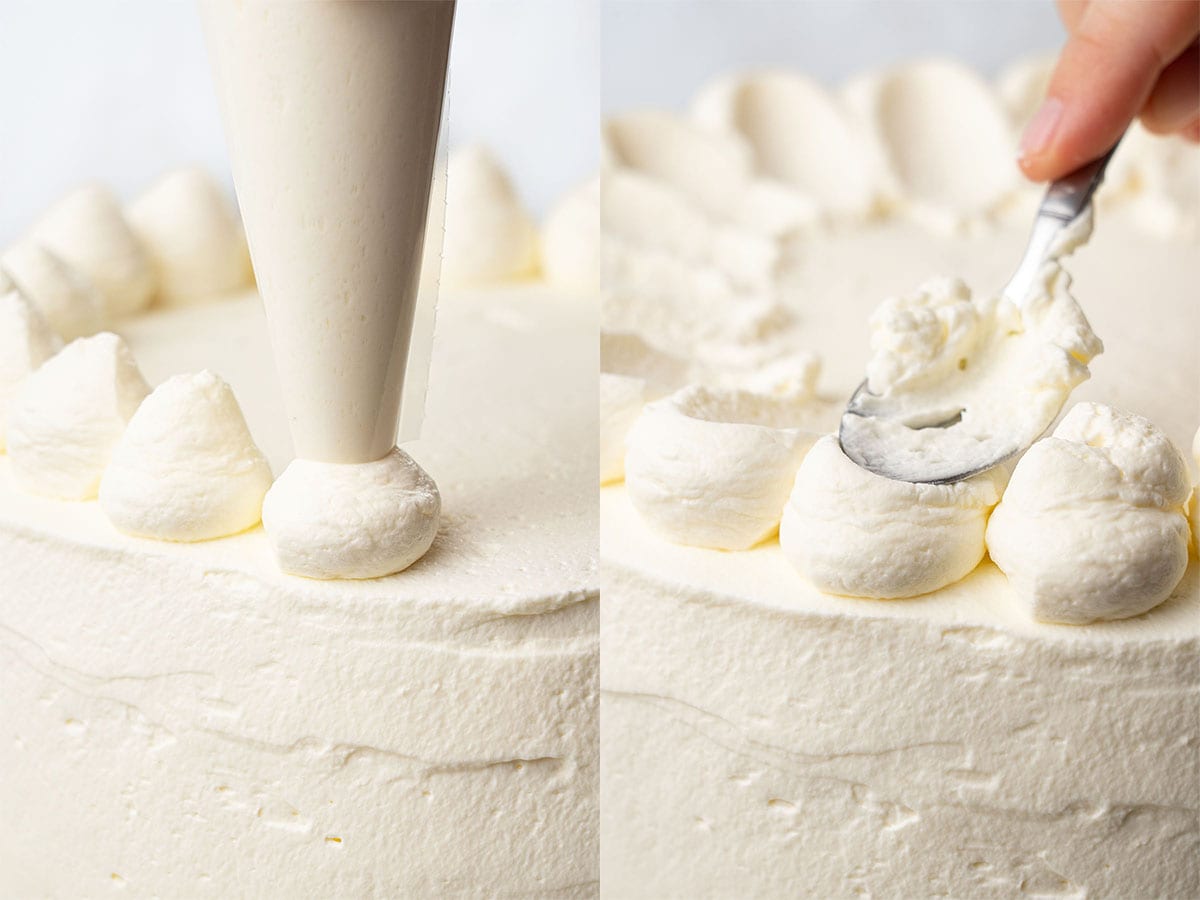
- Pipe the remaining Chantilly cream around the top edge of the cake, then, using the back of a teaspoon, gently press it to create a decorative textured pattern.
- Arrange a mix of fresh berries (strawberries, raspberries, and blueberries) in the center of the cake. Lightly dust the top of the cake with powdered sugar.
Storage
- The assembled cake should be stored in the refrigerator, lightly covered or in an airtight container, and consumed within 2–3 days for best texture and freshness, given the Chantilly cream and fresh fruit. Do not freeze the entire cake, as the Chantilly frosting cannot be frozen. The sponge layers, however, freeze very well: wrap them tightly in plastic wrap (and ideally a second layer of foil or an airtight bag) and freeze for up to 2 months. Thaw the sponges overnight in the refrigerator or at room temperature, while still wrapped to prevent drying, then assemble them fresh with coulis, Chantilly, and fruit.
Notes
- Measure your ingredients with a digital scale for accuracy.
- All cake ingredients must be at room temperature to properly emulsify.
- You can use all-purpose flour in place of cake flour. However, the lower the protein content, the softer and moister the sponge cake will turn out.
- Baking powder is purposely omitted from the recipe; the sponge cake's texture will rely on the air you whip into the batter.
- The heavy cream and mascarpone need to be high in fat and very cold. The low-fat versions won't whip properly because they contain more water.
- The cake must be made with fresh berries. Frozen contains way too much water.
- Be sure to whip the eggs and sugar following the two steps mentioned above, as the air incorporated will help the cake rise without collapsing.
- Here is how to do the cut and fold method:Cut: Use a spatula to "cut" down through the center of the batter. Fold: Gently scoop the mixture from the bottom, lift it up, and fold it over the top. Rotate: Turn the bowl slightly after each fold to ensure even mixing. Repeat: Continue the cutting and folding motion until the ingredients are just combined. Do not overmix.
- Use a cake stripe for baking; with the help of a cake stripe, the side of the cake pan stays cooler for a longer period, and the whole cake rises at the same rate. This results in a level cake with a flat top, which is ideal for stacking layers or decorating.
- You can make your own cooling cake strip so easily! Fold a piece of kitchen paper into thirds and then dip it into water to dampen it. Wrap the wet kitchen paper in aluminum foil, and then wrap it around your cake pan.
- Ovens can vary, so use an oven thermometer to always bake at the right temperature. Each oven is different, so you might need to adjust the baking time slightly. In my oven, this cake takes 40 minutes. Use the toothpick test to ensure your cake is fully baked.
- The sponge cake texture will further set as it cools. Do not attempt to cut while it is hot.
- Chantilly cream is very easy to overwhip. When whipping, stop as soon as the mixture has reached a fluffy consistency (this will take 2-3 minutes) and form early stiff peaks. It won't get stiffer after this point. In fact, if you overbeat it, it will only get runnier and then break.
- Assemble the cake only once the sponge has cooled to room temperature, as a warm cake would melt the cream.
Sarfraz Ahmed
I want to make Berry Chantilly Cake recipe
Emma
It’s perfect! This is my all-time favorite!! The Chantilly cream frosting is so light! Thank you so much for the recipe!
Brianna P
My father in law gifted us with a few dozen peaches. I have had this recipe open for a while and decided it was time to give it a whirl. The substitution was easy, though I did make a peach compote to put on top, since I did not think there was an easy way to top the cake with fresh peaches without them turning. Cake was delicious, frosting very light and sweet, and the combo was great!