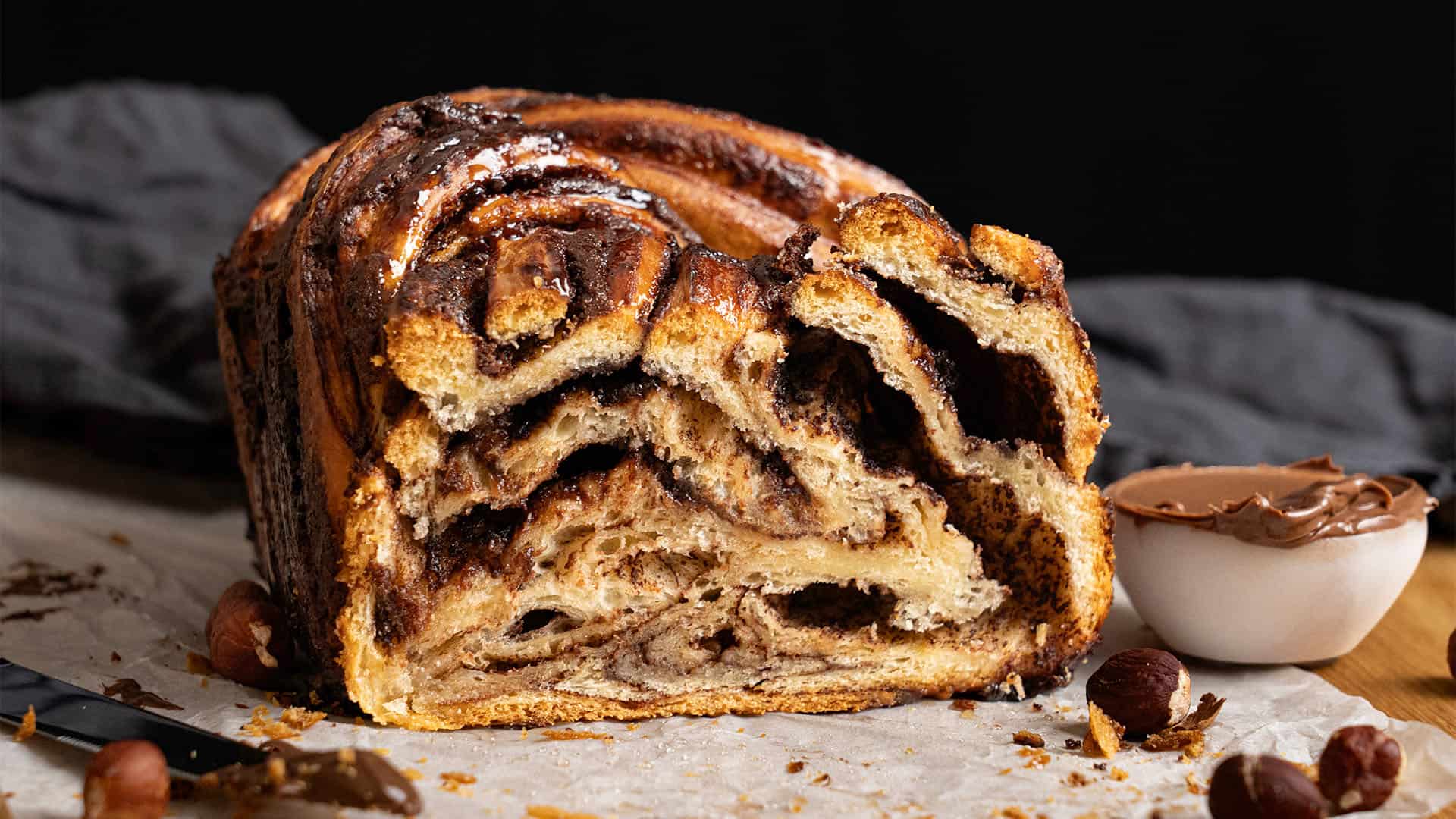
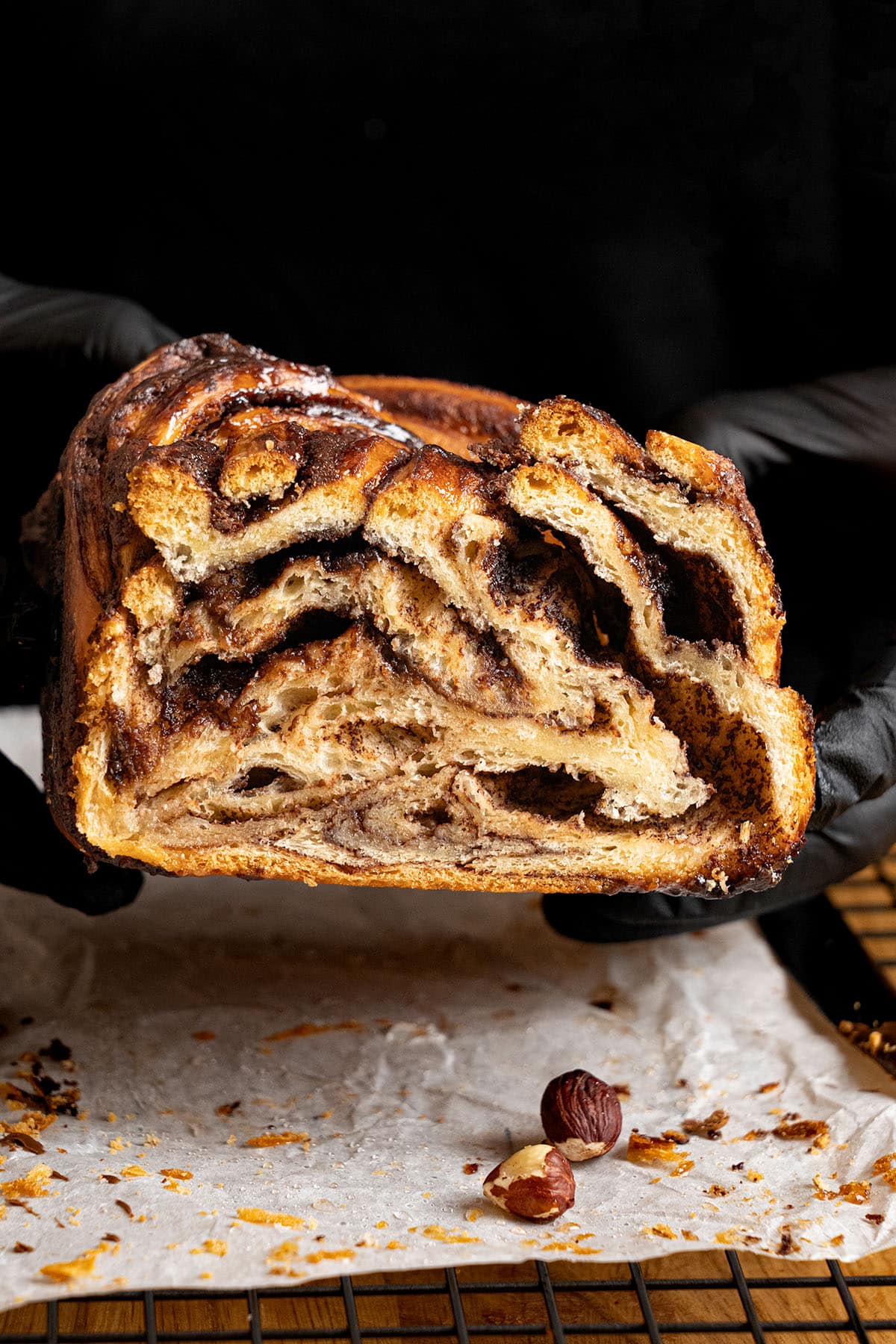
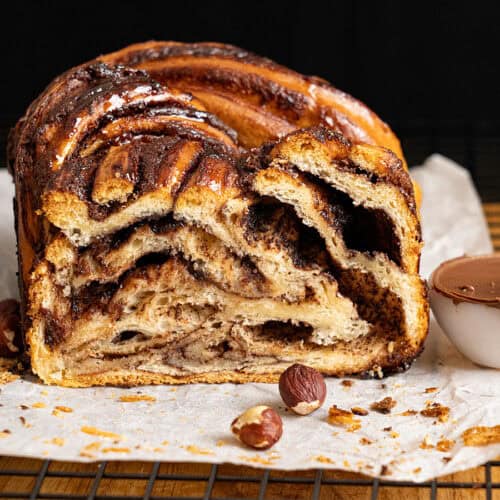
Bake this super delicious Nutella Babka made from the fluffiest, most buttery brioche dough twisted around a decadent Nutella filling. It's probably one of the most delicious recipes on my blog and always warms my heart!
This recipe was one of the first I shared on the blog back in 2021. Since then, I've updated it with new photos, added helpful baking tips, and included several flavor and ingredient substitution options. It is the best-rated recipe on Google; you simply have to try it!
Read what others said about this recipe

"LOVE this recipe. It’s so well explained, even I could make it without too much experience 🙂 Thank you!!" Laura
I love, love, love this recipe! It’s so moist and delicious; I have to make 2 next time! I tried it with chocolate too, and it works well! Tom

Best Nutella babka recipe
I hope you will love this recipe as much as I do! I grew up eating traditional babka recipes in Hungary. Still, babka became increasingly popular across the United States, especially in New York, when Israeli bakery Breads Bakery began selling its famous chocolate babka. Whenever I'm in New York, I stop by Breads Bakery, but honestly, you don't need to travel there to taste it. You can easily recreate Nutella babka at home with this recipe!
Imagine a delicious buttery chocolate hazelnut swirl in soft, pillowy brioche dough. This Nutella babka loaf is totally addictive! I make it over and over again; it is perhaps my favorite sweet bread recipe of all time.
It is super easy. You won't need any fancy ingredients, and the recipe will come together really easily. It's even suitable for beginner bakers! It uses a yeasted dough, so you must factor in some time for it to rise. But your time in the kitchen is actually minimal!
Katalin's key take on why using bread flour (high protein flour) makes the best babka
Babka is a sweet, enriched dough similar to brioche, and the single biggest factor in achieving that pull-apart, layered texture is the flour you choose.
Bread flour has a higher protein content than all-purpose flour — typically 12 to 14% versus 10 to 11% — and that difference matters enormously here. When flour is mixed with liquid and worked by kneading, the proteins bond together to form gluten, a stretchy network that gives the dough its structure. In a rich dough like babka, where you add a significant amount of butter, eggs, and sugar, that gluten network stops the dough from collapsing under the weight of all that fat. A stronger gluten network also traps the gas produced by the yeast more effectively, which is what creates those beautiful, open air pockets in the crumb.
All-purpose flour can work in a pinch, but it gives you a softer, more crumbly result. Bread flour gives you dough with real elasticity; it stretches when you pull it, springs back when you press it, and holds its shape during the roll-and-fill process without tearing. That matters especially for babka, where you roll the dough tightly around the filling, cut it down the middle, and twist it. A weak dough will shred at this stage. A strong one holds together beautifully.
Bread flour is not always labeled as such in every country, so check the protein content on the package rather than the name. Any flour with 12% protein or more will work well. If you want to understand exactly what each flour type does and how to choose the right one for any recipe, my flour guide covers it in full.

Start with making the brioche dough
Mix half of the granulated sugar into lukewarm milk, then sprinkle yeast on top. Wait 10 minutes until the yeast starts to foam. If the yeast doesn't start bubbling in the whole milk after 10 minutes, I recommend starting the recipe over with fresh yeast.
Once the yeast is foamy, place the mixture and the room-temperature eggs (the wet ingredients) into the bowl of your stand mixer fitted with the dough hook attachment.

Mix for a minute to combine, then add the dry ingredients (bread flour, remaining sugar, and salt) and continue kneading. First, it will look messy, but the dough will come together after a few minutes.
Begin adding the softened butter (but not melted) in small pieces while the mixer is running. It might not incorporate immediately; keep kneading/mixing, and then add a little more once it does.

Once all the butter has been added, knead at medium-high speed until the dough is super shiny and elastic and achieves the gluten window! This normally takes around 10 minutes. At this point, the dough should not stick to the bowl's sides.

Move the dough into a bowl, cover it with plastic wrap, and place it in the fridge overnight or for 12 hours to rest and rise.
You can also let the dough rise for 1-2 hours at room temperature in a warm place. However, I always recommend a slow ferment in the fridge overnight for the best taste and texture, and the dough will be easier to handle when it is cold.
Then, roll and twist
Prepare a loaf tin by lining it with a piece of parchment paper. Gently melt the Nutella in the microwave to make it easier to spread, but do not use it when it is hot, or it can melt the dough.
Take the babka dough out of the fridge and punch it out, then turn it out onto a silicone baking mat or lightly floured surface.
Roll out the dough into a 30x42 cm / 12x16 inch rectangle. Spread the Nutella filling onto the dough in a smooth and even layer.
Roll the dough up tightly and neatly from the longer end. Press to seal the edge onto the roulade. Roll it as tightly as possible.
The rolled babka dough is easier to work with when cold, so if it feels too warm at this point, place it into the freezer to chill for 5 minutes before continuing.
Use a sharp knife to cut the babka in half lengthwise, being as precise as possible. If it is still nice and cold, continue to the next step. Otherwise, place it in the freezer for a few minutes before we twist the babka into shape.

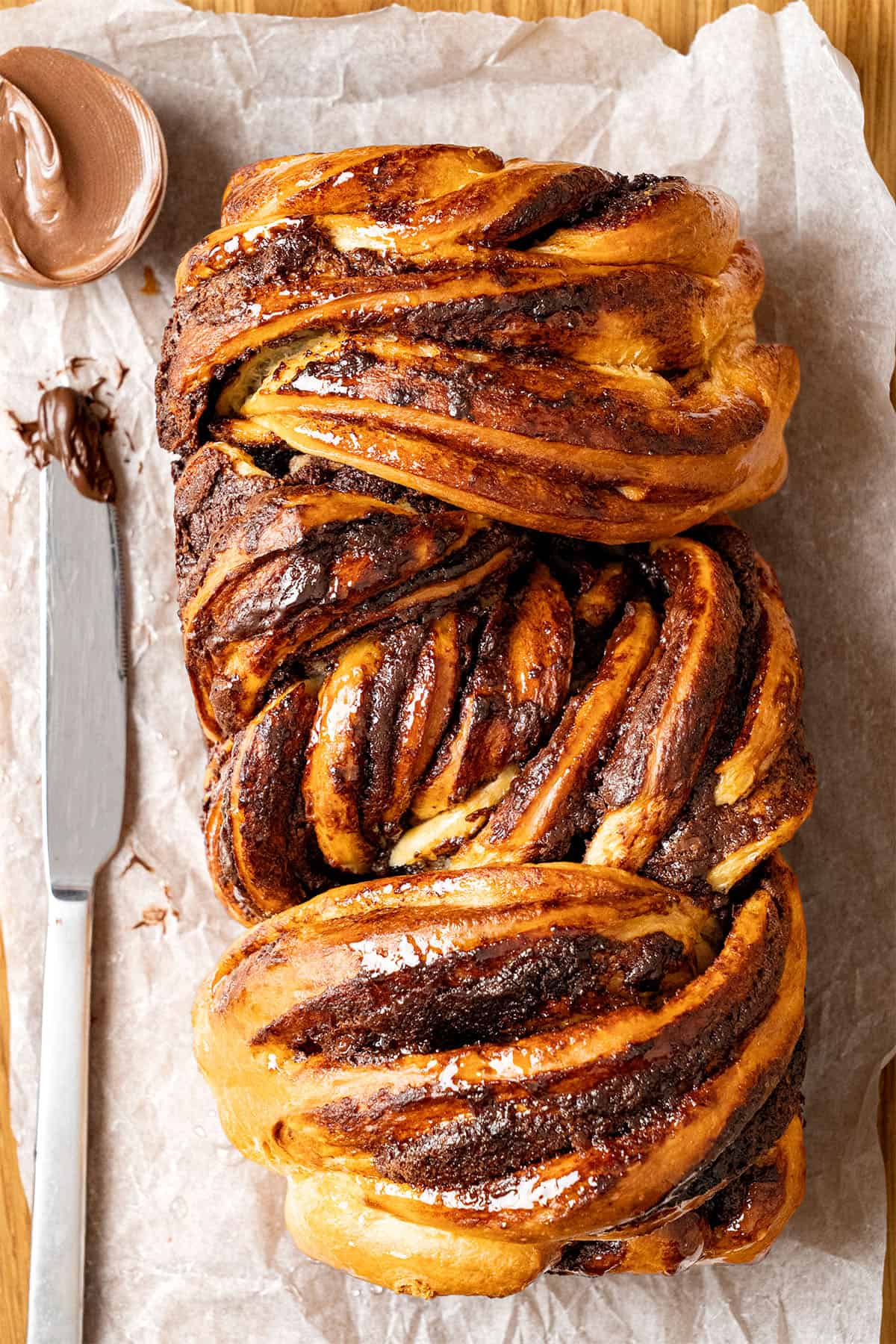
Lay one babka log over the other, filling facing up, and twist the dough around with your hands. Gently squeeze the ends together and carefully lift the babka into your prepared loaf pan.

Cover the loaf pan with a damp kitchen towel so it does not dry out, and let the Nutella babka proof at room temperature in a warm place for 1-2 hours.
Bake it
At the end of the second rise, preheat your oven to 355°F / 180°C (no fan). Proofing can take 1 to 2 hours, depending on how warm your kitchen is, but go by size rather than time. The dough needs to double before it goes in the oven.
Once the babka dough has risen, bake it for about 40 minutes at 355°F / 180°C .

Check it after 30 minutes. If the babka is browning too much on top, place aluminum foil over it for the final 10 minutes of baking time.
The Nutella Babka is ready when golden brown, and a toothpick inserted into the middle comes out clean.
Optional: Sugar syrup for the perfect shine
Pouring syrup over babka after baking gives it a lovely shine. If you don´t want to add more sugar to the dessert, gently brush it with the sugar syrup instead of pouring it on top.
Toward the end of baking, boil the water, sugar, and freshly squeezed lemon juice until the mixture becomes syrup.
Pour the hot syrup over the baked babka immediately when it comes out of the oven. Let it sink in and allow the babka to cool slightly before removing it to a wire cooling rack from the tin. Don't move it too soon, or it can break.

Storing and freezing
Serve the Nutella babka fresh. Any leftovers can be stored in an air-tight container at room temperature for 2-3 days. The babka does not require a fridge; store it like you would store bread.
To freeze babka, double-wrap it in plastic wrap, then aluminum foil, to prevent freezer burn. Consume within one month.
Try some other babka flavors
You can also make this Nutella Babka bread recipe with different spices. Add ground cinnamon, cardamom, or even orange zest to the dough for a delicious and fragrant twist. Chopped pecans can add some crunch, or try my cinnamon babka, walnut babka, and apple cinnamon babka recipes, too!
You can use my homemade Nutella or store-bought Nutella for the babka filling. Why not change things up and use homemade Biscoff spread instead?
Or try my strawberry compote for a fruity alternative to chocolate hazelnut babka? Lastly, this decadent chocolate ganache and some extra chocolate chips could double up on the goodness.
Ingredient substitutions for when you need to bake with dietary restrictions
Baking is a science, so making ingredient swaps can significantly alter the texture and flavor. Sadly, I cannot provide substitutes for every allergy or diet.
You can substitute the butter with vegan butter and the milk with vegan milk to make the babka dairy-free, I've done that before. Some egg substitutes might work to make this an entirely plant-based or vegan babka, but you will need to experiment to achieve the right results.
Use all-purpose flour instead of bread flour if that is all you have, but since babka is bread, high-protein flour will give you the best results.
For more information on common baking ingredients and how to make substitutions in baking, read my baking guides section.
Katalin's expert tips to make Nutella babka
- The milk needs to be lukewarm only. Don't let the milk get too hot, as it can kill the yeast. If it is steaming, it is too hot.
- I use fresh yeast in this Nutella babka recipe, but you can use dry yeast instead. Check out my ultimate yeast guide to convert fresh yeast to dried yeast and learn more about handling yeast.
- There is an exact science to adding leavening agents to baked goods. Use it as soon as it starts to foam, because leaving it on the counter too long can cause the yeast to overflow and eventually break.
- Always use unsalted butter, and make sure it is soft enough but not melted. This can take about an hour out of the fridge, and it's ready when you press your finger into it and it leaves an indent. It helps if your kitchen is not too cold.
- Try to work quickly when shaping the babka. Prepare your equipment first, so ensure you have the rolling pin, measuring tape, Nutella filling, and a loaf pan with parchment paper ready.
- If the babka dough starts to feel sticky at any point, place it in the freezer for a few minutes before continuing.
- Do not skip the second rise! This is essential for the best fluffy, pillowy texture. But make sure it is not resting anywhere too hot or the filling can melt.
What equipment to use
Baking is a science, so weigh ingredients in grams using a digital scale for best results.
For kneading, a stand mixer is super handy with the dough hook on, however, if you are strong like my Mom, you can attempt doing it by hand, good luck!
Use a rolling pin to roll out the dough and an offset spatula to spread the filling.
I prefer rolling out on a silicone baking mat to avoid using too much dusting flour. This can affect the babka dough's texture and make it dry.
For baking, you will need a loaf pan, the quantity stated in the recipe makes a standard size 1 pound loaf tin that is 12x22cm / 5x8 inches.
Invest in an inexpensive digital oven thermometer to ensure you are baking at the correct temperature. Many baking problems arise from an oven that is too hot or cold!
Try some of my other sweet bread recipes
If you love this easy Nutella babka and similar recipes, check out my round-up of the best sweet bread recipes to try next!
Have you tried this recipe?
Please leave a 5-star ⭐️⭐️⭐️⭐️⭐️ rating on the recipe card and consider leaving a comment as well!
Soft & Fluffy Nutella Babka (Best Rated!)
Equipment
Ingredients
Babka dough
- 120 g (½ cup) Whole milk lukewarm
- 30 g (2 tablespoon) Granulated sugar
- 12,5 g Fresh yeast check my yeast guide to convert it to dry yeast
- 1 Egg yolk at room temperature
- 1 Egg at room temperature
- 250 g (2 cups) Bread flour high protein content flour
- ¼ teaspoon Salt
- 80 g (⅓ cups) Unsalted butter room temperature, 82% fat content
Filling
- 170 g (¾ cup) Nutella gently melted, but not hot
Syrup
- 60 g (¼ cups) Water
- 20 g (1 tablespoon) Lemon juice freshly squeezed
- 80 g Granulated sugar
US customary cup measurement is an indicative figure only. Measure the ingredients with a digital scale by weight (gram). Baking is art but also science which requires precision and accuracy.
Instructions
First day - first proofing
- Start by mixing half of the sugar with the lukewarm milk, then sprinkle the yeast on top. Make sure the kitchen is warm, and in 10 minutes the yeast should start to foam.
- Place the yeast mixture into your stand mixer with the kneading hook on, then mix it together with the room-temperature eggs.
- Pour in the dry ingredients: bread flour, the rest of the sugar, and salt, and start kneading until the dough comes together. This will take about a minute or two.
- Then, slowly add the room-temperature (soft) butter chunks, piece by piece, to the dough. Once all the butter is in, knead the dough for another 10 minutes on medium-high speed, until it becomes elastic, shiny, and not too sticky.
- Move the dough into a bowl, cover it with plastic wrap, and let it rest and rise in the fridge overnight for 12 hours.
- Alternatively, rise the dough for 1-2 hours at room temperature in a warm but not hot (avoid direct heat) spot in your kitchen. However, I don't recommend skipping the overnight rise, as the dough is much easier to handle when cold.
Next day
- Try to work quickly and have everything you need - rolling pin, measuring tape, Nutella filling, a loaf pan with parchment paper prepared upfront. If the dough is warming up, pop it in and out of the freezer for a few minutes to chill between steps, making sure it stays cold enough to work with and doesn't tear or stick. Avoid using too much flour, as it will make the babka hard.
- Gently melt the Nutella in the microwave to make it easier to spread. However, don't use it while hot, as it will melt the dough.
- After the dough has risen overnight, take it out of the fridge and punch out the air. Then, on a lightly floured surface or on a silicone baking mat, roll it into a rectangle of 30x42 cm / 12x16 inches.
- Spread the Nutella on top, and roll the dough up evenly and tightly from the shorter end, and then press to seal the end onto the roll. You will end up with a 30cm / 12-inch roll.
- If the dough is still nice and cold, continue with shaping. Otherwise, chill it first for about 5 minutes in the freezer. Cut the babka into half lengthwise, then place the logs over each other with the filling facing up and twist the logs with your hands on both sides.
- Gently squeeze together the ends and then carefully lift the Nutella babka into your prepared loaf pan.
- Cover the loaf pan with a kitchen towel and proof the Nutella babka a second time at room temperature. Proofing might take 1-2 hours, depending on your kitchen temperature. Wait until the dough doubles in size.
- Preheat your oven to 180C / 355F (no fan) towards the end of the proofing time. Once the babka is doubled in size, bake it at 180C / 355F for about 40 minutes. Bake until a skewer inserted comes out clean, and the babka is golden brown. If it browns too much, cover with aluminum foil toward the end of baking.
Syrupy glaze - optional
- At the end of the baking time, make the syrup: boil water, sugar, and freshly squeezed lemon juice together until the mixture reaches a syrup consistency. Pour hot syrup over the baked babka immediately. Let the syrup sink in and the babka cool slightly before removing it from the tin and transferring it to a cooling rack.
- Serve the Nutella babka fresh. Any leftovers can be stored in an air-tight container at room temperature for 2-3 days.
Notes
- Always use unsalted butter in baking; in this babka recipe, the butter needs to be at room temperature, soft enough to be able to knead into the dough.
- Fresh or dried yeast can be used. My instant dried yeast pack says that 25g fresh yeast equals 7 g dried. I use 12,5 g fresh yeast for this recipe, which equals 3,5 g dried yeast (approx. 1 teaspoon). Please check your local brand and calculate your yeast needs accordingly.
- Use milk and egg at room temperature so the ingredients can properly emulsify.
- Since babka is effectively a sweet bread, use high protein content bread flour.
- To activate the yeast (whether it is dried or fresh), make sure that the milk is lukewarm and your kitchen is nice and warm.
- You will knead the dough for about 10 minutes in a stand mixer. The dough is ready when it is shiny, elastic, and no longer sticks to your fingers. Do not add more flour. If it sticks too much, continue kneading. That said, each flour is different, and I cannot guarantee the quality of your flour, so if the dough is still very sticky after 10-15 minutes of kneading, you might need to add a tiny bit more flour.
- Overnight proofing is recommended for the best results. It is much easier to handle (roll, shape) a dough that is risen in a chilled environment.
- During the rolling, filling, and shaping process, try to work with a chilled dough that does not stick or tear. If the dough gets too warm and becomes uncomfortable to handle, pop it in the freezer for a few minutes, then continue.
- Second, proofing is necessary for the perfect rise = fluffy texture.
- Do not skip the syrup at the end. It will make your babka super shiny and moist.
Judy
I have never let a dough rise in the refrigerator so I was curious about this step. As I expected after more than 12 hours it didn't rise. I was interested to see if it would rise a different way so I put it in a warm environment for an hour and it doubled in size. I put it back in the refrigerator to continue with the recipe and will see how it comes out. Maybe it is the type of yeast that does not rise in a cold environment (I used dried yeast)?
Katalin Nagy
Not sure why your dough did not rise, mine always did rise whether using fresh or dried yeast. You can ofc proceed with room temp rise if that works better for you. Good luck!
Jenica Distor
Could I double the dough ingredients to make two loaves instead on one? I just want to use a whole packet of dried instant yeast instead of having to split it.
Katalin Nagy
yes absolutely!
Don McQuaig
In your "Ingredients Notes", you referred to your "Instant Dry Yeast pack" saying that 25g fresh yeast equals 7 g dried. I use 12,5 g fresh yeast to make this recipe which is equal to 3,5 g dried yeast (approx. 1 teaspoon).
Did you mean "Instant Fresh Yeast pack"?
Katalin Nagy
Not sure I understand the question. The point is to either use 12.5g fresh yeast OR 3.5g dried yeast that is about 1 teaspoon of dried yeast.
Irene Dimitropoulou
I’ve tried several recipes from this site. All of them are amazing, tasteful and easy to make if you follow the steps. You have to try this recipe too, totally worth it! ❤️
Sára
What should I replace the egg to make it vegan please?
Kata
I have this answered in my Recipe FAQs
Can I make this recipe gluten-free, eggless etc.?
Most probably yes, you can, however, you can´t just leave out / change one ingredient without reformulating the entire recipe. When one ingredient changes, some other ingredients need to be changed too in order to keep the balance in the texture and flavor. Sadly, I am not able to provide substitutes for all sorts of allergies and diets.
Tom
I just love love love this recipe! It’s so moist and delicious, I have to make 2 next time :! Tried it with chocolate too and works well!
Laura
LOVE this recipe, it’s so well explained, even I could make it without too much experience 🙂 Thank you!
Alexandra
It was a really step by step process it turn out pretty well.