
Rhubarb shows up for a short window each year, and when it does, it is suddenly everywhere. The bright color, the sharp bite, and the sense that it will be gone soon all seem to pull people in at once. It has a way of signaling that spring cooking has fully arrived, when ingredients start to feel lighter and a little more creative.
Why rhubarb is having a moment
Rhubarb has always had a place in cooking and spring baking, but lately it is getting more attention beyond the usual desserts. Part of that comes from a growing interest in seasonal ingredients. When something is only available for a limited time, people tend to use it more creatively while they can.
There is also a shift in how people cook at home. Many are looking for ingredients that bring contrast. Rhubarb does that naturally. It is tart, slightly earthy, and holds its shape when cooked just right. That balance makes it useful in ways that go far beyond pie.
Social media and restaurant menus have also played a role. Rhubarb shows up in drinks and even savory dishes, which encourages people to try it in new ways at home.
Getting to know rhubarb
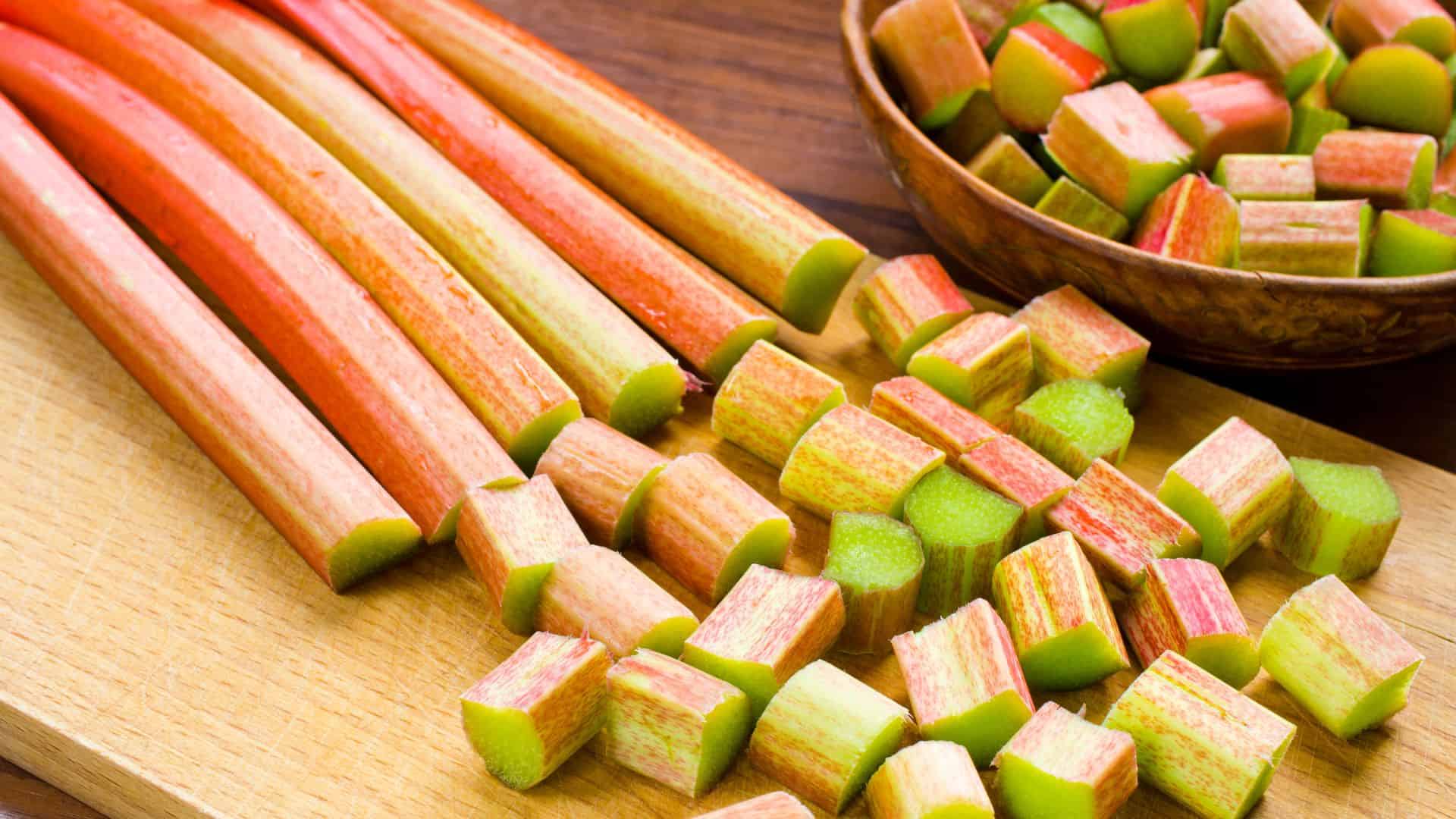
Rhubarb looks like a fresh fruit but is technically a vegetable. Only the stalks are used for cooking. The leaves should always be discarded, as they are not safe to eat.
The stalks range from pale green to deep red. Color can affect how it looks in a finished dish, but it does not always determine flavor. Some green varieties can taste just as tart as the red ones.
Fresh rhubarb should feel firm and crisp. If the stalks bend easily or look dry, they are past their peak. Once you bring it home, it keeps well in the refrigerator for about a week when wrapped loosely.
How to prep it
Rhubarb is simple to prepare, but a few small steps make a difference.
Start by trimming off the ends and discarding any leaves. If the outer layer feels tough or stringy, you can peel it lightly, though many stalks do not need it.
Cut the stalks into even pieces so they cook evenly. Smaller pieces break down quickly, while larger ones hold their shape longer. That choice depends on the texture you want in the final dish.
Because rhubarb is very tart, it is often paired with sugar or other sweet ingredients. The key is balance. Too much sugar can flatten the flavor, while too little can make it hard to enjoy.
Beyond cake and pie
Rhubarb cake and pie have a strong following, but think outside the box. The ingredient works just as well in other desserts, often with less effort.
Rhubarb crisps and crumbles are a natural starting point. The topping adds texture while the fruit softens underneath. Cakes and quick breads also benefit from rhubarb’s moisture and tang. It cuts through sweetness and keeps baked goods from feeling too heavy.
It also fits easily into simple stovetop desserts. A quick compote made with rhubarb, sugar, and a splash of water can be spooned over yogurt, ice cream, or pancakes. It comes together in minutes and keeps for several days.
Strawberries are a common pairing, and for good reason. Their sweetness balances rhubarb’s sharpness. But rhubarb also works well with oranges, apples, and even ginger, which adds warmth without overpowering it.
Using rhubarb in savory dishes
This is where many people are starting to experiment more.
Rhubarb can act like a sour component in savory cooking, similar to lemon or vinegar. It brings brightness to rich dishes and helps balance heavier flavors.
Cooked down into a sauce, it pairs well with pork or even roasted vegetables. The tartness cuts through fat and adds contrast without feeling too sharp.
It can also be used in chutneys or relishes. Combined with onions, spices, and a touch of sugar, it creates a layered flavor that pairs well with grilled meats or sandwiches.
In salads, lightly cooked rhubarb can add a crisp, tangy bite. Thinly sliced with greens, nuts, and a mild cheese, the dish feels fresh and balanced.
Drinks and small additions
Rhubarb has also found its way into drinks, contributing to its recent rise in popularity.
Simmered into a syrup, it can be added to sparkling water or cocktails. The color alone makes it appealing, but the flavor is what stands out. It adds depth without making a drink overly sweet. This rhubarb gin sour is proof.
It also works in jams and preserves, especially when combined with other fruits. A small jar can go a long way, adding a bright note to toast or even savory plates.
Even small amounts can make an impact. A spoonful of rhubarb sauce, served alongside roasted meat or stirred into a grain bowl, can change the entire dish.
Cooking tips that make a difference
Rhubarb cooks quickly, so timing matters. Overcooking turns it mushy and dulls the flavor. Keeping an eye on it and removing it from the heat as soon as it softens helps preserve its texture.
Sweetening should be done gradually. Taste as you go rather than adding a large amount of sugar all at once. This keeps the natural flavor intact.
Pairing it with fats can also help balance its sharpness. Butter in baked goods or a bit of oil in savory dishes rounds out the edges and makes it more approachable.
Freezing is another option if you have extra. Cut it into pieces, spread it out to freeze, then store it in a bag. It can be used later in the same way as fresh rhubarb, especially in cooked recipes.
Leave a Reply