
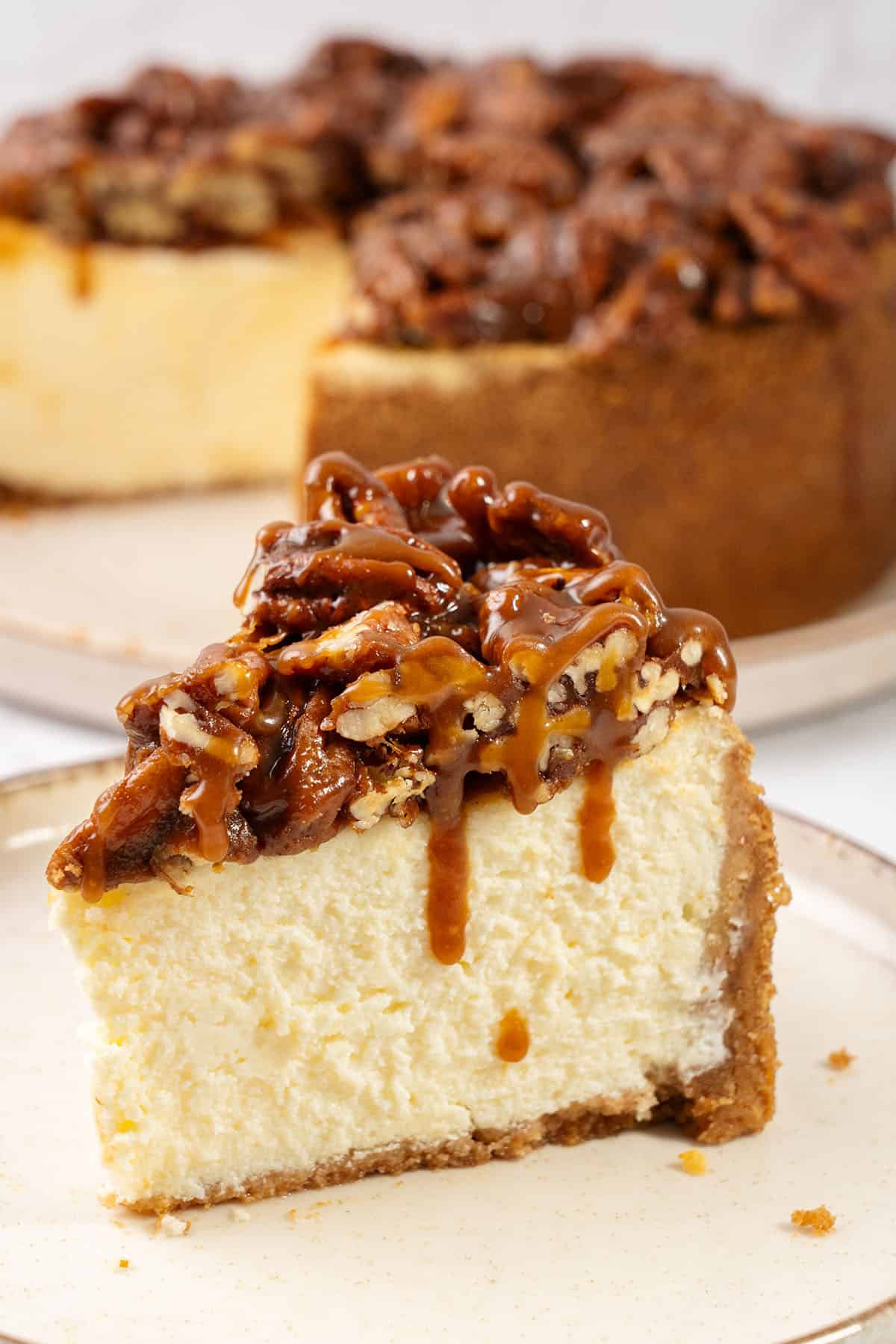
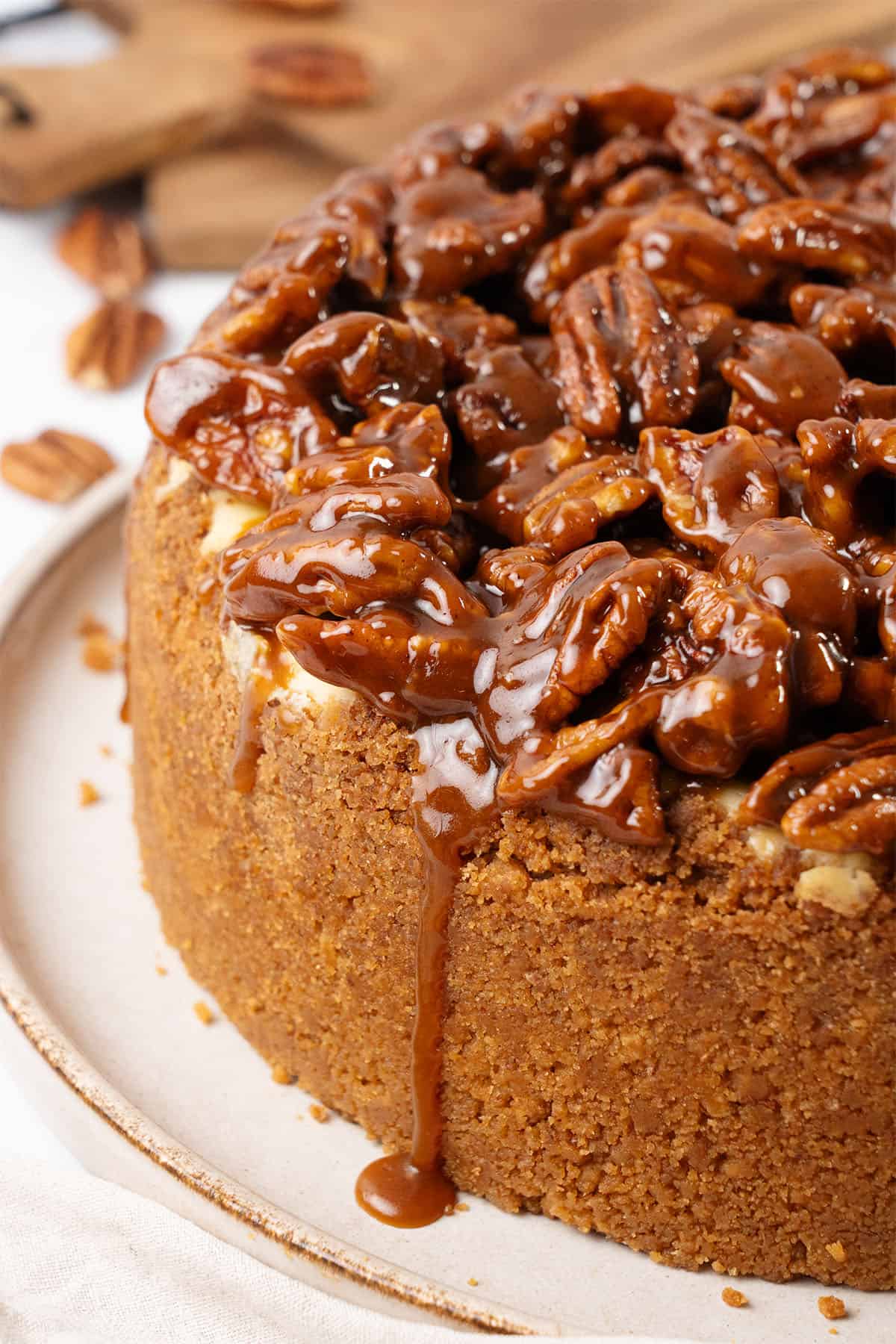
Pecan Pie Cheesecake brings together everything you love about cheesecake and pecan pie. The crisp graham cracker crust holds a creamy vanilla cheesecake filling topped with glossy caramel-coated pecans that add crunch and warmth. It’s a showstopping dessert that is the perfect treat for Fall and definitely deserves a spot at your holiday table, Thanksgiving, and beyond.
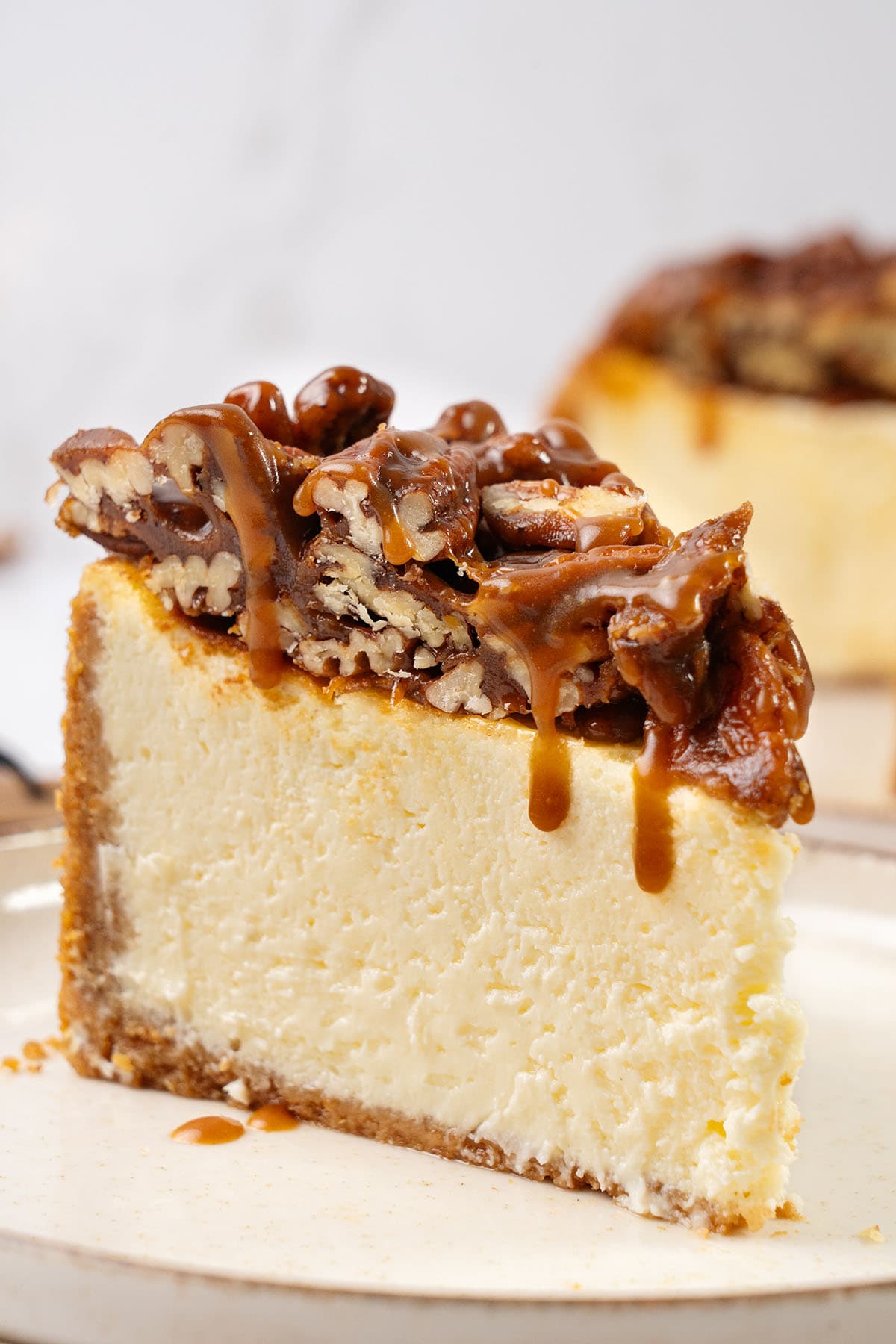
Best Pecan Pie Cheesecake Recipe
My Pecan Pie Cheesecake has been carefully tested and developed to guarantee success every time. Each element has been refined, from the sturdy Graham cracker crust to the smooth cheesecake filling and glossy caramel pecan topping.
The crust holds its shape while staying tender, and the filling is rich, creamy, and evenly baked using full-fat ingredients and a gentle water bath. The caramel topping coats the toasted pecans for a deep, buttery flavor. It's truly one of my favorite pecan desserts.
This is a recipe you can trust. It reflects years of testing, professional insight, and a focus on teaching you how to master an elegant, bakery-quality cheesecake in your own kitchen. You'll be able to enjoy two classic American desserts in one.
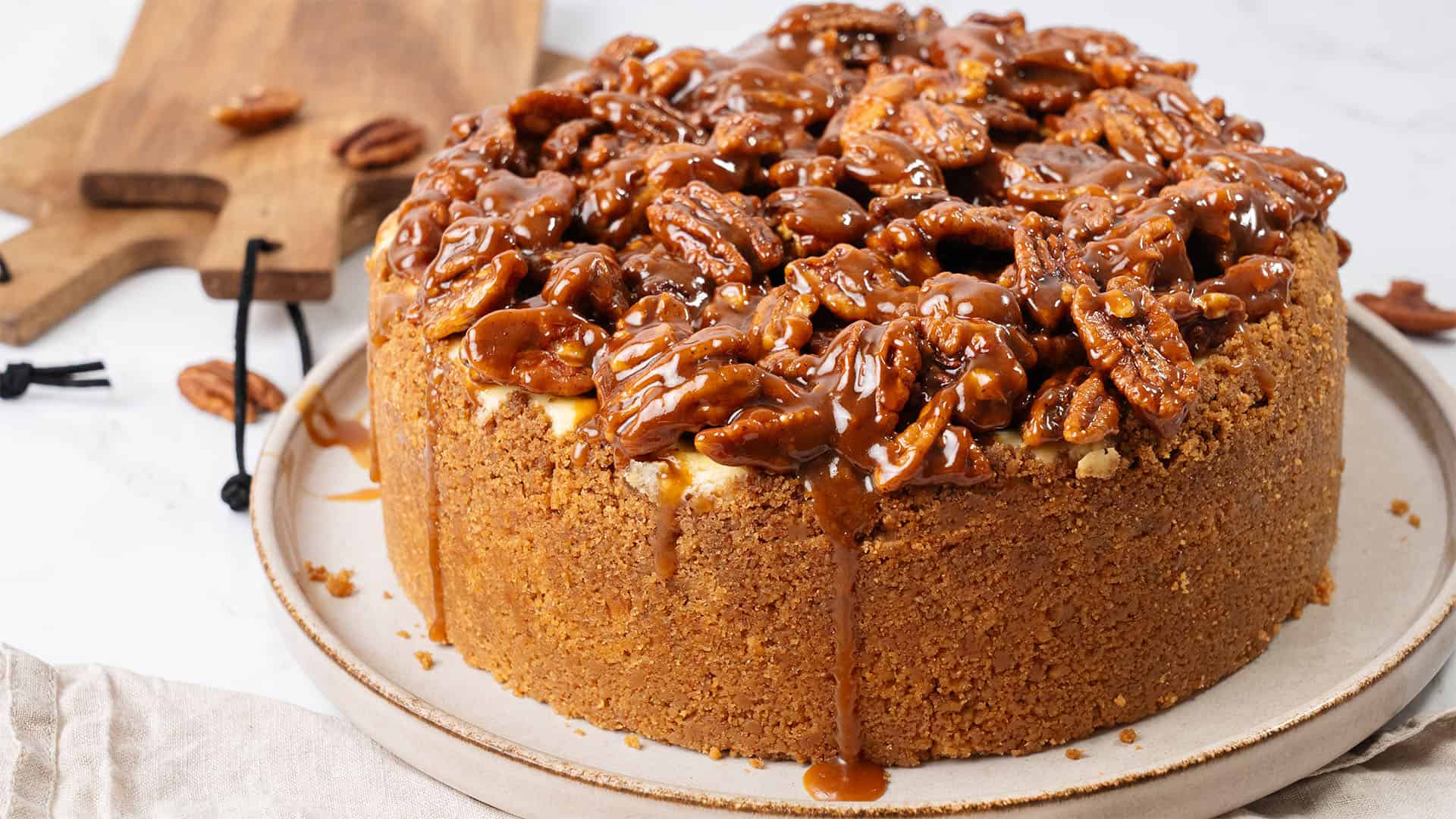
Katalin's key take on whether a water bath is needed for making Pecan Pie cheesecake?
A water bath is one of those techniques that might feel optional, but it makes a noticeable difference in your cheesecake's final texture.
Technically, you could skip it for this recipe since the pecan topping will cover any cracks that might appear on the surface. However, if you want that smooth, bakery-style texture that my New York cheesecake features, I highly recommend using it.
The purpose of the water bath is to create a gentle, humid baking environment that protects the cheesecake from sudden temperature changes. This helps it bake evenly without drying out or puffing up too much. The steam keeps the custard-like filling silky, dense, and free of cracks.
So even though the caramel topping covers imperfections in this Pecan Pie Cheesecake, the extra effort is worth it for the improved texture. The difference may be subtle at first glance, but you’ll taste it in every silky bite.
Start with the Graham cracker crust
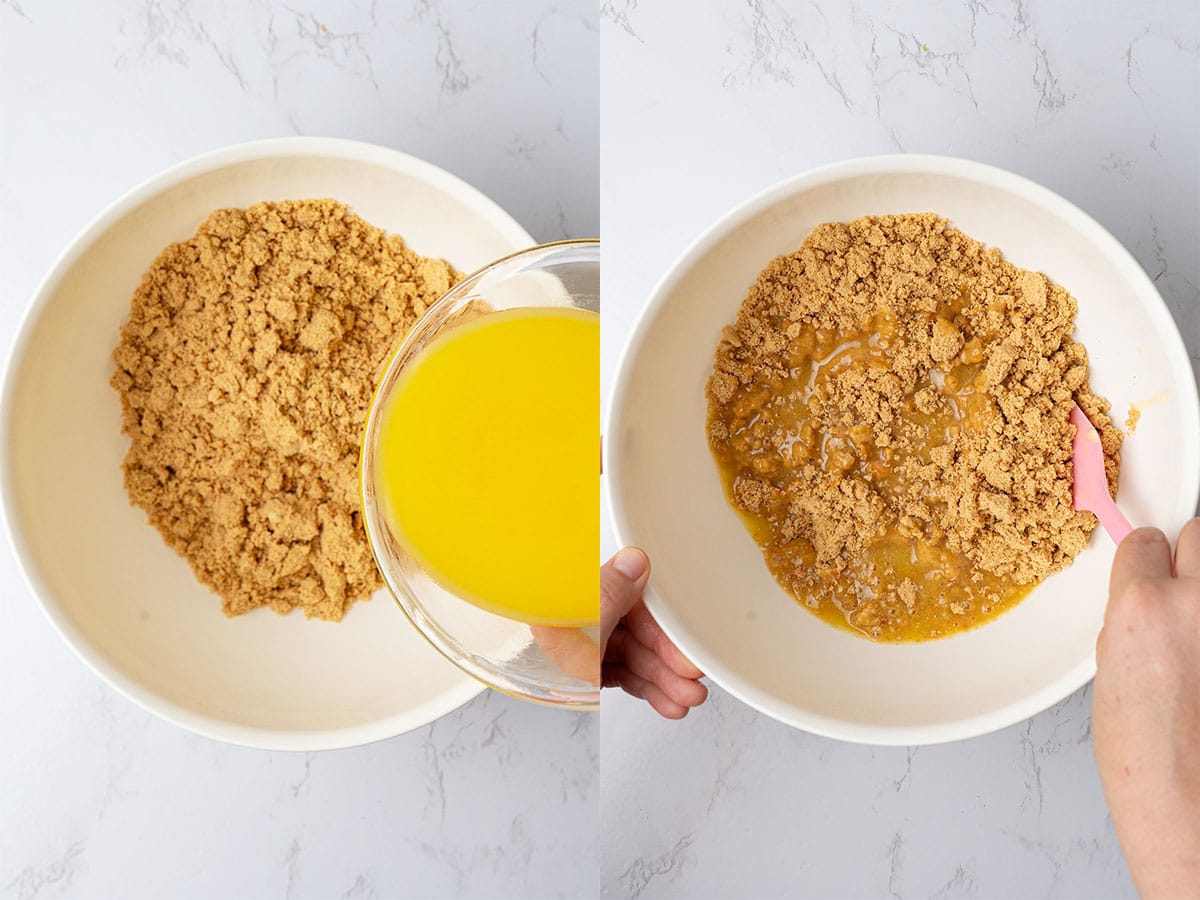
Melt the butter gently until liquid, then set it aside to cool slightly. Crush the graham crackers into fine crumbs using a food processor or a zip-top bag and rolling pin. Avoid overprocessing, as it can make the mixture pasty.
Add a pinch of salt, then pour in the melted butter and mix until the texture resembles damp sand. Stir until no dry spots remain. I recommend using good-quality European-style butter with a high fat content (mine has 82%) for the best results.
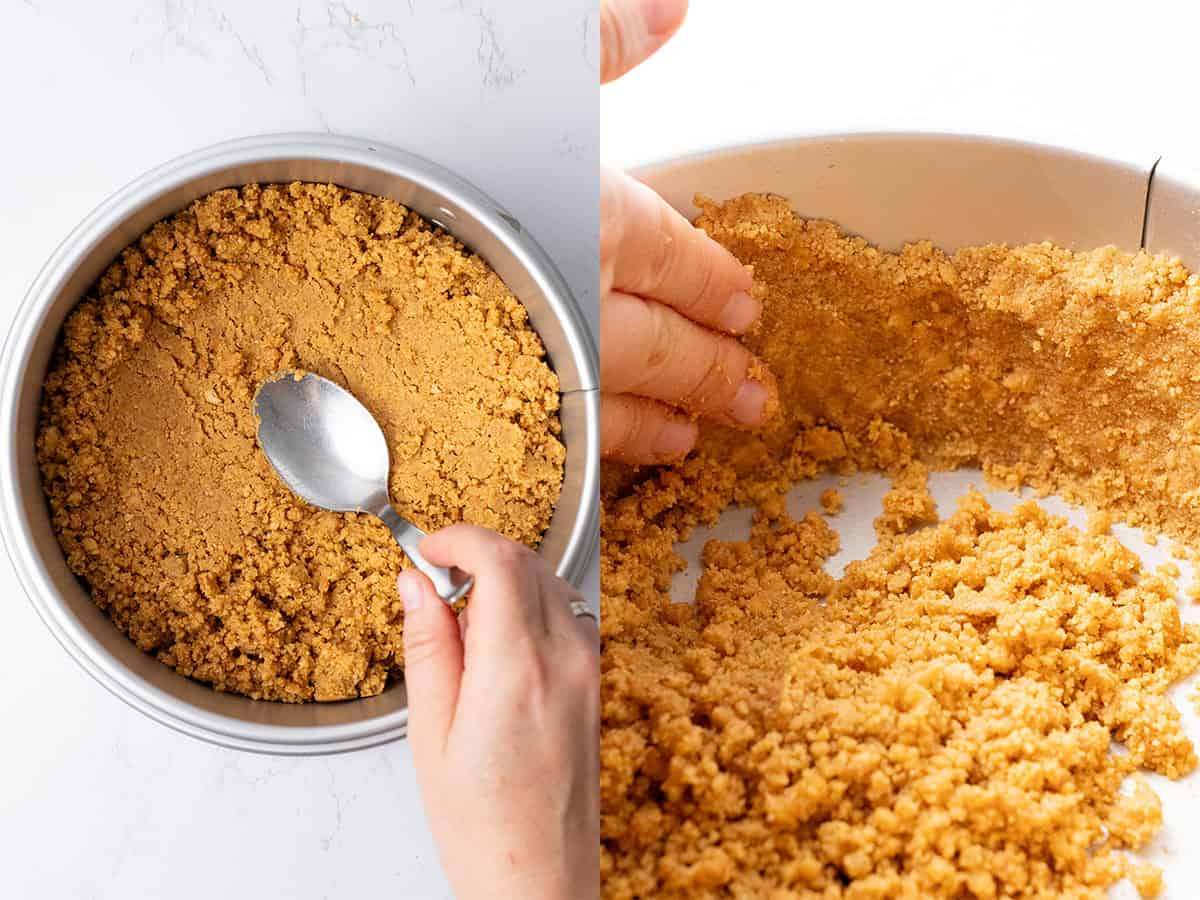
Press the mixture into the springform pan, starting with the sides and finishing with the base. Use firm, even pressure so it holds together but isn’t dense.
Bake at 350°F (175°C) for 8–10 minutes until lightly golden and fragrant. Let the crust cool completely before adding the cheesecake batter.
For more detailed guidance on crust ratios, techniques, and variations, you can refer to my Graham cracker cheesecake crust recipe, where I share all my professional tips for making the perfect base.
Water bath preparation
Prepare a deep roasting pan large enough to fit your springform pan comfortably.
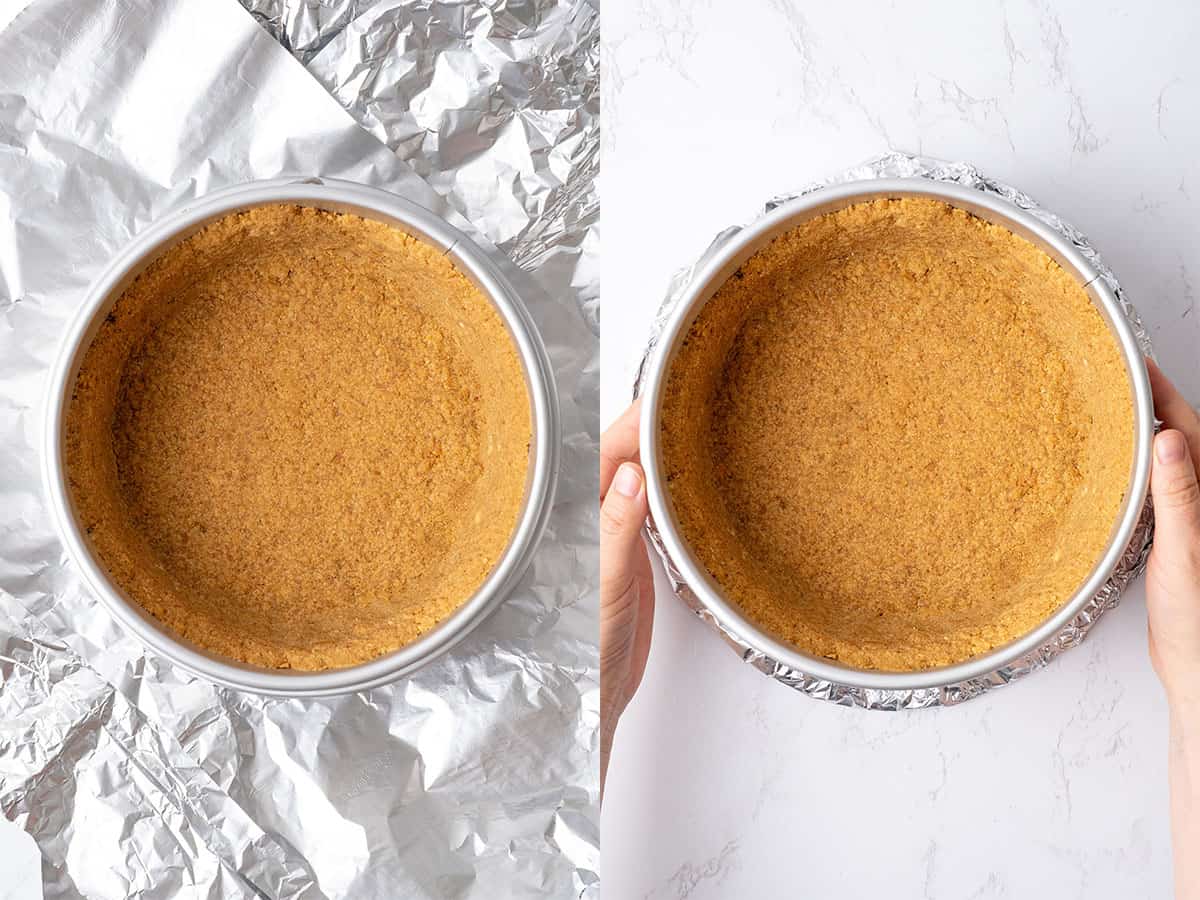
Wrap the springform pan tightly in 4 or 5 layers of heavy-duty foil, sealing the bottom and sides to prevent leaks when we pour hot water for the water bath.
For extra protection, place the wrapped pan inside a large oven-safe roasting bag.
Learn how to make the cheesecake batter really quickly
Preheat the oven to 325°F (165°C), no fan.
Add the room-temperature, full-fat cream cheese to a stand mixer bowl, fitted with the paddle attachment. Beat on medium-low speed until completely smooth, scraping down the sides and bottom of the bowl to remove any lumps.
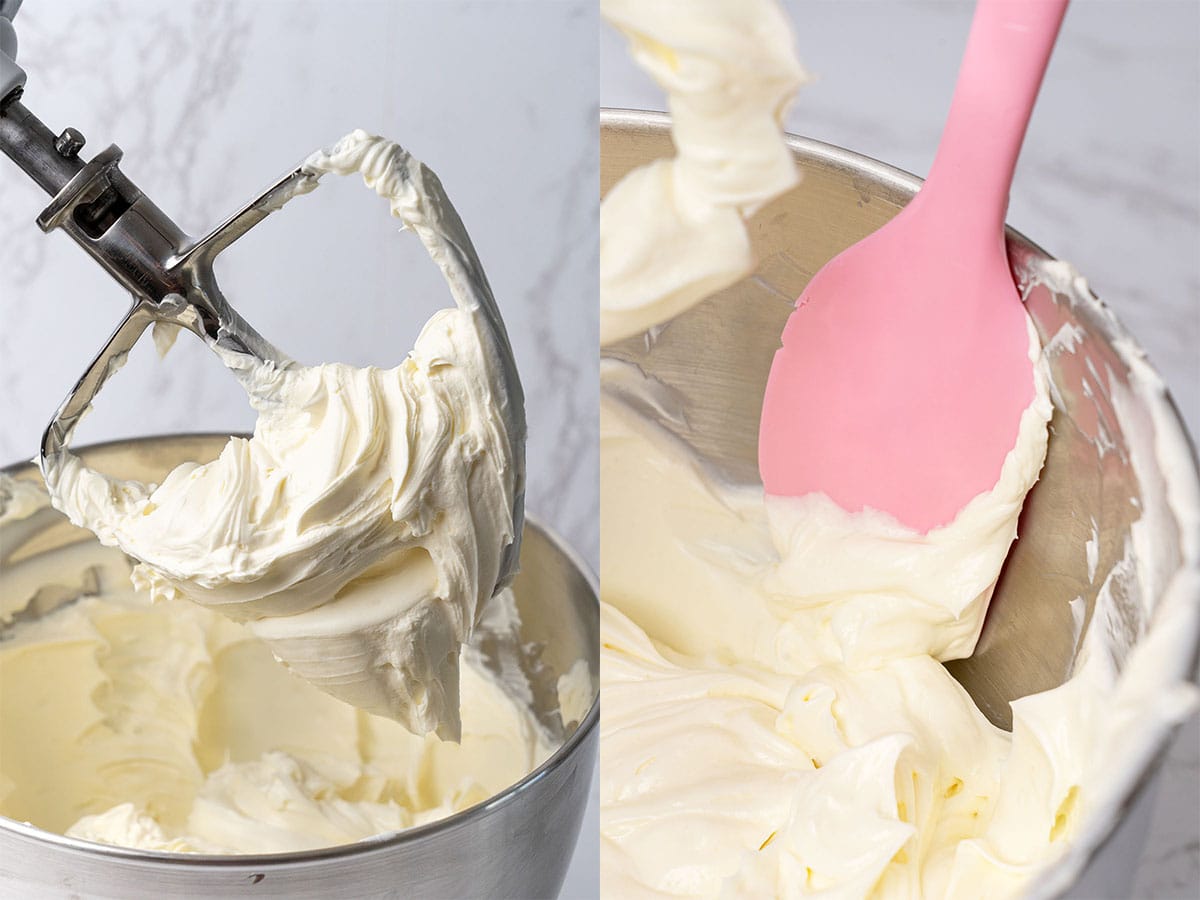
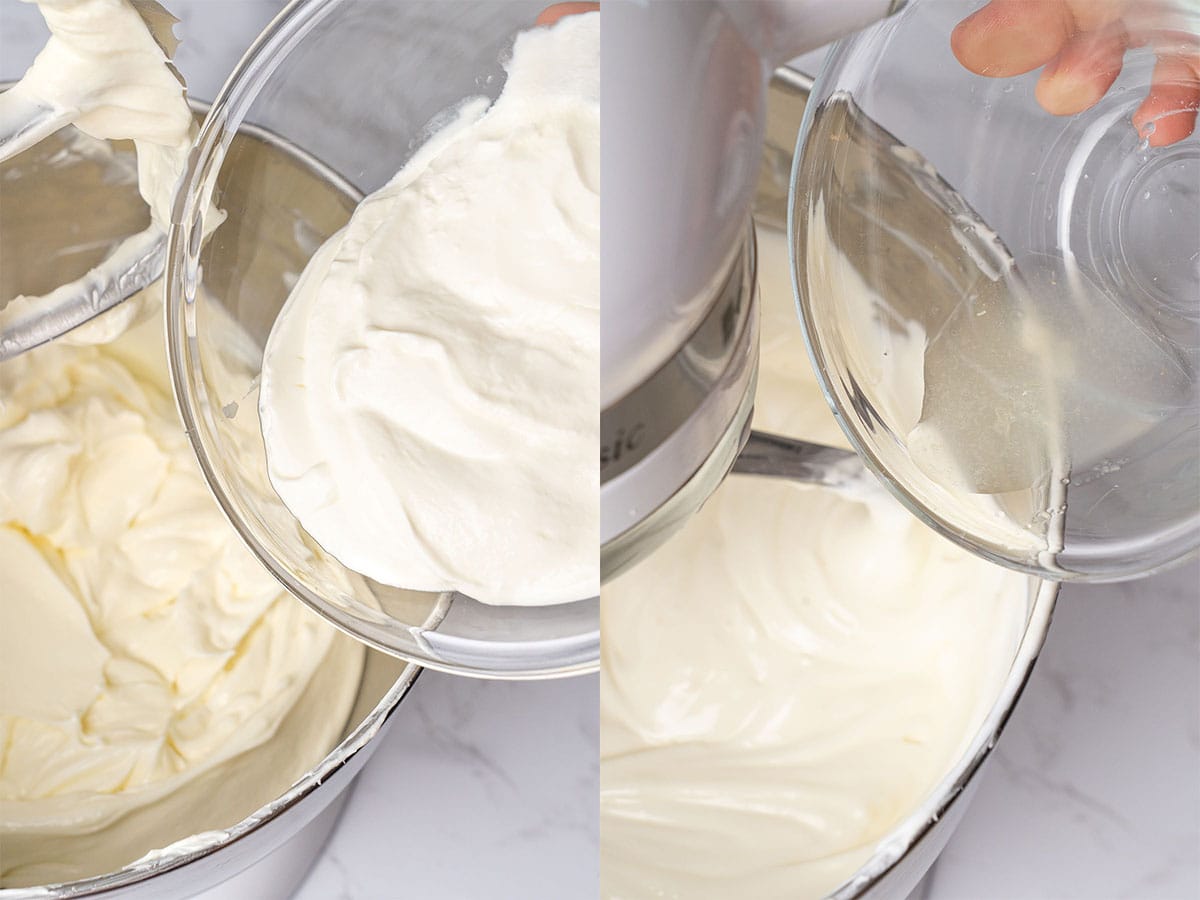
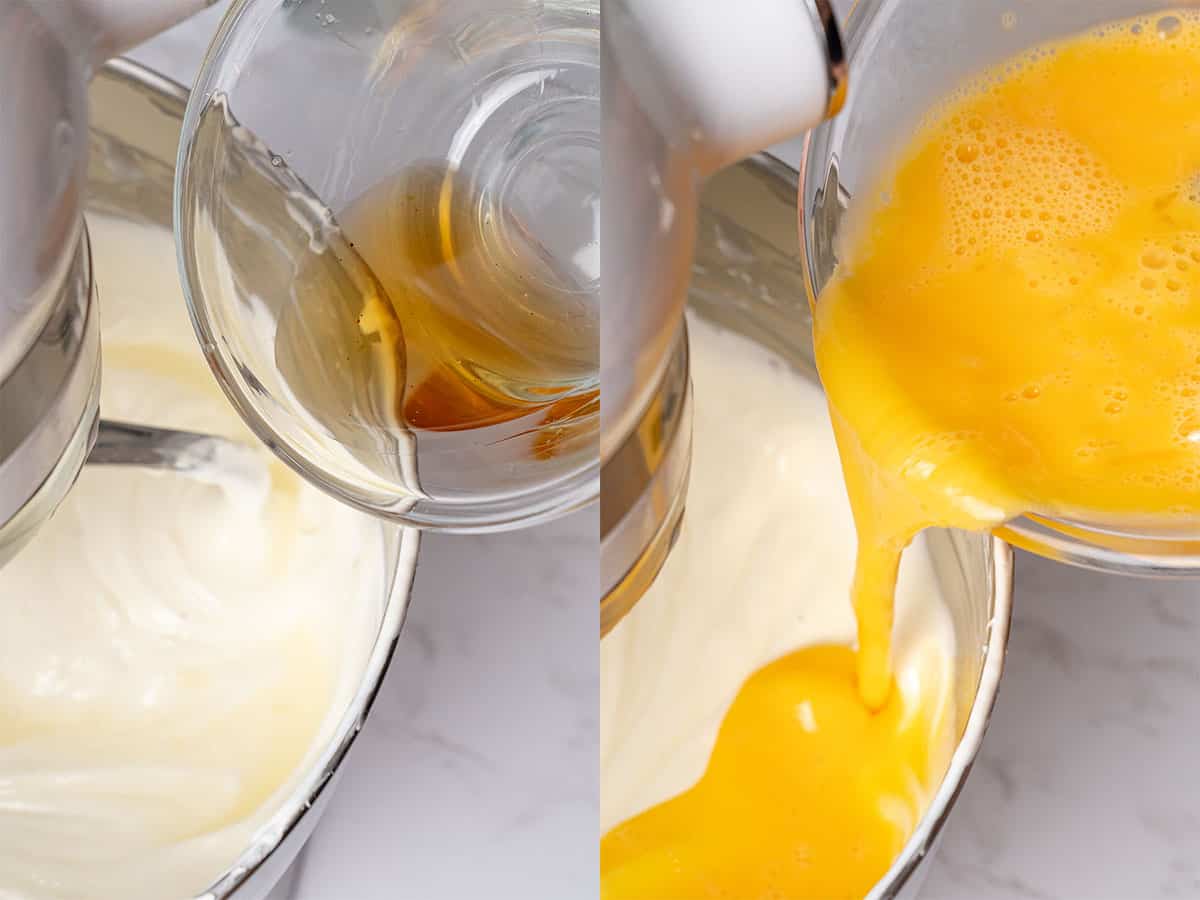
Add the granulated sugar and continue mixing on medium-low speed until the mixture looks glossy and fully combined. Then add the sour cream, lemon juice, vanilla, and salt, and mix just until smooth. Avoid overmixing.
Lightly whisk the eggs in a separate bowl, then slowly pour them into the cream cheese mixture while the mixer runs on low speed. Stop as soon as the batter looks uniform and silky.
The goal is to keep the texture smooth without incorporating too much air, as it is one of the top causes of surface cracks during baking.
Bake your cheesecake, but don't overbake it
Pour the cheesecake batter into the cooled crust and smooth the top with a spatula. Tap the pan gently on the counter to release any trapped air bubbles.
Bring a kettle of water to a boil, then place the springform pan in the roasting pan. Pour the boiling water into the pan until it reaches about one-third of the way up the sides of the springform.
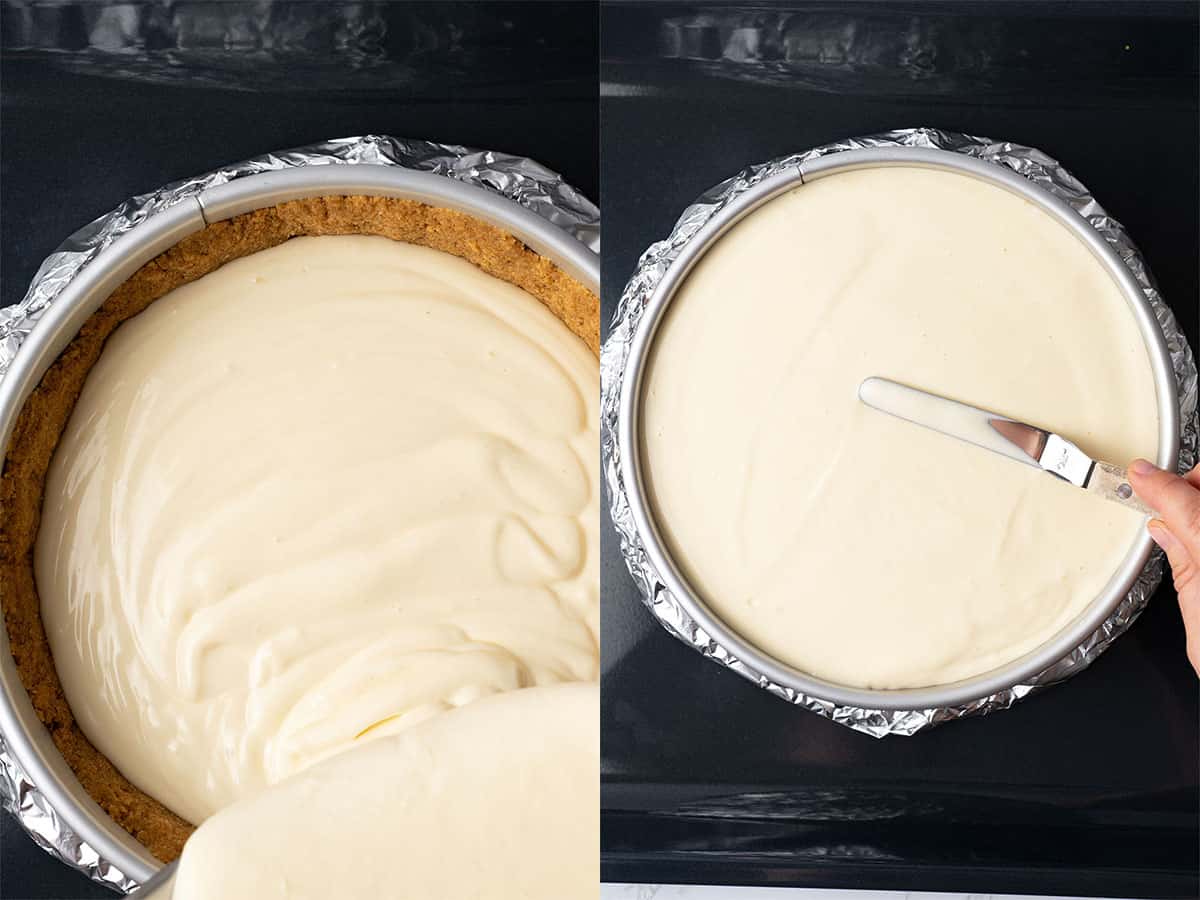
Bake the cheesecake at 325°F (165°C) for 60 to 75 minutes.
How do you know that your cheesecake is done baking? The edges should look set, while the center should still wobble slightly when nudged. Avoid using a convection or fan setting, as it can cause the top to brown too quickly and dry out.
Once the baking time is up, turn off the oven and let the cheesecake cool inside with the door closed for 1 hour. This gradual cooling allows the cheesecake to finish setting and helps prevent sinking or splitting. After an hour, remove the cheesecake from the water bath, unwrap the foil, and let it cool for another hour at room temperature.
Transfer the cheesecake to the refrigerator and chill for at least six hours, or preferably overnight, for the best texture and flavor. A slow chill helps the filling firm up while keeping it smooth and creamy.
Make the irresistibly crunchy pecan caramel topping
There are different ways to make caramel. My classic caramel recipe begins by melting sugar with glucose syrup, followed by adding hot cream and then butter once the mixture cools slightly.
For this Pecan Pie Cheesecake, I use a simplified version that starts by melting the butter and sugar together. This method is easier for small quantities and less likely to burn, since the sugar melts more evenly with the butter. Cook the mixture over medium heat while stirring constantly to prevent the butter from separating. Medium heat gives better control and allows the caramel to develop a deep, golden color without scorching.
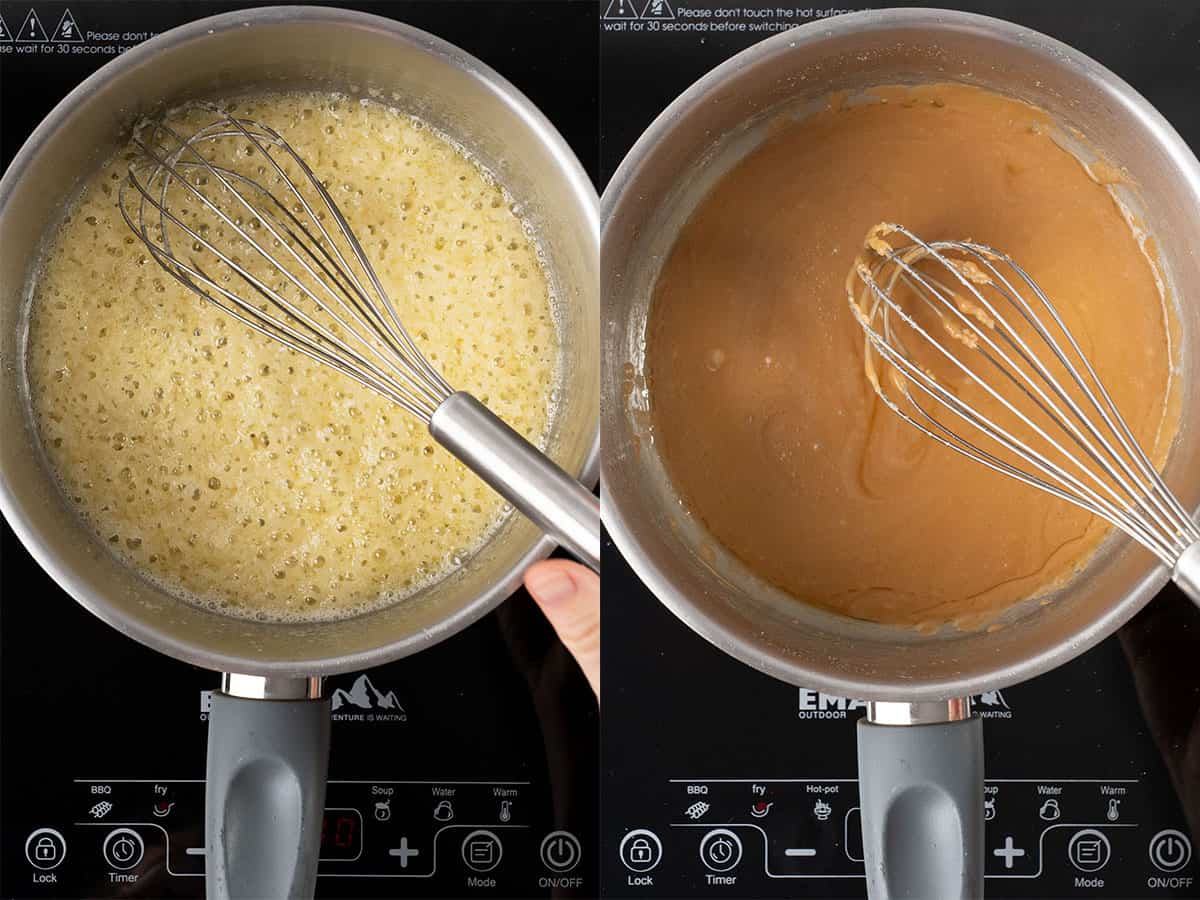
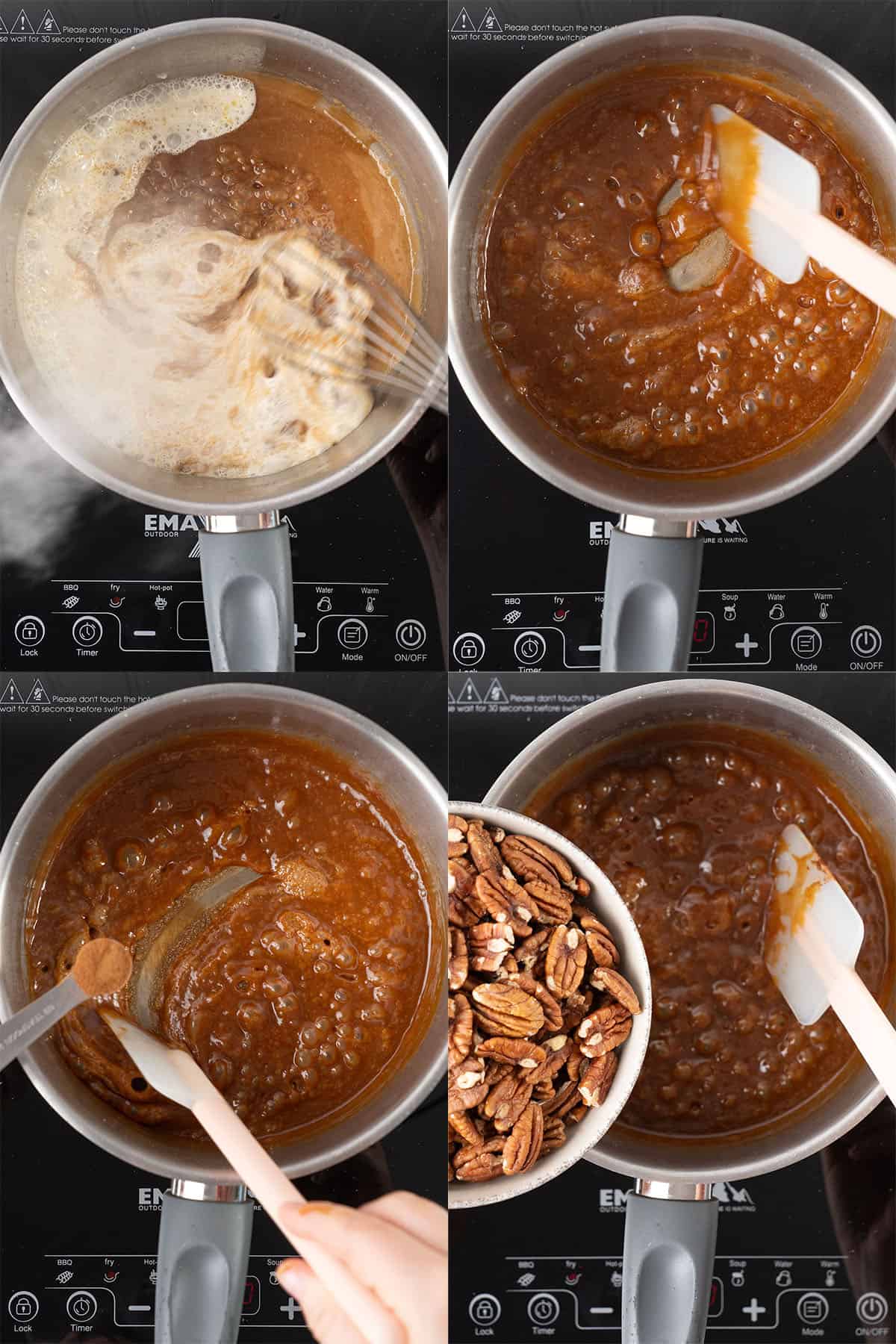
In a separate pan, warm the cream until just simmering. Slowly pour the hot cream into the caramel while whisking. Cook it for 2-3 minutes, stirring constantly, to achieve a smooth, glossy finish. Remove from heat and stir in cinnamon, salt, and vanilla, then fold in roasted pecans.
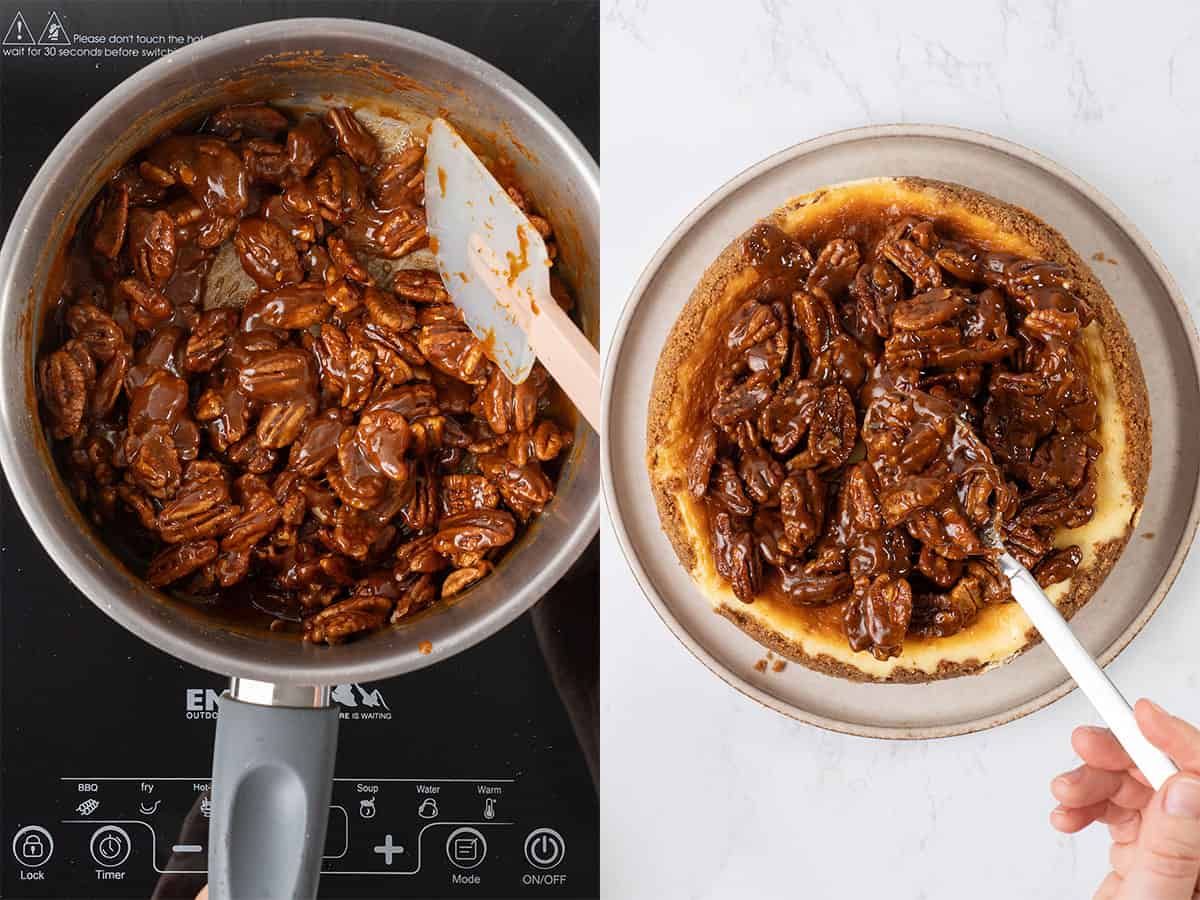
Let the caramel cool for a few minutes until it thickens but remains pourable. Spread it evenly over the chilled cheesecake so it sets into a shiny, sliceable layer.
Storing & freezing
Leftover pecan pie cheesecake can be stored covered in the refrigerator for up to 3–4 days. Keep it in its springform pan or transfer slices to an airtight container to keep the caramel topping soft and the cheesecake moist.
You can also freeze the cheesecake before adding the pecan topping. Once it has fully chilled, wrap the entire cheesecake tightly in plastic wrap, followed by a layer of aluminum foil. Freeze for up to 2–3 months.
To freeze individual slices, double wrap each piece in plastic wrap and foil. When ready to serve, thaw overnight in the refrigerator, then prepare the fresh caramel pecan topping before serving for the best flavor and texture.
Flavor Variations
You can easily adapt this Pecan Pie Cheesecake for different flavors and occasions without changing the base recipe. Try replacing some of the graham crackers with gingersnaps or Biscoff cookies for a warm, spiced flavor that pairs beautifully with the caramel and pecans.
To vary the cheesecake batter, add a tablespoon of maple syrup or a few drops of bourbon or rum extract can also work beautifully.
The topping can be customized, too. Swap the pecans for toasted walnuts, almonds, or hazelnuts, or stir a handful of chopped dark chocolate into the caramel before spreading it over the cheesecake for a turtle-style finish.
Ingredient Substitutions
If Graham crackers aren’t available, you can replace them with digestive biscuits, vanilla wafers, or another mild cookie. For a gluten-free crust, simply use gluten-free cookies. Just make sure the texture remains crumbly and not too buttery, or the crust may turn greasy once baked.
The cheesecake filling relies on full-fat cream cheese for richness, but you can substitute part of it with mascarpone or ricotta for a lighter, less tangy flavor. If using ricotta, strain it well to remove excess moisture. Sour cream can be swapped for Greek yogurt or crème fraîche; both add more acidity, which slightly alters the final flavor but still produces a beautifully creamy texture.
Walnuts can be used instead of pecans, but as I explain in my Pecans vs Walnuts guide, pecans have a buttery flavor that walnuts lack, which adds a delicious richness to this Pecan Pie Cheesecake.
Avoid low-fat cream and low-fat cream cheese. You could also try pouring some extra caramel sauce on top for a richer finish.
This recipe isn’t suitable for a vegan conversion. The cheesecake and caramel depend on eggs and dairy, and replacing both won’t produce a comparable taste or texture.
Expert tips to make Pecan Pie Cheesecake
- Avoid vanilla essence, which has a synthetic flavor and will really impact your cheesecake. Instead, use vanilla extract for the best vanilla cheesecake flavor.
- If your kitchen runs cold, place the cream cheese packages (still sealed) in a bowl of lukewarm water for 10 minutes to quickly bring them to room temperature without unevenly softening them. I share four other ways to do it in my how to soften cream cheese guide.
- When wrapping your springform pan, press the foil upward and fold it tightly around the rim, rather than under the base. This prevents water from pooling and seeping in from the bottom during baking.
- If your caramel starts to look oily or separated, remove it from the heat immediately and whisk vigorously until it comes back together. This re-emulsifies the butter and sugar without burning the mixture.
- If the caramel topping becomes too firm to cut, let the cheesecake rest at room temperature for 20 to 30 minutes before slicing. The caramel will soften slightly, giving clean, beautiful cuts.
What Equipment To Use
Always weigh your ingredients using a digital scale and don’t rely on cups, as baking demands precision down to the gram.
Crush your graham crackers in a food processor for fine, even crumbs, or use a rolling pin in a zip-top bag for a more hands-on approach.
Mix your cheesecake batter in a stand mixer fitted with the paddle attachment to keep it smooth and air-free. Use a rubber spatula to scrape down the sides as you go.
Bake it in a tall 8-inch springform pan to achieve that beautiful height and creamy center. A 9-inch pan works too, but the cheesecake will be flatter.
Ensure your oven is at the correct temperature with a digital oven thermometer. It’s the best way to avoid overbaking and cracked tops.
Try Some Of My Other Cheesecakes
If you love cheesecakes as much as I do, try some of my other recipes:
Pistachio cheesecake
Basque Burnt cheesecake
Tiramisu cheesecake
Apple crumble cheesecake
Baklava cheesecake
And check out my roundup of the best cheesecake types.
Have You Tried This Recipe?
Please leave a 5-star ⭐️⭐️⭐️⭐️⭐️ rating on the recipe card and consider leaving a comment as well!
Pecan Pie Cheesecake
Equipment
Ingredients
Pecan pie Cheesecake
Crust
- 300 g (2½ cups) Graham Cracker Crumbs 300 g = 10.5 oz = approx. 20 sleeves
- 120 g (½ cups) Unsalted butter
- Pinch of salt
Cheesecake batter
- 900 g (4 cups) Cream cheese full fat Philadephia at room temperature
- 250 g (1¼ cups) Granulated sugar
- 230 g (1 cups) Sour cream full-fat at room temperature
- 1 tablespoon Lemon juice freshly squeezed
- 3 teaspoon Vanilla extract
- Pinch of salt
- 4 Eggs lightly whisked at room temperature
Caramel pecan topping
- 55 g (¼ cups) Unsalted butter room temperature
- 100 g (½ cups) Granulated sugar
- ½ teaspoon Cinnamon
- 115 g (½ cups) Heavy cream 36% fat
- ½ teaspoon Salt
- ½ teaspoon Vanilla
- 240 g (2 cups) Pecans oven roast it at 350°F (175°C) for 8–10 minutes
US customary cup measurement is an indicative figure only. Measure the ingredients with a digital scale by weight (gram). Baking is art but also science which requires precision and accuracy.
Instructions
Crust
- Gently melt the butter on the stovetop or in the microwave until smooth and liquid, then let it cool slightly. Pulse the graham crackers in a food processor until finely ground, or seal them in a zip-top bag and crush with a rolling pin.
- Stir a pinch of salt into the crumbs, then add the melted butter and mix until the texture resembles wet sand.
- Press the crumb mixture firmly and evenly into the bottom and sides of an ungreased 8- or 9-inch springform pan, using the back of a spoon or the base of a measuring cup to smooth it out. Pack it tightly enough to hold together but not so much that it becomes dense, then place the pan in the fridge or freezer to set while you prepare the filling.
- Bake the crust in a preheated 350°F (175°C) oven for 8–10 minutes, until lightly golden and set. Remove it from the oven and let the crust cool completely in the pan before pouring in the cheesecake batter.
Water bath preparation
- Preheat the oven to 325°F (165°C), no fan, and prepare a roasting pan for the water bath that is bigger in size, than your springform pan. Set it aside.
- Tightly wrap the outside of the springform pan in at least 4–5 layers of heavy-duty aluminum foil, making sure the bottom and sides are fully covered to guard against leaks. For added insurance, slip the foil-wrapped pan into a large oven-safe bag before baking.
Cheesecake batter
- Add the room-temperature full-fat cream cheese to the bowl of a stand mixer fitted with the paddle attachment and mix on medium-low speed for about 2 minutes until perfectly smooth and free of lumps, pausing to scrape down the sides and bottom of the bowl.
- Add the granulated sugar and continue creaming on medium-low speed for 2 minutes until the mixture looks silky and no longer grainy. Scrape down the bowl again.
- Add the room-temperature sour cream, fresh lemon juice, vanilla, and a pinch of salt, then mix on low speed for about 10 seconds until just blended. Scrape down the sides and bottom of the bowl once more.
- Lightly whisk the room-temperature eggs in a small bowl until just blended. With the mixer running on low speed, slowly add the eggs. Mix only until fully incorporated, about 30 seconds. Do not whip the batter.
Assemble the cheesecake
- When the batter is silky and uniform, stop mixing and pour it into the prepared crust. Gently tap the pan on the counter a few times to release any air bubbles, then place it inside the roasting pan.
- Bring a kettle of water to a boil. Carefully pour the hot water into the roasting pan until it reaches about thirdway up the sides of the springform pan.
- Bake the cheesecake in the prepared water bath at 325°F (165°C) for 60–75 minutes, until the edges are set but the center is still slightly jiggly when gently shaken. Do not open the oven door during baking.
- When the baking time is complete, turn off the oven and leave the cheesecake inside with the door closed for 60 minutes to cool gradually and help prevent cracks. Afterward, remove the roasting pan from the oven, carefully lift the cheesecake out of the water bath, unwrap the foil, and place the pan on a wire rack to cool at room temperature for about 1 hour.
- Once the cheesecake has cooled to room temperature, place it in the refrigerator to chill for at least 6 hours, or overnight, until fully set. Only after chilling, release the springform pan and remove the cheesecake carefully.
Caramel pecan topping
- For the caramel pecan topping, melt the butter with the sugar in a saucepan over medium heat, stirring constantly to prevent the butter from separating. Cook until the mixture turns into a smooth, golden caramel, being careful not to let it burn.
- Meanwhile, heat the cream in a separate pan until it just begins to simmer. Once the caramel reaches the desired color, slowly and steadily pour in the hot cream while stirring. Cook for about 2-3 minutes stirring constantly.
- Stir in the cinnamon, salt, and vanilla, then let the caramel cook for another 30 seconds to infuse the flavors.
- Remove the saucepan from the heat and stir in the roasted pecans until they are fully coated in the caramel.
- Let the caramel pecan mixture cool slightly; it should be warm and pourable, not scorching hot or fully set. Once it reaches the right temperature, pour it over the cheesecake and serve immediately while the topping is still glossy and easy to slice through.
- Note that once the caramel sets, especially after chilling, it will firm up and make the cheesecake more difficult to slice cleanly. It’s best to bring the cheesecake back to room temperature before slicing, as the caramel softens slightly and cuts much more easily.
- StoringOnce the cheesecake has chilled and set, cover any leftover with plastic wrap or aluminum foil, and store it in the refrigerator for up to 3–4 days to maintain freshness and prevent it from drying out.FreezingFreeze before adding the pecan layer. After the cheesecake has fully chilled, wrap the whole cake (still in the springform pan) or individual slices tightly in plastic wrap, then add a layer of aluminum foil for protection; freeze for up to 2–3 months, and when ready to serve, transfer to the refrigerator to thaw slowly overnight for the best texture.
Notes
- Measure your ingredients with a digital scale for accuracy.
- Do not skip the salt; it will balance the flavors.
- Feel free to substitute Graham crackers with Digestive biscuits.
- The crust is sweet enough, but for people with an extra sweet tooth, feel free to add 1-2 tablespoons of granulated sugar to this recipe.
- For the cheesecake batter, use full-fat ingredients at room temperature.
- For the pecan topping, don't skip pre-roasting the pecans. Toasted pecans add a rich, nutty flavor with a hint of butteriness and a deeper crunch compared to raw pecans.
- Make sure you read my step-by-step instructions in the post above with all the details of how to make this cheesecake crust. A short recipe alone is not able to cover all the necessary details and science behind baking.
- The butter should be fully runny so it mixes well with the crumbs, but not hot; otherwise, it can make the mixture greasy.
- When processing graham crackers in a food processor, stop as soon as you have fine, sandy crumbs. If you overprocess, the crackers can release too much fat and turn pasty, almost like cookie butter.
- While preparing the crust, make sure that you press the crumbs firmly and evenly into the sides and the bottom of your springform.
- While preparing the cheesecake batter, use the paddle attachment, not the whisk, to avoid whipping air into the batter.
- Mix on low speed and scrape down the bowl often for a smooth, lump-free texture.
- Always bake the cheesecake in a water bath for gentle, even heat.
- Warm the cream before adding it to the caramelized sugar to prevent the mixture from seizing and splattering.
- Control the heat carefully while making the caramel; medium heat gives you more control and prevents burning while still allowing the sugar to caramelize evenly.
- Pour the topping onto the cheesecake while it’s warm and fluid, as once it fully sets, slicing becomes tricky.
Joe Seeley
You and your husband make a very talented team!
I saw this recipe on Yahoo and it caught my eye. I love to cook but am an amateur when it comes to baking. With that understanding, for my son's birthday I cheated and bought a plain Costco cheesecake and just made the pecan topping.
The topping alone is very tricky, you have to get the timing just right. I was pleasantly surprised I got it right on my second attempt! 😂
It turned an ordinary cheesecake into something very special and scrumptious, the whole family loved it! Thank you very much! I hope with more time I can revisit this recipe and make the whole thing from scratch. Happy Thanksgiving! 🦃
Katalin Nagy
Thanks so much for your kind feedback and particularly praising my husband as well, who is behind the camera every time and contributes in so many other ways, making Spatula Desserts what it is today. I hope you will bake more of my recipes in the near future. Bests
Kata
Brandi Massey
Katalin, I made this last Sunday and it was easier than I thought it would be and phenomenal! My husband raved on it the first time he tried it and everyone else that has tried it loves it too. Thank you for sharing! I will make again, for sure!
Katalin Nagy
So happy to hear!
Sara
Where have you been so far, Katalin? Just found your site, already baked the Paris Brest and this pecan cheesecake and I am truly impressed by the precision of your recipes as well as the outcome and flavors. Wondering what should I bake next?
Taylor
Katalin, I saw this cheesecake in your newsletter and just knew I had to try it. OMG!!!! This is the best pecan dessert and the best cheesecake I have ever made, and I bake a lot. Can't wait to try your apple and tiramisu cheesecake next week.