
Cool Whip often shows up at holidays and family gatherings, so much so that many people assume it's just whipped cream with a longer shelf life. Ask what it is made of, though, and the answers usually trail off. The guesses start pouring out...Cream, maybe sugar, maybe something to keep it fluffy? No one really seems to know.
The uncertainty is not surprising. Cool Whip looks like whipped cream, spreads like whipped cream, and is often used the same way. But it is not whipped cream, and in a pastry kitchen, that distinction matters more than most people realize.
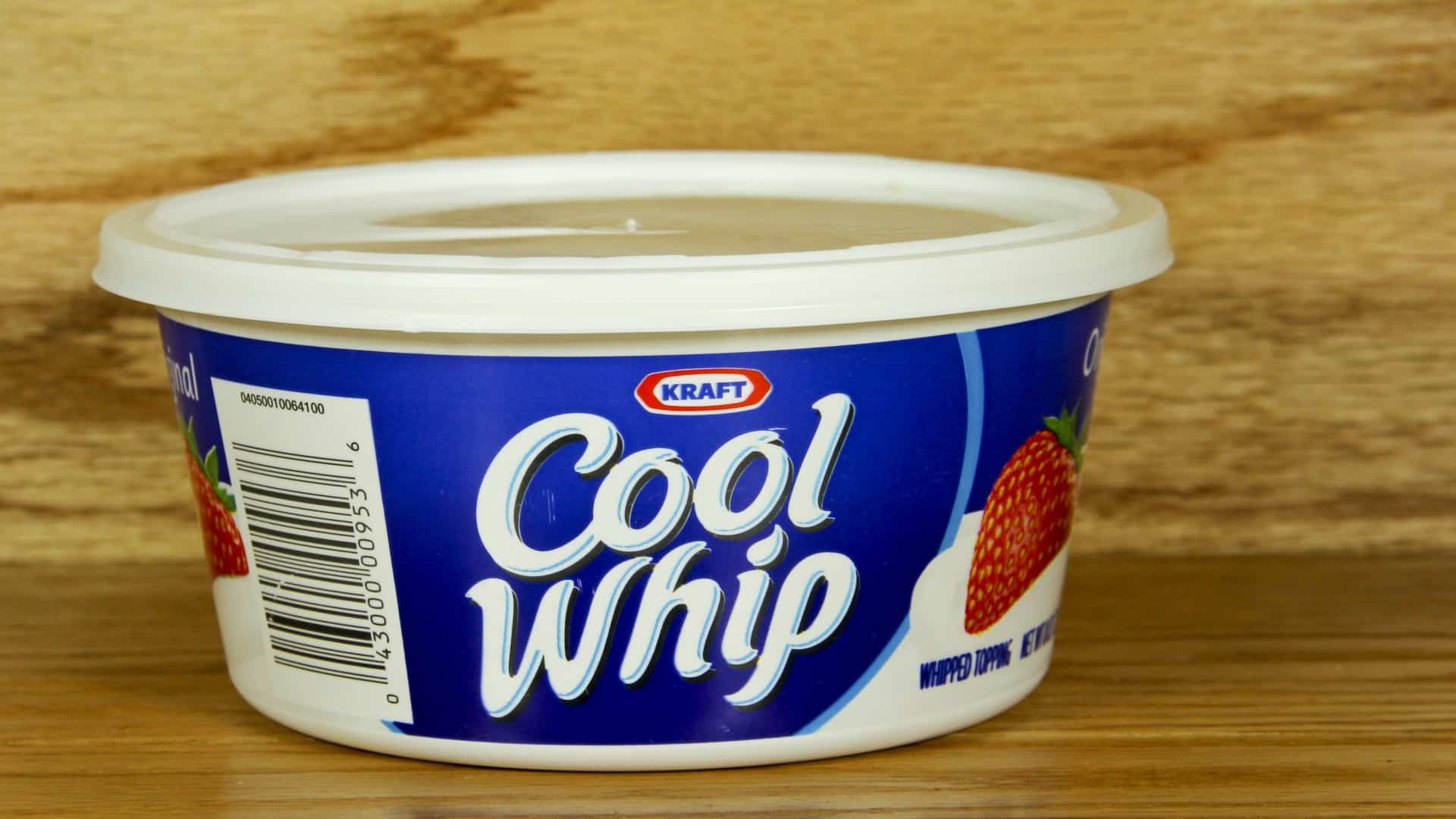
What Cool Whip actually is
Cool Whip is a processed topping introduced by Kraft Foods in 1966. Its primary ingredients are water and hydrogenated vegetable oils. The sweetness comes from corn syrup and high-fructose corn syrup rather than from just added sugar. Skim milk appears on the label, but it's only in a small amount.
Ingredients
WATER, CORN SYRUP, HIGH FRUCTOSE CORN SYRUP, HYDROGENATED VEGETABLE OIL (COCONUT AND PALM KERNEL OILS), SKIM MILK, CONTAINS LESS THAN 2% OF LIGHT CREAM, SODIUM CASEINATE (FROM MILK), NATURAL AND ARTIFICIAL FLAVOR, XANTHAN AND GUAR GUMS, MODIFIED FOOD STARCH, POLYSORBATE 60, SORBITAN MONOSTEARATE, SODIUM POLYPHOSPHATE, BETA CAROTENE (COLOR).
To maintain shape and texture, Cool Whip relies on stabilizers and emulsifiers. These ingredients help it hold peaks and thaw without immediately collapsing and liquifying. Artificial flavoring is added to create a dairy-like taste that the oils and ingredients cannot give.
From a marketing standpoint, it works. Cool Whip is affordable and adds a bit of flair and flavor to desserts. From a professional standpoint, it introduces limitations that become apparent when used in a dessert that relies on balance or clean flavor.
Why it is often mistaken for whipped cream
For many, Cool Whip was the go-to topping for desserts and dessert tables. It appears on no bake pies, pumpkin pie, and fruit salads, year after year.
Its appearance reinforces confusion. It is white and spoonable. When served cold, it feels similar enough to homemade whipped cream that most people don't pause to notice the difference.
Marketing has also played a role. The word “whipped” carries a strong association with cream, even when cream is not the foundation of the product. Without reading the ingredient list, most people have no reason to question the difference.

Texture problems in real desserts
Texture is where Cool Whip starts to show its limits. Its structure comes from gums and additives rather than dairy fat and milk proteins.
In pies and layered desserts, Cool Whip releases moisture as it sits. That can lead to watery layers, especially when paired with fruit fillings. In mousses or cream-based fillings, it does not integrate smoothly. Instead of blending evenly, it breaks down or sits separately. It's visually noticeable and can make a dessert look less than appealing.
The mouthfeel is also different. Cool Whip feels light at first, then slightly slick. It lacks the elasticity and richness of real whipped cream.
Flavor is the bigger issue
Flavor is where the gap widens. Homemade whipped cream has a natural sweetness from the sugar and depth that requires little enhancement. Cool Whip relies on artificial flavoring to enhance its taste. In heavily sweet desserts, the difference can be masked. In simpler desserts, it cannot.
As a professional baker, I want toppings that support the dessert rather than sit on top of it as a separate element. Once you make and taste homemade whipped cream, you may also notice that store-bought Cool Whip has a chemical aftertaste compared to the real deal.

Ingredient concerns beyond preference
This is not a moral argument about processed foods. The concern here is function.
The ingredients in Cool Whip are designed for shelf life and consistency, not flavor development or versatility. Hydrogenated oils add structure but no richness. Corn syrups add sweetness without complexity, and stabilizers create volume without contributing to taste.
By contrast, whipped cream is straightforward. The fat content naturally creates structure, and the added sugar dissolves cleanly. Flavor comes from the ingredient itself rather than from added compounds.
Presentation is another issue. Cool Whip has a "fake" look. Real whipped cream can be soft or hard, depending on how it is prepared.
Why homemade whipped cream works better
Homemade whipped cream is simple and adaptable. The result pairs easily with fruit, chocolate, and spice. It can be whipped softly for spooning or more firmly for piping, and it can be lightly or generously sweetened, depending on the dessert and craving.
When stability is needed, small adjustments are simple. Powdered sugar provides a subtle structural change, while gelatin or mascarpone can be added to desserts that need to hold longer without changing or overwhelming the flavor. Try my "homemade cool whip" recipe with gelatin for added stability.

The convenience argument
Convenience is the strongest argument in favor of Cool Whip. It is ready when needed and keeps for months. Homemade whipped cream requires a whisk or mixer and a few minutes of prep time. It's not hard, but it takes more time and effort.
From a professional perspective, those few extra minutes are worth it. From a home perspective, they often are too. Whipped cream can be made right before serving and stored without issue. The flavor alone makes it worth it.
The takeaway
Cool Whip does exactly what it was made to do. It stays stable and is easy to store. It's ready in the freezer for whenever you need it, and can be used quickly with a wide multitude of desserts. As a professional baker, I avoid it because it limits control and dulls results.
Real whipped cream offers better flavor and more flexibility with far fewer ingredients. Once the difference is clear, it becomes hard to justify using a product that imitates cream rather than simply using cream itself.
Linda
I stopped using Cool Whip over 20 years ago when my son pointed out the ingredient list. I will not serve my loved ones a chemical concoction because it’s “easy” or “convenient”. There are enough hidden toxins in our environment without gleefully serving them up deliberately. I scrupulously avoid any recipe or any food blogger that offers it promotes the use of Cool Whip.
Katalin Nagy
Smart woman!:)