
Good knife skills do more than make you look confident in the kitchen. They make cooking faster, safer, and far more enjoyable. When you know how to handle a knife properly, you spend less time struggling through prep and more time focusing on the actual meal.
Once you build these skills, weeknight dinners feel more manageable. You can move through prep quickly without second-guessing every cut, and that confidence carries into everything from simple lunches to hosting guests.

Start with the right knife
Before learning techniques, it is good to understand your tools. You do not need a full knife block to get started. A few key knives can handle almost everything.
A chef’s knife is the most versatile option and should be your go-to for most tasks. It is designed for chopping, slicing, and dicing vegetables, meats, and herbs. A smaller paring knife is helpful for detail work like peeling or trimming. A serrated knife is best for bread and anything with a tough exterior and soft middle.
What matters most is that your knife feels comfortable in your hand. A well-balanced knife gives you better control and reduces fatigue, especially during longer prep sessions.
Grip and stance make a difference
How you hold the knife directly impacts both safety and efficiency. Many beginners hold only the handle, but a more secure grip is the “pinch grip.” This means placing your thumb and index finger on the blade just above the handle, while your other fingers wrap around the handle.
This grip gives you better control and precision. It may feel unfamiliar at first, but it quickly becomes natural.
Your stance matters just as much. Stand with your feet shoulder-width apart and keep the cutting board stable. Your non-dominant hand should guide the food using a “claw grip,” where your fingertips are tucked under, and your knuckles face the blade. This protects your fingers while helping guide even cuts.
The basics: chop, slice, and dice
These three techniques form the foundation of most cooking tasks.
Chopping is the most casual cut. It is used for larger, less precise cuts, such as when cutting vegetables for soup or stew. The motion is straightforward. Lift the knife and bring it down in a controlled motion, keeping the tip of the blade near the board when possible.
Slicing creates thinner, more uniform pieces. Instead of pushing straight down, use a smooth, forward-and-downward motion. This is especially useful for meats, onions, and vegetables, where presentation matters more.
Dicing takes things a step further by creating evenly sized cubes. Start by slicing the ingredient into even slabs, then cut those into strips, and finally turn them into cubes.
It may feel like extra work at first, but it results in consistent pieces that cook evenly. When making a quick weeknight stir-fry, evenly diced chicken and vegetables cook at the same rate, keeping everything tender and preventing overcooking.
Mincing and fine cuts
Mincing is all about creating very small pieces, often used for garlic, herbs, or onions. Start by chopping the ingredient, then continue rocking your knife over it until the pieces are very fine.
A useful trick is to keep one hand on the top of the blade while the other controls the handle. This stabilizes the knife and helps create an even texture.
Fine cuts like this can completely change a dish. Garlic that is minced properly blends into sauces more smoothly, giving you flavor without large chunks.
Julienne and uniform cuts
Julienning creates thin, matchstick-like pieces. This cut is often used for carrots, peppers, or zucchini, especially in salads or stir-fries.
Start by cutting the vegetable into even sections. Then slice those sections into thin planks, and finally cut them into narrow strips. The goal is consistency.
Uniform cuts are not just about appearance. When vegetables are cut to the same size, they cook evenly and create a more balanced bite. This becomes especially important when preparing dishes for guests, where presentation and texture both matter.
Use the right motion
Many beginners rely on straight-up-and-down chopping, but most knives are designed for a rocking motion. Keep the tip of the knife on the board while lifting and lowering the handle.
This motion is smoother, faster, and more controlled. It also reduces strain on your wrist over time.
For slicing, think of the knife as gliding through the food rather than forcing its way down. Let the sharpness of the blade do the work.
Keep your knife sharp
A sharp knife is actually safer than a dull one. Dull blades require more force, which increases the risk of slipping.
Regular sharpening or honing keeps your knife performing well. Honing aligns the blade edge, while sharpening removes material to create a new edge. Even basic maintenance can make a noticeable difference in how your knife handles.
If you have ever struggled to cut through a tomato cleanly, you have likely experienced the frustration of a dull knife. A sharp blade slices through smoothly without crushing the food.
Safety tips that matter
Knife safety is not complicated, but it does require attention.
Always keep your fingers tucked when guiding food. This simple habit prevents most common cuts. Keep your cutting board stable by placing a damp towel underneath if needed.
Pay attention to where your knife is at all times. Avoid leaving it in a sink where it cannot be seen. When carrying a knife, hold it at your side with the blade pointing down.
Take your time, especially when learning. Speed comes naturally with practice. Rushing is when mistakes happen.
Building confidence over time
Knife skills are not something you master overnight. They improve with repetition and small adjustments.
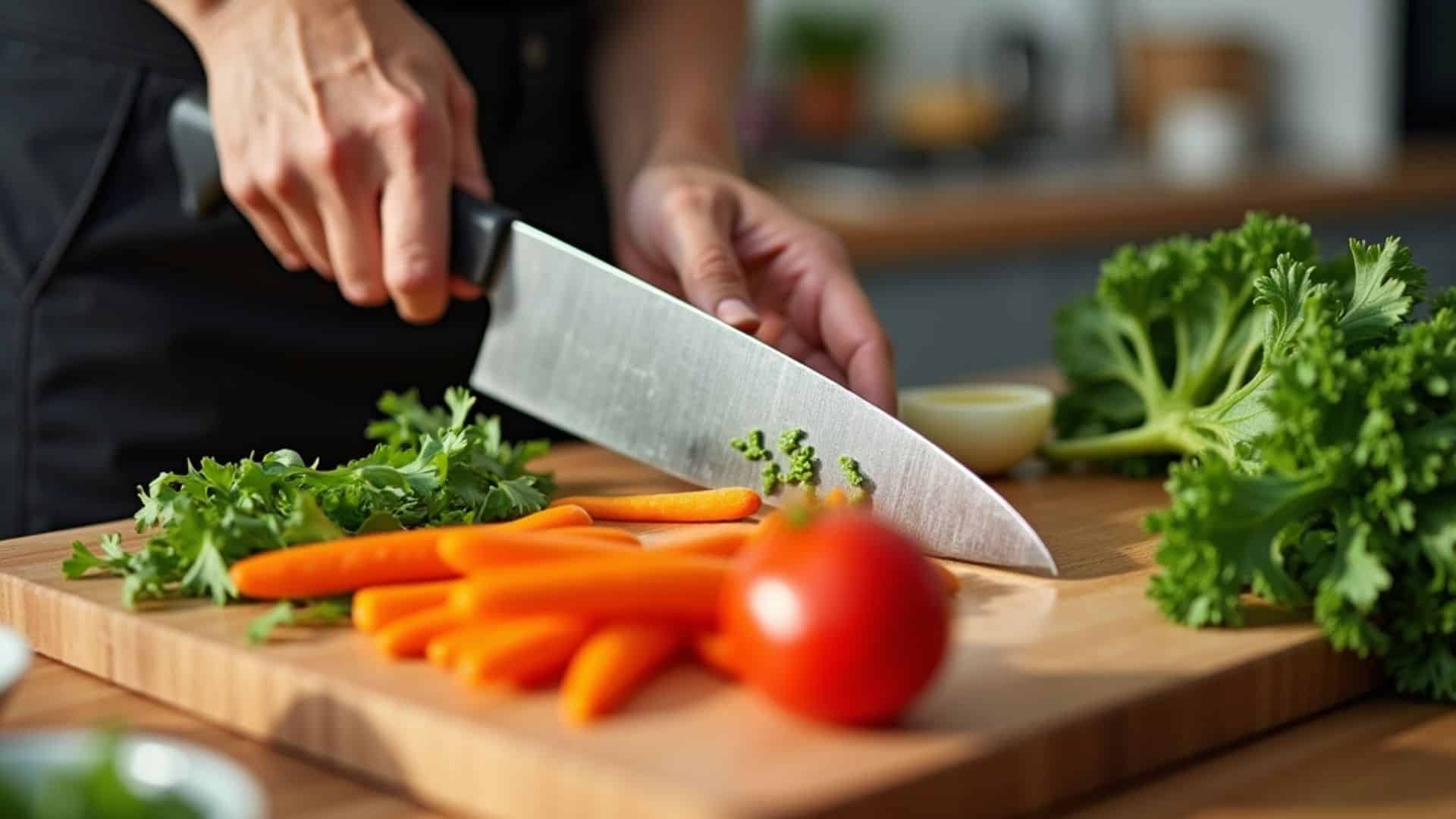
Start with simple ingredients like onions, carrots, and herbs. Practice cutting them into different shapes and sizes. Focus on consistency rather than speed.
Over time, you will notice that your cuts become more even, your movements more natural, and your confidence much stronger. What once felt slow and awkward becomes second nature.
The takeaway
Learning to chop, slice, and dice properly changes the entire cooking experience. With a few core techniques and regular practice, anyone can handle a knife with confidence and cook more efficiently every day.
It also gives you a level of control that is hard to replicate any other way. You start to notice how size and shape affect cooking time and even flavor. Over time, these small details add up, helping you cook with more intention instead of just following steps.
The more comfortable you become with a knife, the more freedom you have in the kitchen. Recipes feel easier to adapt, and cooking starts to feel like something you can truly enjoy rather than rush through.
Leave a Reply