
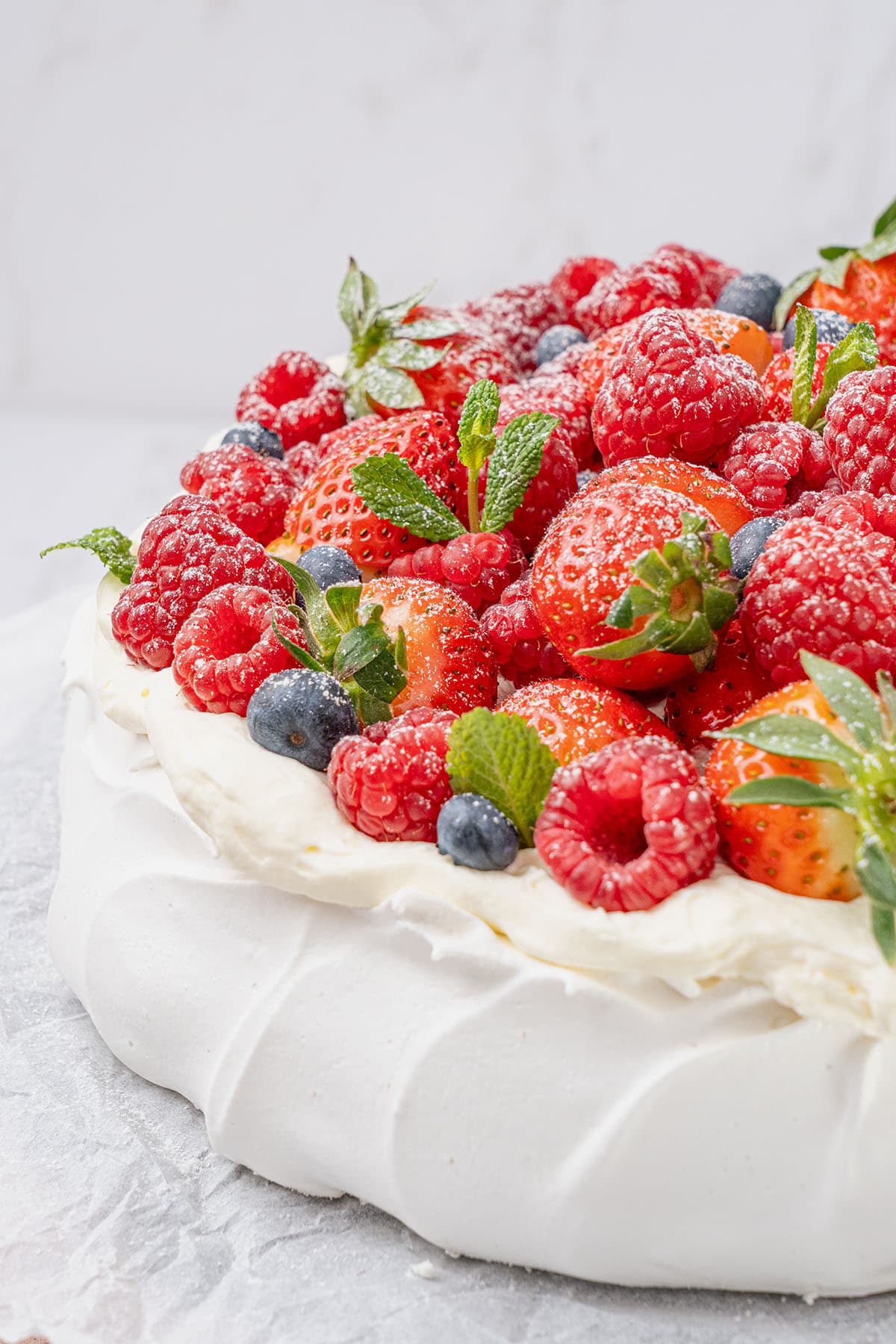
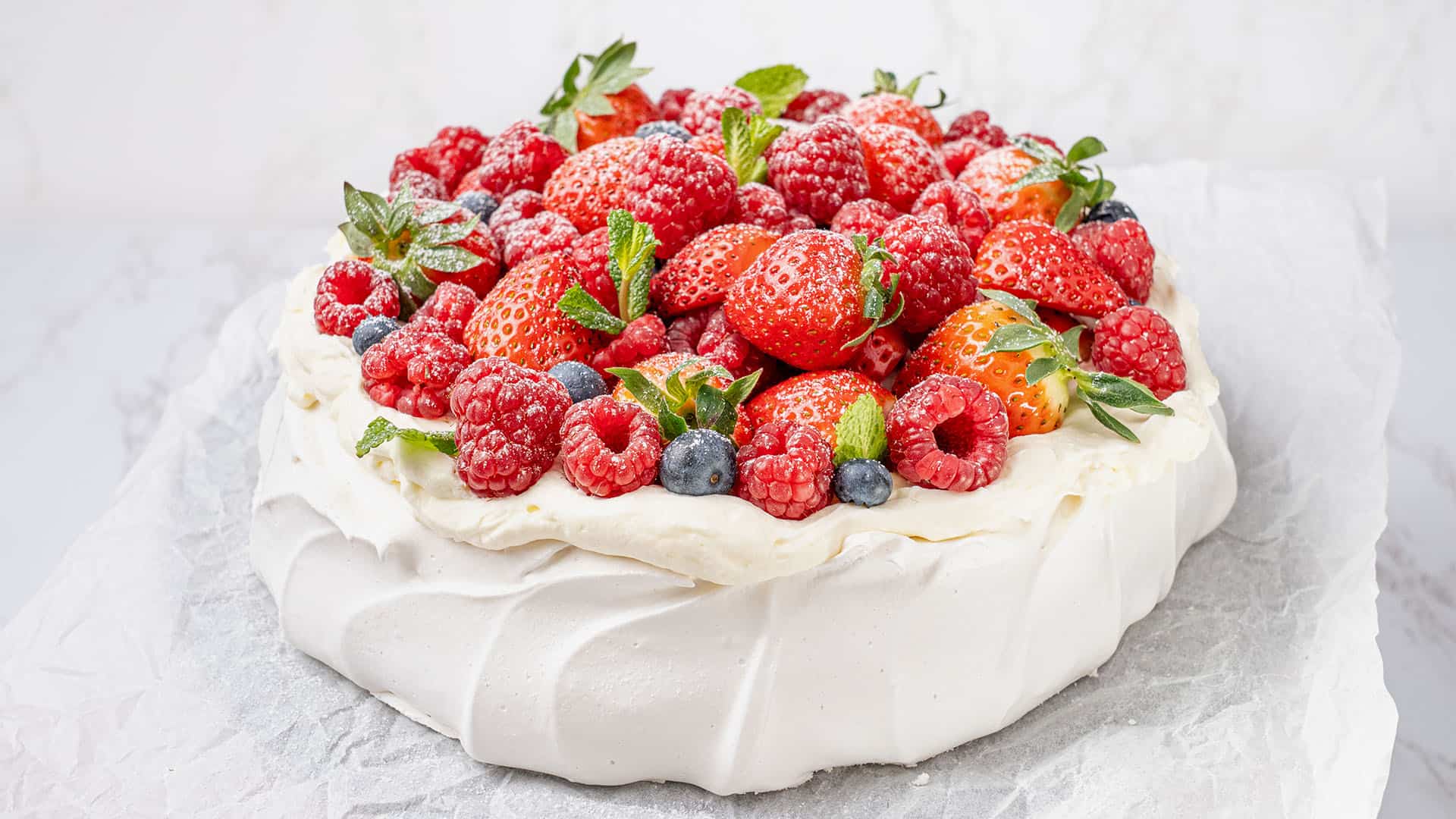
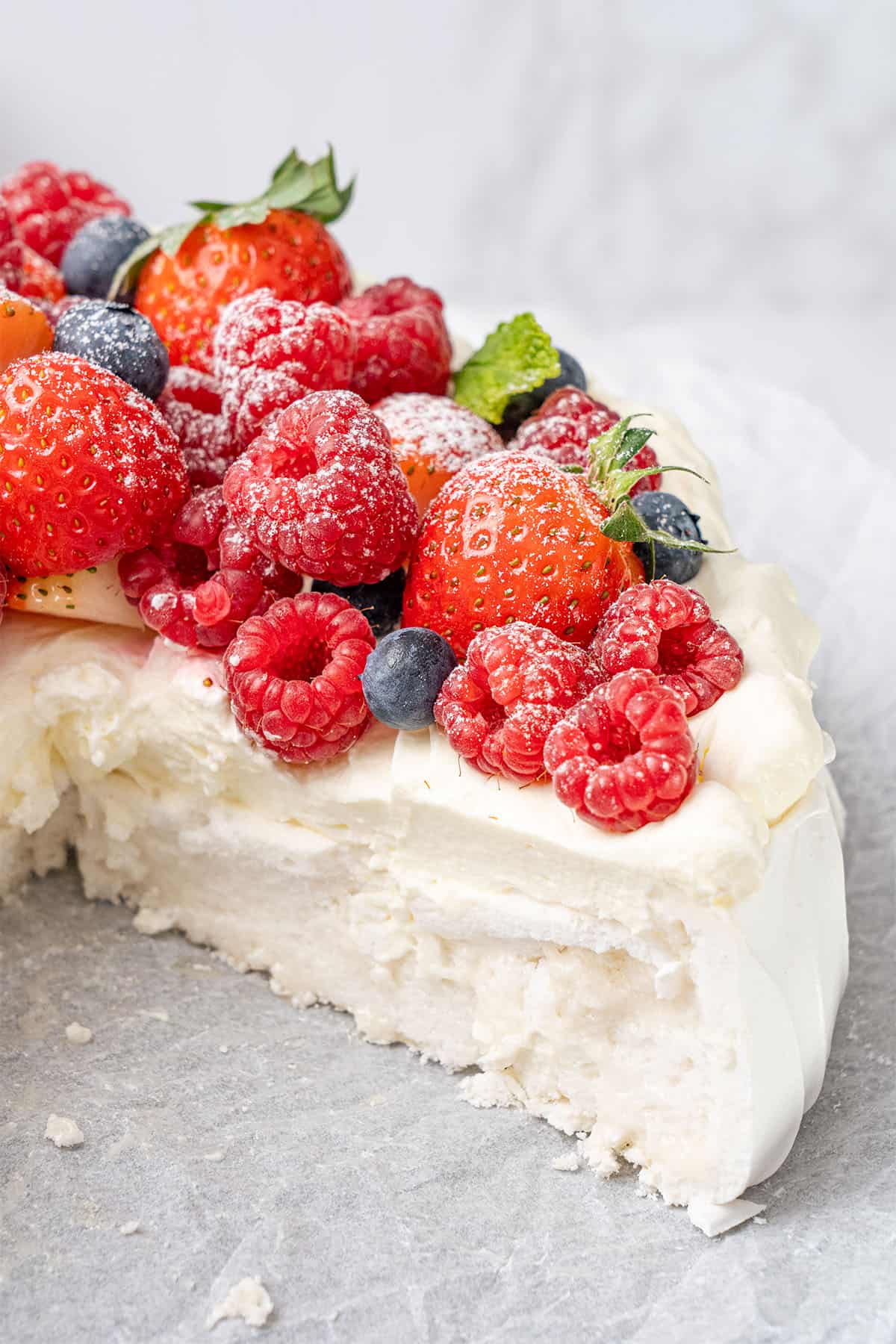
Perfectly baked meringue that's crunchy on the outside and marshmallow on the inside, with freshly whipped cream and juicy berries on top.
Best Pavlova Cake Recipe
A classic Pavlova is one of the most basic yet most elegant and delicious desserts you can make. It has it all; it is visually stunning and with incredible taste and texture. And it's naturally gluten-free! But there are so many recipes out there, and it can be hard to know which one to follow.
This is the best pavlova recipe because it avoids the common problems others encounter, such as cracks and browning. Many recipes lead to cracked pavlovas or ones that break apart, it´s a big no! With this recipe, you get a perfectly white, crack-free pavlova every time, topped with luscious whipped cream and summer berries. Garnish with fresh mint, and you have the most delicious summer dessert ever.
Did you know that this dessert gets its name from the famous Russian Prima Ballerina Anna Pavlova? It was invented in her honor.
Katalin's Take On What Is The Secret Of a Good Pavlova
Making Pavlova cake is not difficult and doesn't take much time; however, like most meringue-based recipes, it requires attention, accuracy, and a bit of practice.
Meringue only uses a few ingredients you probably already have at home: mainly egg whites and sugar. Egg whites have a unique way of holding structure when air is whipped into them, but if there is any fat (e.g., egg yolk), it will fail.
So, first things first, you need to be careful when separating your egg whites from the egg yolks. I personally get better results from using fresh, whole eggs and separating them than from using store-bought egg whites in cartons. The egg whites must also be at room temperature and not cold from the fridge.
We need a little acid (no need for cream of tartar; a few drops of lemon juice or vinegar work fine), and we need to whip the egg whites and sugar together slowly. I'll tell you more below. We bake meringue low and slow, and let it dry out and cool while still in the oven with the door slightly open. Those are my key tips for the best meringue cake ever!
Not sure what to do with leftover egg yolks? You must try my ultimate Crème brûlée recipe.
This Is How To Make The Meringue Base For The Pavlova
For a printable recipe card with exact ingredient quantities, visit the original Pavlova cake recipe.
Preheat your oven to 195°F (90°C), no fan. Yes, it is low! A low oven temperature is crucial for making the best meringue.
Prepare a baking tray by lining it with parchment paper or a silicone baking mat, and attach the whisk to your stand mixer.
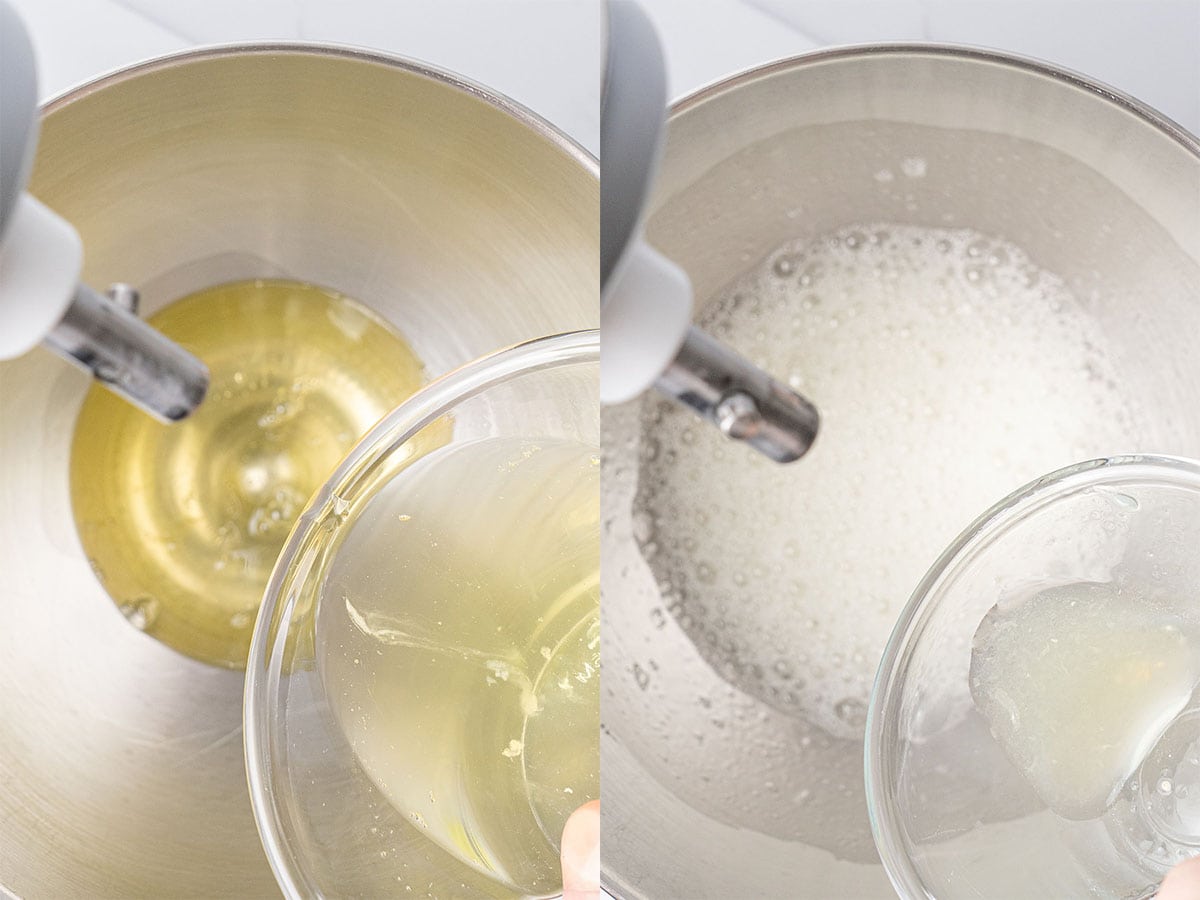
If you are using cream of tartar as your acid, add it to the bowl of your stand mixer along with the room-temperature egg whites. If you are using lemon or vinegar as your acid, you will be adding it later.
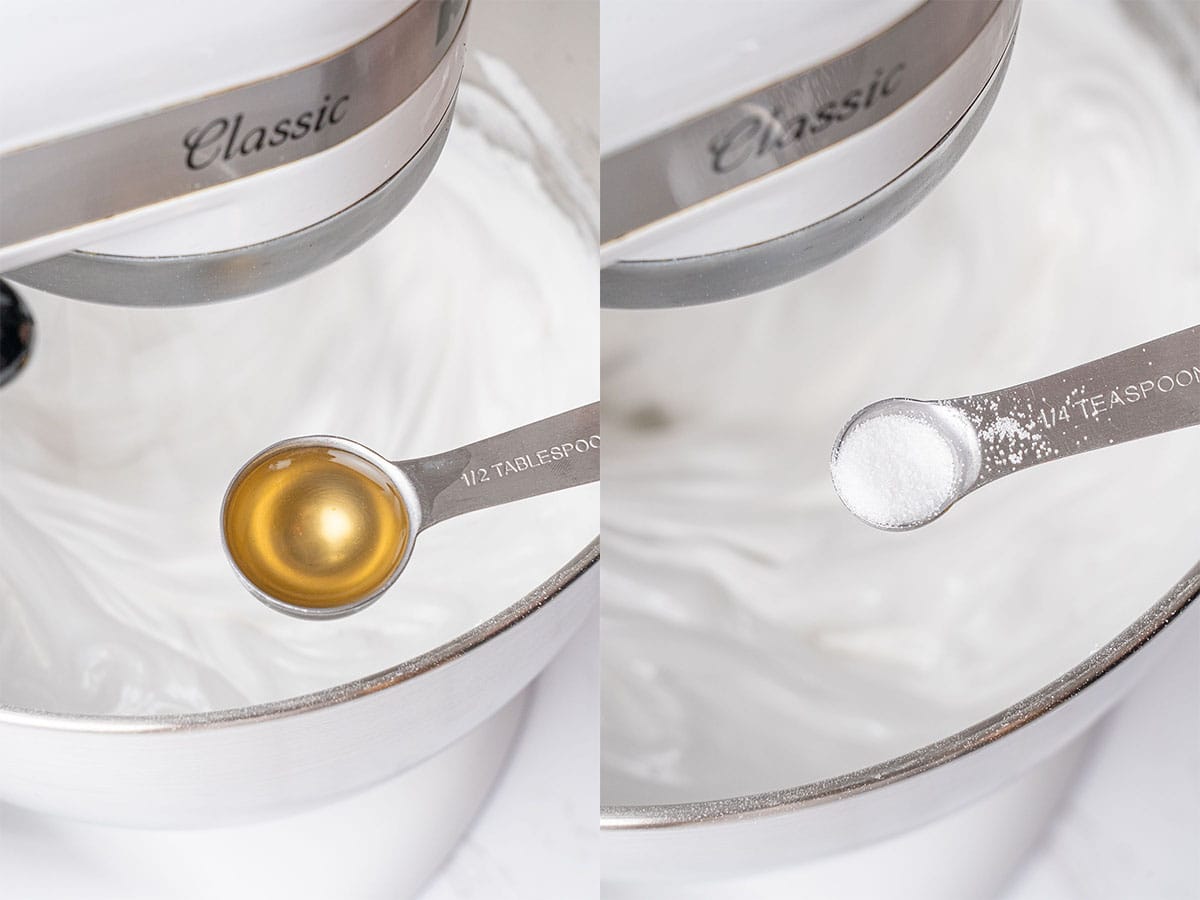
Begin whisking the egg whites on low speed at first to build a good structure. If using vinegar or lemon juice, wait until the egg whites are foamy before adding one of them.
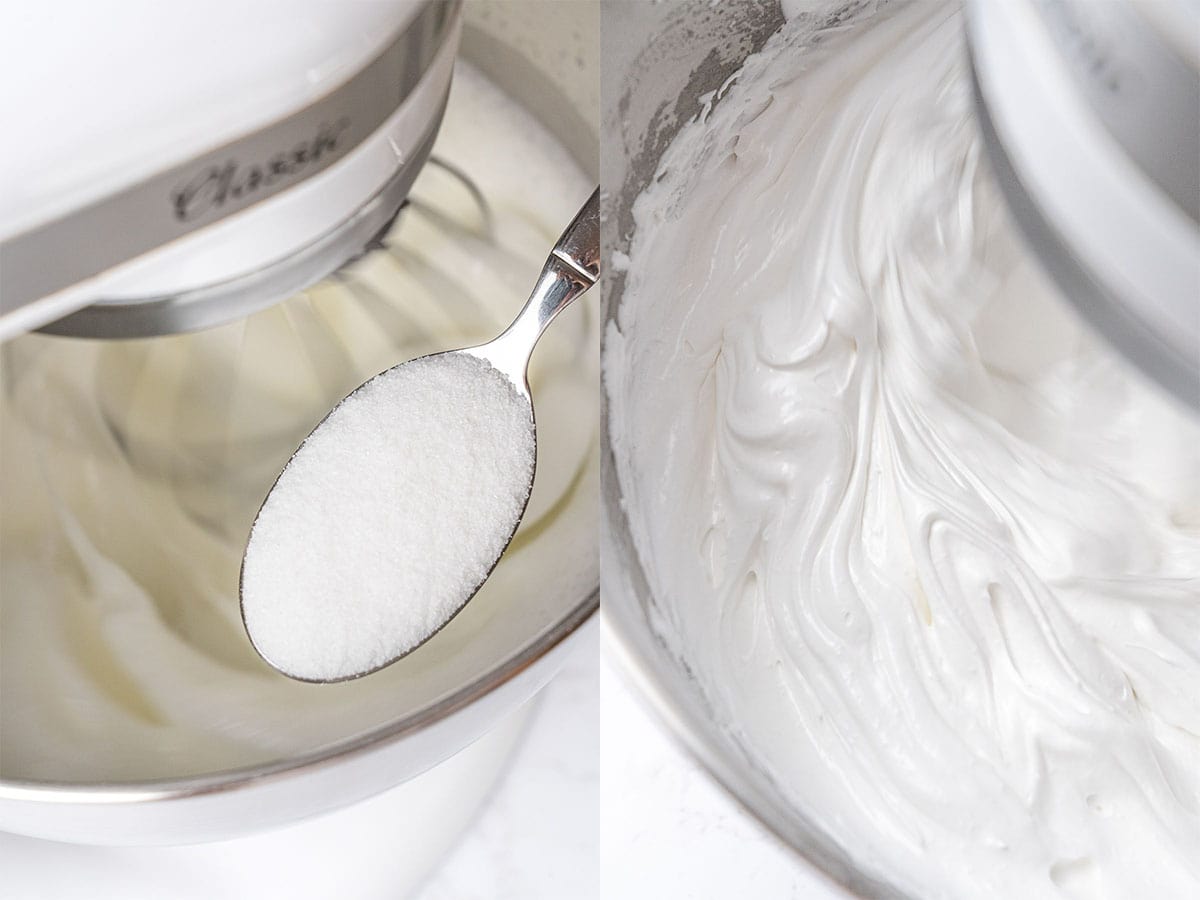
Once the egg whites are foamy, increase the speed to medium/high and start adding the superfine sugar. Add one tablespoon at a time and wait for it to be incorporated before adding the next one. This will take some time; be patient.
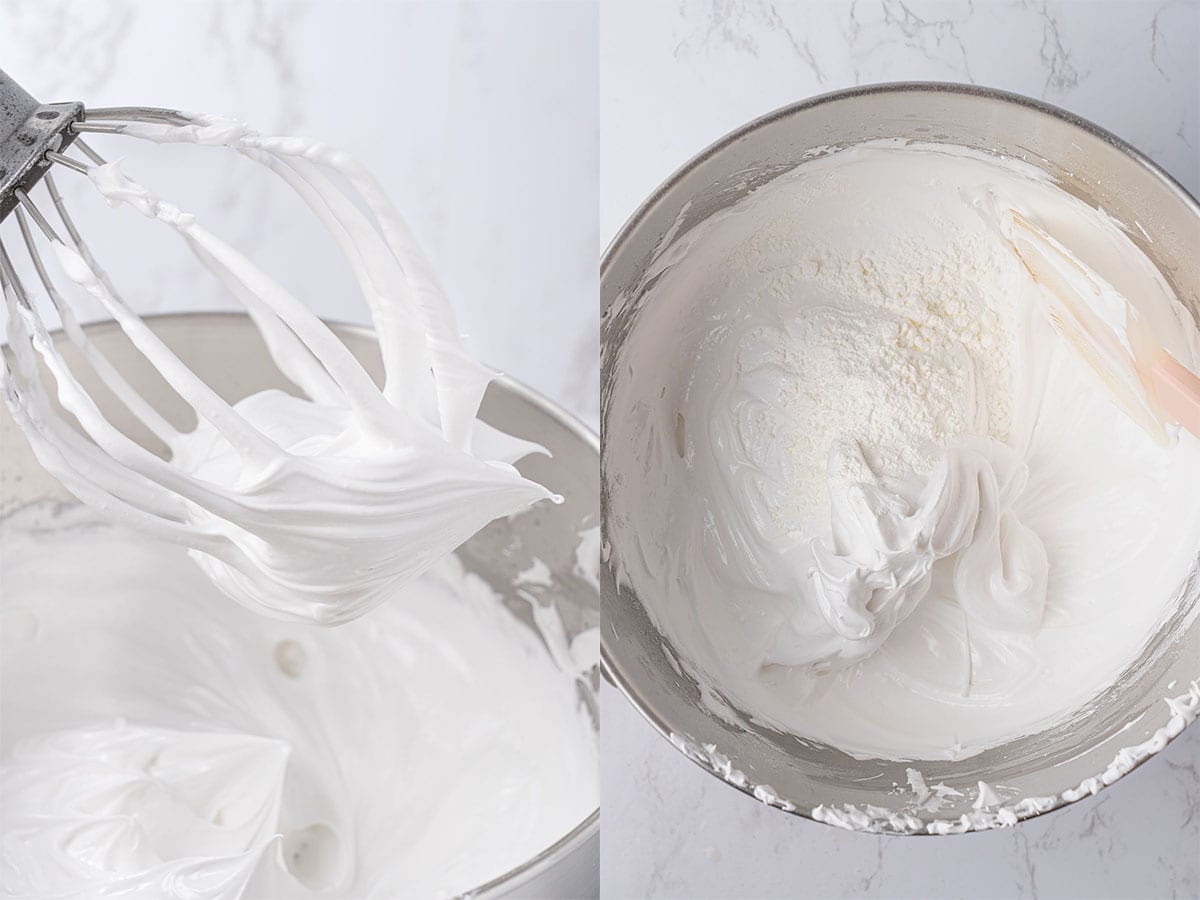
Once you have added all the sugar, turn the speed up to high and whip the meringue until it becomes thick, glossy, and holds stiff peaks. Turn the mixer off and rub a small amount between your fingers. It should be smooth, with no gritty feeling from undissolved sugar.
Finally, add the vanilla extract and salt and whip for a few more seconds.
Gently fold in the cornstarch using a rubber spatula, being careful not to deflate the meringue.
Bake Pavlova Like a Pro
For a printable recipe card with exact ingredient quantities, visit the original Pavlova cake recipe.
Now you can decide what shape you want your Pavlova. The classic shape is a circle with a dip in the center for your fillings. But you can also make small nests to make individual mini Pavlovas.
You can transfer the meringue to a piping bag for this stage, or use a spoon or spatula. If you want to make a large Pavlova cake to share, spread or pipe the meringue onto the prepared tray in an 8-inch (20 cm) circle.
Use your spoon to make a shallow dip in the center. You can smooth the sides and edges with the back of a spoon or use a fork to create decorative swoops or peaks, if you like.
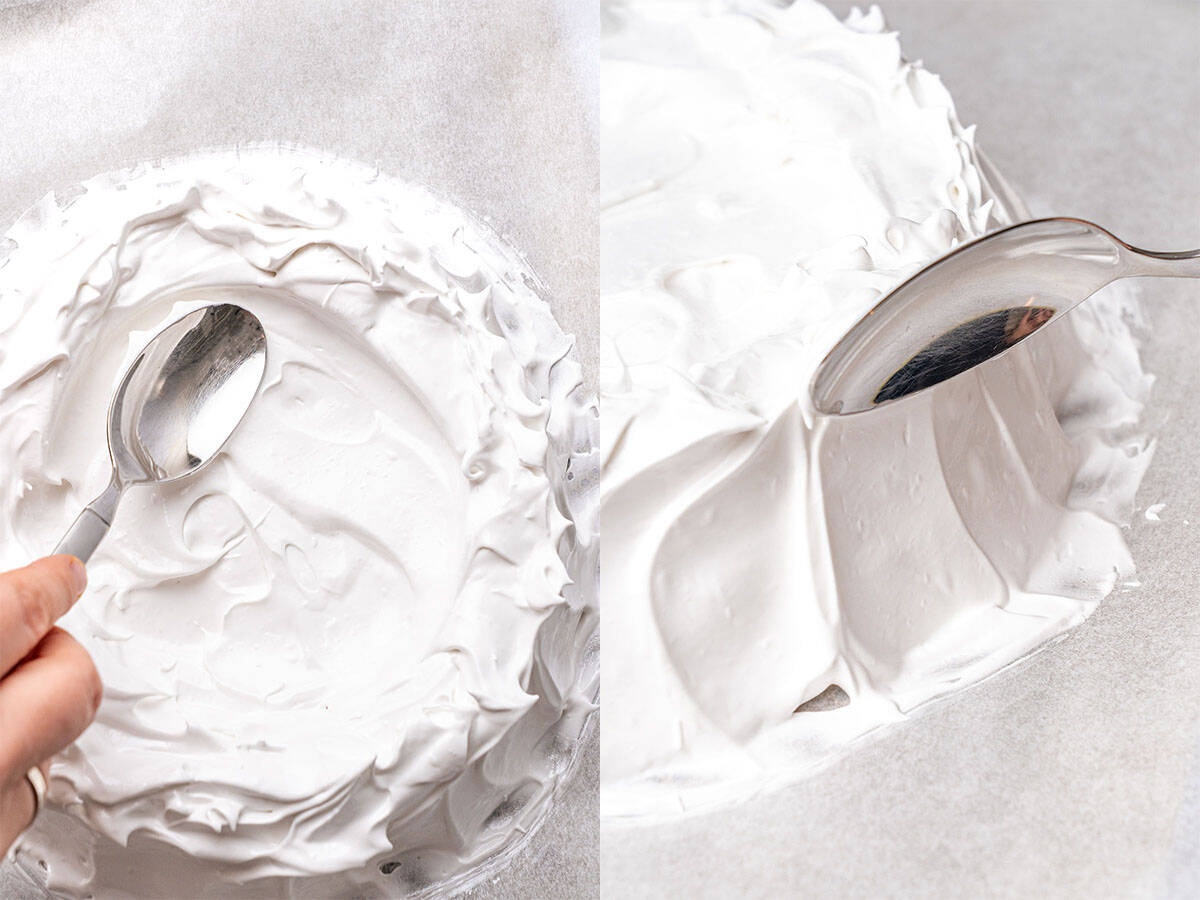
Bake the Pavlova for 2½ hours at 195°F (90°C). After 2 hours, check if it feels dry to the touch, but avoid opening the oven before this time.
Turn the oven off, but leave the Pavlova inside. Crack the door slightly open and let the oven cool down completely with the Pavlova inside it for several hours. This allows the Pavlova dry out and prevents cracking.
Fill It and Decorate
Wait until just before serving to fill your Pavlova cake so that the meringue is as crisp as possible.
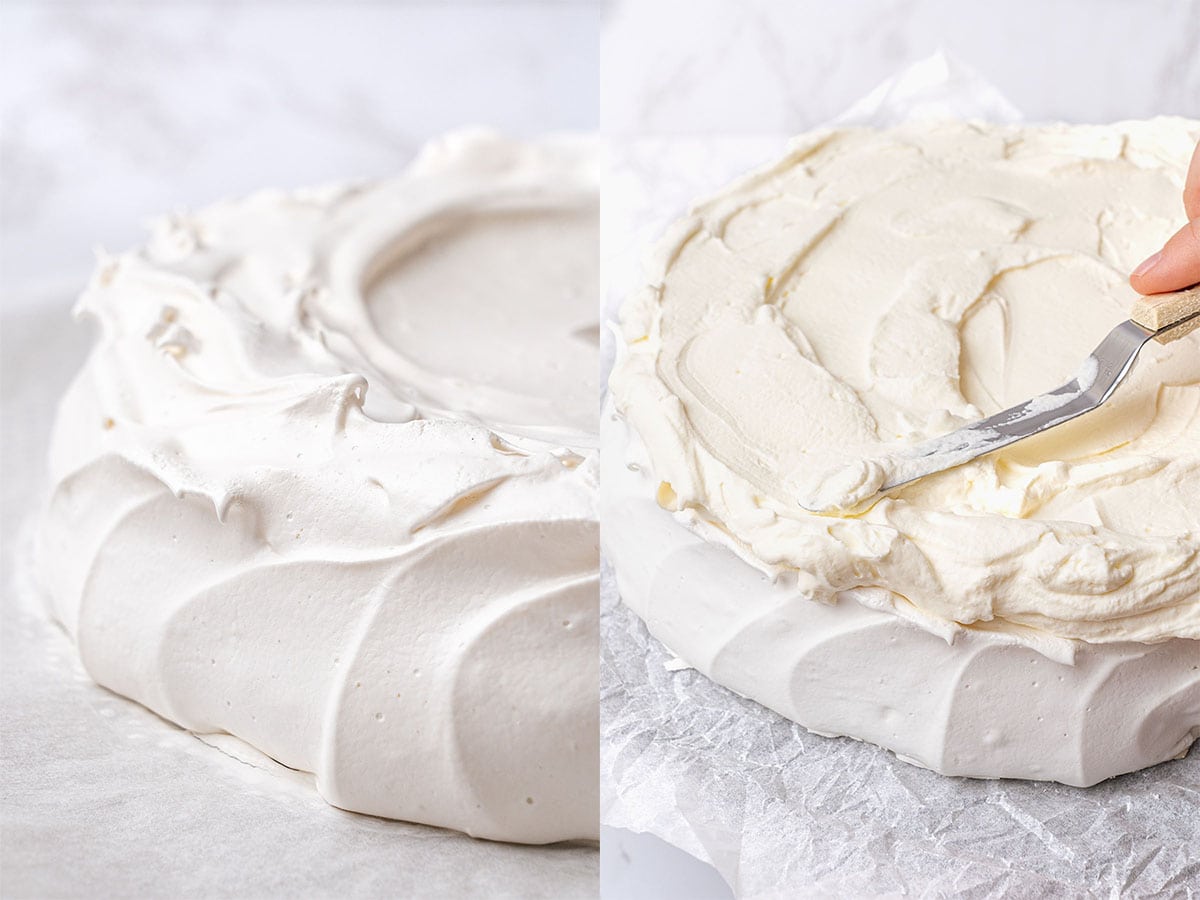
Whip cold heavy cream and sifted powdered sugar together until soft peaks form. Then, add the vanilla extract and continue whipping until fluffy and pipeable. Don't let it go stiff!
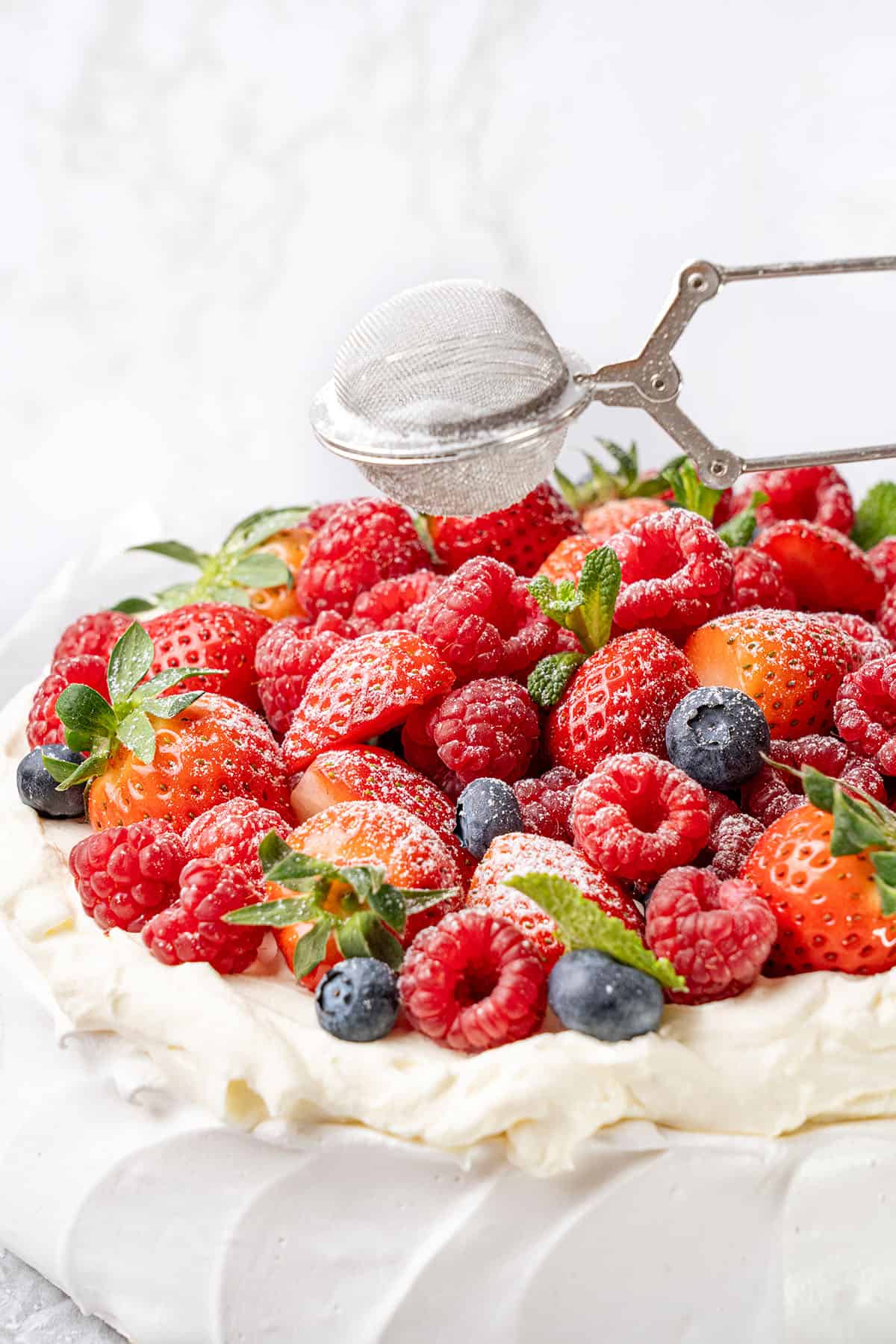
Spoon the whipped cream onto the Pavlova cake and decorate it with fresh berries, such as strawberries and raspberries. Garnish with a few sprigs of mint and dust over some powdered sugar.
Leftovers? This Is How You Store It
Baked meringue can last up to 2 days in an airtight container on the counter or another cool, dry place. Once filled, the Pavlova cake is best enjoyed immediately, as the cream can make the meringue go soggy over time. If you do have any leftovers, store them covered in the fridge and enjoy them within a day.
You can freeze baked meringue to defrost and fill/enjoy later, although it won't be quite as crisp as it is when baked fresh. Freeze the meringue wrapped in foil and stored in an airtight container to protect its shape.
Expert Tips For Making Pavlova Cake
- Egg size will differ in weight/size by country (e.g., a large egg in the US is smaller than a large egg in the UK), and even then, they can vary within a carton. The only way to guarantee accuracy in the ratio of egg whites to sugar is to weigh your egg whites.
- Wipe all your equipment with a paper towel soaked in vinegar before you start to remove any residual fat traces. So wipe out the bowl, wipe the whisk attachment, and so on.
- Even if there is one tiny speck of egg yolk in your egg whites, the meringue will fail. Be very careful not to pierce the egg yolk when separating the eggs.
- Cornstarch is not completely essential, but it is the secret to the best pavlova marshmallow center, so you should definitely include it.
- Don't bake anything else in the oven while you are baking the meringue, as it will add steam to the environment and affect the outcome of your pavlova cake.
- Allow the pavlova cake to cool and dry completely in the oven before using it.
Useful Equipment
Weigh your egg whites and sugar using a digital scale for accuracy.
A stand mixer will make your life easier when whipping meringue, but you can use an electric hand whisk, too.
I use a piping bag without a nozzle to pipe pavlova cake, but you can also use a spoon or rubber spatula.
Always check that you are baking at the right temperature with a digital oven thermometer! If your oven is too hot, you will not get a perfectly white meringue with no cracks.
Try Some Of My Other Dessert Recipes
Looking for more summer showstopper desserts to make? Try some of these next:
And be sure to check out my strawberry desserts roundup, too.
Leave a Reply