
Strawberries are one of our favorite fruits for the summer. They are sweet and juicy, making them perfect for baking or enjoying on their own. But before you eat them, it is essential to know how to clean them properly.
Why You Should Always Wash Strawberries

Cleaning strawberries properly is not just about removing visible dirt. Strawberries grown in fields are often treated with pesticides and frequently carry noticeable pesticide residue and surface bacteria that are picked up during transport and handling. A proper wash breaks down many chemical residues, reduces microbes, and dramatically slows mold growth.
What you will need
Distilled white vinegar
Cold water
Large bowl + colander/strainer
Clean kitchen towel/paper towels
Quick Cold-Water Rinse
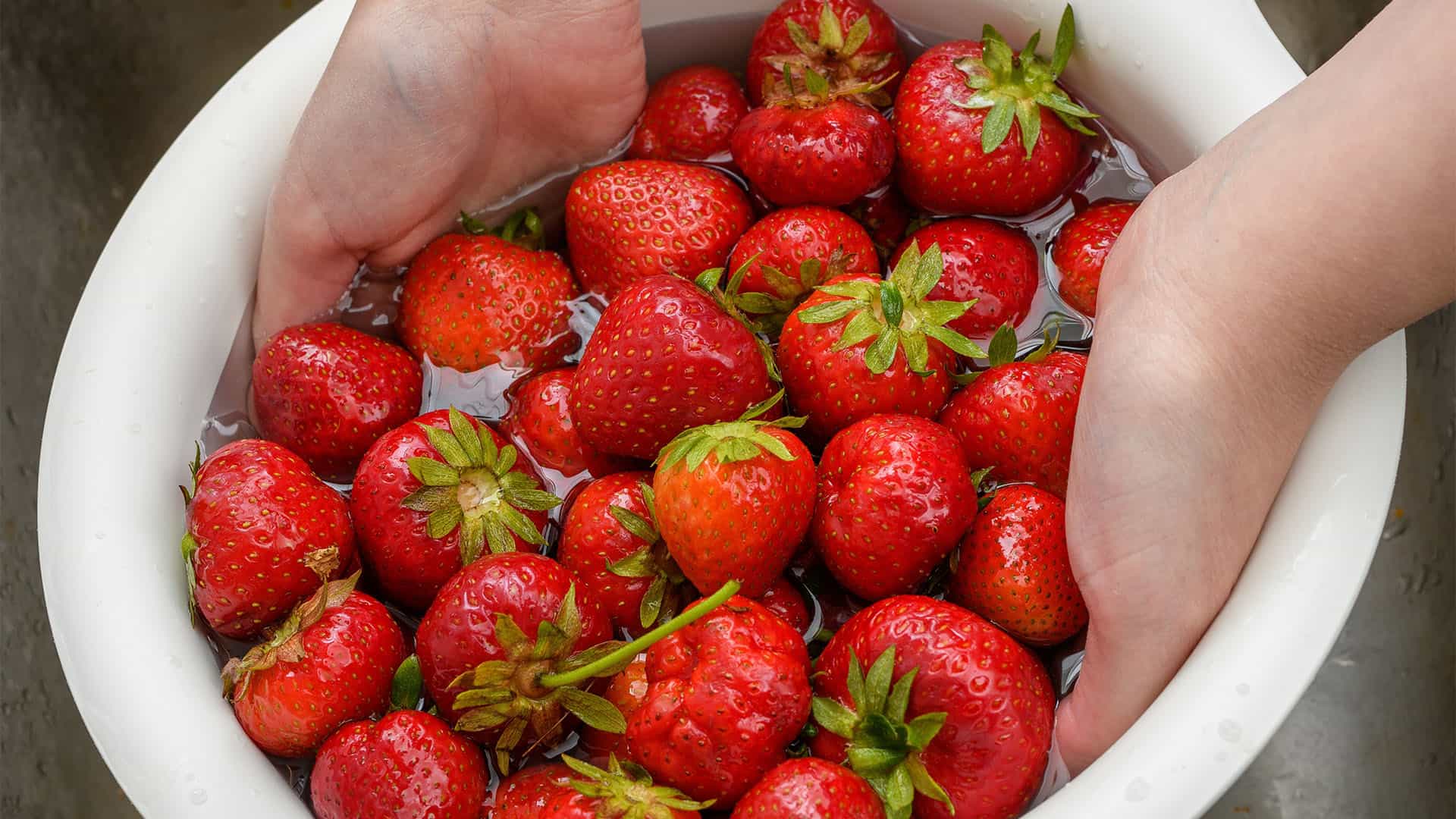
Place strawberries in a colander and run cold tap water over them for about 30 seconds, gently rubbing each berry to remove dirt.
Choose the Right Vinegar Bath
While many people prefer to wash their strawberries with just water, adding vinegar to the mix makes the cleaning process more thorough.
For the vinegar mix, combine 4 parts water with 1 part vinegar. Like 4 cups of water and one cup of vinegar. Mix it with a spoon.
Soak & Rinse
Place the strawberries in a colander and submerge them in the vinegar mixture for 20 minutes. Ensure that all the strawberries are thoroughly covered with the vinegar mixture. This helps loosen dirt and effectively removes surface residues. After 20 minutes of a vinegar bath, rinse the strawberries in fresh, cold water for 10-20 seconds. Make sure to wash them properly to remove the dirt and the remaining vinegar mix.
Alternatively, you can use a 3:1 vinegar ratio, but in this case, reduce the bath time to 5 minutes.
Dry Completely
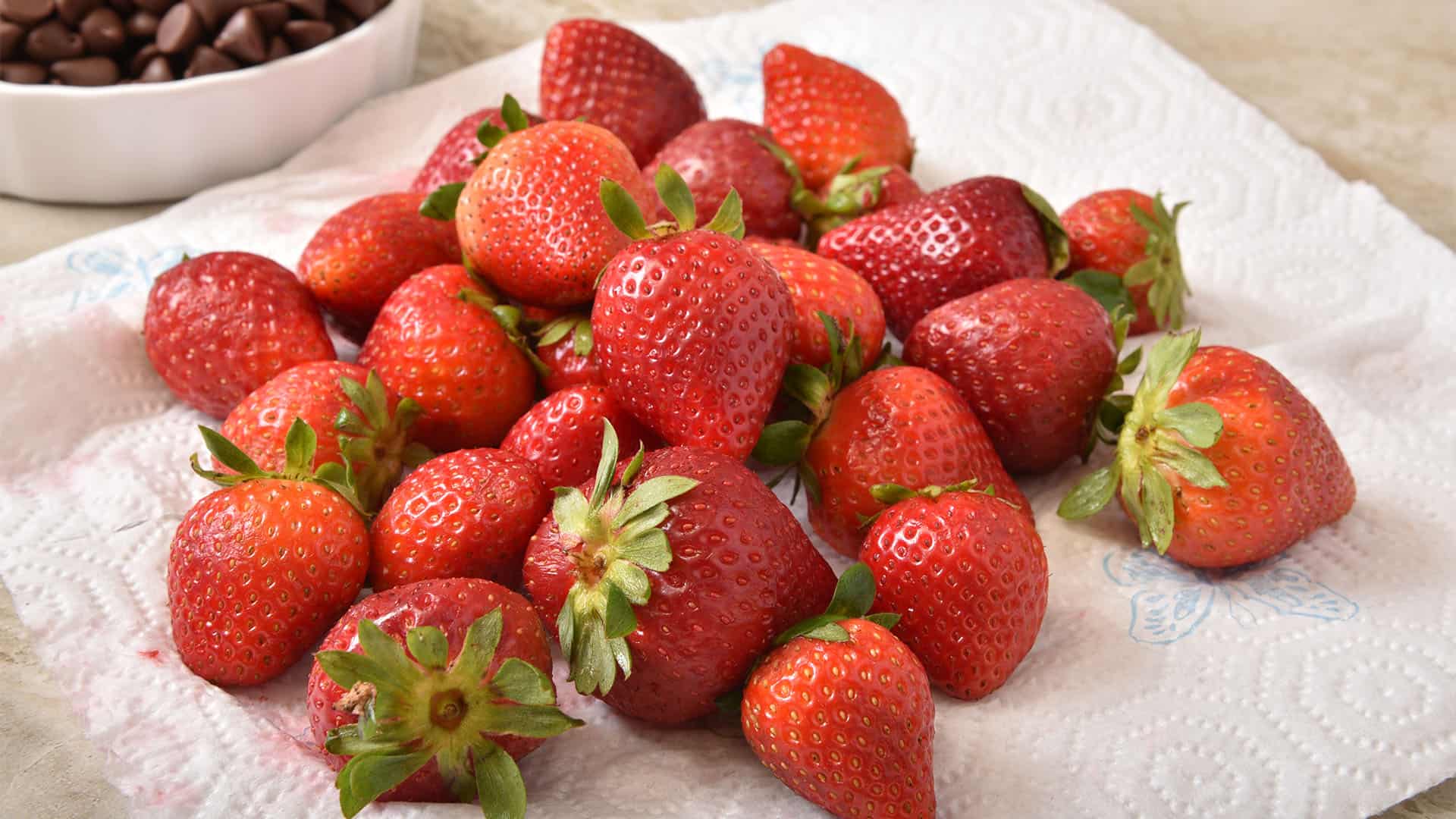
Spread the berries in a single layer on a towel, gently pat them, and then air-dry until completely dry. Moisture is mold’s best friend, so make sure they are completely dry.
Storing Your Clean Strawberries
Properly cleaned and dried berries last in the refrigerator for about 3-7 days.
Arrange the strawberries in a single layer in a glass or plastic container lined with fresh paper towels. The paper towel will help to collect the moisture from the container and keep the berries fresh for longer.
Pro tip: Remove the stems from the hull only right before eating, as cut surfaces can attract moisture and mold.
FAQ
Does the vinegar affect taste?
No. A quick post-soak rinse removes any flavor trace.
Can I substitute apple cider vinegar?
Yes, but it can leave a light apple note. Distilled white vinegar is neutral and budget-friendly.
Should I wash berries as soon as I get home?
Only if you dry and store them immediately, otherwise, keep them unwashed and dry until use.
How to use them
Strawberries are wonderfully versatile. Put them into your morning yogurt, blend them into vibrant smoothies, or layer them over leafy salads. Strawberry desserts are my favorites when the fruit is in season, from classic cakes to fluffy muffins. Don’t forget that you can also make a homemade strawberry compote to enhance any summery cheesecake.
Freeze Your Strawberries for Longer Shelf Life
If you have excess strawberries, consider freezing them. Freezing strawberries helps preserve their flavor and nutrients. You can freeze them whole or sliced, just be sure to lay them flat on a baking sheet first to prevent clumping. After they’re frozen, transfer them to an airtight container for long-term storage.
Leave a Reply