
There is a very specific version of New York cheesecake that most people are trying to recreate without fully realizing it. It is dense but not heavy, creamy but not loose, rich without being overly sweet, and it slices cleanly while still feeling almost velvety on the tongue.
The problem is not usually the recipe itself. Most home bakers are working from perfectly solid formulas. The gap appears in execution.
After years of baking cheesecakes and refining what actually affects texture, a pattern becomes obvious. The difference almost always comes down to a few non-negotiable technical principles.
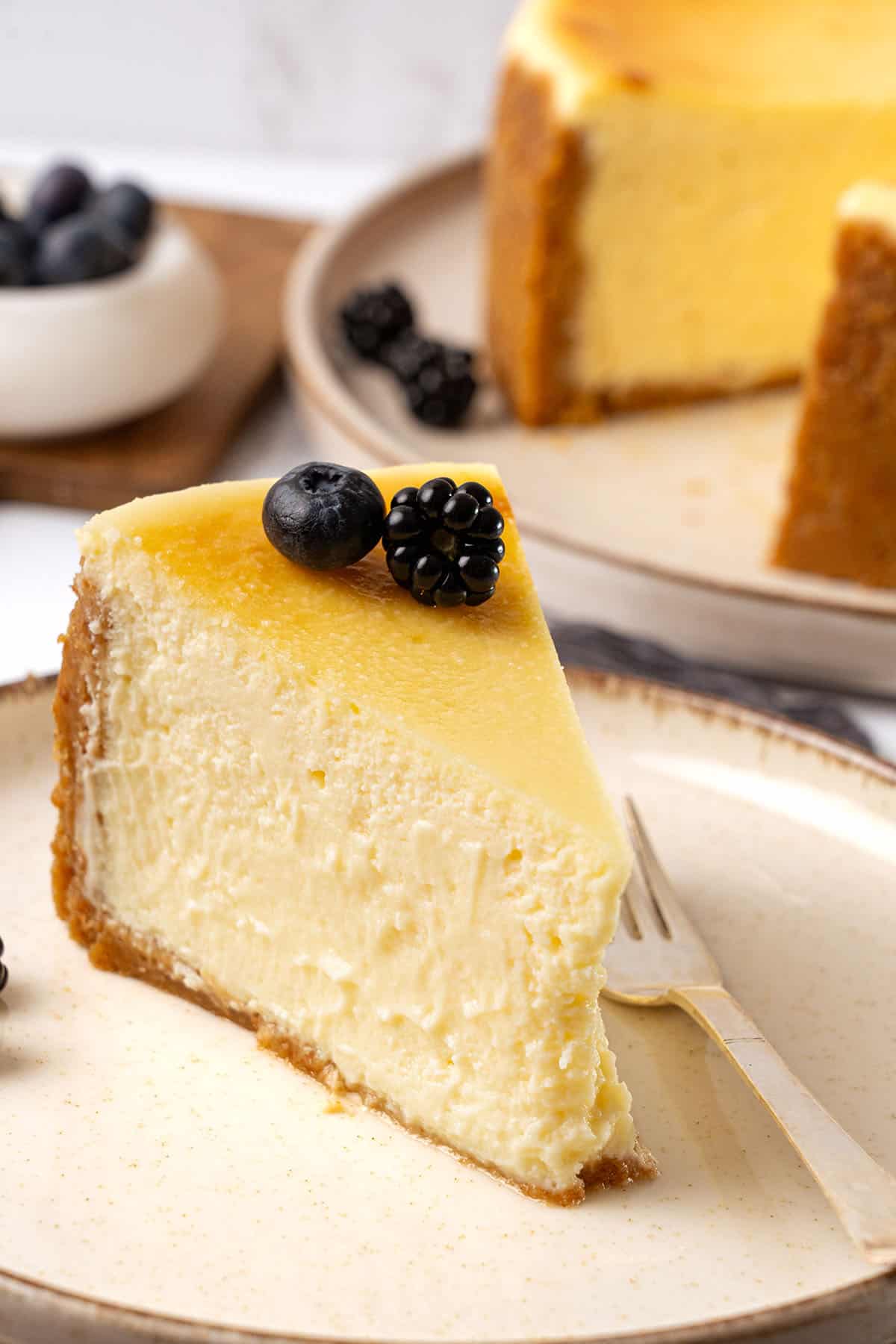
Most home cheesecakes are either too sweet or structurally overworked
One of the most common issues in home baking is sweetness imbalance. Many American-style cheesecakes lean heavily toward sugar, which can flatten the perception of creaminess and tang. Instead of enhancing flavor, excess sweetness often masks it and makes the final result feel heavier than necessary.
But even more important than sweetness is structure. The moment cheesecake batter is overworked, the texture starts moving away from dense and creamy toward airy and unstable. Excess air trapped in the mixture expands in the oven, causing puffing, cracks, and eventually collapse as it cools.
Professional bakers treat cheesecake batter differently from cake batter. It is not meant to be whipped or aerated. It is meant to be gently emulsified. Cream cheese, sugar, sour cream, and eggs are combined just until smooth, not further. The goal is not volume, it is density with silkiness.
Controlled heat is the real foundation of bakery texture
The signature texture of a proper New York cheesecake is created in the oven long before it ever reaches the fridge. The baking environment has to be stable, gentle, and consistent. This is where most home bakers unintentionally go wrong.
Bakery-style cheesecake is almost always baked low and slow (except Basque burnt cheesecake). The temperature is kept moderate to prevent aggressive expansion. When the heat is too high, the edges set too quickly while the center continues to rise, creating cracks and a dry outer layer.
This is also why water baths are so important. It surrounds the cheesecake with moist, even heat, preventing harsh temperature gradients. Instead of direct oven heat attacking the pan, the cheesecake cooks gently and evenly from all sides.
It is one of the least glamorous but most important steps in achieving bakery-level consistency.
Equally important is knowing when to stop baking. A cheesecake is not meant to look fully set in the oven. Professionals remove it when the center still has a slight wobble. The residual heat continues the cooking process naturally, creating that signature dense-but-creamy structure without overbaking.
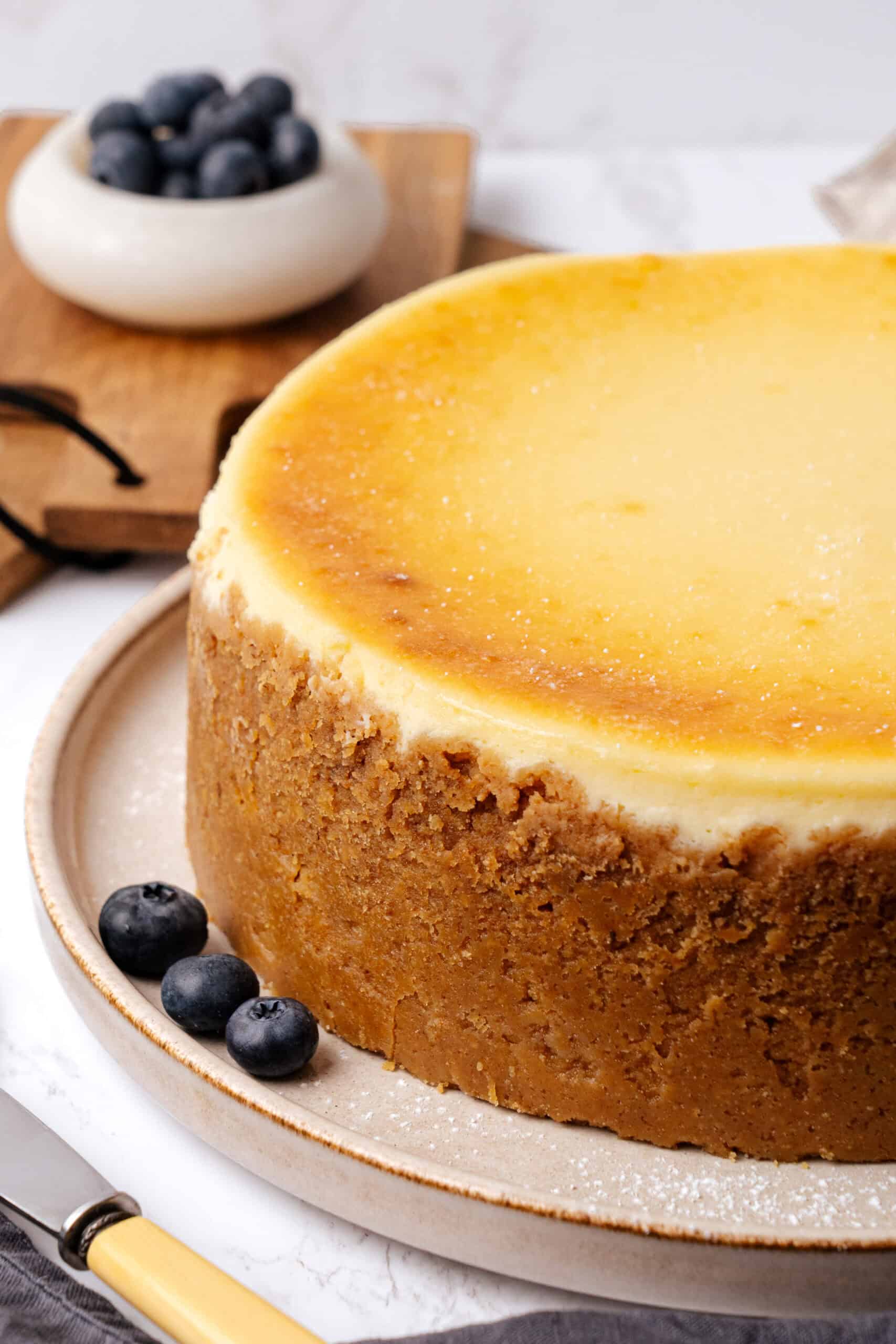
Cooling is just as important as baking itself
Even when baking is done correctly, the texture can still fail if cooling is rushed. Cheesecake is extremely sensitive to sudden temperature changes, and this is where many home versions collapse or become dry.
Professional bakers rarely move a cheesecake directly from the oven to the countertop. Instead, it cools gradually inside the turned-off oven first. This controlled drop in temperature prevents shock, a major cause of cracks and sinking centers.
After that, it continues cooling at room temperature before being fully chilled in the fridge. Each stage matters. Skipping steps does not save time; it simply increases the risk of structural failure.
Ingredient quality matters less than control of fat and air
There is a common belief that bakery cheesecakes use secret ingredients, but in reality, most rely on standard components: cream cheese, eggs, sugar, and sour cream. What matters more is the fat content and how these ingredients are handled.
Full-fat cream cheese and sour cream are essential for that signature richness and slight tang. They also contribute to stability during baking. Lower-fat versions introduce too much water and compromise the final structure.
But even perfect ingredients cannot compensate for poor technique. A well-controlled process will outperform premium ingredients used without precision.
When all of these elements come together, the result is what most people are actually chasing: a dense, creamy, sliceable cheesecake that feels rich without being heavy, and indulgent without being overly sweet.
Leave a Reply