
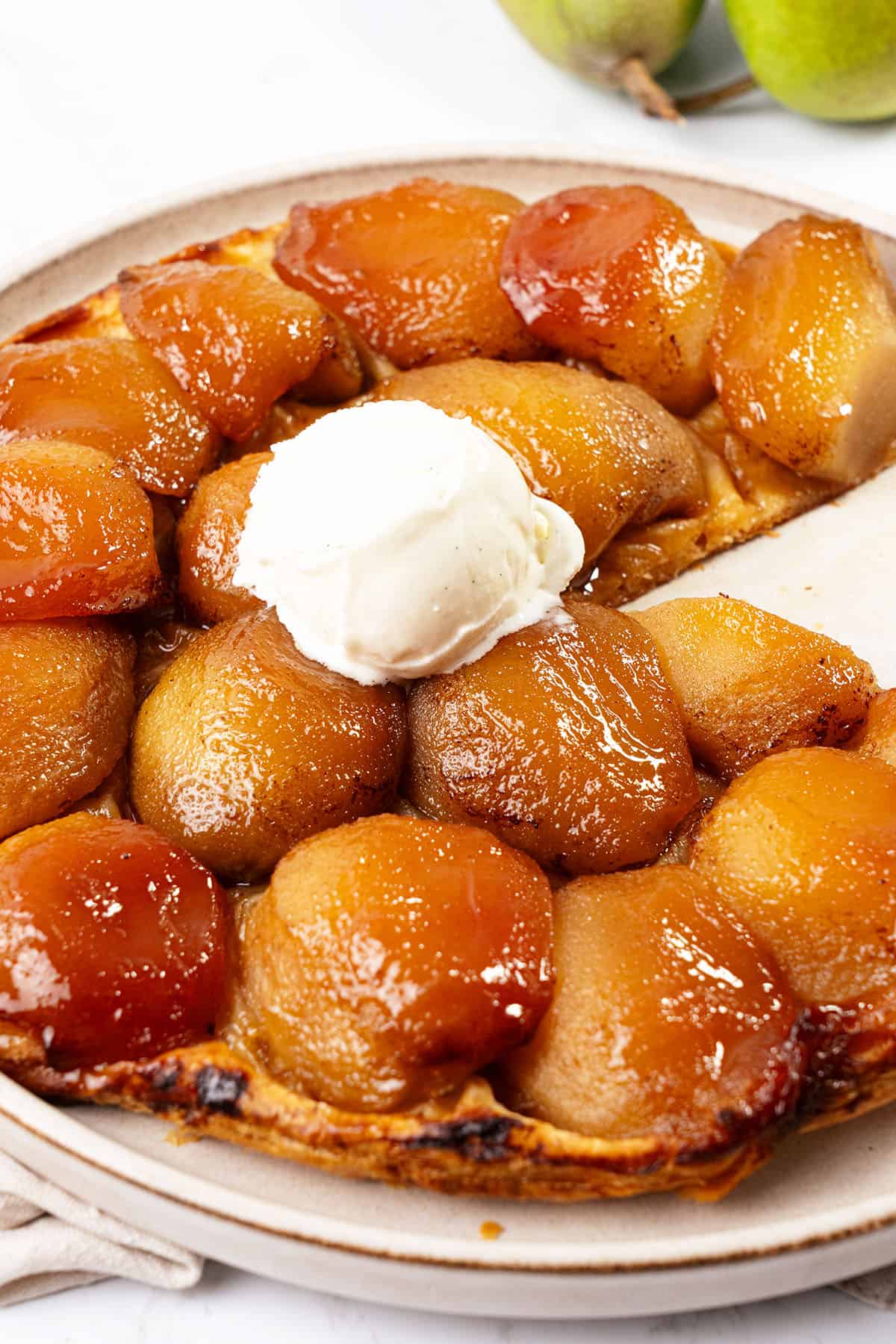
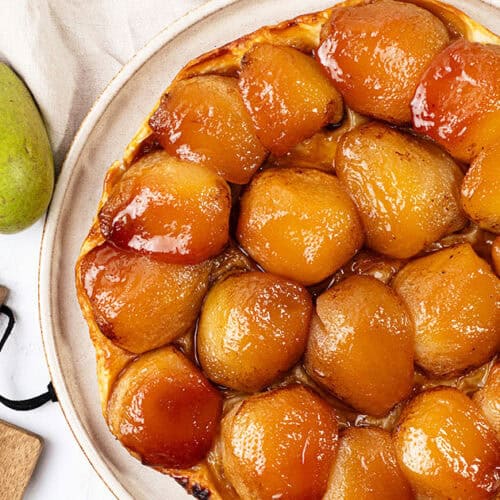
This Pear Tarte Tatin is a stunning take on the classic French upside-down tart, apple tarte Tatin. Caramelized pears melt into a rich, buttery caramel sauce beneath layers of flaky puff pastry that bake to a perfect golden crust. It’s a timeless dessert that feels both rustic and refined.
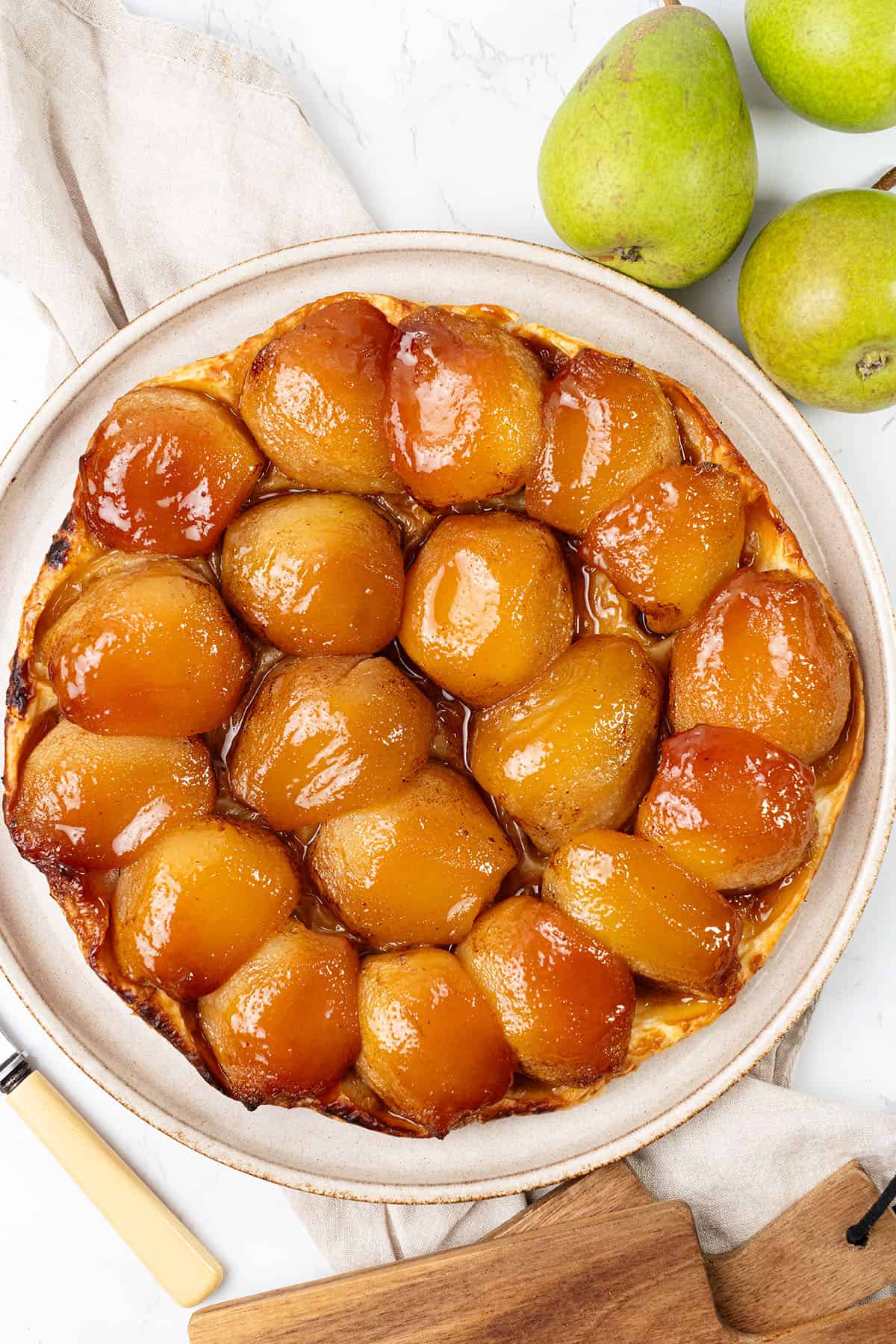
Best Pear Tarte Tatin Recipe
My Pear Tarte Tatin has been carefully tested and refined to ensure it works reliably every time. While the method follows the traditional French approach I used in my apple tarte Tatin recipe, I’ve adjusted the process and timing specifically for pears to achieve the perfect balance of soft fruit, rich caramel, and crisp pastry.
The key is controlling moisture and caramelization. The pears are pre-baked in a light caramel, which helps them soften evenly without releasing excess liquid. This is key to avoiding the puff pastry from becoming soggy. I tested several varieties and found that certain firm pears hold their shape best while still turning tender and flavorful in the oven to give you the best pear dessert.
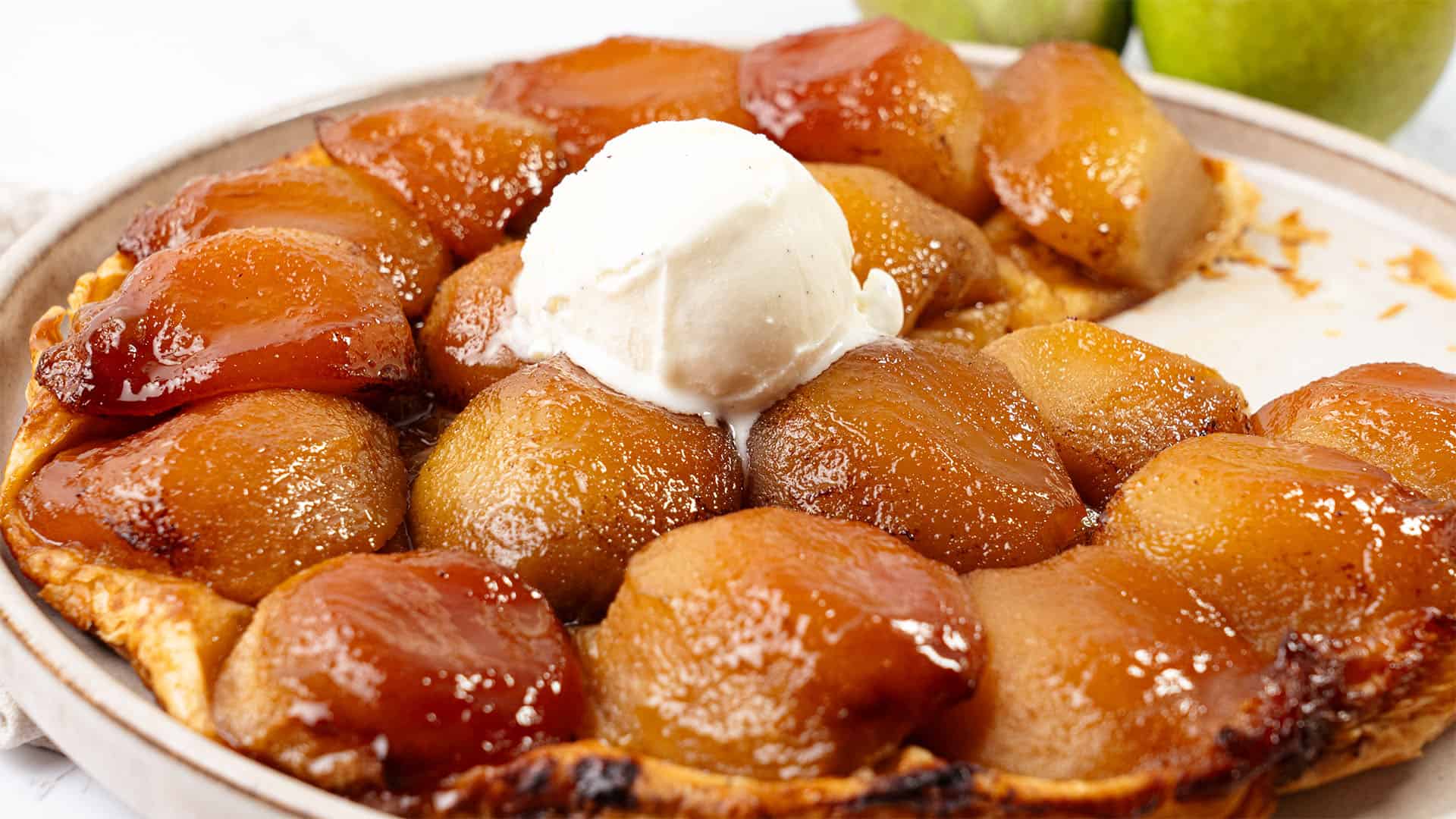
This recipe focuses on precision and technique. You’ll learn how to judge the right caramel color, how tightly to pack the fruit, and when to invert the tart for a clean, glossy finish. It’s a professional method made simple, giving you consistent, elegant results every time.
Katalin's Key Take On How to Succeed with This Recipe
The key to mastering this classic French dessert is finding balance between the perfectly baked pears, deep caramel, and crisp puff pastry.
It all begins with the pears. I recommend using firm varieties like Bosc, Anjou, or Bartlett that keep their shape in the oven. Softer, juicier pears might taste delicious raw, but they’ll release too much liquid and turn the caramel thin and the pastry soggy.
My biggest trick is prebaking the pears in the caramel before adding the pastry. This step lets them partially cook, absorb the flavor, and lose excess moisture so the final texture is jammy but not wet. After baking, I spoon out any remaining liquid to make sure the pastry sits on rich caramel, not syrup.
Keep your puff pastry chilled until the very last minute. If it warms up, the butter layers will melt too soon, and you’ll lose that crisp, flaky lift and texture the pastry desserts should have. Tucking the edges snugly around the fruit helps it bake evenly and gives that signature golden crust when inverted.
Follow these small but crucial steps, and you’ll get a Pear Tarte Tatin that’s glossy, fragrant, and crisp in every bite and truly one of the best tarts you've ever tried.
Prepare the Pears
Peel, core, and slice the pears in half, keeping them as uniform as possible so they cook evenly and look neat when inverted. This helps give that polished look when serving.
Drizzle the cut pears with freshly squeezed lemon juice to prevent browning while you work. If you are prepping them in batches, place them in a bowl of water with lemon juice, then pat them dry before arranging them in the pan.
Make the Caramel
Preheat the oven to 350°F (175°C), no fan. Set a 9-inch (23 cm) cast-iron skillet or other ovenproof pan over medium heat.
Add the sugar, butter, and a splash of lemon juice to a pan, all at the same time. Cook the mixture slowly until the sugar dissolves and the mixture turns smooth and light golden caramel.
If the butter starts to separate from the sugar, lower the heat slightly and whisk until it comes back together. This simple step re-emulsifies the mixture and prevents the caramel from turning grainy.
Caramel can darken quickly, and taking it off the heat once it reaches a light amber color will prevent a bitter taste later. Stir in the salt to balance the sweetness.

Pre-Bake the Pears
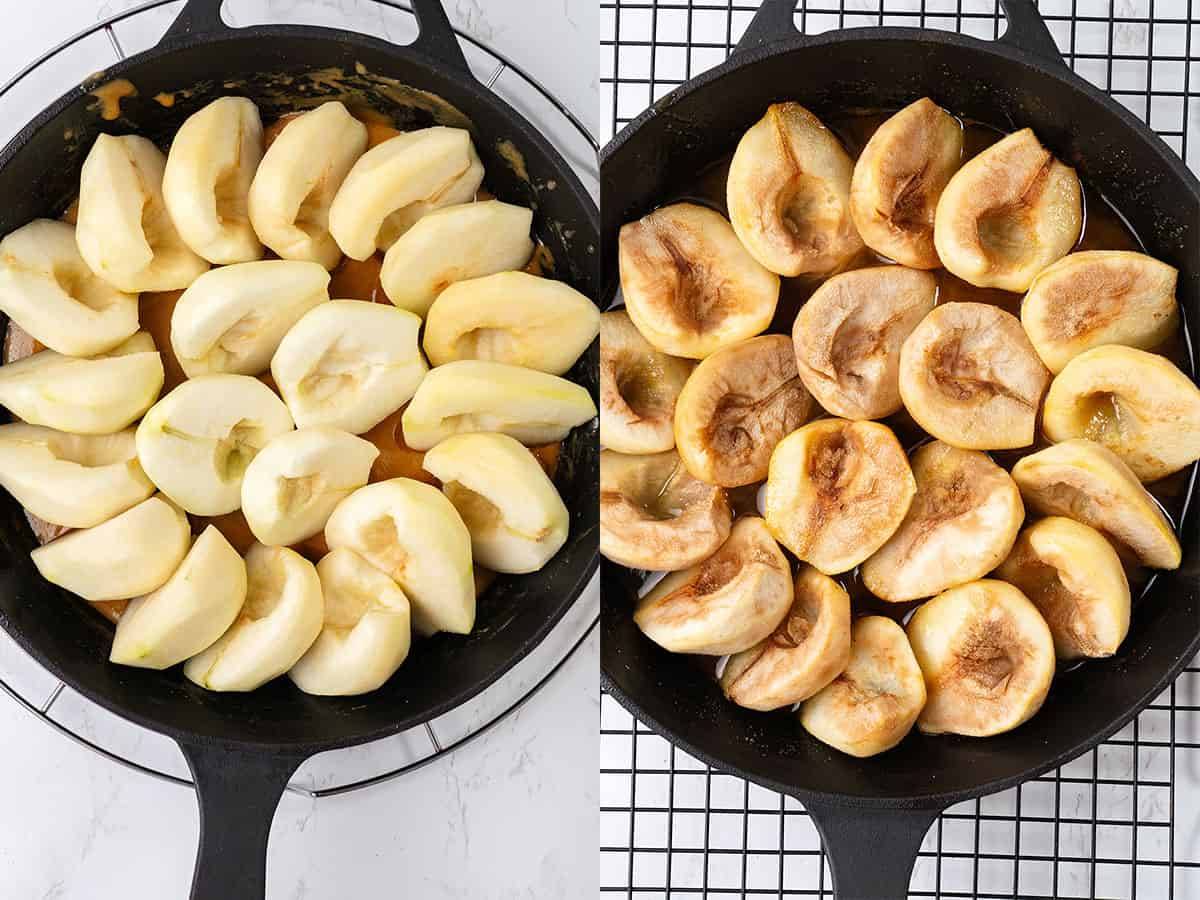
Arrange the pear halves cut-side up in the caramel. Press them together tightly so there are no large gaps, adding an extra half if needed to fill the pan completely.
Place the skillet in the preheated oven and bake for 20 minutes, just until the pears start to soften but still hold their shape. You can test this with a paring knife; it should meet gentle resistance in the center. This step helps reduce shrinkage and ensures the puff pastry stays crisp later.
Remove the skillet from the oven and let it cool to room temperature. If you notice excess liquid, gently spoon it out so the pears are sitting in a thin layer of caramel rather than a watery syrup.
Assemble the pears with the puff pastry and Bake
Preheat the oven to 375°F (190°C) while you prepare the pastry. As with my pear puff pastry tarts, you can use store-bought puff pastry to save time. But for the best flavor, I highly recommend making your own traditional puff pastry.
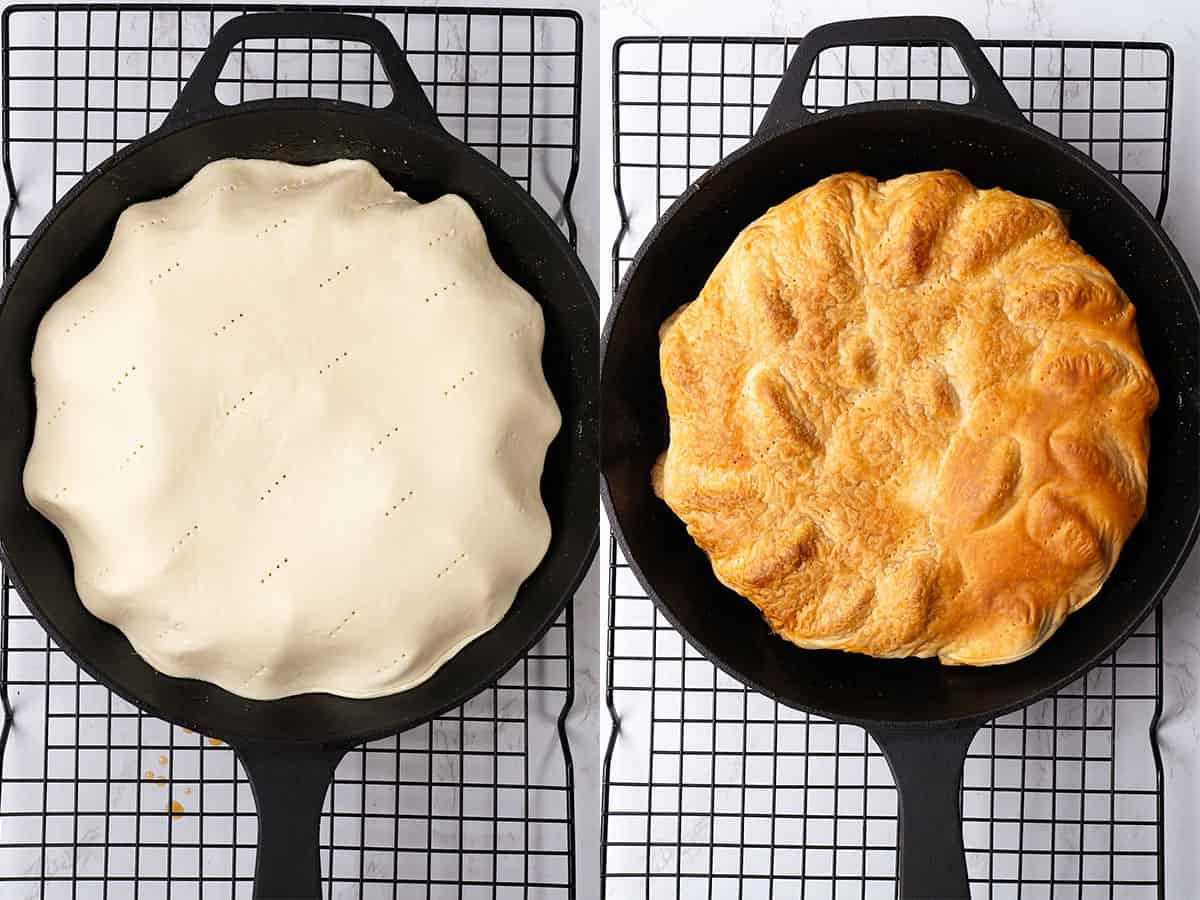
Roll out the puff pastry into an 11–12 inch (28–30 cm) circle, slightly larger than the skillet (9inch / 23cm). Keep it chilled until ready to use. Prick the surface lightly with a fork to let steam escape during baking.
If your kitchen is warm, chill the rolled-out pastry on a baking sheet for 5 minutes before covering the pears; this keeps the butter layers intact for maximum lift.
Lay the cold pastry over the cooled pears and tuck the edges down around the fruit so it seals snugly. Bake for 25–30 minutes at 375°F (190°C), or until the pastry turns golden brown and crisp.
Once baked, remove the tart from the oven and let it rest for 15 minutes before inverting. Check the skillet for excess caramel and carefully spoon some out if necessary. Place a large serving plate over the skillet and flip the tart while it is still warm.
If any pears shift, gently nudge them back into place while they're still warm, then brush them with caramel to ‘glue’ them in place. Serve warm with whipped Chantilly cream or a scoop of vanilla ice cream.
Storing & Freezing
Leftover pear tarte Tatin can be covered and stored in the refrigerator for up to 3 days. It tastes lovely cold, but to enjoy it warm, place slices on a baking tray and reheat in a 300°F (150°C) oven for about 10 minutes. This helps the caramel melt slightly and brings back some of the pastry’s crispness.
You can also freeze the tart for up to 1 month, though the pastry won’t be quite as crisp once thawed. Let it cool completely, then double-wrap it tightly in plastic wrap and aluminum foil. Keep it flat in the freezer, and when ready to serve, thaw overnight in the refrigerator. Reheat the whole tart or individual slices in a 325°F (160°C) oven until warmed through.
Flavor Variations
You can easily adapt this Pear Tarte Tatin for different seasons and flavor profiles without changing the base method. Try adding a pinch of cinnamon or even apple pie spice to the caramel for a warm, spiced version that'll work especially well as a fall dessert. A few curls of orange zest are also a great way to add brightness.
For a richer variation, drizzle a tablespoon of Calvados, Cognac, or dark rum into the caramel before baking. The gentle heat of the spirits enhances the caramel's richness and gives the dessert a delicate depth. You can also scatter a few toasted walnuts over the pears before adding the pastry for a little crunch, like I do in my pear galette recipe.
This recipe also works beautifully with other fruits. Fall fruits like apples or plums, and summer fruits like peaches, make excellent alternatives—keep an eye on the baking time, as softer or higher-sugar fruits may caramelize faster.
For a completely different take, try using shallots for a savory tarte Tatin that pairs wonderfully with roasted meats or cheese.
Ingredient Substitutions
You can purchase gluten-free puff pastry and use it to make this dessert suitable for those with gluten intolerance. Many store-bought options are also made with vegetable oil instead of butter, which can be helpful if you’re avoiding dairy.
If you don’t have puff pastry on hand, try using my flaky pie crust instead. The result will have a more classic pie-like texture, but it’s just as delicious and holds up beautifully with the caramelized pears.
For the caramel, use plain white granulated sugar or light golden sugar. Avoid dark brown sugar, which tends to burn quickly and gives a bitter taste.
It’s difficult to make this dessert fully dairy-free, as traditional tarte Tatin depends on butter for its rich flavor and glossy caramel. You can experiment with vegan butter if needed, though it won’t achieve quite the same depth or texture. For more details on balancing flavor and fat content, see my butter substitute guide.

Expert Tips To Make Pear Tarte Tatin
- Use a light-colored spatula or spoon when making caramel. It helps you see the exact shade more clearly, especially when cooking in a dark cast-iron skillet. Stop cooking once the caramel reaches a light honey color, since it will continue to darken in the oven.
- Arrange the pears in a tight circular pattern. The pears will significantly shrink, so you need to press them together tightly.
- If you're looking for a homemade touch but don't have time to make classic puff pastry, consider making some quick and easy rough puff pastry for this tarte Tatin instead. It can be ready in just a few hours, rather than the 1-2 days it takes for traditional versions.
- Always bake the tart on the lower third rack of the oven. This placement helps the base caramelize evenly while keeping the pastry on top from browning too quickly.
- If baking with a fan (convection) setting, reduce the oven temperature by about 20°F (10°C).
- When you are ready to flip the tart, wait until the caramel stops bubbling and thickens slightly. That is the perfect time to invert, ensuring the caramel coats the pears evenly rather than running off. However, don't wait too long, as it will otherwise harden.
- For a clean presentation, invert the tart onto a plate with a small rim to catch any excess syrup. Brush the extra caramel over the pears for a beautiful, glossy finish.
- To restore the pastry’s crispness the next day, place the slices on a preheated baking tray for a few minutes instead of reheating from a cold oven. The direct contact restores the caramelized base and keeps the texture light and flaky.
What Equipment To Use

Always weigh your ingredients using a digital scale and don’t rely on cups, as precision is key when baking French pastries like this.
Cook and bake the tart in a 9-inch cast-iron skillet, which holds heat evenly and can go straight from stovetop to oven without any fuss.
Use a digital oven thermometer to ensure your oven is set to the correct temperature. Puff pastry needs consistent heat to bake up crisp and golden.
Try Some Of My Other Fall Dessert Recipes
If you loved this pear tarte Tatin recipe, try some of my other Fall desserts next:
- Apple crumble pie
- Pecan pie cheesecake
- Brioche cinnamon rolls
- Pumpkin streusel bread
- Mini carrot cakes
And for even more pear desserts, check out my roundup of the 35+ Best Pear Desserts.
Have You Tried This Recipe?
Please leave a 5-star ⭐️⭐️⭐️⭐️⭐️ rating on the recipe card and consider leaving a comment as well!
Pear Tarte Tatin
Ingredients
- 5-6 Pears
- 1 tablespoon Lemon juice freshly squeezed
- 150 g (¾ cups) Granulated sugar
- 60 g (¼ cups) Unsalted butter
- 1 tablespoon Lemon juice freshly squeezed
- ¼ teaspoon Salt
- 1 pack Puff pastry store-bought or homemade
US customary cup measurement is an indicative figure only. Measure the ingredients with a digital scale by weight (gram). Baking is art but also science which requires precision and accuracy.
Instructions
- Peel, core, and cut the pears in half. Drizzle them with freshly squeezed lemon juice to keep them from browning.
- Preheat the oven to 350°F (175°C), no fan.
- Set a heavy, ovenproof skillet or tarte Tatin pan (9-inch / 23 cm) over medium heat. Add the sugar, butter, and lemon juice, and cook slowly until the mixture becomes a light golden caramel. If the butter separates from the sugar, whisk gently until it combines again. Take the pan off the heat and stir in the salt.
- Place the pear halves cut-side up in the caramel, packing them tightly since they will shrink during baking. Add more pears as needed to create a full, even layer.
- Place the pan with the pears in the oven and bake at 350°F (175°C) for about 20 minutes. Check the texture — they should be partially baked at this stage. Allow them to cool to room temperature before adding the pastry on top. If the pears release too much liquid, gently spoon out the excess. The pears should remain moist with caramel underneath, but not be submerged in liquid.
- Roll out the chilled dough into a circle about 11–12 inches (28–30 cm) wide, just large enough to cover the pears and tuck around the edges of the skillet. Use a fork to prick the dough all over before laying it on top of the pears.
- Lay the puff pastry over the pears, gently tucking the edges down around the fruit. Bake in a preheated oven at 375°F (190°C) for 25–30 minutes, until the pastry turns golden brown and crisp.
- Allow the tart to rest for 15 minutes. Before inverting it onto a serving plate, check for any excess liquid in the pan and carefully spoon it out if needed. Don’t discard it. Once cooled, it will thicken into a rich caramel you can brush over the pears for a glossy finish.Then, while the tart is still warm, gently flip it onto a serving plate to keep the caramel from hardening.
- Slice and serve warm, with whipped chantilly, or vanilla ice cream.
- Store leftover tarte Tatin covered in the refrigerator for up to 3 days. Rewarm slices gently in the oven at 300°F (150°C) for about 10 minutes before serving to bring back the caramel’s shine and crisp up the pastry slightly.Tarte Tatin is best enjoyed fresh, but you can freeze it if needed. Wrap the cooled tart tightly in plastic wrap, then in aluminum foil, and freeze for up to 1 month. To serve, thaw overnight in the refrigerator, then reheat in a 325°F (160°C) oven until warmed through. Keep in mind that the pastry may lose some of its crispness after freezing.
Notes
- Use a type of pear that is both firm and crisp, without turning mushy e.g., Bosch, Anjou, Bartlett. It is better if they are roughly the same size and more on the smaller side to be able to fit them tightly.
- The simplest and most reliable method is to cook the sugar and butter together with a splash of lemon juice until you get a very light caramel. Don’t push it too far; the caramel will continue to deepen in the oven, and starting too dark can leave you with a bitter taste.
- Pears shrink significantly while cooking therefore you have to pack the skillet very tightly.
- Baking the fruit before adding the puff pastry not only helps reduce shrinkage but also prevents the pastry from turning soggy.
- After prebaking, if the pears have released too much juice, spoon it out so you’re left with just moist pears sitting in caramel, not watery sauce.
- Puff pastry softens quickly at room temperature. Roll it out while still chilled and only place it over the pears once they’ve cooled slightly. Never cover the hot pears, or the pastry will melt before baking.
- Once the tart is fully baked, let it rest for a few minutes before flipping. If there’s still too much caramel in the pan, spoon some out first; this keeps the serving plate neat. As the sauce cools, it thickens into a rich caramel that you can brush over the pears for a glossy finish.
- You can flavor the tarte tatin by adding ginger, cinnamon, cardamom, vanilla extract.
Silvie
I've tried your apple tarte tatin first but I think I love this pear version even more. So easy (used store-bought puff pastry) and looks very impressive.