
Your oven has more buttons and symbols than you’ll ever bother with, yet most people only twist the dial to the same couple of settings every time. Then they wonder why cookies burn on the edges or pizza crusts come out soggy. Those tiny symbols are there for a reason, and each function addresses a different cooking need.
The most common oven functions
It is beneficial to become familiar with the various symbols, as modern ovens offer solutions for different cooking methods and types of food. Here are the most common functions and how to use them.
Conventional heating (two horizontal lines)

You'll spot this symbol as two horizontal lines, one at the top and one at the bottom of a square. This mimics old-school ovens with heating elements above and below your food. They both work and heat up at the same time, providing even heat distribution.
This setting is ideal for traditional baking, such as cakes, cookies, and bread, working best when baking on a single rack and providing the gentle, even heat that most baked goods require.
Fan-forced/convection (fan symbol)

The fan symbol, usually inside a circle or square, indicates that a fan circulates hot air throughout the oven cavity. This creates more even temperature distribution and faster cooking times.
Fan-forced works perfectly for roast dinners, multiple cookie trays, and reheating leftovers. The swirling air reaches every corner, so you can use multiple shelves without worrying about uneven cooking. It's multitasking at its finest.
Bottom heat only (single line at bottom)

This symbol shows just one horizontal line at the bottom of the square, indicating that only the bottom heating element is active.
This setting is perfect for achieving crispy bases on pizzas, pies, and pastries. It's also excellent for slow-cooking casseroles and stews that need gentle heat from below.
If you struggle with uncooked pizza bases, this might be one of the problems. Learn about this setting, and you'll always have crispy results, no matter what you make.
Grill/broil (zigzag line at top)

The zigzag line at the top represents the grilling function. This option helps generate intense heat from above, perfect for creating golden tops and caramelized surfaces. Some ovens offer full-width grilling (long zigzag) or center grilling (short zigzag).
The grill or broil option is used for browning gratins, melting cheese, toasting bread, or giving meat a crispy skin finish. Always keep the oven door closed when using this function (unless the manual says explicitly otherwise for grilling).
As this function generates intense heat from above, food can go from perfectly golden to charred in seconds. Monitor the temperature when you use this option to avoid food burning.
Fan and grill combined (fan with zigzag above)
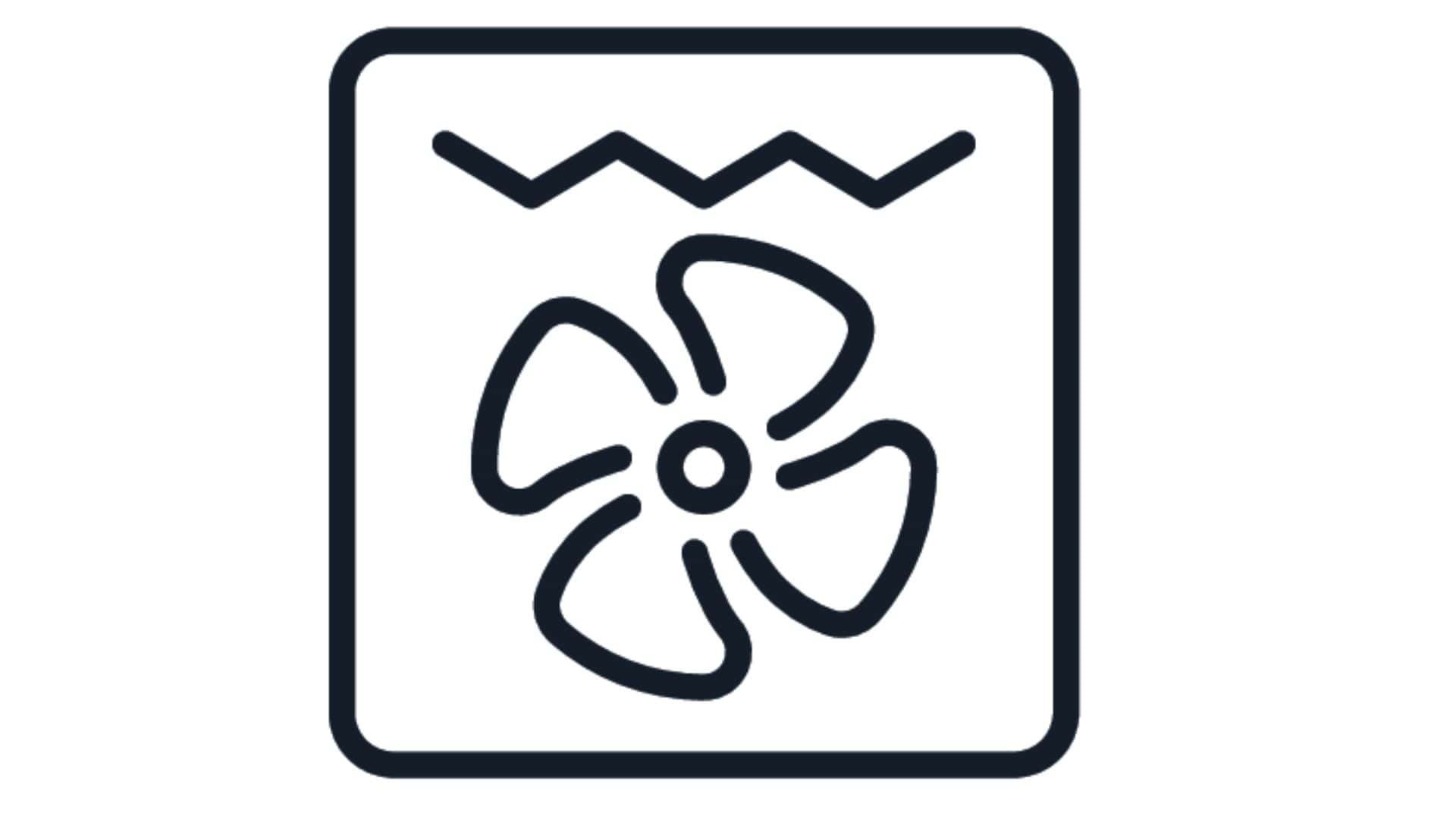
This symbol combines a fan with the zigzag grill line. The setting uses the fan’s hot air and the direct heat from the grill at the same time. It is ideal for thick cuts of meat or when you want a golden finish on top of your food.
Regular grilling often burns food before it cooks through, and this option solves this problem by evening out the heat while preserving the browning power you want.
Fan with bottom heat (fan with line below)

This symbol shows a fan with a horizontal line at the bottom, combining air circulation with concentrated bottom heat. This option is ideal for foods that need crispy bases and evenly cooked tops, such as homemade pizza.
Most people struggle with pizza and pastries because they are unaware of this setting. They end up with either soggy bases or burnt tops. This function ensures the base and toppings cook evenly without burning.
The fan vs. the conventional temperature
Here is what almost everyone gets wrong:
Fan (convection) ovens are designed with a built-in fan that circulates the hot air evenly around the oven cavity. This improves heat distribution compared to a conventional (static) oven, where heat rises and creates hotter and cooler spots. Because the heat transfer is more efficient, food typically cooks faster and more evenly in a fan oven.
As a result, recipes usually recommend lowering the temperature by about 20°C (roughly 50°F) when using a fan oven instead of a conventional one. For example:
- Conventional oven: 350°F (180°C)
- Fan oven: 300°F (160°C)
This adjustment helps prevent the food from overcooking or drying out. It is particularly critical in baking recipes, where a 20°C (50°F) difference is significant. Always check what the recipe creator recommends regarding oven setting and either follow that or adjust according to the recommendation above.
Less Common But Useful Functions
Not every oven comes with these settings, but for those who do, it can make cooking or baking a lot easier.
Defrost (snowflake symbol)
The snowflake symbol uses the fan without heat to thaw frozen food safely. Air circulation helps everything defrost evenly without starting the cooking process. It's gentler than a microwave and more reliable than leaving things on the counter.
Keep warm (low temperature setting)
This low-temperature function holds food at serving temperature without overcooking it. It’s perfect for keeping side dishes warm while you finish the main course.
Slow cook (pot symbol)
This function uses very low heat over extended periods, similar to a slow cooker. It’s ideal for tough cuts of meat that need long, gentle cooking to become tender.
Self-clean (dots or "P" symbol)
Those dots or the letter "P" represent pyrolytic cleaning. The oven heats to around 932°F (500°C), turning food residue into ash you can wipe away.
The Most Common Oven Mistakes (And How to Avoid Them)

Even with the correct settings, people often make simple mistakes that can ruin their results. Some of these common mistakes include:
Not preheating properly
Electric ovens need at least 10 minutes to reach the desired temperature. Best to give it another 5-10 minutes to stabilize before you add the food. Using the oven without preheating can have a significant impact on your results, especially when baking desserts.
Opening the door too often
Every time you open the door, you lose a significant amount of internal heat, and your oven works overtime to recover. If you’re using the correct settings, there is no need to open the door again and again. Open it less, and your meals or desserts will come out perfect!
Using the wrong rack position
Using the wrong rack can affect your recipe. It’s important to understand your meals and where to position them in the oven. Most recipes work perfectly when the pan is placed in the middle. However, if something needs browning, it should usually go on the top rack. Similarly, if you want a crispy base, you should use the bottom rack.
Wrong oven settings
Not all ovens are the same! What works for one oven may not work for the other. Make sure to read the manufacturer’s instructions book before you cook and bake, as it explains the best modes for making certain foods using the oven.
Overcrowding
When multiple dishes crowd the oven, air circulation becomes restricted. This leads to uneven cooking and longer cooking times. Make sure not to add multiple things at once, as it can disturb the temperature, and the food may not come out as good as expected.
Tips for Better Oven Use

Here are some of the tips to help you use your oven more efficiently and make sure your meals are cooked or desserts are baked to perfection.
Know your oven: Not all ovens are the same. Before cooking or baking in the oven, make sure to read the manual and the temperatures. This will help you understand your oven inside out, and you’ll be able to make better meals.
Use the light: The oven light is there for a reason. Instead of opening the door and letting out heat, check on your food through the glass. Even a brief glance at the door can drop the temperature, often leading to uneven cooking.
Consider your cookware: The pan you use can change the result as much as the setting. Dark pans absorb more heat and cook food faster, while glass dishes stay hotter for longer than metal ones. If you know your cookware or bakeware, you can adjust cooking times to avoid undercooked centers or burnt edges.
Clean regularly: It’s important to keep your oven clean if you want it to work well. Old grease and food crumbs can cause smoke, stop heat from spreading properly, and even change the taste of your food. You can quickly wipe down your oven after a few uses and do a deep clean every three months.
The oven is often the hardest-working appliance in the kitchen. Understanding its full capabilities means enjoying better food, experiencing less frustration, and gaining more confidence in the kitchen. Learn about the symbols as they are there to help create exactly the results needed, every single time.
Leave a Reply