
Grocery prices are already sky-high, and with new tariffs coming, they are expected to climb even more. If you have not started using coupons yet, now is the time. There is no better moment to become a real couponer.
With a little strategy and some savvy shopping habits, you can trim your grocery bill in a big way, all thanks to simple coupons. The average American who uses digital coupon codes saves an annual total of $1,465. We bet you can save even more! Here are a few pro tips and tricks to help you learn everything you need to know to save big at the store using coupons.
Check Your Paper Mailers
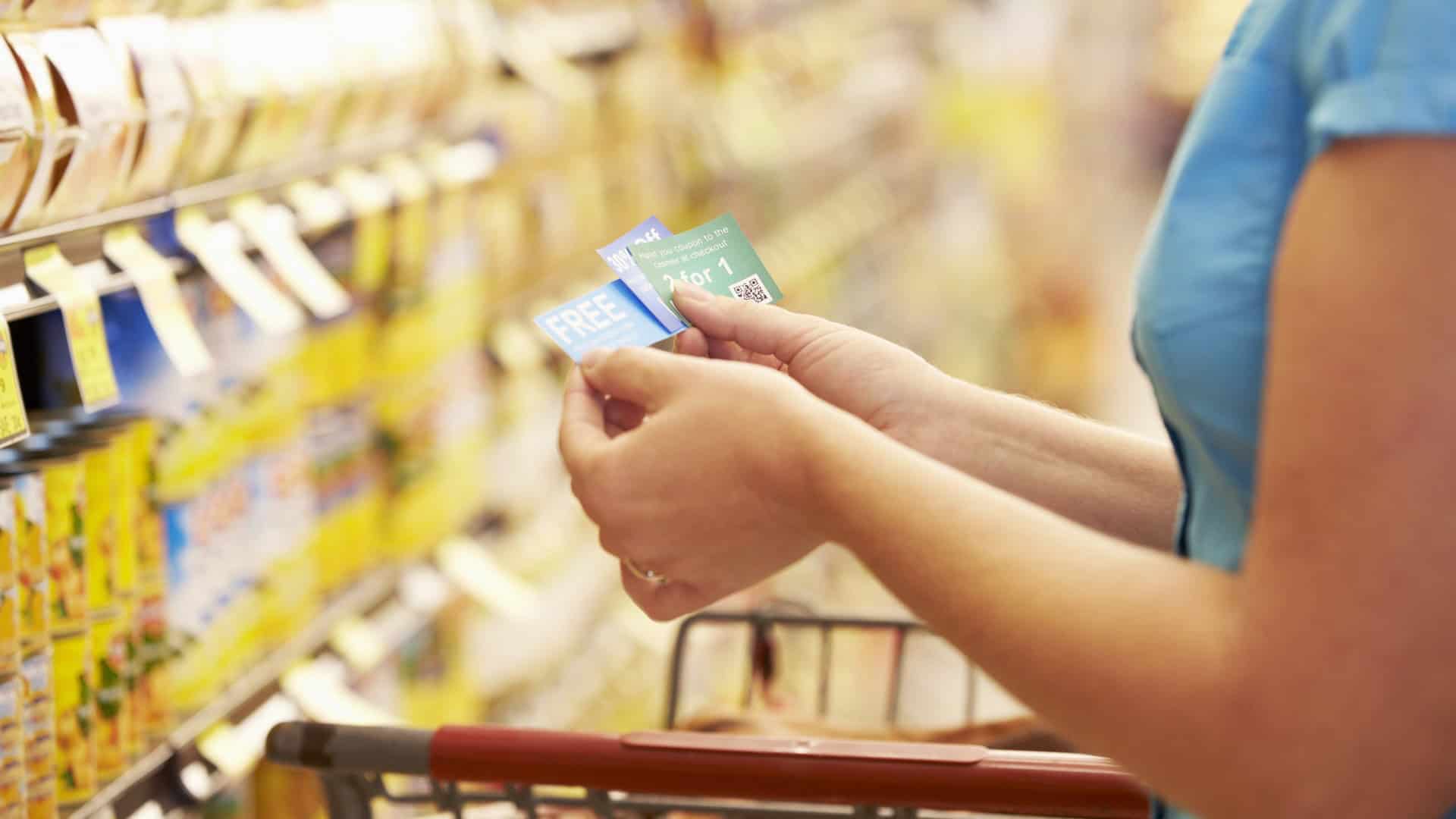
Yes, paper coupons are still alive and well! Many stores still distribute coupon booklets and inserts through local newspapers or weekly mailers. These often include valuable savings on brand-name pantry staples, household cleaning products, and even pet food. Many big-name manufacturers also send coupon booklets straight to your door, full of coupons you can use at almost any store where products are sold.
Check your mail weekly and then clip the coupons you think you will use and stash them in a coupon organizer, envelope, or even a Ziploc bag that you can later toss in your purse. If you find a coupon in the mail that is really useful, don’t be shy about asking your friends, family, or neighbors for their mailer, too! Building up a stash of the same coupon lets you stock up when a great deal hits.
Try Coupon Apps for a Paper-Free Experience
If carrying around a bunch of paper coupons feels too old-school, there are plenty of digital alternatives. Coupon apps like Coupons.com, Flipp, or Store-specific apps (like Kroger, BJ's, or Target) let you browse and “clip” coupons digitally.
You can load the coupons to your account and then scan your loyalty card or app at checkout, no scissors needed here! This method is not only more organized but also makes last-minute couponing much easier. You can even clip coupons on your phone while you are walking through the store.
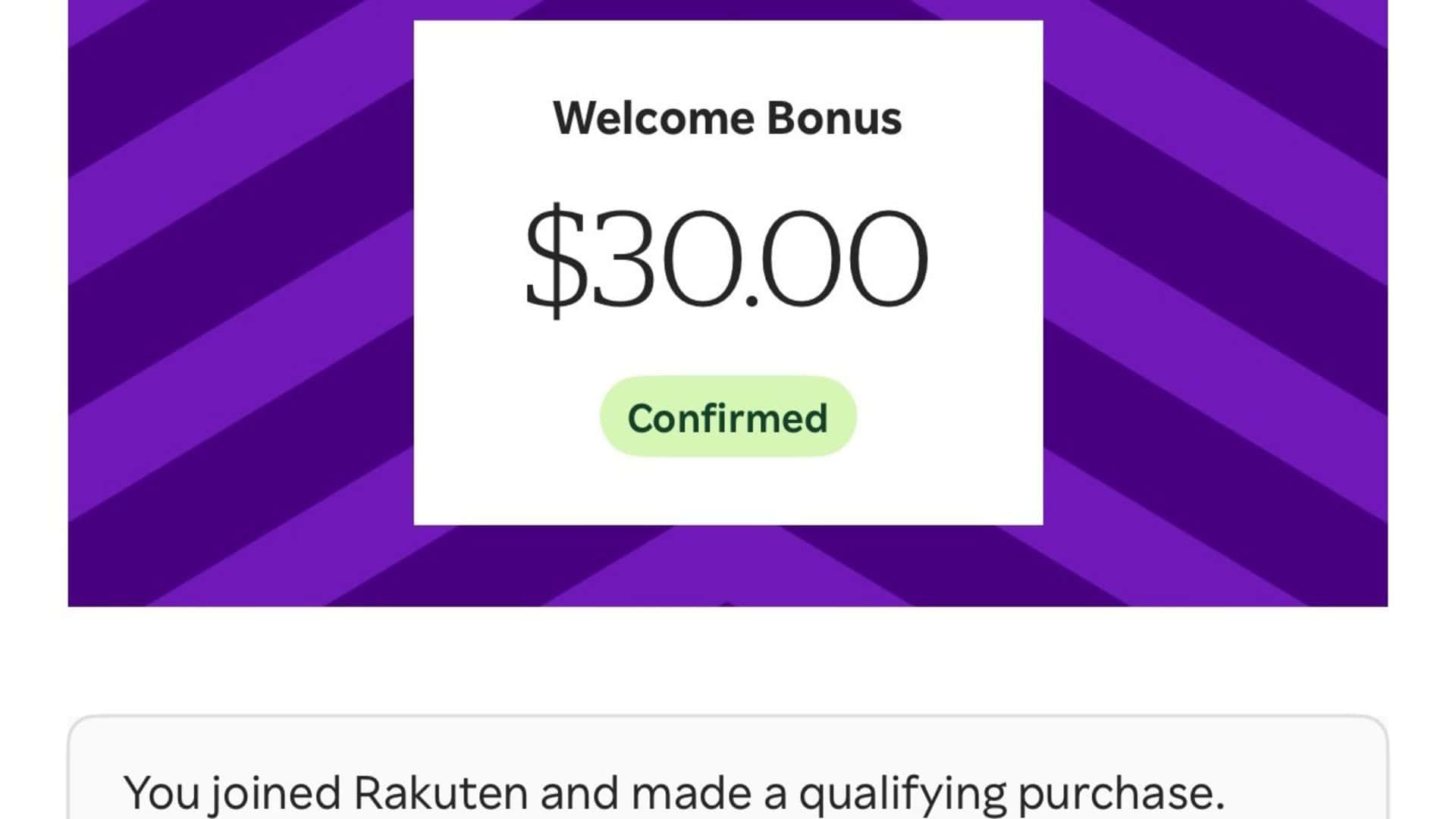
Some apps allow you to place your grocery order via your phone for extra savings. You can go through apps like Rakuten to instantly save a percentage off your total. Open the Rakuten app, click the store where you would like to shop, and then simply place your order. Your savings will either be instantly applied to the total or you will get cash back, depending on the app. You can also earn instant sign-on bonuses like I did. I'll take an extra $30! Thanks, Rakuten!
Save After You Shop with Receipt-Scanning Apps
Even after your groceries are in the bag, you can still use coupons and find more savings. Apps like Ibotta, Fetch Rewards, and Receipt Hog all allow you to scan your receipt after checkout and earn cash back, gift cards, or points toward future rewards.
It only takes a few seconds to scan your receipt, and you will be amazed at how quickly those rewards add up. Ibotta even has special offers tied to specific items for bonus savings. Activate those deals in the app and then scan your receipt. You will be amazed by how quickly these savings add up!
Ask For Coupons Directly

Did you know that many companies will send you coupons if you ask nicely? If you love a product or a food you are excited to try, hop on the company website and send a message asking for a coupon. The worst they can say is no! The best end result is coupons for groceries ending up in your mailbox.
Here is a helpful list of companies that will send you coupons directly.
Understand and Use Catalina Coupons
If you have ever had a coupon print out with your receipt at the checkout, that is a Catalina coupon. These are personalized coupons based on your shopping habits that instantly print at the end of your shopping trip. They can be for dollars off your next purchase or savings on a specific product that is likely something you have already bought or have bought in the past.
To use Catalina Coupons, just bring them on your next grocery trip and hand them over during checkout. You can only use Catalina coupons at the store that issued them, so do not bring a Stop and Shop coupon to a Shop Rite! This is a mistake I have made before.
Another bonus is that these printed coupons can often be stacked with other savings, like store discounts or manufacturer coupons. You can get double the savings, which is always the best.
Combine Coupons With Sales for Maximum Impact
Learning how to stack coupons with sales is where the real savings can begin. When you use a coupon on an item that is already discounted, your savings multiply. For example, if a box of cereal is on sale for $2.50 and you have a $1-off coupon, you’re getting it for $1.50. But if the store also has a promotion like “Buy 5, Save $5,” you shave even more off the final price.
It is worth checking store flyers and weekly ads to see what is on sale, matching your coupons to those items, and getting the best bang for your buck.
Choose the Right Grocery Stores

Not all grocery stores treat coupons equally. Some offer double coupon days, where a 50¢ coupon becomes $1 off. Others limit the number of coupons you can use in a single trip or per product.
Go to the website for your local stores and look for their coupon policies. Here are a few things you need to check for as a couponer:
- Does the store double the value of coupons?
- How many coupons will they double per transaction?
- Do they allow coupon use on BOGO (Buy One Get One Free) deals?
- Do they accept competitor coupons?
- Are there extra savings for students, seniors, or veterans?
Choosing a coupon-friendly store can make just as big a difference as finding the right coupon. Kroger, for example, is fantastic when it comes to accepting, doubling, and handing out coupons. What makes Kroger one of the best stores for couponing is the Kroger 5x event. Aldi, on the other hand, doesn’t typically accept any manufacturer coupons at all. Of course, you’ll find that Aldi without coupons is usually cheaper than many places with them.
Join Store Loyalty Programs
If you haven’t already joined your favorite grocery store’s loyalty program, you are missing out on a lot of automatic savings. Loyalty programs often give you instant discounts, member-only prices, and digital coupons you can clip online and link to your card.
When you check out, the discounts are automatically applied, so there is really no extra work needed. Some programs even track your spending and offer bonuses or discounts the more you shop.
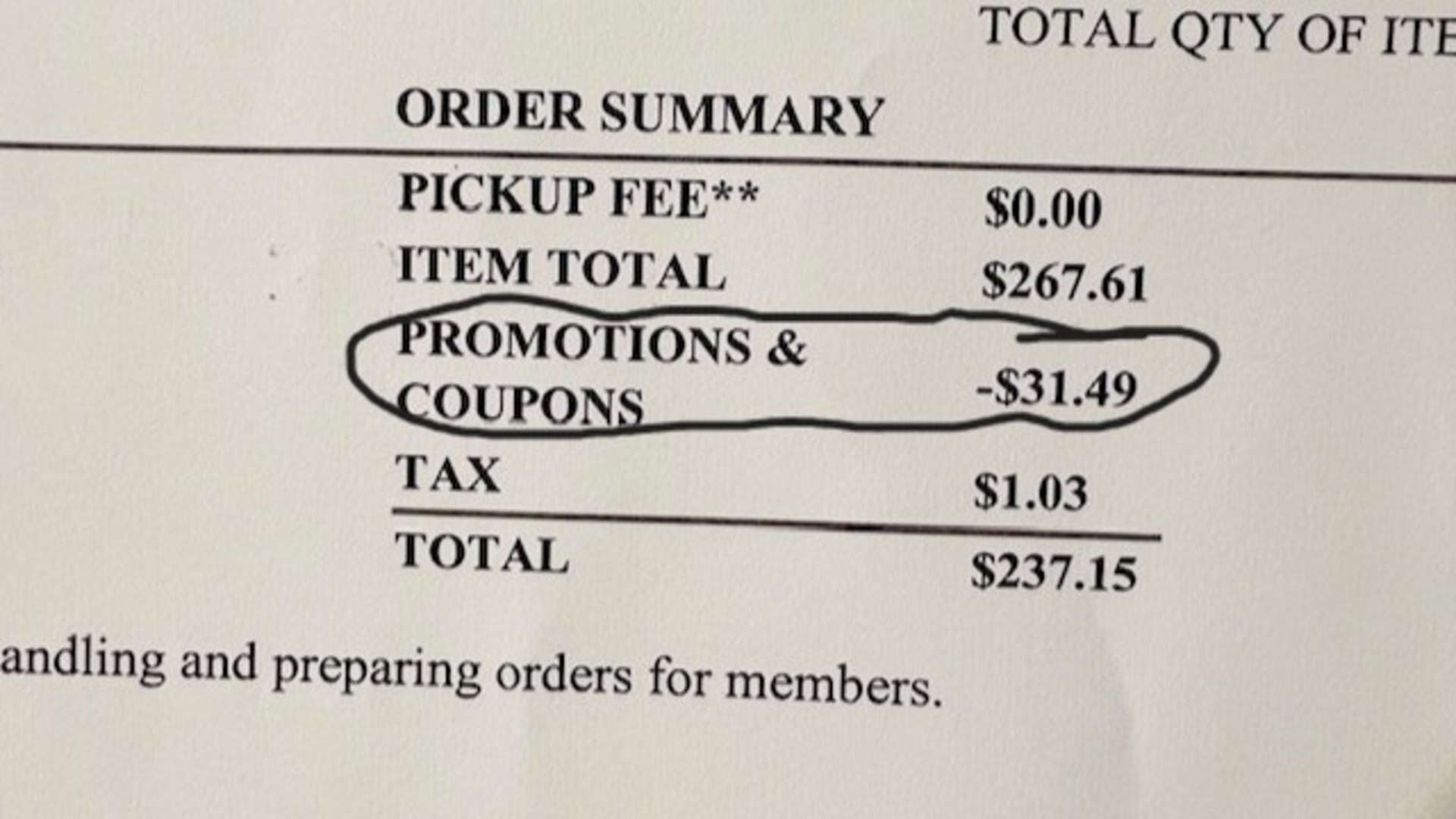
Here is an example of my savings on my recent BJ's receipt. I placed my order through the BJ's app, clipping digital coupons as I added items to my cart. You can see how much I saved on this single order just by using the app. It was effortless, and in this one grocery order, I saved over $30.
Take Advantage of BOGO Stacking
Now, stacking coupons with BOGO (Buy One, Get One) deals is a professional couponer move. It may sound a little tricky, but it is easier than you think. Here is how it is done.
Let’s say your store is running a BOGO sale on pasta at $1.50 each, and you have a coupon for $1 off two boxes. That coupon applies to the two items, even though one is already free. Now you are getting two boxes for just $0.50 total, or 25¢ per box. Multiply that by multiple coupons, and you can stock your pantry for pennies.
This strategy works especially well when you have a coupon that applies to the entire purchase (like “$2 off 2”) and the items are already discounted through a BOGO deal.
Learn How Overages Work
Overages happen when your coupon is worth more than the item you are buying. For example, say you have a $1.50-off coupon for an item that is already on sale for $1.25. That extra 25¢ doesn’t go to waste! Some stores, like Publix, deduct that extra amount from the rest of your bill.
That means your item is free, and it helps pay for the rest of your groceries. But keep in mind that not every store allows overages. Policies vary and change often, so always read up on store coupon rules before heading out with a strategy in mind.
Stack Your Coupons in the Right Order
This might sound minor, but the order in which you use your coupons can affect how much you save.
For example, if you have a $5 off $15 purchase coupon and a 10% off coupon for the same brand, always use the $5 off coupon first. If you use the percentage discount first, your total may drop below the $15 threshold, making the $5 coupon invalid.
However, if you have a $5 off coupon (not tied to a minimum purchase) and a 10% off coupon for the same brand, always use the percentage discount first. This allows you to take advantage of the percentage off the highest price. Here’s how the math works:
- First, apply the 10% discount to the $15 price: $15 - 10% ($1.50) = $13.50.
- Then, apply the $5 off coupon: $13.50 - $5 = $8.50.
If you use the $5 off coupon first:
- Subtract $5 from the $15 price: $15 - $5 = $10.
- Then, apply the 10% discount to $10: $10 - 10% ($1) = $9.
As you can see, using the percentage discount first results in a better deal: $8.50 instead of $9.
Think of your coupons as puzzle pieces. If you line them up correctly, your savings will stack up faster than you may think!
Stick to Your Grocery Budget
One of the easiest traps to fall into with coupons is buying something just because it is on sale. In fact, 67% of people make unplanned purchases just because of a coupon. Your goal is to save on what you actually need, not clutter your pantry with ten boxes of cookies that you will never eat.
Before couponing, make a real grocery list and set a budget. Then, use coupons to bring that total down, not inflate it. If a deal is too good to pass up, but it is for something you won’t use, leave it on the shelf.
So, stay focused on what your family needs, and you will get excited every time you knock a few bucks off the grocery bill. It always feels good to save!
Leave a Reply