
Layouts, pricing tactics, and promotions are carefully engineered to influence what people buy, how much they spend, and how long they stay inside the store.
In 2026, people are more informed than ever, and many of the tactics that once drove up grocery bills are no longer effective. Rising food prices and greater access to price-comparison tools have changed how people navigate stores and make decisions.

Endcaps that masquerade as deals
Endcaps are one of the most powerful upselling tools in grocery stores. Positioned at the ends of aisles, these displays are designed to interrupt shopping patterns and create a sense of urgency.
Endcap spots are usually paid for by brands, not set aside for the best deals. The price is often the same as elsewhere in the store, and even sometimes higher. More people are now checking shelf tags and unit prices instead of assuming these displays signal savings. Visibility alone is no longer a reliable cue for value.
Multi-buy promotions that cost more
“Buy two, get one free” and similar offers continue to dominate weekly ads. These deals can make sense for shelf-stable items or products that a household already uses regularly. The trap occurs when people buy more than they intended, only to discover that the per-unit price is higher than for a single item from another brand. Skip multi-buy deals unless the savings are clear.
Eye-level pricing games

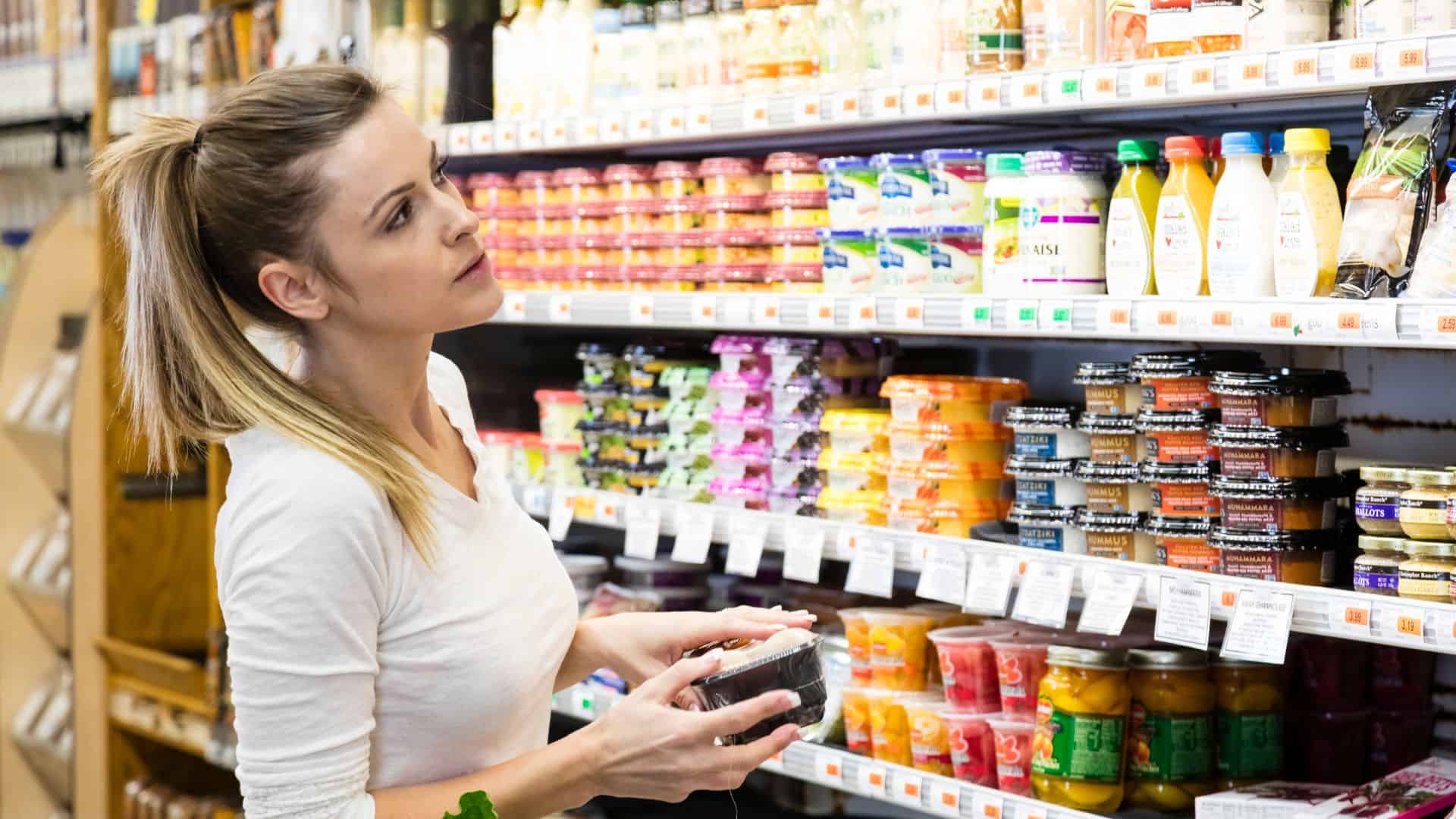
Eye-level shelves are prime space, especially for national brands. Items placed there often cost more than other similar products. Store brands and better values are usually placed where people must bend down or look up to find them.
As grocery prices rise, more people are looking up and down the shelf instead of grabbing the first item they see. That extra glance often adds up to real savings over time.
Unit prices
Unit pricing is one of the easiest tools. The cost per ounce, pound, or count often tells a very different story than the price printed on the package.
In 2026, digital shelf tags and grocery apps make unit prices easier to spot, but they still require a closer look. People who focus only on sale signs often miss that a larger package or a store brand costs less per unit, even if the upfront price is higher.
Store layouts that slow you down
The basic grocery store layout remains largely the same. Staples like milk, eggs, and bread are often spaced far apart, pushing people past aisles filled with impulse items. Seasonal displays and promotional bins are placed to slow movement and encourage browsing.
Time pressure now shapes how many households shop, making efficiency a key factor in saving money. People who stick to lists or use pickup services reduce impulse purchases while still getting what they need.
Checkout lanes built for impulse buys
Candy bars, single-serve snacks, and small convenience items fill checkout lanes for a reason. They depend on split-second choices made while waiting to pay. Each item may seem cheap, but the total cost adds up.
Self-checkout and curbside pickup have reduced this temptation for some people, though it has not disappeared entirely.
Shrinkflation hidden in plain sight
Package sizes keep shrinking while prices hold steady or rise. Boxes look the same, but weights and counts change, making the shift easy to miss without close comparison.
More people are checking the net weight and count instead of judging by package size. In many cases, the item that appears to be the better deal ends up costing more per serving than a slightly larger or less eye-catching option.
Sales that depend on loyalty apps
Digital coupons and loyalty pricing are now common. While they can deliver real savings, they also create a gap between users and non-users. In many cases, a sale price applies only with app activation, and this detail is not always clear.
Many now check apps before heading to the store or stick with store-wide pricing instead of chasing app-only deals. For some, the time and data trade-off is not worth it unless the savings are meaningful.

Fresh displays that encourage overbuying
Produce sections are designed to look bright and overflowing. Misting systems, angled displays, and frequent restocking create a sense of constant freshness. That setting can push people to buy more fresh items than they can realistically use.
Food waste has become a growing concern, both financially and environmentally. More people are buying produce in smaller amounts or choosing frozen options for items they know they will not use right away.
Seasonal displays that create false urgency
Limited-time packaging and seasonal flavors push people to make quick, fear-driven choices. While some seasonal items are worth buying, many are standard products with themed packaging and higher prices.
By waiting a few weeks or skipping novelty items altogether, people are pushing back against the urge to buy something for its own sake.

Bulk buying without a plan
Buying in bulk is often seen as a way to save, but it only works if items are used before they expire. Large packages of perishable foods can lead to waste that wipes out any upfront savings.
In 2026, bulk buying is more deliberate. People are saving it for nonperishable items, freezer-friendly foods, or items they use regularly, rather than assuming bigger always means cheaper.
What this shift says about grocery shopping now
The common thread across these traps is not a lack of information, but how people use it. Grocery stores still rely on psychology and visual cues to boost sales, while people facing ongoing food inflation and tighter budgets are making more deliberate choices.
Avoiding these traps does not require extreme frugality or rigid rules. It often comes down to slowing down and questioning habits that once felt automatic. In 2026, grocery shopping is less about reacting to what is placed in front of us and more about deciding what is worth bringing home.
Lee
Articles like this are highly appreciated because they make me look at labels in a whole new light. Thanks so much for all the research and effort!