
This croissant French toast casserole is an easy and impressive way to transform buttery croissants into a comforting, elegant dessert that is also crowd-favorite to serve for breakfast or brunch. Made with a few simple ingredients and minimal prep time, you’ll have a golden, melt-in-your-mouth casserole that looks like it took all morning to make!
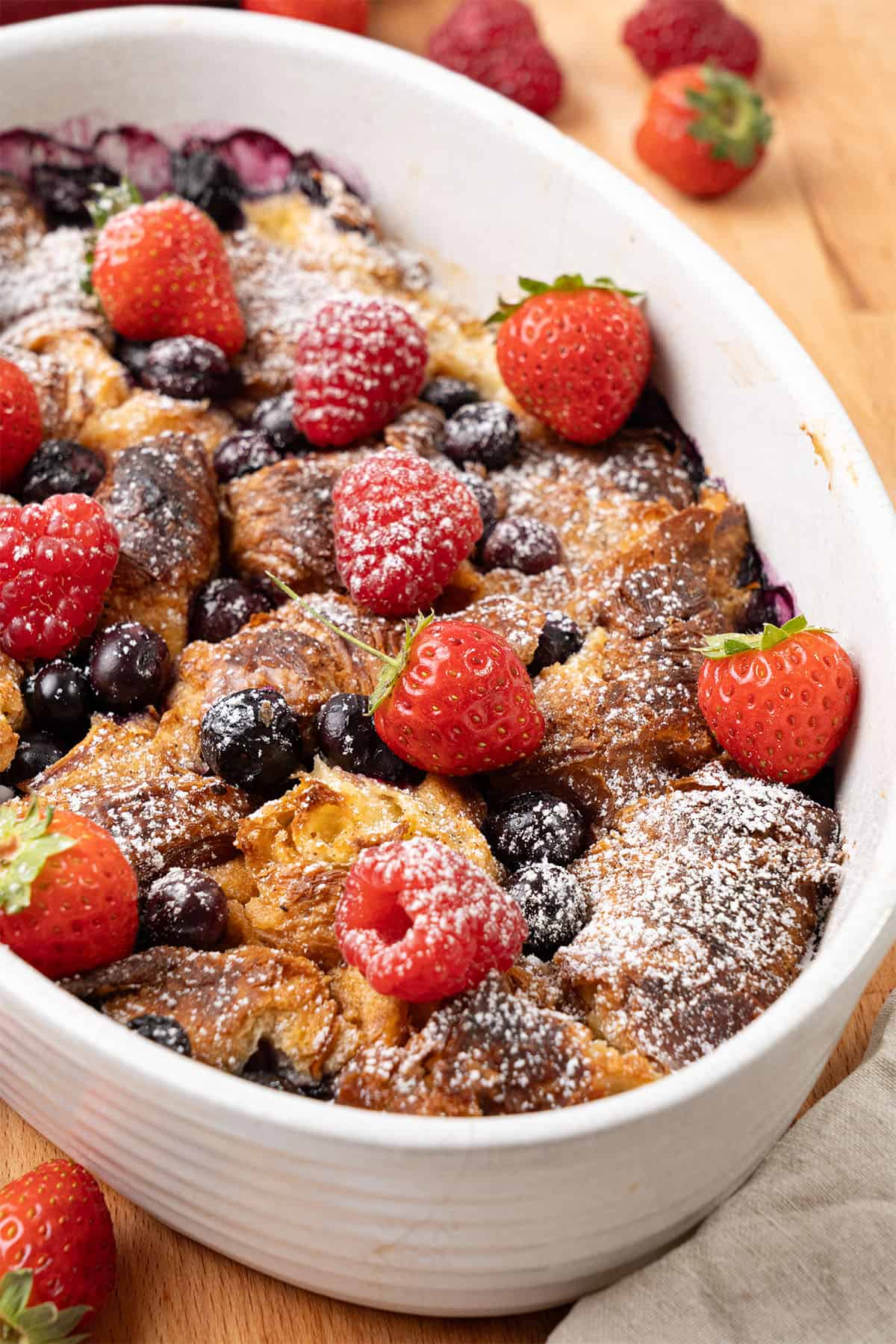
What you can expect from this Croissant French Toast Casserole recipe
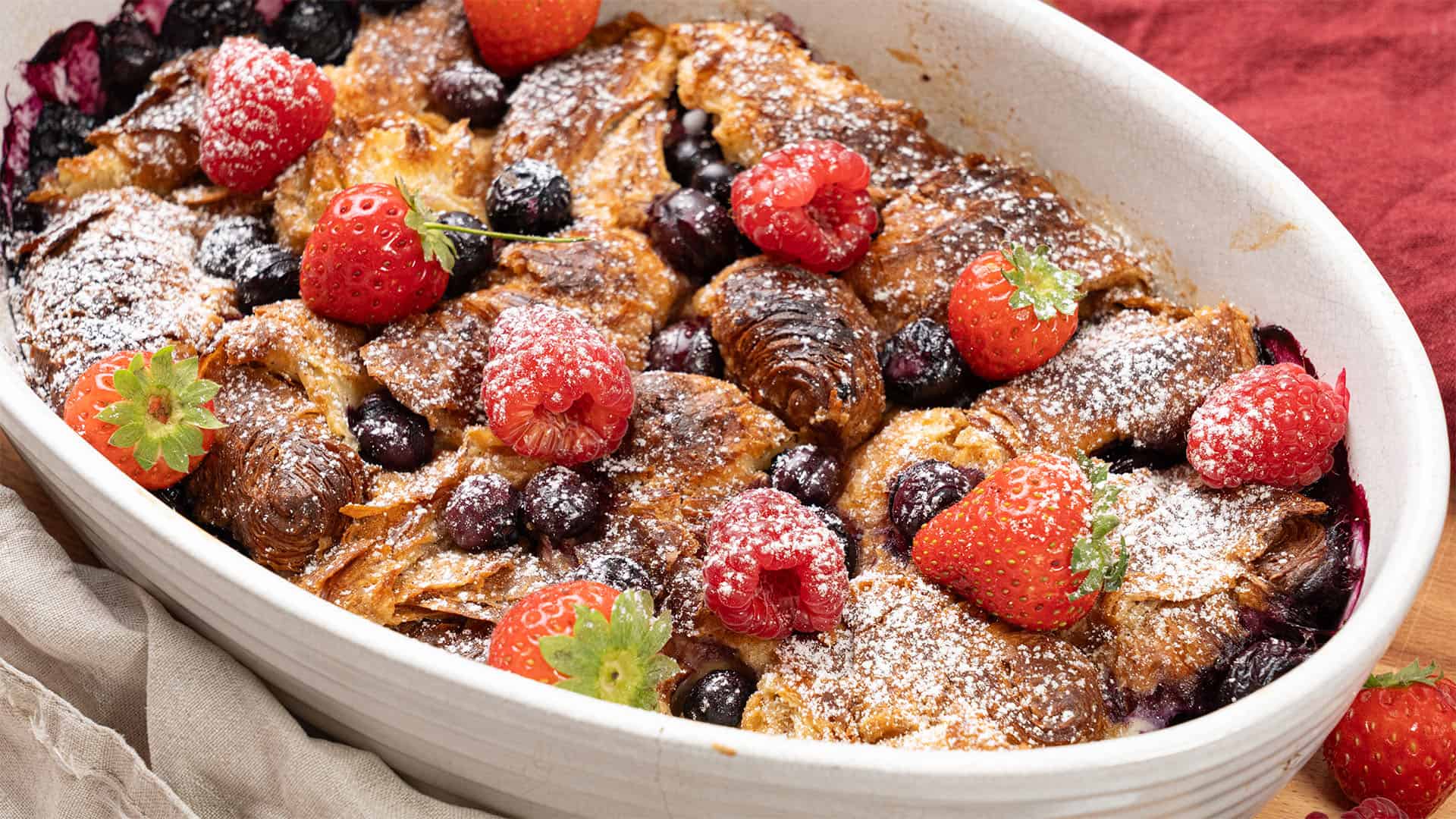
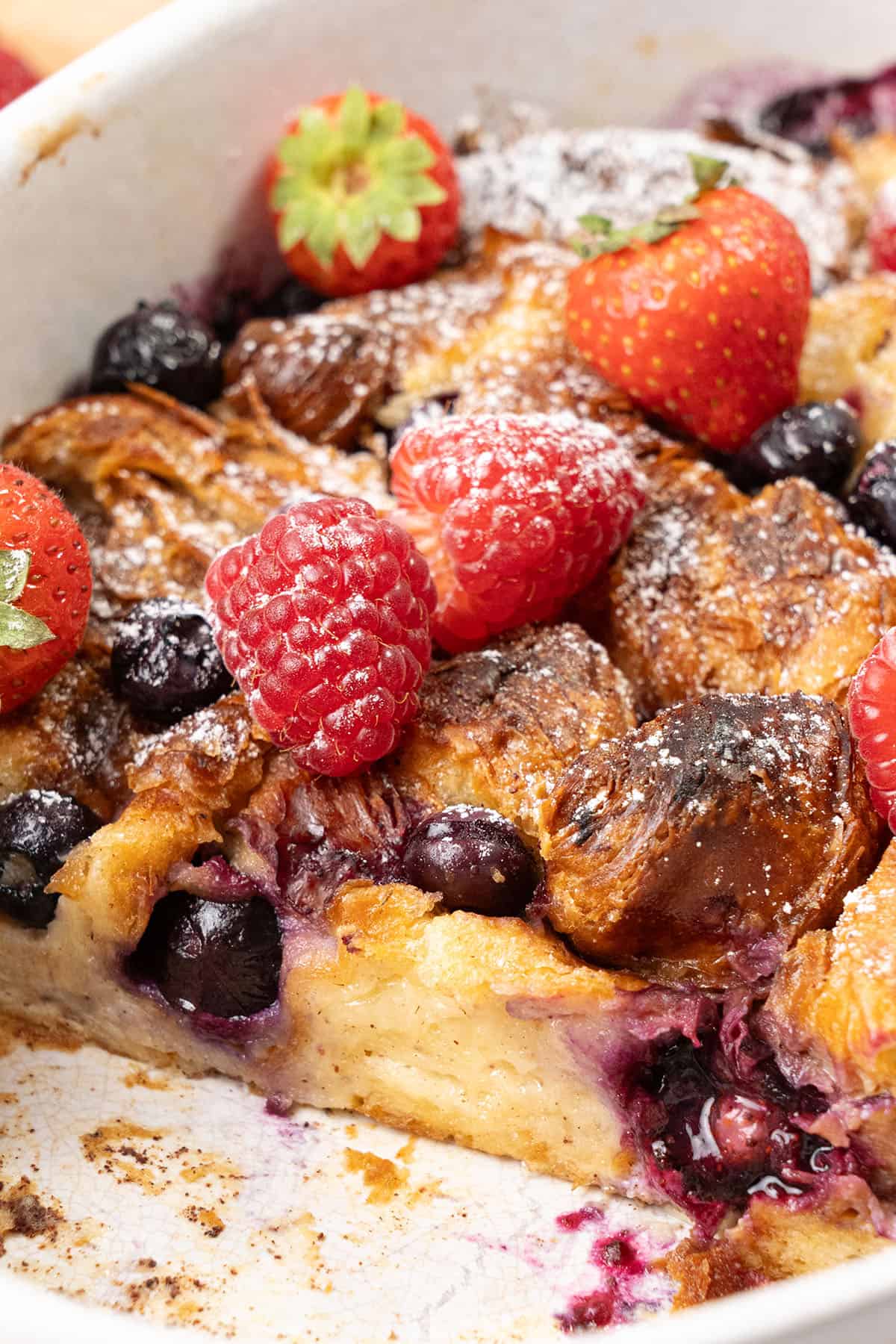
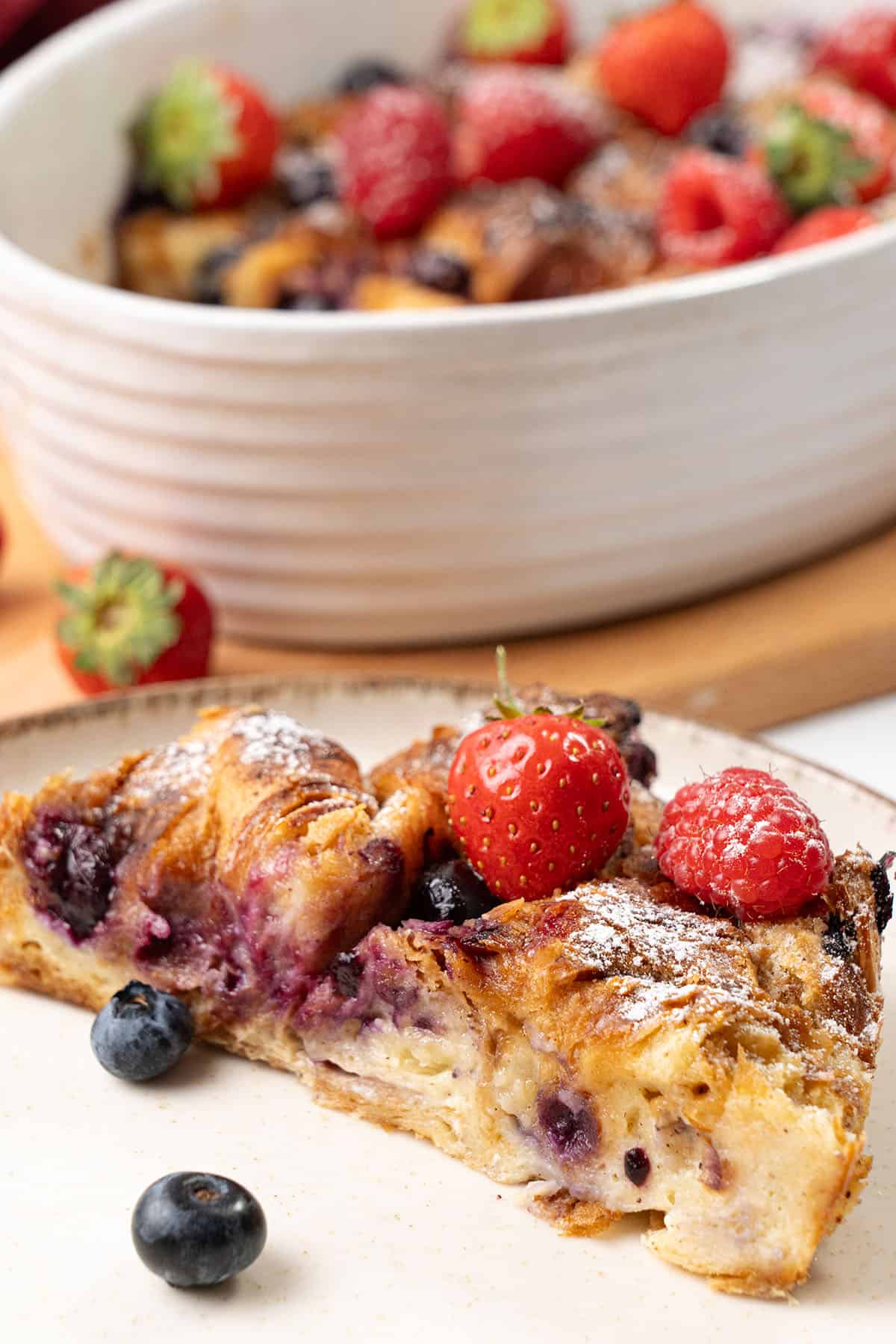
This croissant French toast casserole looks and tastes like something right from a café, yet takes very little effort to make at home. With just 10 minutes of prep time, it transforms store-bought croissants into a custardy baked dessert with a golden top and a soft center, all perfectly balanced in sweetness.
What makes this recipe different from other French toast casseroles is the use of croissants instead of standard bread. Their naturally layered structure creates a more complex texture while still evenly absorbing the custard. You get a balance of lightly crisp edges and a tender interior.
The custard is carefully balanced to complement the croissants rather than overpower them. It is rich enough to bring everything together, but not so heavy as to weigh the dish down or turn it soggy.
Whether you are hosting guests or just want something special at home that doesn’t take too much time, this is a reliable option that never disappoints!
Katalin's key take on what croissant to use to make this recipe
When making this recipe, the type of croissant you use for the casserole has a major impact on the final texture. While I typically bake most things from scratch, this is one case where good-quality store-bought croissants work perfectly and deliver the buttery, flaky texture needed.
Day-old or slightly stale croissants work best because they can absorb the custard without collapsing. Fresh, very soft croissants tend to become overly mushy when soaked, resulting in a dense, heavy texture after baking. If your croissants are freshly baked, I recommend cutting them and letting them sit at room temperature for a few hours to dry out slightly.
Classic plain butter croissants are ideal for this recipe, as their buttery flavor and flaky structure provide a solid base for the custard to soak into while still maintaining some definition after baking. You can also experiment with chocolate or almond croissants for a variation, but keep in mind that their fillings will add extra sweetness and may slightly alter the custard's balance. If you use flavored croissants, keep the rest of the ingredients simple to avoid an overall flavor that's overwhelming.
Start with the custard base
Before starting, make sure your eggs and dairy are at room temperature so the ingredients emulsify properly.
In a large mixing bowl, whisk together the milk, heavy cream, sugar, eggs, melted but not hot butter, vanilla extract, ground cinnamon, and nutmeg until smooth. I highly recommend using freshly grated nutmeg, as it has a much better aroma and flavor than pre-ground versions and adds a subtle depth to the custard. Stop when everything is evenly incorporated.
Once ready, set the custard base aside while you prepare the croissants.

Assemble, wait, bake
Start by cutting the croissants into large chunks, about 2 inches each. Avoid cutting them too small, as larger pieces help maintain some structure during baking.
Transfer the croissant pieces to a 9×13-inch (23×33 cm) baking dish generously greased with unsalted butter. Arrange them evenly, but do not pack them too tightly. A slightly irregular arrangement allows the custard to flow into all the gaps.
Pour the prepared egg milk mixture over the croissants, coating each piece. Gently press them down with the back of a spoon afterwards to ensure even absorption and prevent dry spots.
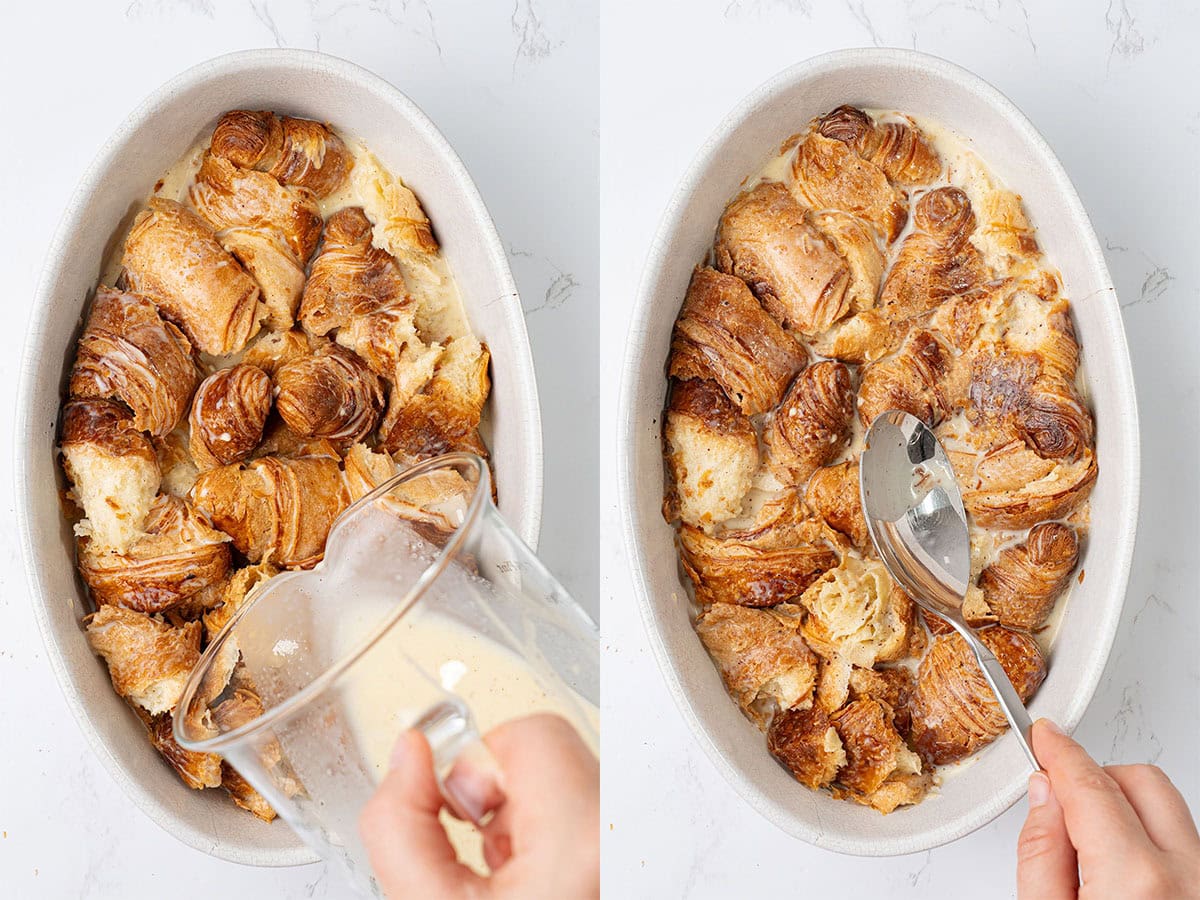
Let it rest at room temperature for at least 1 hour. Do not skip this step, as it allows the custard to fully soak into the croissants, creating a more even texture.
Make-ahead tip: You can also make this croissant French toast casserole ahead of time. Cover and refrigerate it overnight, then bake it fresh the next morning.
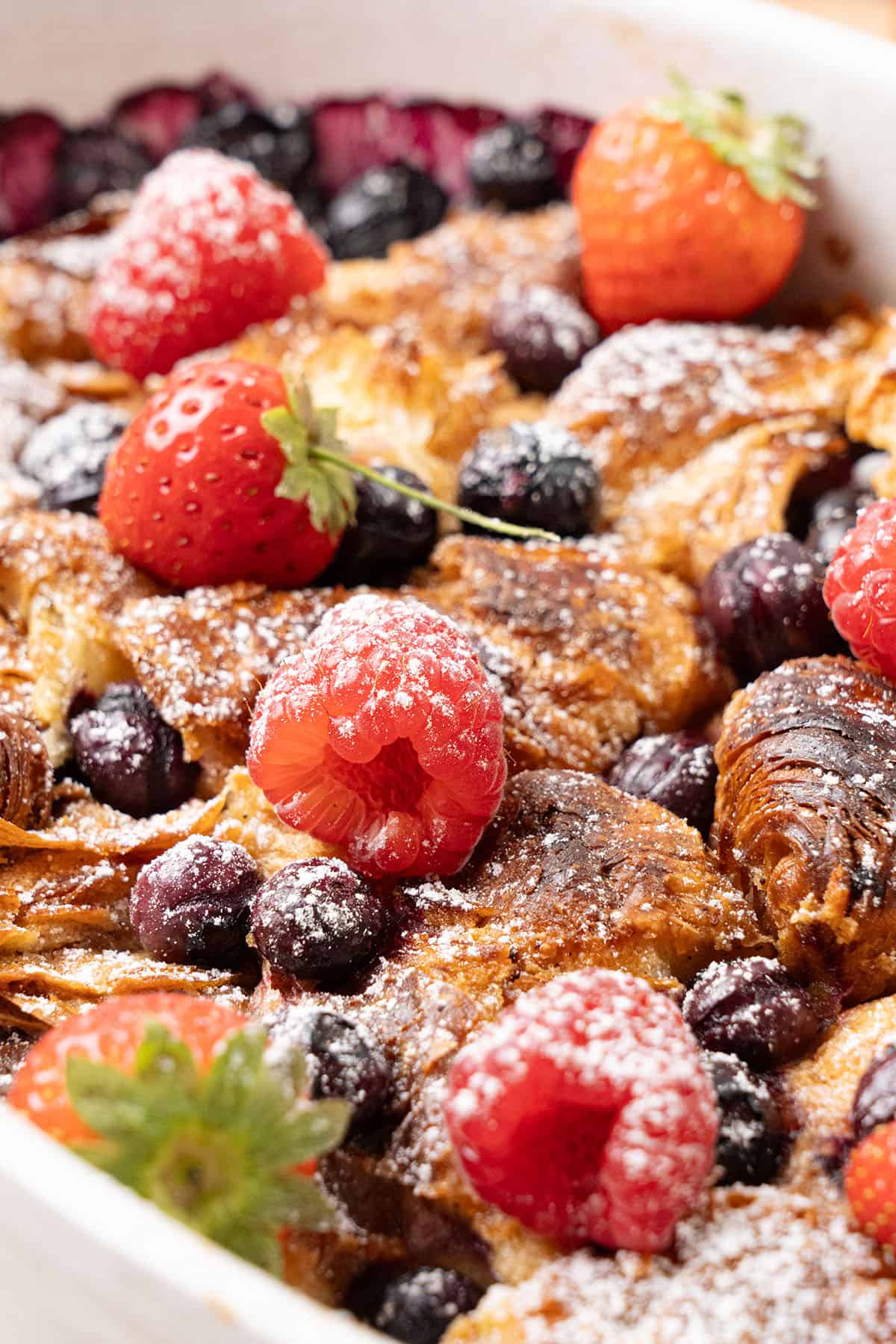
Preheat the oven to 350°F (175°C), no fan. Before baking, arrange the fresh blueberries on top, then bake them for about 30 minutes, or until the top is golden brown and the center is set but still slightly soft.
To check for doneness, insert a knife into the center. It should come out mostly clean with a few moist crumbs, but not liquid custard. If the top browns too quickly before the custard sets, loosely cover the dish with foil.
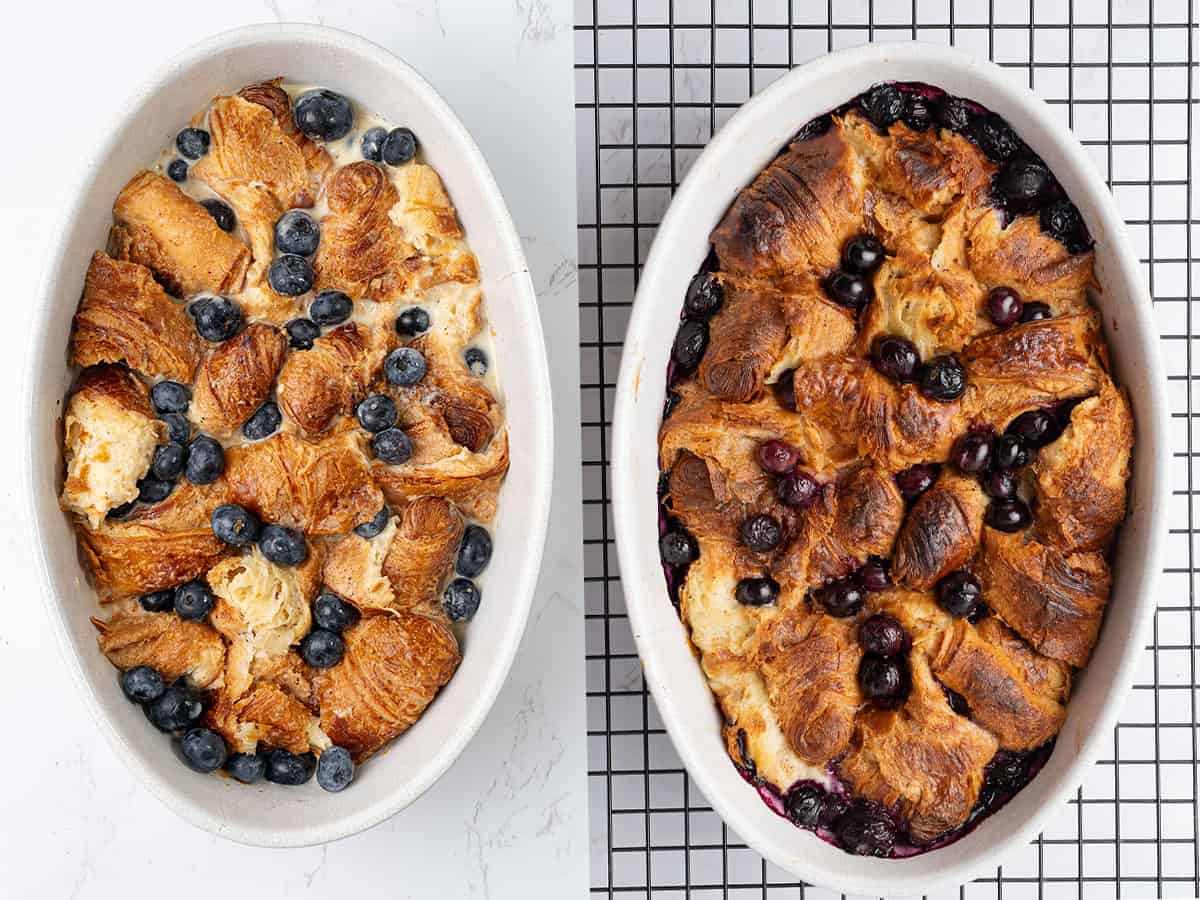
Once baked, let the casserole rest for 5 to 10 minutes to settle before serving. This will make slicing easier.
Serve warm with fresh berries and a dusting of powdered sugar, or add maple syrup, whipped Chantilly cream, or crème anglaise.
Storing & freezing
Allow the casserole to cool completely before storing. Then cover it tightly with plastic wrap, or transfer the casserole to an airtight container, and refrigerate for 2-3 days.
For the best texture, reheat in a preheated oven at 325°F (160°C) until warmed through. You can also reheat individual portions in the microwave, although the texture will be softer.
You can also freeze your casserole by wrapping the cooled dish tightly in plastic wrap, then covering it with a layer of aluminum foil (to prevent freezer burn), or by transferring portions into freezer-safe airtight containers. Freeze for up to 2 months.
To reheat, thaw overnight in the refrigerator, then bake at 325°F (160°C) until thoroughly heated. If reheating from frozen, cover with foil and bake longer, removing the foil toward the end to allow the top to crisp.
Flavor variations
Different base: Replace the croissants with brioche bread or another sweet bread for a result closer to a classic bread pudding.
With fruit: Try adding diced apples or pears before baking, similar to my apple bread pudding. You can also infuse your croissant French toast casserole with blueberries or other fresh berries.
Flavored custard: Add orange or lemon zest for a fresh, citrusy contrast.
With add-ins: Mix in chopped pecans or walnuts for a nutty flavor and crunch, or incorporate chocolate chips or chunks.
Other toppings: Try your casserole with a drizzle of my homemade caramel, white chocolate sauce, or caramelized apple topping!
Ingredient substitutions
For a vegan version, replace the dairy products with vegan-friendly egg, heavy cream, and butter substitutes.
You can replace the granulated sugar with light brown sugar for a subtle molasses flavor.
For the best results, follow the recipe as written. Substitutions may require adjusting the ratios of other ingredients to maintain the same texture.
Expert tips to make Croissant French Toast Casserole
- Use high-fat ingredients such as 3% whole milk and 36% fat heavy cream for the richest flavor and texture.
- Using slightly dry croissants will help the custard absorb more evenly than using fresh ones.
- Arrange the croissants loosely in the pan so the custard can flow between the layers.
- After the custard is added, you can cover and refrigerate it overnight, turning it into easy overnight French toast ready to bake the next morning.
- Bake only until the center is set but still slightly soft. Overbaking will dry out the dish.
What equipment to use
Always use a digital scale for accurate ingredient measurements. Small differences in ratios can affect the texture of the custard.
A digital oven thermometer helps ensure the correct baking temperature, as oven models can vary.
This recipe is written for a 9×13-inch (23×33 cm) baking dish. A smaller pan will result in a thicker casserole and may require additional baking time.
Try some of my other sweet breakfast recipes
If this easy croissant French toast casserole hits the spot, you will also want to try my other sweet breakfast recipes:
- Cinnamon Roll Pancakes
- Apple Tarte Tatin
- Banana Nutella Muffins
- Brioche Cinnamon Rolls
- Dutch Baby Pancake
And for even more recipes to get your day started off on the right foot, check out this roundup of my best sweet breakfast recipes.
Have you tried this recipe?
Please leave a 5-star ⭐️⭐️⭐️⭐️⭐️ rating on the recipe card and consider leaving a comment as well!

Croissant French Toast Casserole
Equipment
- 9x13 inch sheet pan
Ingredients
- 6 Croissant best if 1-2 days old
- 250 g (1 cups) Whole milk 3% fat
- 240 g (1 cups) Heavy cream 36% fat
- 4 Eggs
- 60 g (⅓ cup) Granulated sugar
- 42 g (⅕ cup) Unsalted butter melted but not hot
- ½ teaspoon Cinnamon
- ½ teaspoon Nutmeg best if freshly grated
- 1 teaspoon Vanilla extract
- 150 g (1 cups) Blueberry fresh - to bake
- (1 cup) Mix of berries fresh blueberry, strawberry, raspberry - to serve with
- Powdered sugar to serve with
US customary cup measurement is an indicative figure only. Measure the ingredients with a digital scale by weight (gram). Baking is art but also science which requires precision and accuracy.
Instructions
- Start by cutting the croissants into large, rustic chunks, about 2 inches in size. If the croissants are very fresh, allow them to sit out for a few hours so they dry slightly, which helps them absorb the custard without becoming overly soft.
- Next, generously grease a 9×13-inch (23×33 cm) baking dish with butter to prevent sticking.
- Place the croissant pieces into the prepared baking dish, arranging them evenly while keeping a slightly irregular texture so the custard can settle into all the gaps.
- In a large mixing bowl, whisk together the milk, heavy cream, melted but not hot butter, sugar, eggs, vanilla extract, ground cinnamon, and freshly grated nutmeg until the mixture is smooth and fully combined.
- Pour the custard mixture over the croissants, making sure each piece is evenly coated. Gently press the croissants down with the back of a spoon to help them soak up the liquid.
- Allow the casserole to sit for at least one hour so the croissants can fully absorb the custard. At this point, you can cover and refrigerate it overnight.
- Preheat the oven to 350°F (175°C), no fan.
- Arrange the fresh blueberries on top, and bake the casserole for about 30 minutes, or until the top is golden brown and the center is set while still slightly soft.
- Once baked, let the casserole rest for 5 to 10 minutes before serving so it can firm up slightly.
- Serve warm, topped with fresh berries and a dusting of powdered sugar, and optionally drizzled with maple syrup or topped with a spoonful of whipped chantilly cream or creme anglaise.
Storing
Allow the casserole to cool completely at room temperature.Once cooled, cover the baking dish tightly with plastic wrap or transfer the casserole to an airtight container.Store it in the refrigerator for up to 2-3 days.To reheat, place the casserole in a preheated oven at 325°F (160°C) until warmed through, or reheat individual portions in the microwave.Freezing
If you plan to freeze the casserole, it is best to do so after baking and cooling completely.Wrap the entire dish tightly in plastic wrap, then cover with a layer of aluminum foil, or transfer portions into freezer-safe airtight containers.Freeze for up to 2 months for the best texture and flavor.To reheat from frozen, thaw the casserole overnight in the refrigerator. Then bake it in the oven at 325°F (160°C) until fully heated through.If reheating directly from frozen, cover with foil and bake for a longer time, then remove the foil toward the end to allow the top to crisp up.
Notes
-
- Always cut the croissant into cubes or small pieces before using it. Smaller pieces soak up the custard more quickly and help it bake faster.
- To check for doneness, insert a knife into the center of the casserole. If it comes out clean, it is done (it is OK if there are a few moist crumbs on the knife). It should not feel too wet or runny when you press down on the croissant.
- Avoid overbaking, as it will make the casserole too dry.
Leave a Reply