
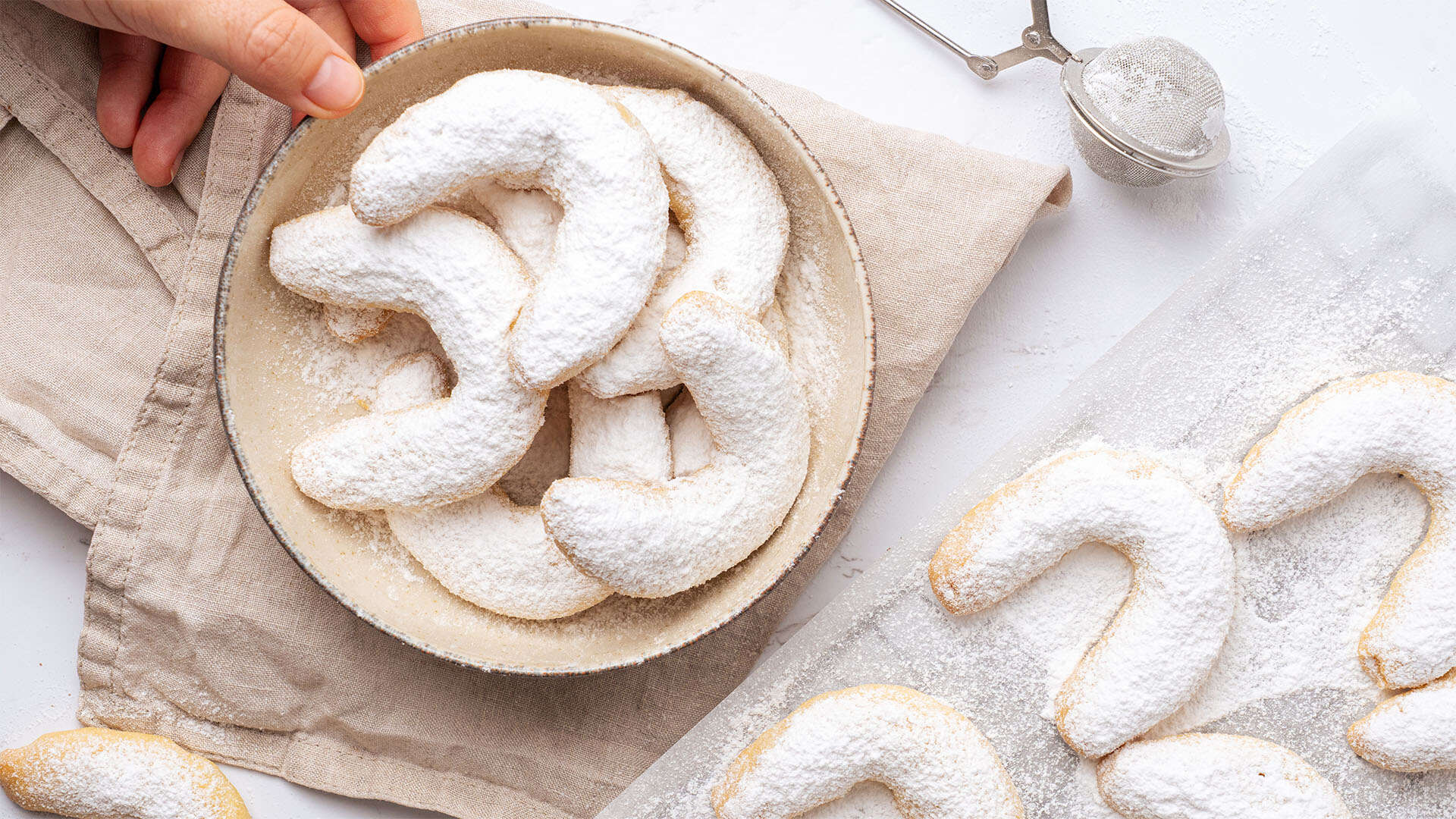
These Almond Crescent Cookies are a delicious treat full of nostalgia and flavor. Their gentle almond aroma and snowy powdered-sugar finish make them a favorite during the holidays, but they’re just as lovely any time you want a simple, elegant cookie.
Perfect with coffee, ideal for gifting, and irresistibly nostalgic, these cookies are a small baking project that always delivers big joy. Enjoy with a cup of hot coffee or tea, or grab one for each hand.

Best Almond Crescent Cookies recipe
These almond-crescent cookies are truly a little bit of magic. Every bite is soft, slightly crisp around the edges, melts in the mouth, and is full of almond flavor.
What makes these cookies stand out is attention to technique and detail. This recipe has been tested with different forms of almonds, and I will share my verdict. Just keep on reading.
I also guide you through each step with plenty of detail, from shaping the dough into even crescents to baking them just long enough to stay tender, and finally rolling them in powdered sugar for that classic snowy finish. These thoughtful techniques ensure consistently beautiful results every single time.
If you're a fan of my pecan snowball cookie recipe, you're in for a treat. This almond crescent cookie recipe is basically the same cookie, except I use almonds in this one and shape the dough differerently.
Katalin's key take on how to keep the crescent cookies from spreading?
To prevent cookies from spreading too much, start with butter that’s just the right temperature. It should be soft enough to cream but not melted. Learn more about what we mean by creaming butter and sugar exactly. It is critical to learn the technique if you enjoy baking cookies.
Make sure you measure ingredients carefully. This is especially important for the flour because too little flour can lead to overly wet dough that spreads really badly. The same happens if you add too much batter or sugar.
Then, chill the dough (usually one hour or more is needed) before baking so the butter solidifies and stays firm long enough for the cookie to set during baking.
Bake on cool, ungreased cookie sheets (use parchment or silicone mats) rather than hot or greased pans, and avoid overcrowding the sheet. Leaving 2–3 inches between each one and baking one tray at a time helps maintain shape.
Stick to these proven steps to stop cookies from going flat. Your cookies will bake up soft, flavorful, and consistently perfect.
Assemble the dough
Cream the room-temperature butter and powdered sugar with an electric mixer for a few minutes until light and fluffy. So, what is creaming butter? Basically, it’s just the process of whipping room-temperature softened butter together with sugar at a moderately high speed until the mixture is fluffy and pale in color.
Then, add the vanilla and almond extract, mixing until thoroughly combined. Make sure to use only high-quality extracts.

Sift the flour and salt together, then gently fold them into the butter mixture with a rubber spatula until combined. Stir in the almond meal, folding carefully until evenly mixed. Do not overmix the cookie batter at this point. Only fold the dry ingredients until combined, leaving no visible dry bits, and make sure not to deflate the air previously incorporated with the creaming.

Add parchment paper to two baking trays.
Scoop the dough into 25–28 portions using a small (1-tablespoon) ice cream scoop. If the dough feels sticky, chill it for a few minutes first. Do not add more flour to the dough.

Shaping is key to achieving uniform crescents. A slightly firmer dough is much easier to handle and holds its shape better. Roll carefully between your palms to form a smooth log about 13 cm / 5 inches long. After that, bend the log into a crescent, pressing lightly to seal any cracks.

Chill & bake
Refrigerate the shaped crescents for at least 1 hour. This firms the dough so it bakes without losing its shape. This final chill is essential; it helps the crescents retain their shape during baking.
Preheat the oven to 350°F (175°C) without the fan. Then, bake the chilled crescents for 15–17 minutes, until the bottoms are golden and the tops remain pale. Baking just until their edges are golden ensures the centers stay soft and delicate. Under-bake by a minute or two if you prefer a more melt-in-the-mouth, buttery “almost-crumbly” crescent.
The cookies are fragile when hot, so handle them lightly. They will set as they cool, so let them cool before coating with the powdered sugar.

Roll in the powdered sugar
When it comes to coating your crescents in powdered sugar, you have two reliable options.
For a classic coating, gently roll each crescent in powdered sugar to cover every curve. Gently tap or dust off any excess powdered sugar.

If you prefer a lighter, softer look, place the cookies on a tray and dust the tops evenly with a fine sieve. You can even dust once more for an extra-snowy finish. Both methods work well.
Storing & freezing

Store leftover almond crescent cookies in an airtight container for up to 1 week, separating layers with parchment to prevent breakage.
These almond crescent cookies hold up well in the freezer. Arrange them in a single layer to freeze, then transfer to a container or freezer-safe bag for up to 2 months. Let them thaw at room temperature and re-dust with powdered sugar if necessary.
Flavor variations
There are plenty of simple ways to change the flavor of almond crescent cookies while keeping their classic texture. One easy option is changing the extracts. Swap in other natural extracts such as hazelnut or coconut.
You can also switch up the nuts to match your preferred flavor. Hazelnuts, pecans, pistachios, or walnuts are all great options.
For a different finish, roll the cookies in cinnamon sugar instead of powdered sugar. The light spice adds depth without overpowering the almond flavor.
Top with or mix in finely shredded toasted coconut for added texture and a unique tropical flavor.
If you want a sweeter variation, dip the cooled crescents halfway into melted chocolate. Dark, milk, or white all work well. Add a sprinkle of chopped nuts or flaky sea salt before the chocolate sets for an extra layer of texture.
If you're a fan of coffee flavors, add ½–1 teaspoon of instant espresso powder to the dry ingredients. Almond + coffee is a delicious pairing, especially for holiday cookie trays.
Add a pop of citrus flavor by incorporating finely grated lemon, orange, and lime zest.
You could also swap regular butter for browned butter. Let it cool before mixing in. This adds a nutty flavor that pairs really well with the almond crescent cookies taste.
Ingredient substitutions

For a gluten-free version, swap all-purpose flour for a gluten-free alternative such as almond flour or a reliable gluten-free baking blend. My flour guide gives tips and options.
This recipe is naturally egg-free, which already makes it accessible for people with egg allergies. Butter can be swapped for a high-quality vegan butter, and margarine can work in a pinch, though the flavor and texture might change slightly. Using the proper substitute ensures the dough stays tender, the crescents hold their shape, and the cookies still deliver that rich, almond-forward taste.
Expert tips to make Almond Crescent Cookies
- After testing this recipe with both store-bought almond flour and homemade ground almonds, the results were nearly identical in texture and flavor. Because of this, making your own ground almonds from whole nuts isn’t worth the extra time or effort, in my view. High-quality almond flour offers consistency, ease, and excellent results every time.
- Almonds have a naturally mild flavor, so even when using fresh nuts or almond flour, you’ll still need a good natural almond extract to bring out that signature almond taste. Choose a pure, high-quality extract for the best flavor.
- Sift the powdered sugar and flour to ensure a lump-free batter.
- Using a larger or smaller scoop will change the cookie size, so your final yield may be higher or lower than the recipe states.
- Keep half the dough in the refrigerator while you shape the first batch. This prevents the dough from warming up and helps with consistent crescent shapes.
- If you have warm hands (or your kitchen runs warm), rinse your hands in cold water and dry them before shaping. Cool hands prevent the butter in the dough from softening too quickly, which helps the crescents hold their shape.
- For a more polished look, taper the ends of each crescent slightly with your fingertips. It gives them a bakery-finished look.
- Salt enhances almond flavor. Without it, the cookies can taste flat or overly sweet, so do not skip it.
- Use an offset spatula to slide under the cookie rather than lifting it. Warm crescents break easily if lifted at an angle.
- Once the leftover cookies are cooled and ready to store, place a slice of fresh bread in the container, along with the cookies. They will stay soft longer while the bread absorbs any moisture, keeping the cookies fresh and delicious.
What equipment to use
I always use a digital scale for accurate ingredient measurements. It's also important in baking to use a digital oven thermometer to make sure your oven is calibrated and shows the correct temperature.
An electric hand mixer makes mixing the cookie dough easy, and a rubber spatula is best for scraping down the sides of the mixing bowl.
Try some of my other cookie recipes
If you're a fan of easy cookie recipes, here are a few more for you to try.
- Brownie Cookies
- S'mores Cookies
- Danish Butter Cookies
- Almond Croissant Cookies
- Christmas Tree Meringue Cookies
And for even more cookie recipes, check out my roundup of the best cookie recipes.
Have You Tried This Recipe?
Please leave a 5-star ⭐️⭐️⭐️⭐️⭐️ rating on the recipe card and consider leaving a comment as well!

Almond Crescent Cookies
Ingredients
- 227 g (1 cups) Unsalted butter room temperature
- 60 g (½ cups) Powdered sugar sifted
- 1 teaspoon Vanilla extract
- 1 teaspoon Almond extract high quality, natural extract
- 250 g (2 cups) Flour sifted
- ¼ teaspoon Salt
- 125 g (1 cups) Almond Almond flour, almond meal, or toasted and finely chopped
- 40 g (⅓ cups) Powdered sugar use it only for coating
US customary cup measurement is an indicative figure only. Measure the ingredients with a digital scale by weight (gram). Baking is art but also science which requires precision and accuracy.
Instructions
- Cream the room-temperature butter and powdered sugar with an electric hand mixer for a few minutes until the mixture becomes light and fluffy. Mix in the vanilla and almond extract until fully incorporated.
- Sift together the flour and salt, then gently fold the mixture into the butter with a rubber spatula just until everything comes together. Avoid overmixing. Add the almonds and fold again carefully until evenly distributed.
- Line two baking trays with parchment paper.
- Using a small ice cream scoop (about 1 tablespoon), portion the dough into 25–28 balls. If the dough feels too soft or sticky to handle, chill it for a few minutes before shaping. Roll each ball into a log about 13 cm / 5 inches long, then curve it into a crescent. If a piece cracks during shaping, simply press it back together.
- Chill the shaped crescents for at least 1 hour. This helps them hold their shape in the oven and prevents spreading.
- Preheat the oven to 350°F (175°C), no fan. Once the dough is well chilled, bake the cookies for 15–17 minutes. Keep a close eye on them; they’re ready when the bottoms are golden, but the tops remain pale.
- Handle the cookies gently when they come out of the oven; they are very delicate while hot and will firm up as they cool. Let them reach room temperature before coating.
- Place the powdered sugar into a bowl, then gently roll dust and/or roll them in the powdered sugar one by one until well coated.
- Storage InstructionsRoom Temperature: Store the cookies in an airtight container for up to 1 week. Place a sheet of parchment paper between layers to prevent breakage.Longer Storage: These cookies freeze very well. Freeze in a single layer, then transfer to a container or freezer bag for up to 2 months. Thaw at room temperature, and dust again with powdered sugar before serving if needed.
Notes
- Measure your ingredients with a digital scale for accuracy.
- Use room temperature ingredients (e.g. butter) and sift the dry ingredients (e.g. powdered sugar and flour).
- Using store-bought almond flour works just as well as grinding your own almonds, and the flavor difference is negligible following my tests. Grinding nuts at home can easily lead to under- or over-processing, so it’s not worth the extra effort in my view. Because almonds have a naturally mild flavor, a high-quality almond extract is still essential. If you switch to stronger nuts like pecans or walnuts, you won’t need any extract at all. And don’t worry, even with almond flour, the cookies stay moist, not dry, because almonds are naturally rich in fat.
- Look for pure or natural almond extract made from real almonds rather than synthetic flavorings. The ingredient list should be short with no artificial additives or colors. High-quality almond extract has a warm, nutty aroma, free of any harsh chemical smell. A small bottle goes a long way, so it’s worth investing in a good one for the best flavor.
- Make sure you read my Expert tips section above to maximize your success. A short recipe alone cannot cover all the necessary details and the science behind baking.
- If the dough feels too moist before scooping/shaping, place it into the fridge for 15 minutes for the butter to solidify
- Do not skip the chilling time, or the cookies might turn out very flat, losing their signature shape.
- Try not to overbake your cookies; they should stay nice and pale. Consider using an oven thermometer.
- The cookies will be very fragile when they are hot, but they will set as they cool.
- Depending on the size of your ice cream scooper, you may get slightly more or fewer cookies than stated.
Mayanka
HI,
If I want to keep it round shape & not cresecent , what do I need to after rolling into small balls.
Please let me know
Thankyou,
Mayanka
Katalin Nagy
Follow the recipe exactly as written, except ship the crescent shape and make them into balls.