
There’s a familiar disappointment that comes with strawberries. You pick up a bright, perfectly shaped container at the store, bring it home, and within what feels like no time at all, they’re already losing firmness, leaking juice, or developing mold at the bottom of the punnet.
Most people assume strawberries are simply “delicate” or that they were already close to spoiling when purchased. But in reality, the speed at which strawberries deteriorate is usually the result of a chain of small decisions, starting in the store and continuing all the way to your fridge.
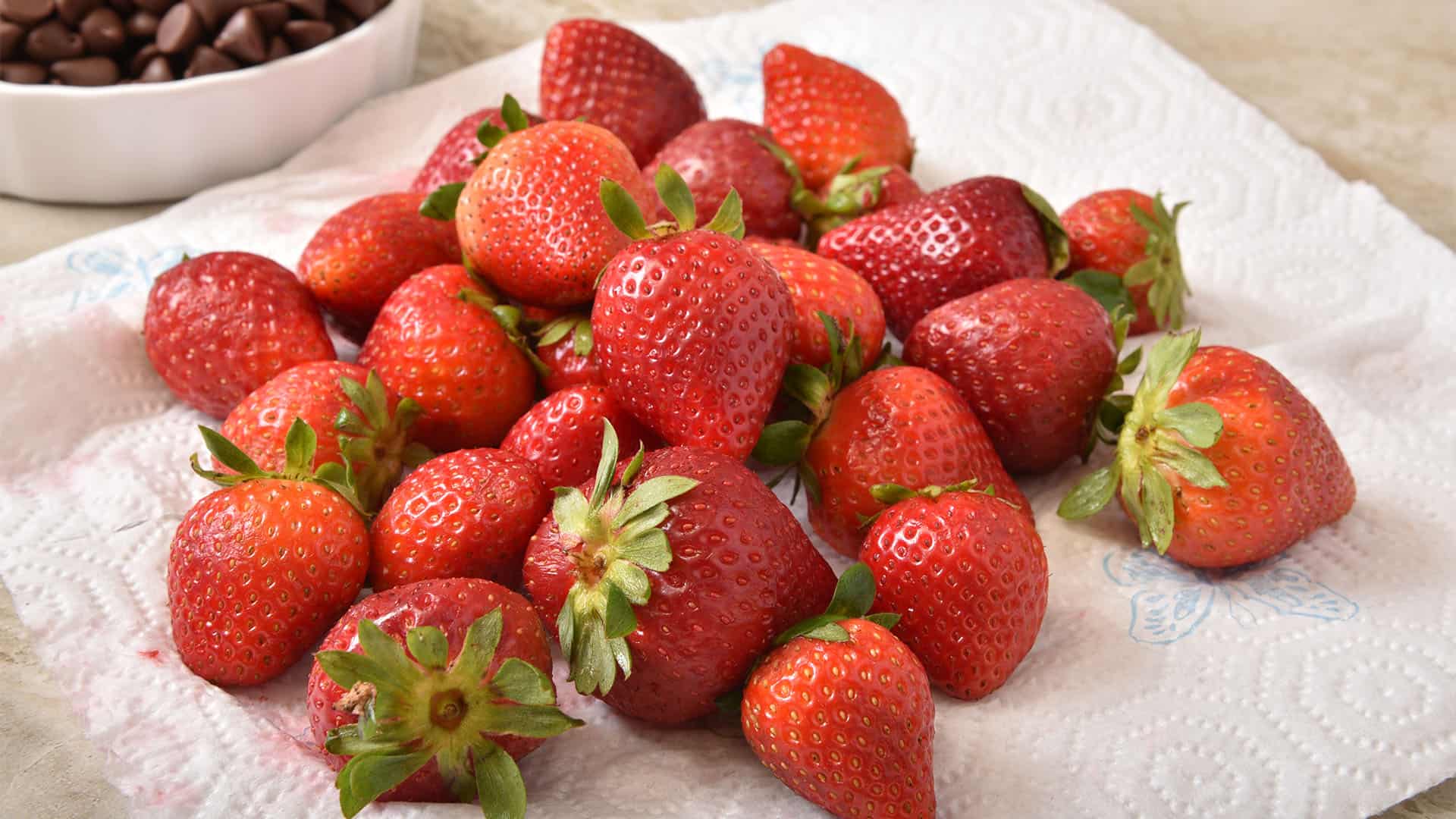
How to actually choose good strawberries at the store
Strawberries begin to degrade the moment they are picked, which means selection matters more than it does with most fruits. The best berries are not necessarily the biggest or brightest red, but the ones that still show structure and firmness.
Look for strawberries that feel dry, not damp or glossy with moisture inside the container. Excess condensation is one of the first signs that spoilage has already started inside the pack. The caps (green tops) should look fresh and upright, not wilted or darkened.
Color is important, but uniformity matters more than intensity. Overly dark red berries can sometimes indicate overripeness, especially if they feel soft when gently pressed. Ideally, strawberries should have a consistent red tone without soft spots or pale underripe patches.
Another detail most people overlook is the bottom layer of the container. Many spoilage issues start there because berries are often packed tightly and can get bruised under their own weight. It is worth briefly checking the underside before buying.
Transportation is where most strawberries quietly get damaged
Even perfect strawberries can degrade quickly if they are handled poorly on the way home. This is the stage most people underestimate.
Strawberries are extremely sensitive to pressure and temperature changes. Leaving them in a warm car, placing heavy grocery items on them, or letting them sit unrefrigerated while finishing other errands can all dramatically shorten their lifespan.
They should ideally be one of the last items you pick up and one of the first things you bring home. Heat accelerates moisture release inside the container, which creates the perfect environment for mold to develop.
Another small but important detail is airflow. If the strawberries are sealed tightly in plastic, any condensation formed during transport stays trapped, effectively “steaming” the fruit in its own moisture. That combination of warmth and humidity is exactly what speeds up spoilage.

The one step most people skip before storing them
This is where most of the real damage happens, and it is surprisingly simple.
Many people place strawberries directly into the fridge in their original packaging without checking or adjusting anything. That single habit is often the reason they spoil faster than expected.
Before refrigeration, strawberries should be inspected and gently sorted. Any damaged, crushed, or slightly moldy berries need to be removed immediately, as a single spoiled berry can quickly affect the entire container.
Moisture control is also essential. Strawberries should be stored in a dry environment. Washing them before storage introduces surface moisture, which can encourage mold growth unless they are dried thoroughly first. In most cases, professionals recommend washing just before eating rather than immediately after purchase.
The container itself also matters. Airflow is more important than sealing. A lightly ventilated container or a loosely covered setup helps reduce trapped humidity, one of the main drivers of rapid spoilage.
How to make strawberries last longer at home
Once properly selected, handled, and stored, strawberries can last significantly longer than most people expect. The key is consistency rather than perfection.
Keeping them dry, loosely stored, and undisturbed in a stable part of the fridge helps maintain structure. Avoid placing them near areas with high moisture or frequent temperature changes, such as the door.
The most important shift, however, is mental rather than technical: strawberries are not a “store and forget” fruit. They are a short-cycle ingredient that rewards attention in the first 24 hours after purchase.
Leave a Reply