
Did you know that across various countries, food laws are stricter about additives and processing methods? Ingredients that are widely used and legally sold in the U.S. have raised enough safety or regulatory concerns elsewhere to be restricted or outright banned.
Here are 10 foods common in the United States but restricted or banned elsewhere, along with the reasons for those restrictions or bans.
Skittles
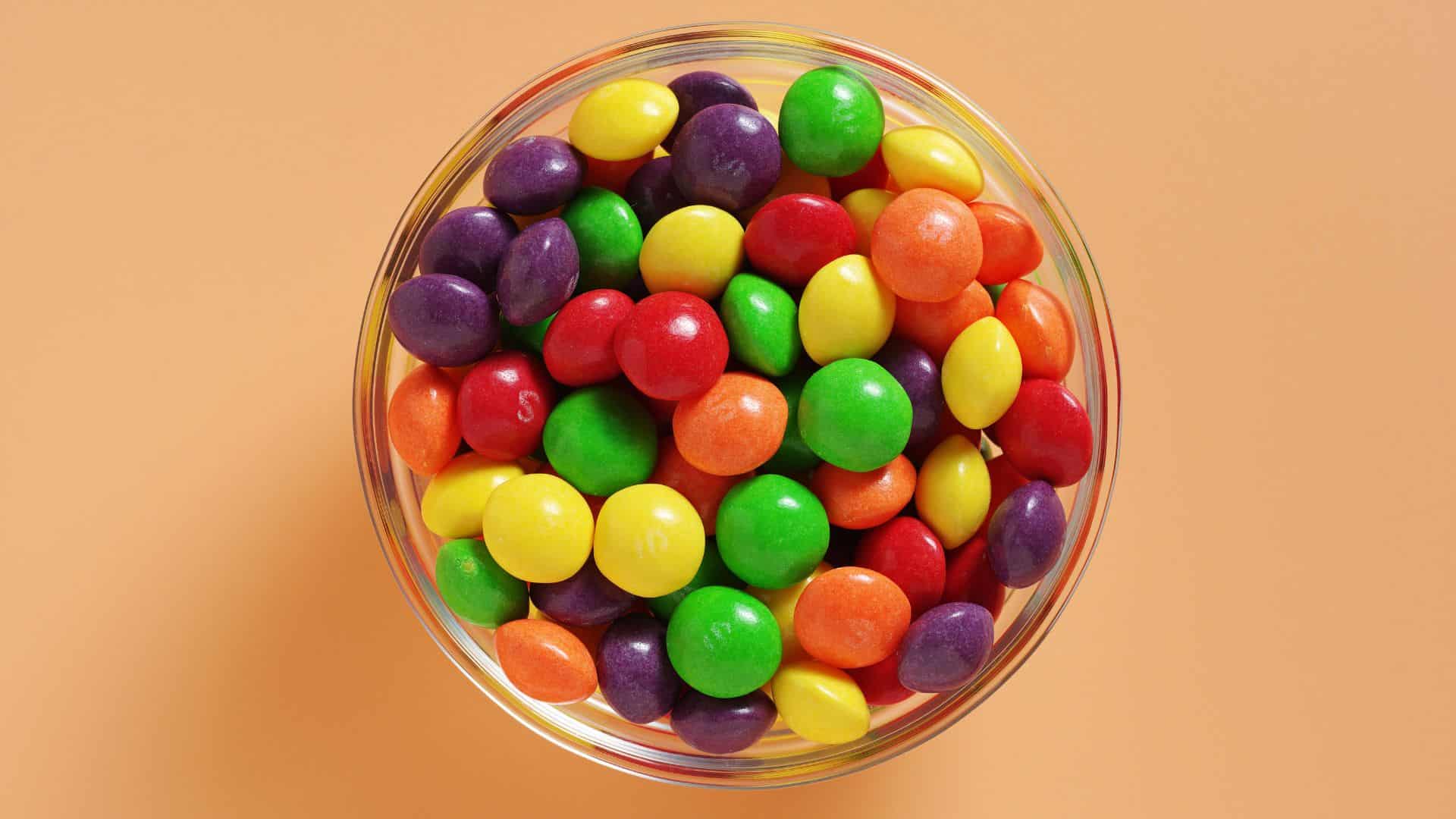
The bright colors that make Skittles instantly recognizable are also what cause problems abroad. Many countries restrict the use of artificial dyes in the American version, including Red 40 and Yellow 5. In parts of Europe, foods containing these dyes must carry warning labels about possible effects on children’s behavior.
Rather than relying on labels, many manufacturers reformulate Skittles overseas to use plant-based colors. The U.S. version, with synthetic dyes, does not meet those standards in some markets and is therefore restricted or just not sold.
Froot Loops
Froot Loops sold in the United States rely heavily on artificial colors to create their rainbow appearance. In countries with stricter food coloring rules, that formulation is not approved.
International versions of Froot Loops exist, but they look noticeably duller and use alternative coloring sources. Many use natural fruit or vegetable dyes instead of processed dyes. This change is due to studies showing that dyes can cause behavioral issues and hyperactivity.

Pop-Tarts
Pop-Tarts are a breakfast staple in the U.S., but certain flavors contain preservatives and dyes that are restricted in European countries. Some additives used in American baked goods are restricted in other countries due to concerns about long-term exposure.
As a result, overseas versions of Pop-Tarts are often reformulated, and some varieties are not sold at all. The issue is less about the pastry and more about pecific food dyes, or the use of high fructose corn syrup.

Ritz Crackers
Some varieties of Ritz Crackers sold in the U.S. do not meet European food standards.
Many countries have strict limits or bans on industrial trans fats, fats linked to increased heart-disease risk. Older formulations of Ritz crackers contained partially hydrogenated oils (a source of trans fats) that violate these standards.

Little Debbie snack cakes
Little Debbie snack cakes combine preservatives, artificial flavors, and food dyes that are tightly regulated in other countries. Norway and Australia are two countries that restrict the sale of snack cakes containing color additives.
Rather than adjust the recipe, these products are often not sold at all in stricter markets. The concern centers on frequent consumption of highly processed snacks with long ingredient lists.
Mountain Dew
Mountain Dew has drawn attention for its past use of brominated vegetable oil, or BVO, an additive used to keep citrus flavoring evenly mixed. BVO has been banned in the European Union and Japan for decades due to concerns about bromine buildup in the body.
While many U.S. soda brands have removed BVO, older formulations are not allowed abroad.
Cheez Whiz
Cheez Whiz is not legally considered cheese in many countries because it contains emulsifiers and stabilizers. In some European countries, products must meet stricter definitions of food categories to be sold as cheese or cheese spread. It's also highly processed with minimal actual dairy added.
There is also an issue with how far removed the product is from traditional dairy processing. That combination has kept American-style cheese spreads off shelves in certain regions.
American non-dairy coffee creamers
Many popular U.S. coffee creamers rely on vegetable oils and artificial flavors rather than dairy. In several European countries, these ingredients are subject to tighter controls, especially when marketed as cream alternatives.
As a result, similar products overseas often use real milk or cream, and some American-style creamers are not approved for sale without reformulation. If you've traveled to a different country and seen any of these products on the shelves, you'll likely see that they are made with real dairy instead of oils and additives.
Chicken washed with chlorine
Chicken processed in the United States is often rinsed with chlorine solutions to reduce bacteria. This practice is banned in the European Union, where regulators prefer strict hygiene controls throughout farming and processing instead of chemical washes at the end.
European officials argue that allowing chlorine-washed chicken could mask poor conditions earlier in the production process. Because of this difference in approach, U.S. poultry is restricted in many countries.

Pork with ractopamine
Ractopamine is a feed additive used in the U.S. to promote lean meat growth in pigs. It is banned in the European Union, China, and about 160 other countries due to concerns about animal welfare and potential health effects.
Even trace amounts can block imports, which is why American pork must often be specially certified to be accepted abroad. Some countries chose a full ban rather than manage enforcement through limits.

Why these bans exist
These foods are not banned because people elsewhere dislike American tastes. Many countries use a precautionary model, limiting or banning ingredients unless they are clearly necessary and proven safe in the long term.
For people shopping in the United States, these food products highlight how familiar foods can be shaped as much by policy as by preference. The same brand name does not always mean the same product, and what ends up on the shelf depends heavily on where the rules are drawn.
Leave a Reply