
Walk through any supermarket in America, and the word is everywhere. "All natural." "100% natural." "Made with natural ingredients." It appears on chips and cereals, on sodas and salad dressings, on products whose ingredient lists tell a very different story than the front of the package suggests. The word feels meaningful. It is designed to. But from a legal standpoint, it carries almost none of the weight consumers tend to assume it does.
What the FDA actually says
The core issue is simple: the FDA has never formally defined the word for use on food labels.
The FDA has considered the term "natural" to mean that nothing artificial or synthetic (including all color additives regardless of source) has been included in, or has been added to, a food that would not normally be expected to be in that food. However, this policy was not intended to address food production methods, such as the use of pesticides, nor did it explicitly address food processing or manufacturing methods, such as thermal technologies, pasteurization, or irradiation. The FDA also did not consider whether the term "natural" should describe any nutritional or other health benefit.
So, with other words, a heavily processed product that happens to contain no added synthetic ingredients can sit comfortably under a natural label.
How about organic
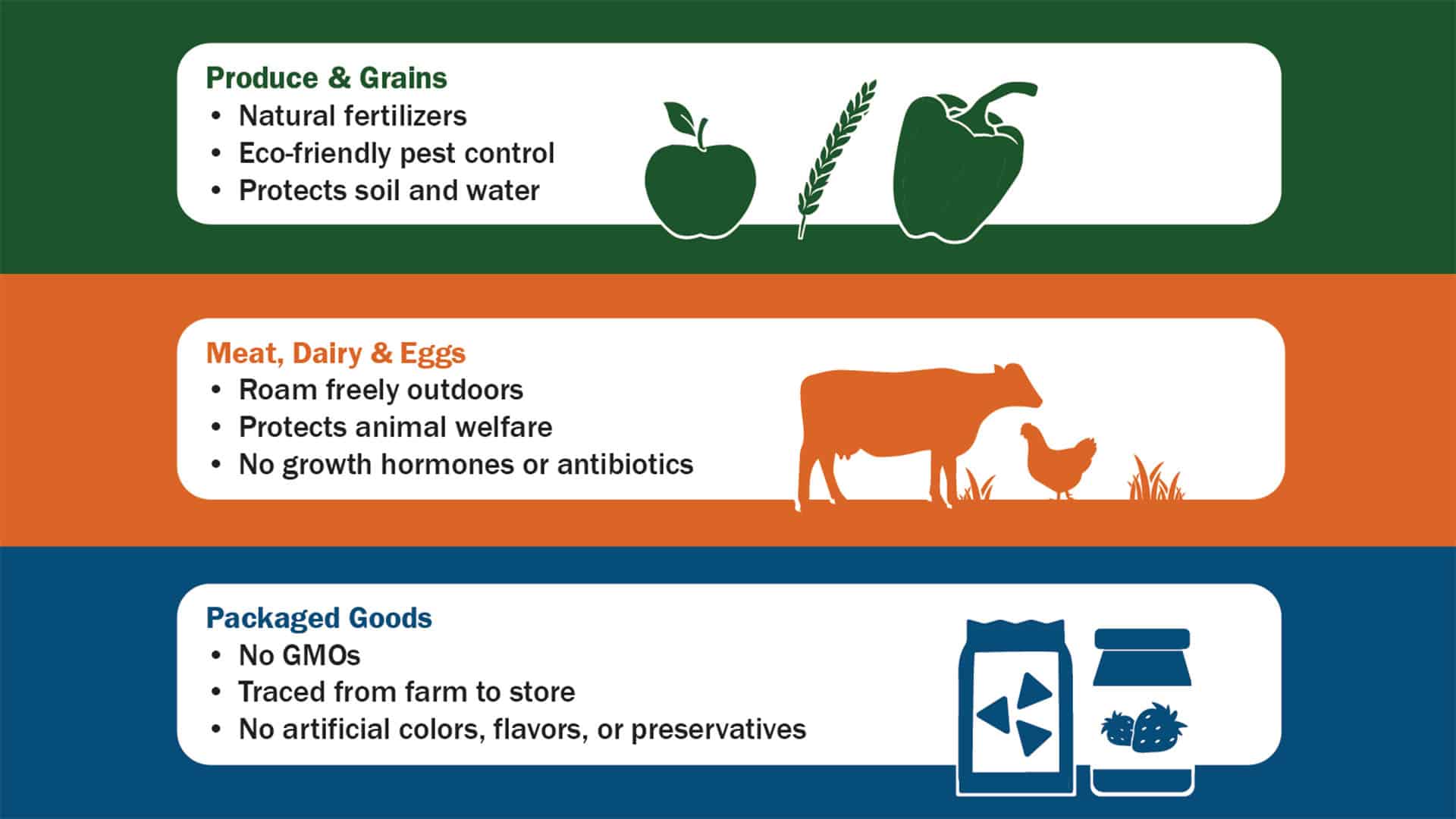
Organic is a label that indicates that a food or agricultural product has been produced according to the USDA organic standards, which require operations to use practices that cycle resources, conserve biodiversity, and preserve ecological balance. The USDA’s National Organic Program develops and enforces the standards for organic crops, livestock, and agricultural products so consumers can feel confident purchasing organic goods.
How to actually use this at the grocery store
Once you understand that natural has no binding legal definition, it becomes easier to stop letting it do any work in your purchasing decisions. The front of a package is marketing. The back is information.
There is a practical way to reframe how you shop. Treat the front of any package as a headline and nothing more, the kind of thing designed to catch your eye rather than inform your decision. The ingredient list, the nutrition panel, and any third-party certifications are where the substance lives.
None of this means that every product carrying the word natural is misleading or low quality. Many are perfectly fine. But the label itself is not your evidence of that, and knowing the difference between a word that sounds regulated and one that actually is makes you a sharper reader of everything on the shelf.
Leave a Reply