
According to YouGov’s US Dining Out Report, in 2025, most people still dine out regularly, but many are becoming more selective about how often they go and how much they spend.
Nora Hao, Sr. Sales Director, YouGov America, states, "Although dining out remains a staple for Americans, economic pressures have made consumers more cost-conscious".
Seven in ten Americans say they eat out at least once a month, yet more than a third say they’re doing it less often than last year. The declining number of people dining out is mainly due to higher menu prices and, overall, a need to cut expenses and save money.

Fewer Americans are eating out as restaurant prices climb
Many Americans are not eating out due to the higher prices. 82% of diners say restaurant prices have increased over the past year. While 28% diners believe prices are fair for their quality.
37% of Americans say they dine out less frequently than they did last year. Among lower-income households, that number rises to 44%. The share is 33% among middle-income diners, and among higher-income groups, 27% state they dine out less.
58% of Americans say they are trying to save money in this challenging economy, and 57% dining out less now than 12 months ago due to higher living costs. Only a smaller portion reports changing lifestyle as the reason for dining out less than before.
How Americans are cutting costs when they eat out
54% percent of US diners say they have changed their dining preferences to reduce expenses. Women are slightly more likely than men to report adjusting their habits to save money.
Among those who have made changes, 60% say they now choose cheaper restaurants. On the other hand, 53% of US diners use discounts or coupons to avail of more affordable deals, and 51% order fewer items. 42% of diners don’t order soft drinks, and about 38% skip desserts to cut expenses while still enjoying eating out.
The trend is consistent across age and income groups. Younger adults are somewhat more likely to seek digital coupons or promotions, while older adults are more likely to avoid higher-cost menu items.
Fine dining sees the steepest decline in visits
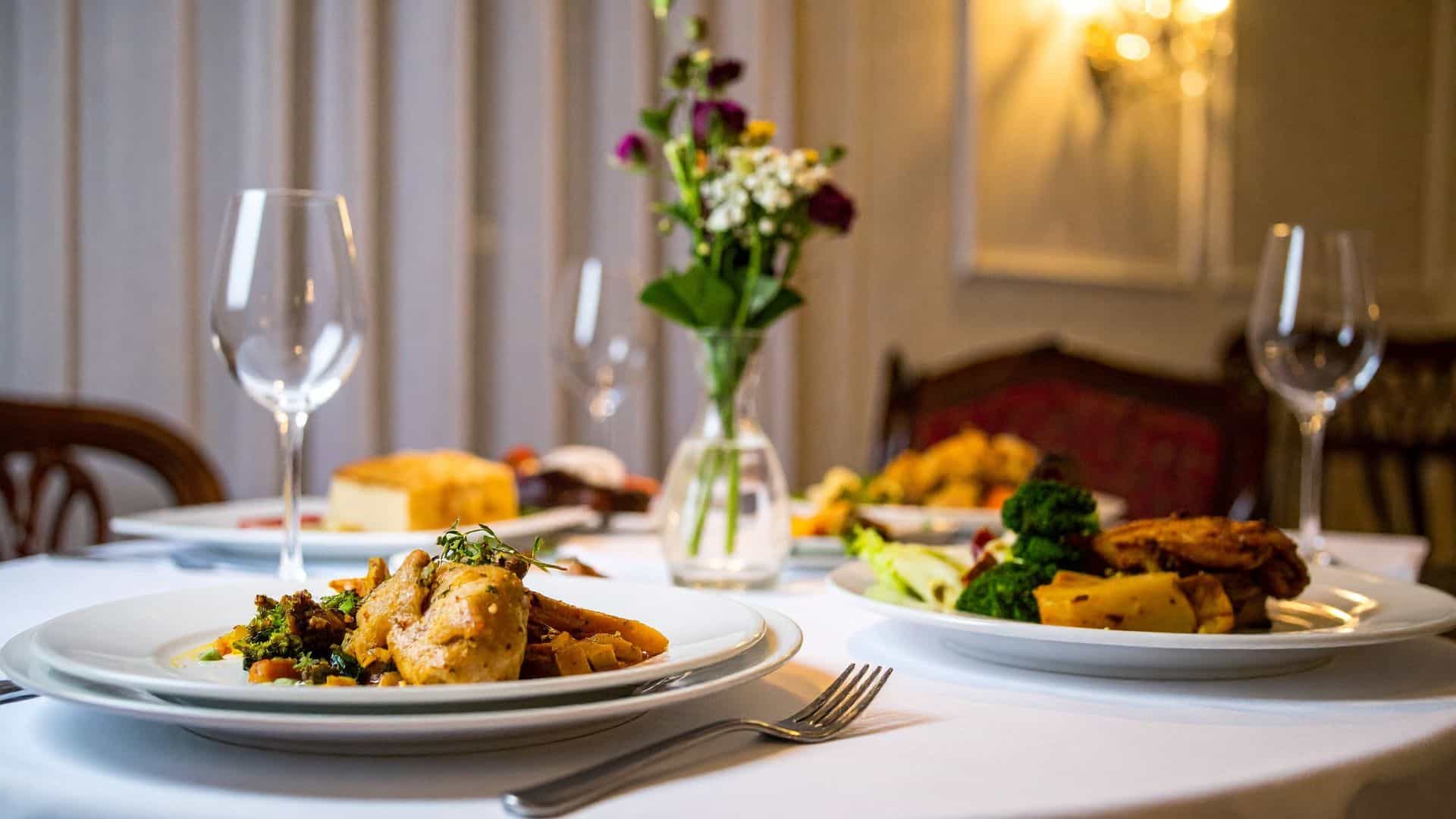
Fine-dining restaurants have recorded the sharpest decline in visits. 46% of Americans say they visit fine-dining restaurants less often than they did a year ago.
Other categories have seen smaller decreases. Diners visit fast-casual, casual-dining, or café-style restaurants less than before.
Lower-income diners report the largest cutbacks in fine dining, with nearly 36% saying they go less often. However, 50% of lower-income diners are reported to visit fast-food restaurants more often than other types of restaurants.
The findings indicate that high-end restaurants are being affected more than other segments as consumers adjust to tighter budgets.
Deals and discounts are what bring diners back

Promotions remain the strongest incentive for restaurant visits. 58% percent of Americans say “buy one, get one free” offers would encourage them to eat out more often. However, 56% of respondents would prefer standard discount offers when they dine out.
Loyalty points and free appetizers or desserts also appeal to about 33% of diners. Birthday rewards and happy-hour deals attract smaller shares.
Lower-income diners are more likely to respond to “buy one, get one free” deals. Middle-income diners favor standard discount deals, while a small percentage of higher-income respondents cite that happy hour would encourage them to eat out more often.
Across all groups, cost incentives remain a primary factor influencing dining decisions.
How people find restaurant discounts and promotions
Diners now rely mainly on email and social media to find restaurant deals. 33% of Americans say they find promotions through email or newsletters. Whereas 32% cite social media, and other respondents hear about offers through word of mouth. A small number of respondents also follow restaurant apps or in-store signage to learn about restaurants’ deals and promotions.
Younger adults are more likely to find deals through digital platforms. 37% of Gen Z and millennial diners cite social media, compared with 28% of Gen X and baby boomer diners. Older adults are more responsive to email communications. The findings highlight the growing importance of digital communication for restaurants seeking to attract more diners.
Loyalty programs are increasingly shaping where people choose to dine. 37% of Americans say they have used a restaurant loyalty program in the past 12 months. About 44 percent of Gen Z and millennial customers say they’ve used at least one loyalty program, compared with roughly 32% of older adults.
A small but growing number say they’d even pay a monthly fee for perks or discounts. The data shows that customers would even prefer signing up for a loyalty program depending on the offer. It gives restaurants a chance to offer such deals to attract more diners.
America’s most-considered restaurants in 2025
YouGov’s brand rankings show restaurant chains Americans are most likely to consider when deciding where to eat.

Quick-service restaurants: McDonald’s ranks first, with about half of Americans saying they would consider purchasing from it. Chick-fil-A, Burger King, Wendy’s, and Taco Bell follow. KFC shows a year-over-year increase in consumer consideration.
Casual dining: Olive Garden remains the top casual-dining chain, followed by Texas Roadhouse and Applebee’s. Texas Roadhouse records the strongest growth in its category, while Olive Garden sees a slight decline from 2024.
Fast-casual dining: Panera Bread is loved by most diners, followed by Chipotle and Five Guys. Waffle House posts the most significant increase among the top 10 brands.
Specialty and coffee chains: Starbucks and Dunkin’ remain the most-considered brands, both posting modest increases over the previous year. Cold Stone Creamery also reports a slight increase compared to 2024.
The rankings show that leading restaurant brands continue to dominate their categories even as overall dining frequency declines.
Americans still love eating out, just differently
Dining out hasn’t stopped completely, but rising prices are shaping how consumers plan and spend. “Americans still enjoy dining out, but value has become the deciding factor shaping where and how they choose to eat,” said Nora Hao.
As economic pressures continue, Americans are trying to remain selective about dining choices while still finding ways to enjoy meals outside the home.
Methodology
The US Dining Out Report 2025 draws on data from a YouGov survey conducted Aug 11 to Sept 2, 2025, among 1,500 US residents. Respondents were defined as diners who eat out at least once a month at restaurants, cafés, pubs, or fast-food outlets.
Brand rankings come from YouGov’s ongoing BrandIndex tracker, which measured restaurant consideration from Oct 1, 2024, to Sept 30, 2025. Generational groups were classified as Gen Z (born 1997 or later), Millennials (1981–1996), Gen X (1965–1980), and Baby Boomers (pre-1964). Income levels were grouped into lower (below 75% of the median), middle (75–200% of the median), and higher (over 200% of the median).
Leave a Reply