
Matcha has been a staple of Japanese tea ceremonies for centuries, but it has recently gained global popularity. But just because matcha is popular does not mean people are preparing it the way it is meant to be enjoyed.
During my visit to Japan, I had the chance to taste some of the best matcha and explore how it is used in traditional ceremonies and modern desserts alike. Inspired, I created several matcha dessert recipes of my own and want to share what I’ve learned along the way about mistakes people typically make and how to use it best.

What is matcha
Matcha is not just your ordinary green tea. It's a special powdered Japanese tea crafted from the finely ground leaves of the revered camellia sinensis plant, which is the very same plant that gives us various types of traditional green tea. However, unlike regular green tea, the processing of the leaves and the preparation method are different.
Different from any other type of tea, matcha has a distinctive flavor profile that blends earthy, sweet, and umami notes, with a slight hint of grassy vegetal freshness. This unique combination of flavors makes it both invigorating and calming. However, it's essential to note that the grade and quality of the tea can significantly influence the taste (as well as the color), with higher grades offering a more refined and complex flavor compared to lower-grade teas, which can be bitter.
Read our guide on how to bake with matcha. This matcha tiramisu is my favorite recipe, one I created after visiting Japan and tasting it in Kyoto.

Matcha sparked debate online
On Reddit, a post sparked a debate when the poster expressed frustration with how social media constantly tells people to “upgrade their matcha” or avoid cheaper powders. In their view, low-grade matcha is perfectly fine for lattes, and using ceremonial-grade tea for that purpose is a waste.
They pointed out that ceremonial matcha is intended for traditional tea practices only, not flavored drinks, and argued that most people would not even enjoy it if they tried it the proper way.

The reactions
One of the most common complaints was about cafés serving watered-down drinks. As one person put it:
"I have no problem with low-grade matcha as long as the matcha to water/milk ratio is strong. So many places make the WEAKEST matcha lattes. I want it bright green and grassy tasting, not milky, thank you."
Even if you do not buy top-shelf tea, a strong ratio can give you a bold, satisfying cup. But when cafés skimp on the matcha and pour in more milk, the result is bland.
Another comment focused on how the quality of matcha can affect your drink:
"The only thing you will get out of low-quality matcha will be a bad drink unless you add lots of sugar."

Someone added further, "Low-quality matcha tastes absolutely awful. I don’t buy ceremonial matcha because it’s expensive, but I get a good culinary-grade matcha instead. It’s not a crime, and buying tea that doesn’t taste like bad isn’t immoral. I drink my matcha as is, with no milk or sugar. The grade is very noticeably different with no additives."
One user commented about the price point of matcha tea, "A lot of them could use good quality green tea powder for the color and taste too, but hey. It's their money, let them spend it. The only sad part is the significant price surge it caused. And you know, people buying hordes of it that probably is going to go stale because they bought way too much to use in a reasonable time frame."

Other users offered a middle ground. One wrote:
"I love matcha, and I agree with this. No-name matcha is perfectly good for baking and lattes. Save the Marukyuu Koyamaen for drinking pure with water. You can't taste the difference after adding milk and sweetener."
The discussion showed that people have different expectations. Some want perfectly flavored matcha, some need that traditional taste, and others just want a latte that tastes good without costing a fortune. In the end, it all comes down to preference, how much you’re willing to spend, and what kind of matcha experience you’re after.
What are the official grades of matcha
Each grade serves a different purpose, and experts judge it based on the matcha leaves, processing method, and final texture.
Ceremonial Grade Matcha: This is the highest quality matcha and is made with the most vibrant green leaves. It's smooth and creamy with mild notes of umami and a slightly sweet taste. Ceremonial grade is most often whisked together with hot water and sipped.
Premium Grade Matcha: Slightly lower in quality compared to ceremonial grade, it is still perfect for drinking as a tea and is also a great choice for making lattes, smoothies, and baking. With a vibrant green color and a mellow flavor profile, this grade is ideal for those who want high quality at a lower cost.
Culinary Grade Matcha: This type is specifically intended for incorporating into recipes. It has a slightly stronger flavor that makes it perfect for baking, cooking, and blending into smoothies. Culinary grade is a great cost-effective option that strikes a good balance between quality and affordability. However, you have to be careful using one that has a vibrant green color, or your dessert might not turn out green enough.
This is how you can make a delicious matcha latte at home
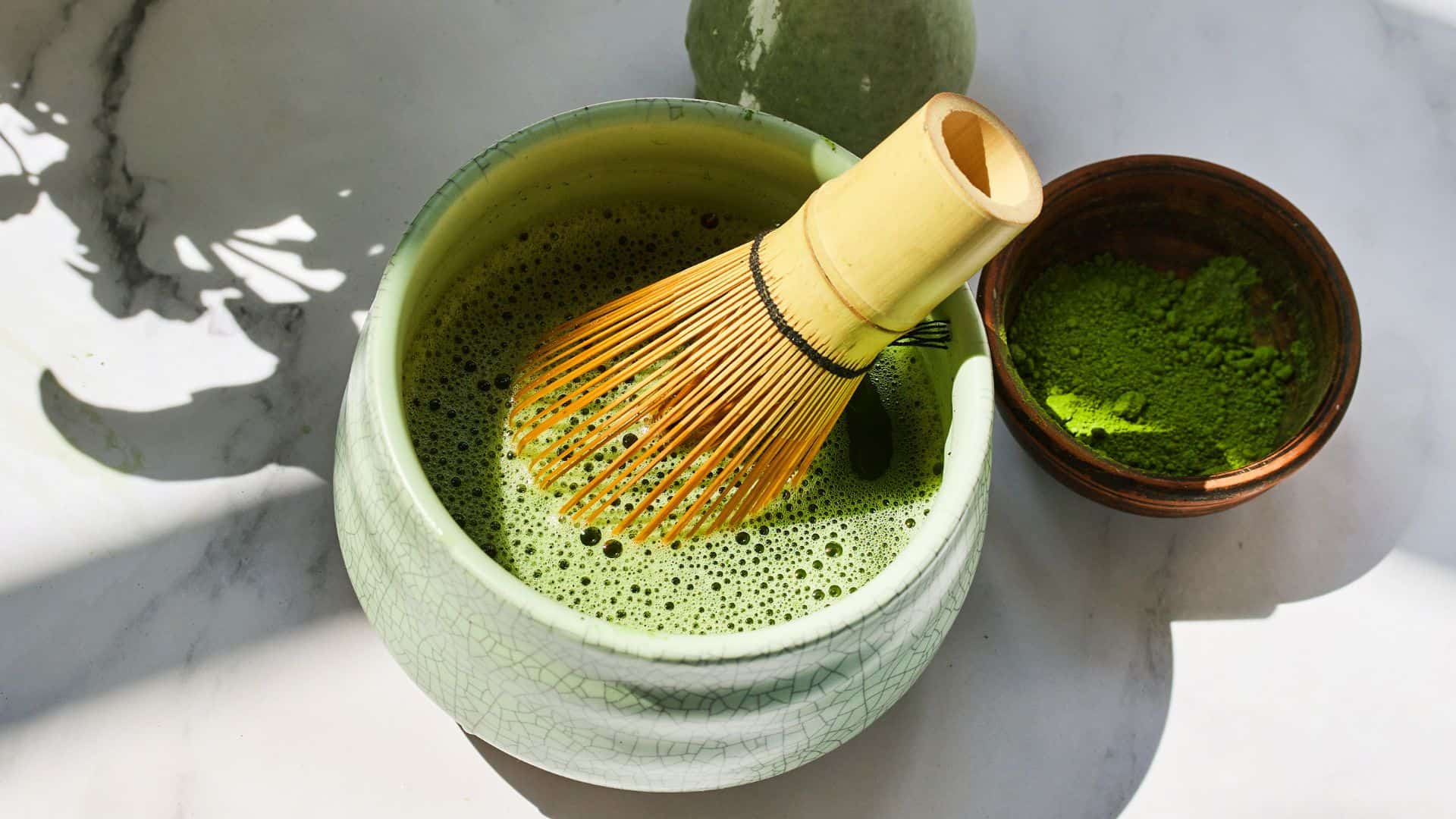
If you are tired of weak drinks at cafés, making one yourself at home is easier and less costly. There are three key rules you should remember: use high-quality powder, heat water to the right temperature (hot, but not boiling), and use enough matcha so that the flavor stands out.
Homemade lattes often surprise people because the taste is stronger and more satisfying. The bright green color and earthy flavor really come through when the drink is prepared with proper instructions.
Here is how you can make a matcha latte at home the right way:
To make a good matcha, try purchasing ceremonial-grade tea as well as the right tools: a chasen (bamboo whisk), a strainer, a small scooper, and a chawan (bowl) in which to whisk.
Before whisking, soak your chasen in hot water for a couple of minutes; it will soften the bristles.
Next, take about 1 or 2 teaspoons of ceremonial-grade matcha (you can adjust the quantity according to your taste), and sift it into the bowl.
Add hot water, enough to make a watery paste; remember not to add boiling water as it will burn the matcha powder.
Whisk it gently until you get the frothy top.
Add ice cubes into the glass, fill ¾th of it with milk, and then add your matcha. You can also add a syrup or honey to sweeten the matcha latte. And your delicious drink is ready!
The takeaway
Matcha has become one of the most popular drinks of the moment. However, as this Reddit discussion revealed, not everyone is enjoying it as intended.
There is no single right way to drink it. Some prefer it plain, others love it in lattes, and plenty of people like it baked into cookies or cakes. But if you want an original matcha taste, it’s best to understand the grades and how each one tastes. A latte made with a high-quality powder can be completely different from the overly sweet versions found in many shops.
Leave a Reply