
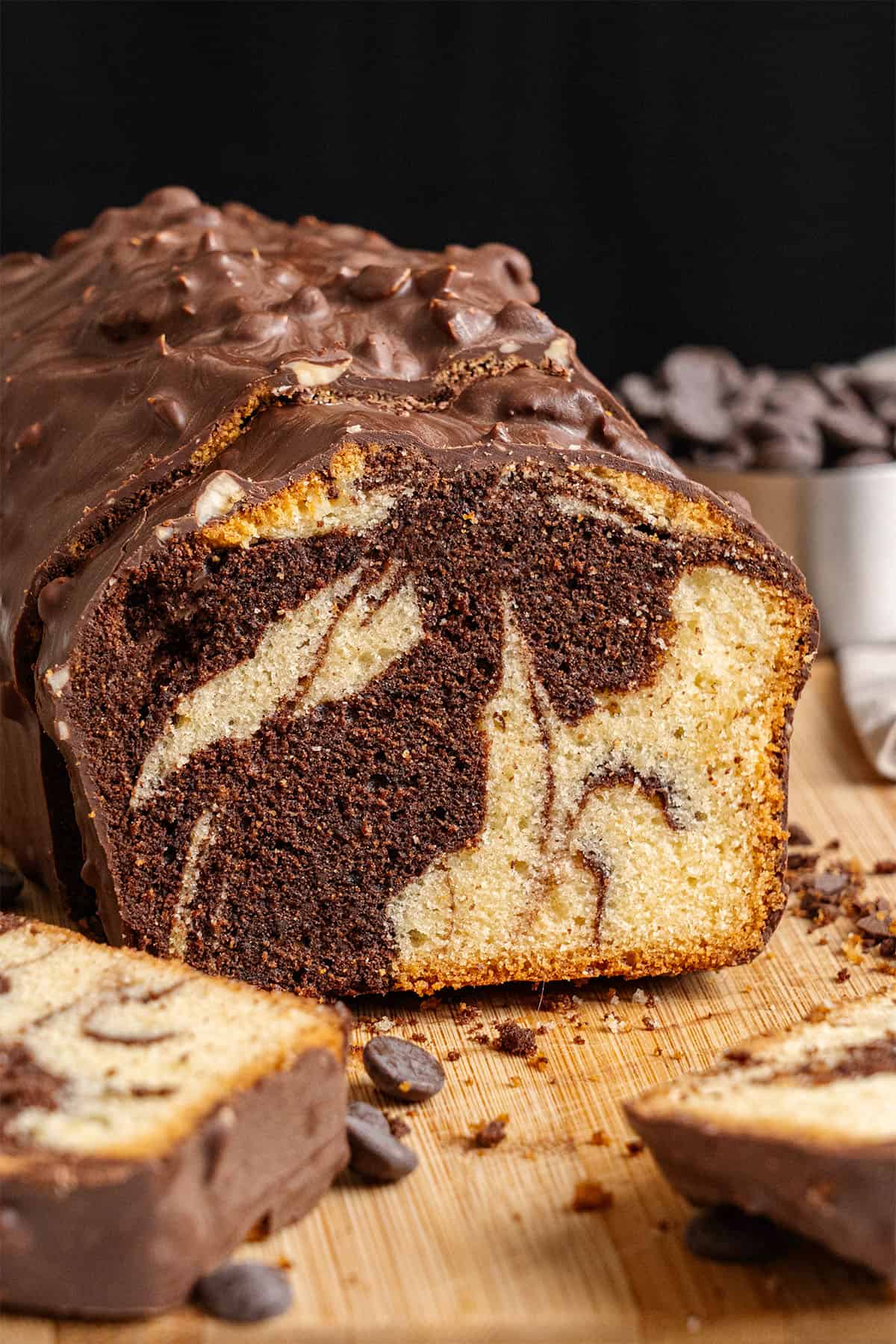
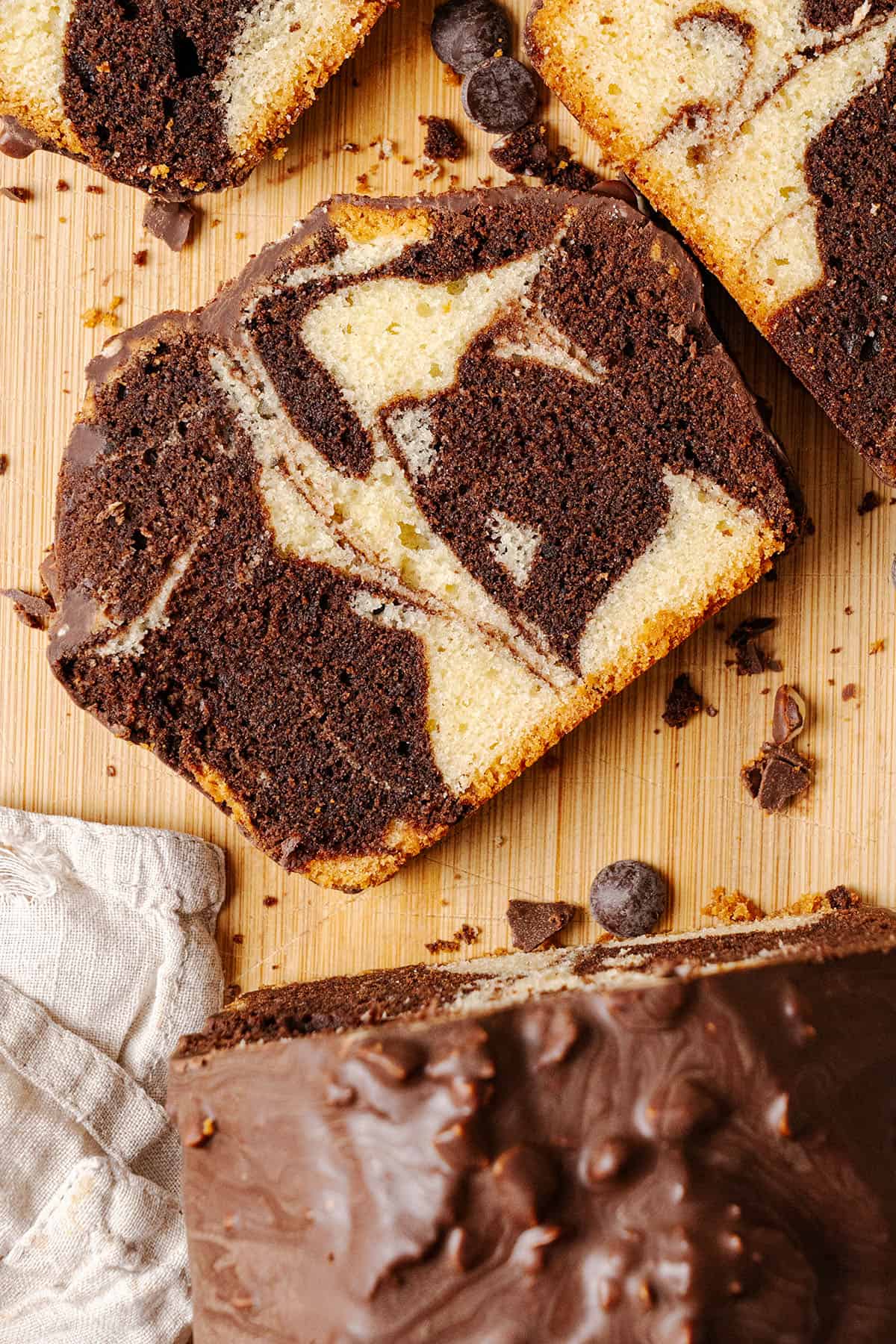
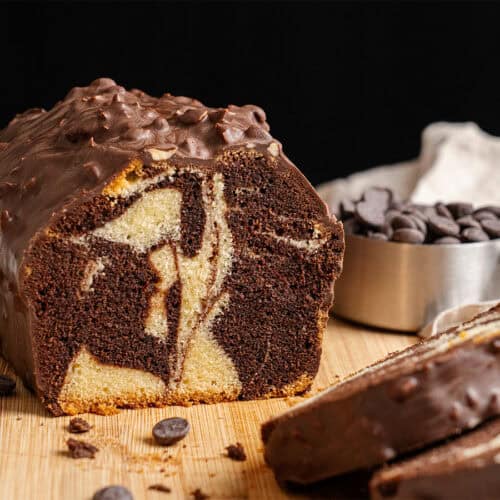
This chocolate marble loaf cake is everything a great tea cake should be: a swirl of tender vanilla and chocolate sponge, impossibly moist thanks to Greek yogurt and a soaking syrup, finished with a crunchy chocolate hazelnut glaze. This marble pound cake comes together easily with no fancy technique, and it looks stunning every time.
This marble loaf cake slices cleanly and holds its shape beautifully, making it just as impressive on a plate as it is straight from the pan. Bake it for tea, breakfast, picnic, or dessert.
I first shared this recipe on the blog in 2021. Since then, I've updated it with new photos, added helpful tips, and included several flavor and ingredient substitution options.
Read what others said about this recipe

"This is the only recipe you will need for marble loaf cake, the taste is amazing, the layers are perfectly marbled together and the glaze is really a nice addition too!! Definitely making it again." Noemi
"THE BEST recipe for a beautiful marble cake! Loved everything about it. Katalin’s measurements and tips are just so to the point. Would absolutely recommend this to anyone who wants to make a quick, yet impressive cake." Ghazal
What is Marble cake
A marble cake is a cake with a streaked or mottled appearance (like a marble), achieved by gently mixing light and dark cake batter before baking it. You can make it with vanilla and chocolate cake batter, or any other distinctive colors, e.g., matcha with vanilla cake batter, strawberry with chocolate cake batter, etc.
This marble pound cake example is made in a 9x5 inch loaf pan, but you can turn it into a layer cake or even a bundt cake. Check my cake pan conversion guide.
Best Marble Loaf Cake Recipe
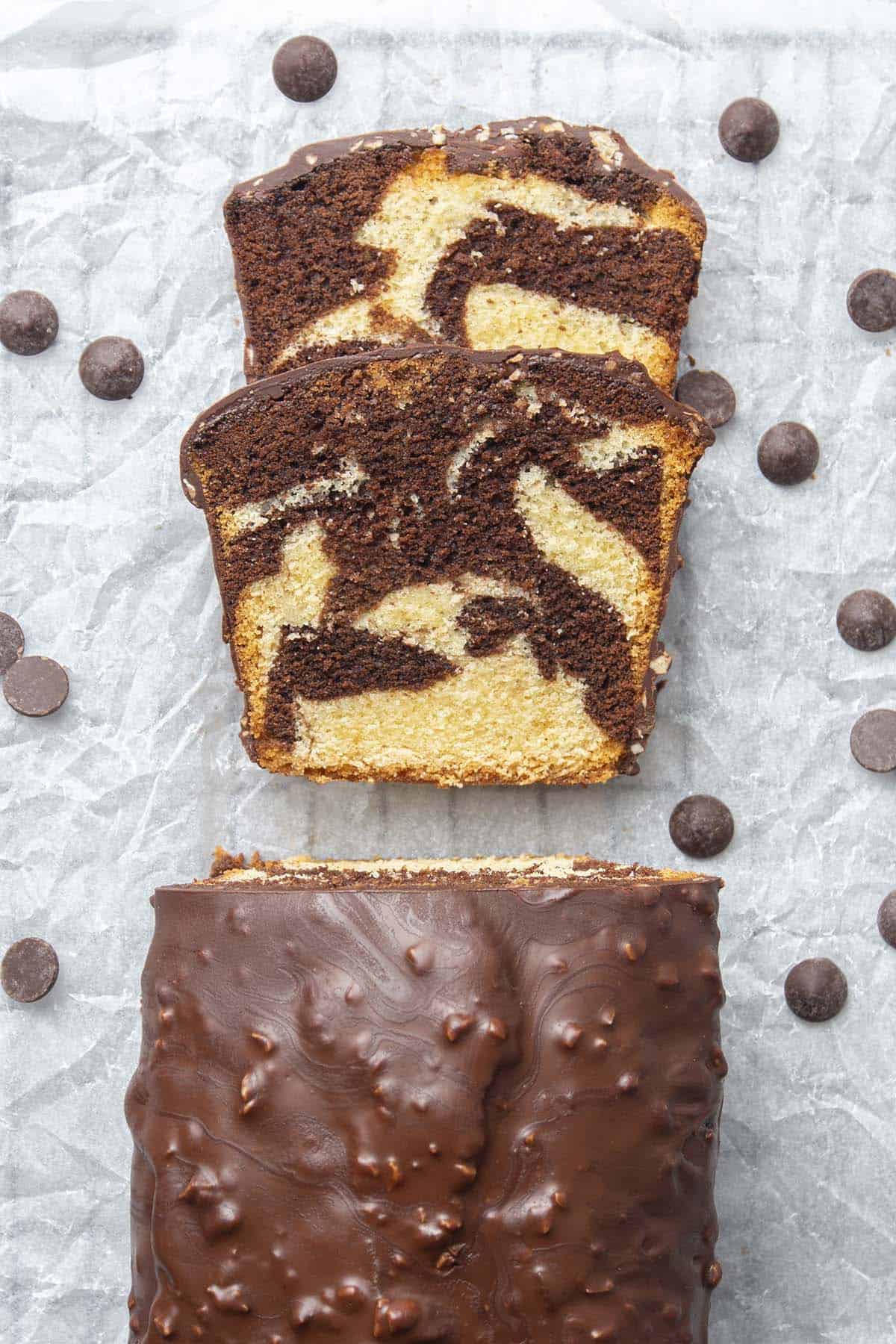
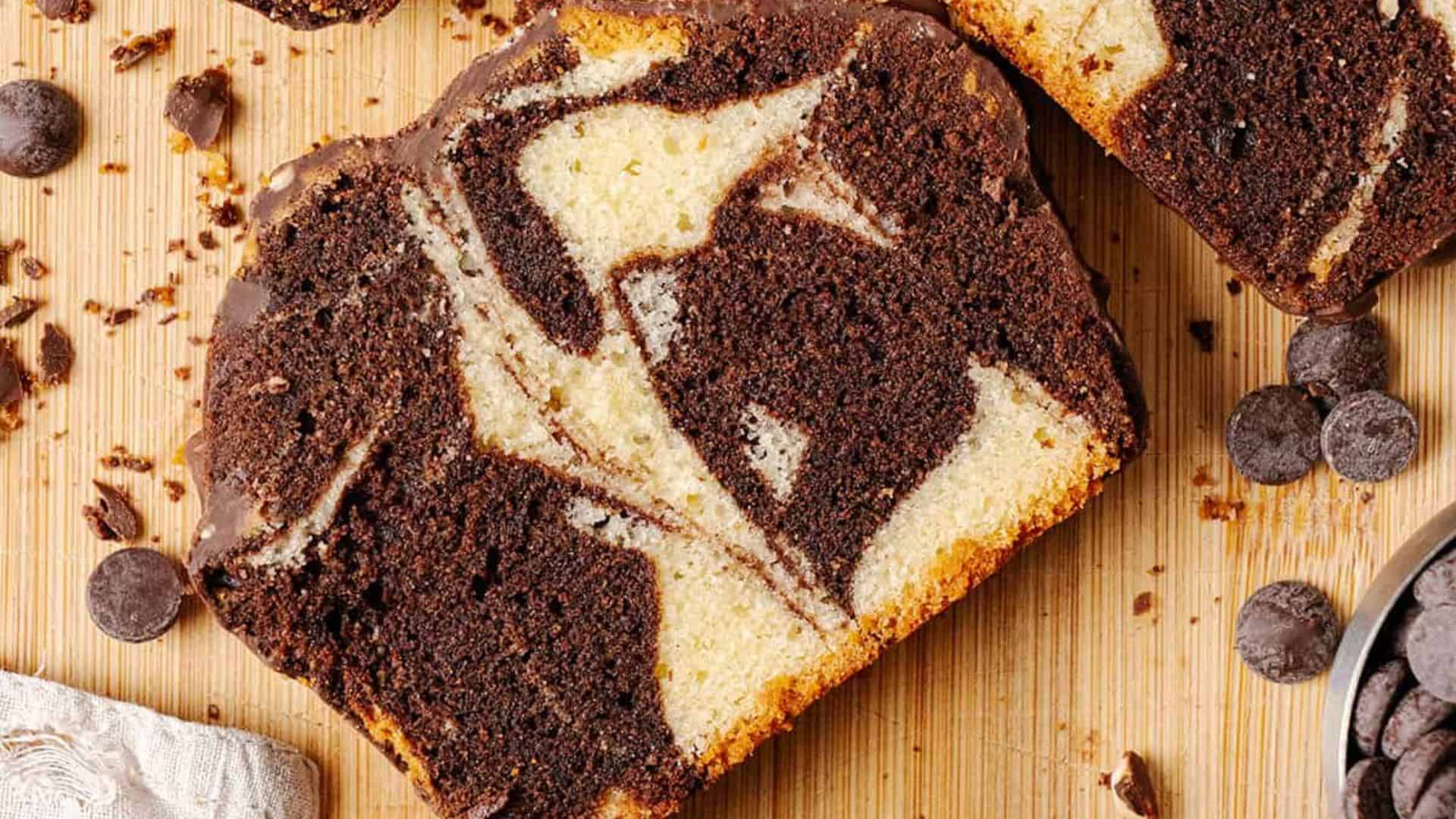
Most marble loaf cake recipes produce something dry, flat in flavor, or streaky rather than truly marbled. Three things separate this marble pound cake from the rest.
First, the batter is made with added Greek yogurt instead of just butter. Yogurt adds moisture and a subtle tang that makes the crumb feel velvety rather than heavy. That's why this cake stays moist for days.
Second, the mixing method. Creaming the butter and sugar properly, then adding the egg slowly while the mixer runs, builds the structure that gives this marble pound cake its light, open crumb.
Third, a soaking syrup. While the cake is still hot from the oven, a simple sugar syrup is poured over the cake in stages. It sinks in completely and makes the interior unbelievably moist. Most marble loaf cake recipes skip this step entirely.
I'll also share a not-so-well-known secret for what to do with the cake batter before it hits the oven, so the pound cake opens up nicely and evenly instead of breaking randomly as it rises.
Katalin's Key Take On the Room Temperature Ingredients
Every ingredient in this marble loaf cake batter must be at room temperature before you start. Butter, eggs, and yogurt all need to be at room temperature so the batter can properly emulsify.
Cold butter will not cream with sugar.
Eggs straight from the fridge will break the batter and make the crumb greasy and dense.
Cold yogurt will cause the batter to seize.
This is not optional advice. It is the single most important preparation step. Set your butter out at least two hours before you bake. Take your eggs and yogurt out at the same time.
How to make this recipe
Begin by preheating your oven to 350°F (175°C) with no fan.
Prepare your loaf pan. I am using a classic 1-pound (9x5 inch (13x23cm cm)) pan. Either line it with parchment paper or butter the inside thoroughly and dust with flour.
In a large bowl, cream the room-temperature soft butter and sugar with an electric hand mixer on high speed for several minutes until the mixture is light, pale, and fluffy.
With the hand mixer on low, add the room-temperature eggs to the butter mixture one at a time. Don't add all the eggs at once. Adding it slowly, while the mixer runs, allows the emulsion to build properly.
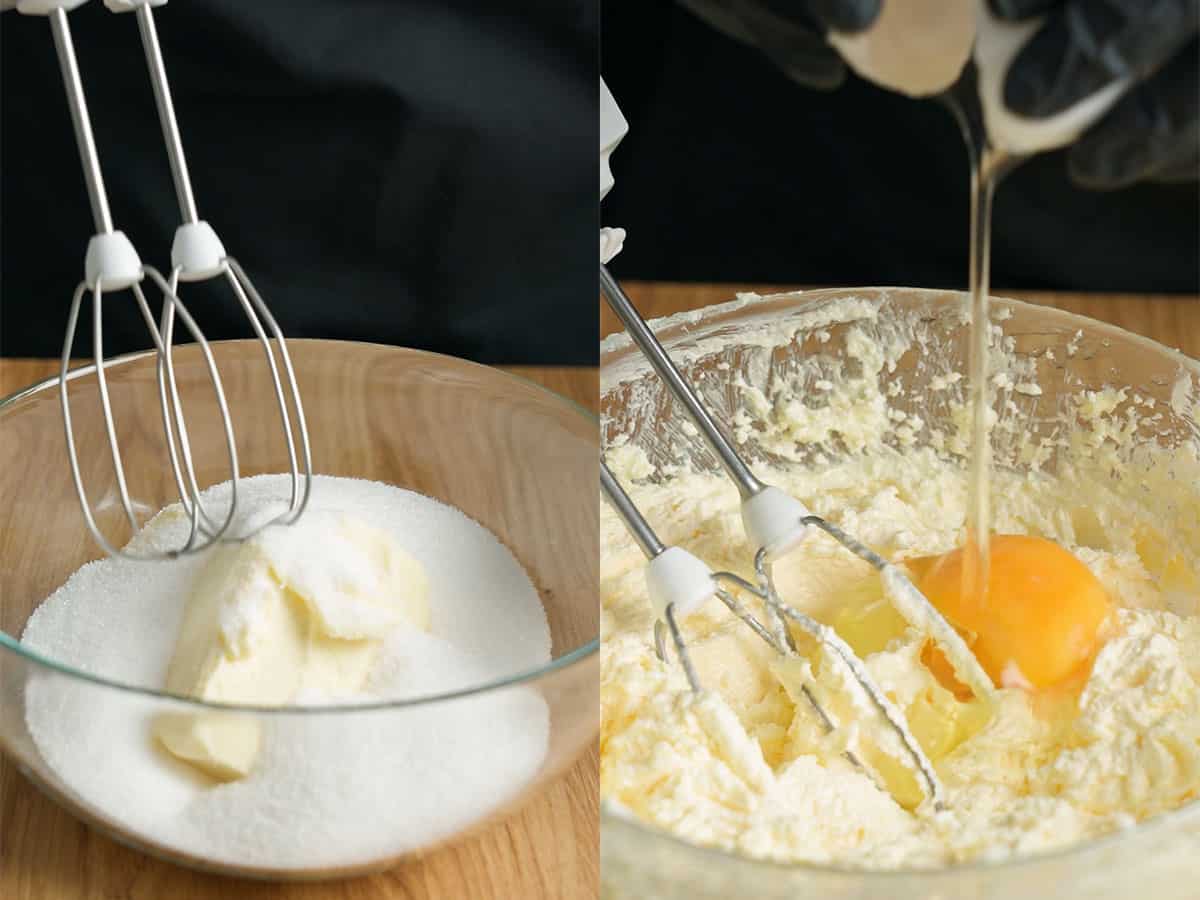
Tip: Whisk the eggs in a separate bowl before adding them to the butter mixture, one small pour at a time.
Once the egg is fully incorporated, add the room-temperature yogurt and vanilla extract and mix until just combined.
Divide the wet ingredients in half using a digital scale so both portions are exactly equal. Set them in separate bowls.
Sift the vanilla batter dry ingredients (flour, baking powder, salt) into one of the bowls.
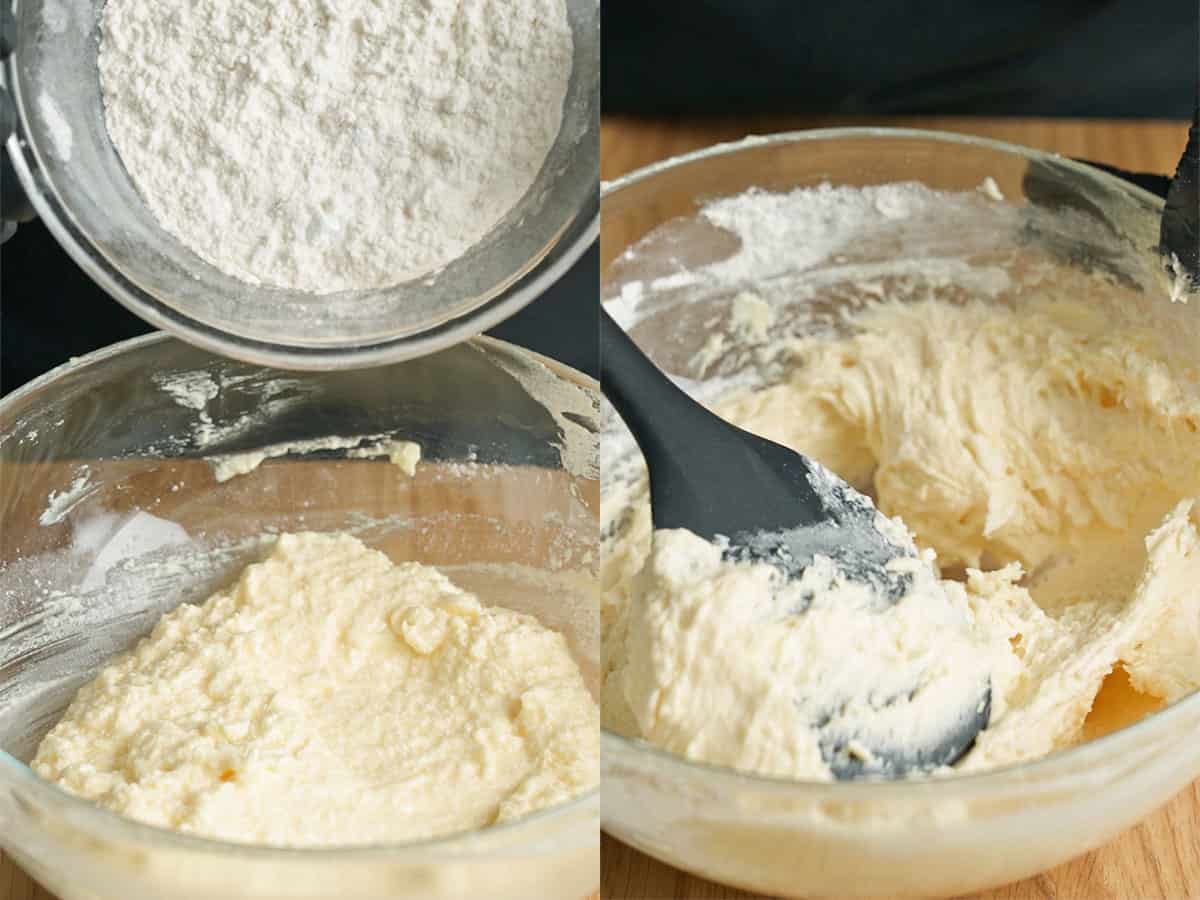
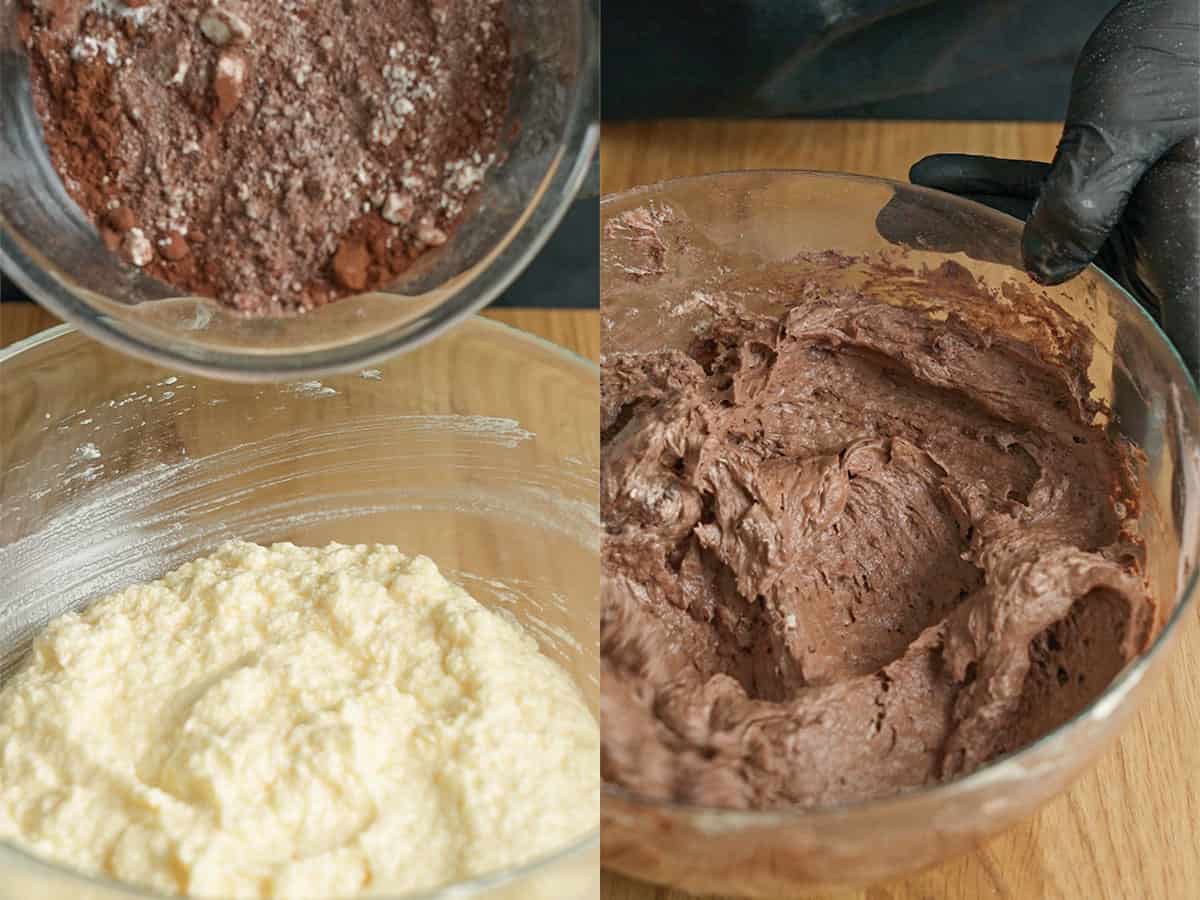
Sift the chocolate batter dry ingredients (flour, cocoa powder, baking powder, salt) into the other.
Now, switch to a rubber spatula and fold the dry ingredients into each bowl separately using gentle, circular strokes. Do not use the mixer at this point. Overmixing after you add the flour develops gluten and makes the cake tough.
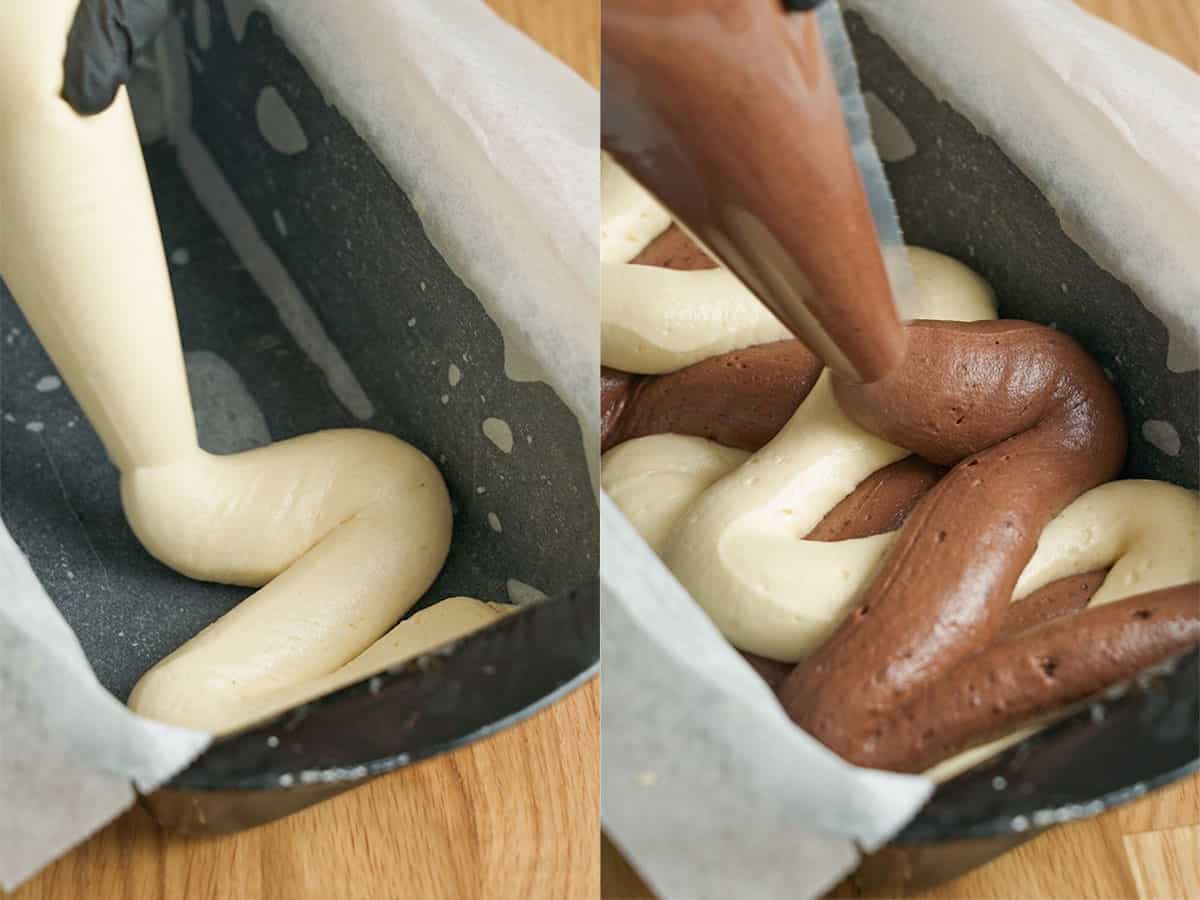
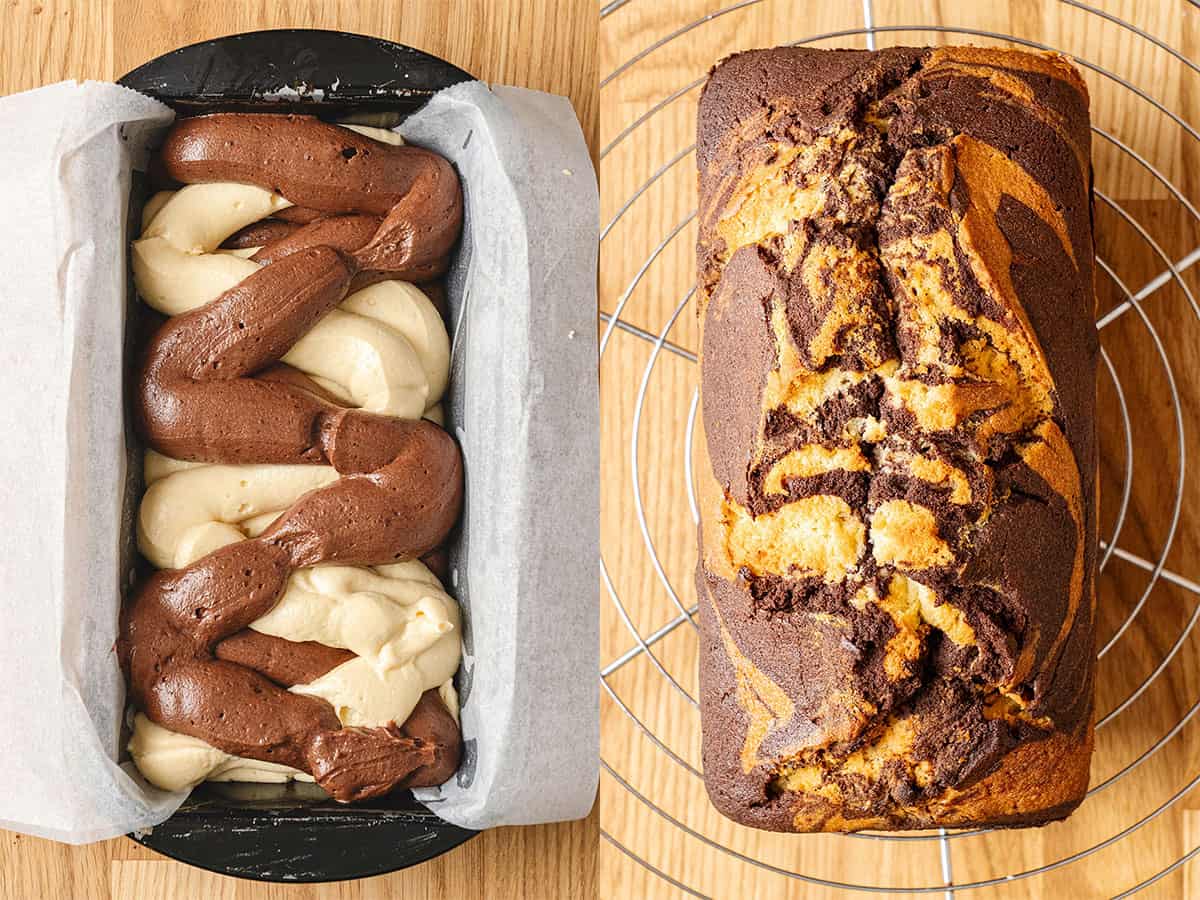
Spoon each batter into a piping bag. Pipe the batters into the prepared loaf tin by alternating between vanilla and chocolate: a layer of vanilla, then chocolate, then vanilla.
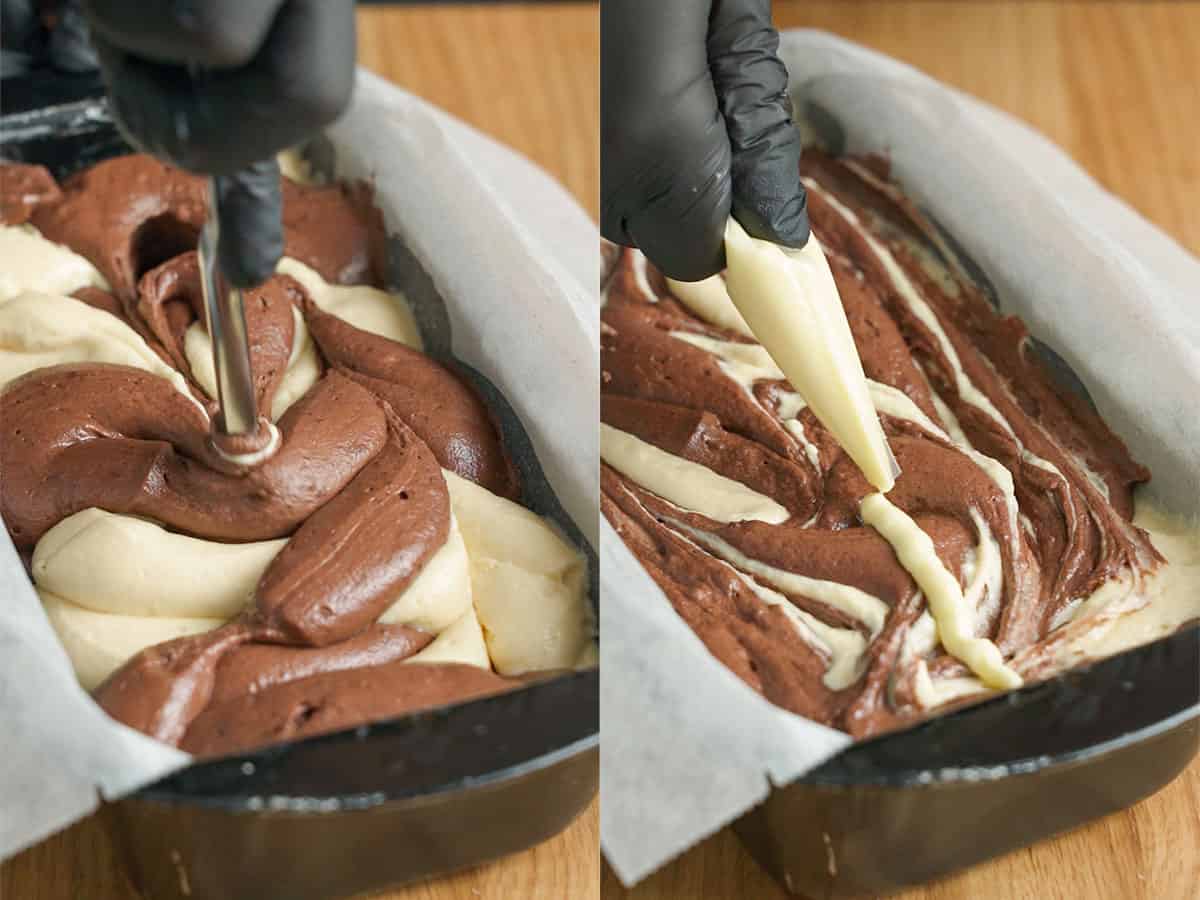
Once both batters are in the tin, run a knife through in slow zigzag movements to create the marble pattern. Do not overmix here. Four or five passes are enough.
How to bake the loaf cake
Before the cake goes into the oven, apply a very thin line of soft butter along the top center of the batter using a pastry bag or the tip of a knife. This small step helps the loaf crack open evenly and neatly down the center as it rises, instead of splitting randomly.
Then, bake the loaf cake at 350°F (175°C) for about 45 minutes. Ovens vary, so focus on texture rather than the clock. The cake is ready when it has risen well and a toothpick or skewer inserted into the center comes out clean.
Now this is optional but highly recommended. Towards the end of the baking time, make the soaking syrup. Combine the water and granulated sugar in a small saucepan and bring to a boil, stirring until the sugar dissolves. Simmer for about 5 minutes, until the mixture thickens slightly to a light syrup consistency. You can flavor the syrup here too: a strip of orange or lemon zest, or a cinnamon stick, simmered with the syrup adds a beautiful layer of flavor to the finished marble loaf cake.
As soon as the cake comes out of the oven, pour the warm syrup over the hot cake in two or three stages, letting each pour sink in before adding the next. The syrup will absorb completely. Let the cake rest in the tin for a few minutes, then transfer it to a cooling rack.
Chill the cake in the fridge for at least 1 hour (or 15 minutes in the freezer) before glazing. Glazing a warm cake results in a runny, uneven coating.
Make the Chocolate Hazelnut Glaze
The glaze is optional, but it takes this marble pound cake to a different level, adding crunch, richness, and a beautifully glossy finish. Use a good-quality semi-sweet chocolate with a high cocoa butter content.
Place chopped, good-quality chocolate in a heatproof bowl and melt in the microwave, stirring every 30 seconds. Use an infrared thermometer gun to check the temperature. When the chocolate reaches 113 to 122°F (45 to 50°C), stir in the vegetable oil and heat the mixture briefly to bring it back to 113°F (45°C). Then stir continuously until it cools to about 77°F (25°C). This process tempers the chocolate lightly, which gives the set glaze a satisfying snap instead of a dull, soft coating.
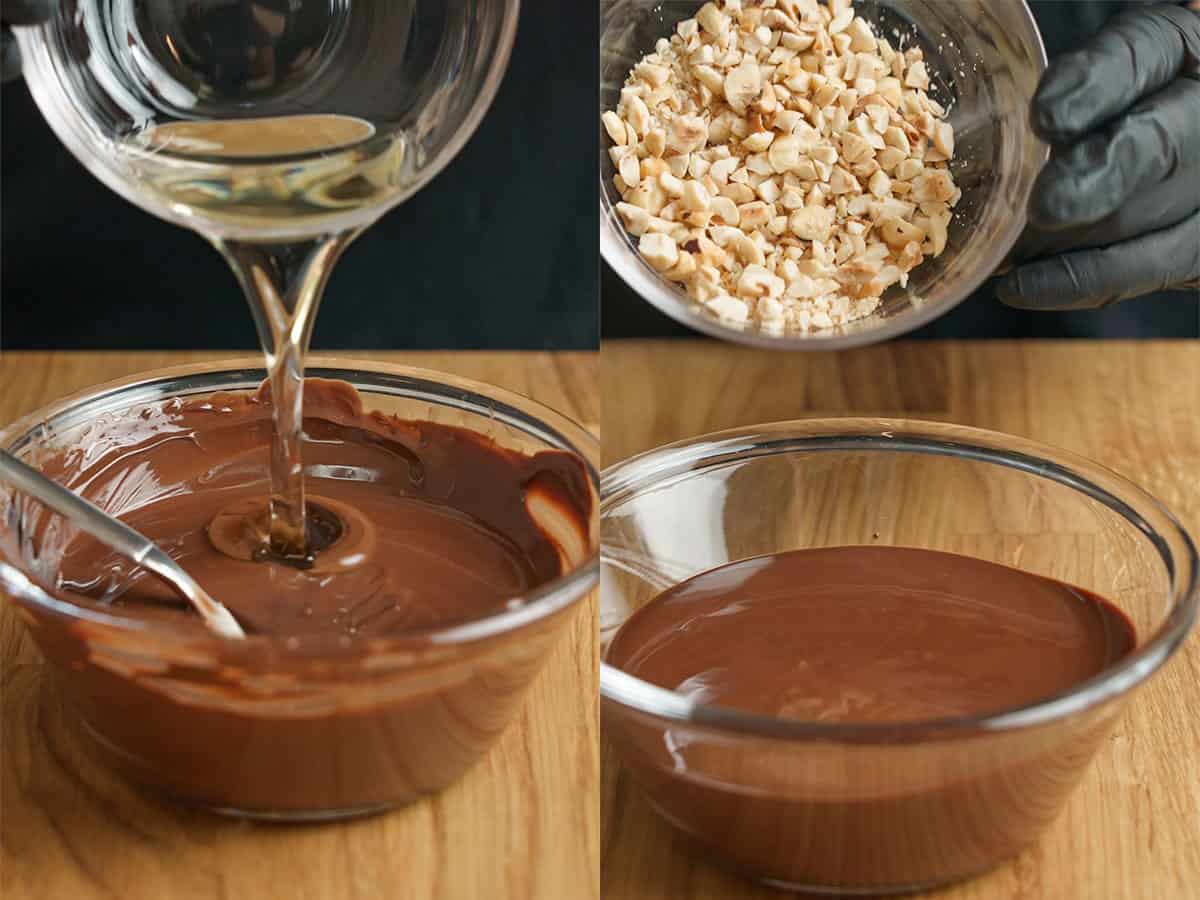
Stir in the roasted chopped hazelnuts.
The chilled cake should be at refrigerator temperature, around 41°F (5°C), when you pour the glaze.
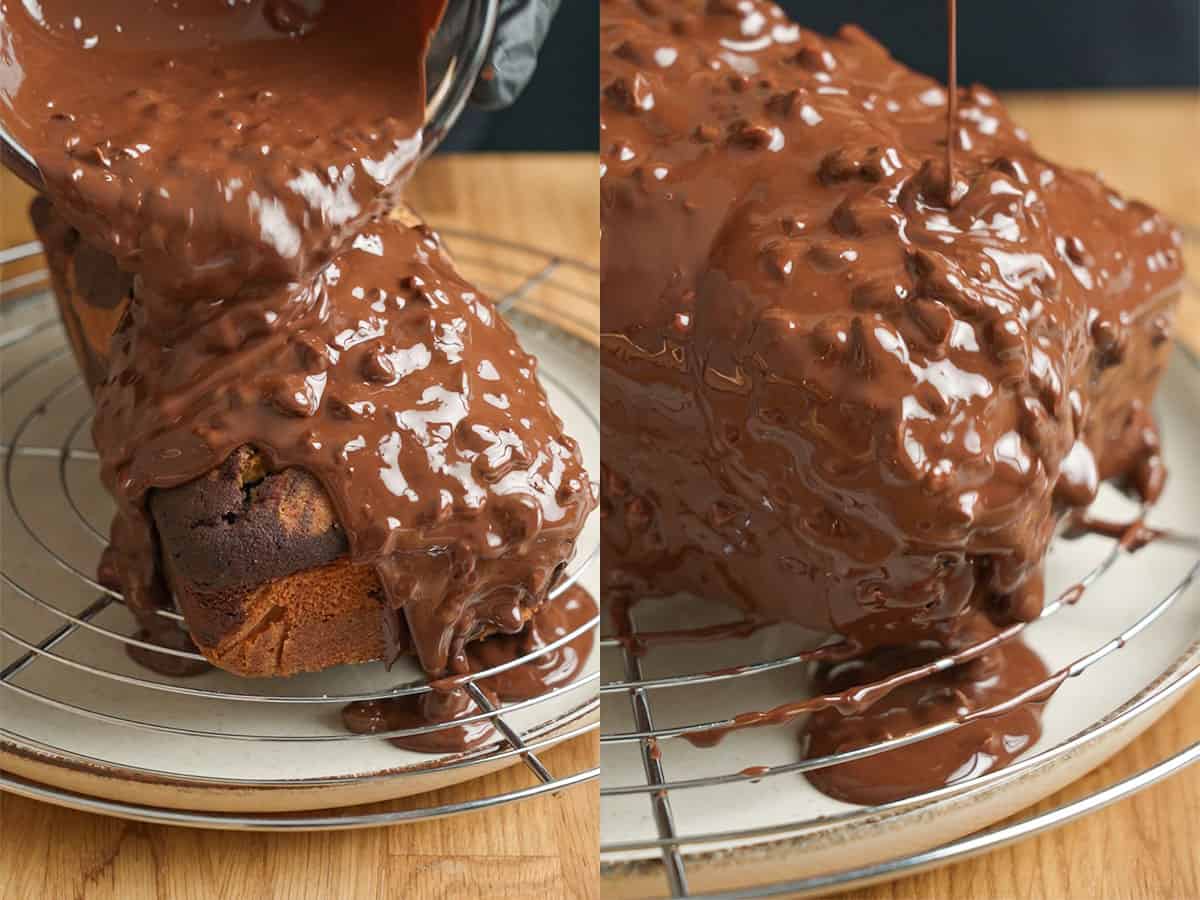
Place the loaf cake on a wire rack over a tray to catch any glaze that runs down the sides.
Then, pour the glaze over in one confident movement. At the right temperature (77°F (25°C)), the glaze will set in under a minute. If the glaze is too warm, it will run off the sides before setting. If it is too cold, it will coat the cake in a thick, uneven layer. 77°F (25°C) is the sweet spot.
Storing and Freezing
Store the marble loaf cake in an airtight container at room temperature or in the fridge for 3-4 days. If storing it in the fridge, cover it to prevent it from absorbing surrounding smells, and let it come back to room temperature before serving for the best flavor and texture.
To freeze, wrap the unglazed marble pound cake tightly and freeze for up to 2 months. Thaw at room temperature, then glaze once thawed.
Flavor Variations
This marble loaf cake is very easy to personalize.
Adding a few orange or lemon zest strips to the syrup while it simmers gives the finished cake a beautiful citrus lift, similar to the bright citrus flavor in my Cranberry Orange Bread.
Or, you can replace either the vanilla or the chocolate cake batter with my Pumpkin Bread batter to make a pumpkin marble loaf cake.
You can also replace 25% of the flour with almond flour or hazelnut flour for a slightly nuttier, more tender crumb.
Adding espresso powder to the chocolate batter deepens the cocoa flavor as well as adds a subtle coffee note.
For a matcha marble loaf cake, replace the cocoa powder in the chocolate batter with matcha powder. Matcha is much more intense than cocoa, so you need less: start with about 1 tablespoon (8g) and adjust to taste.
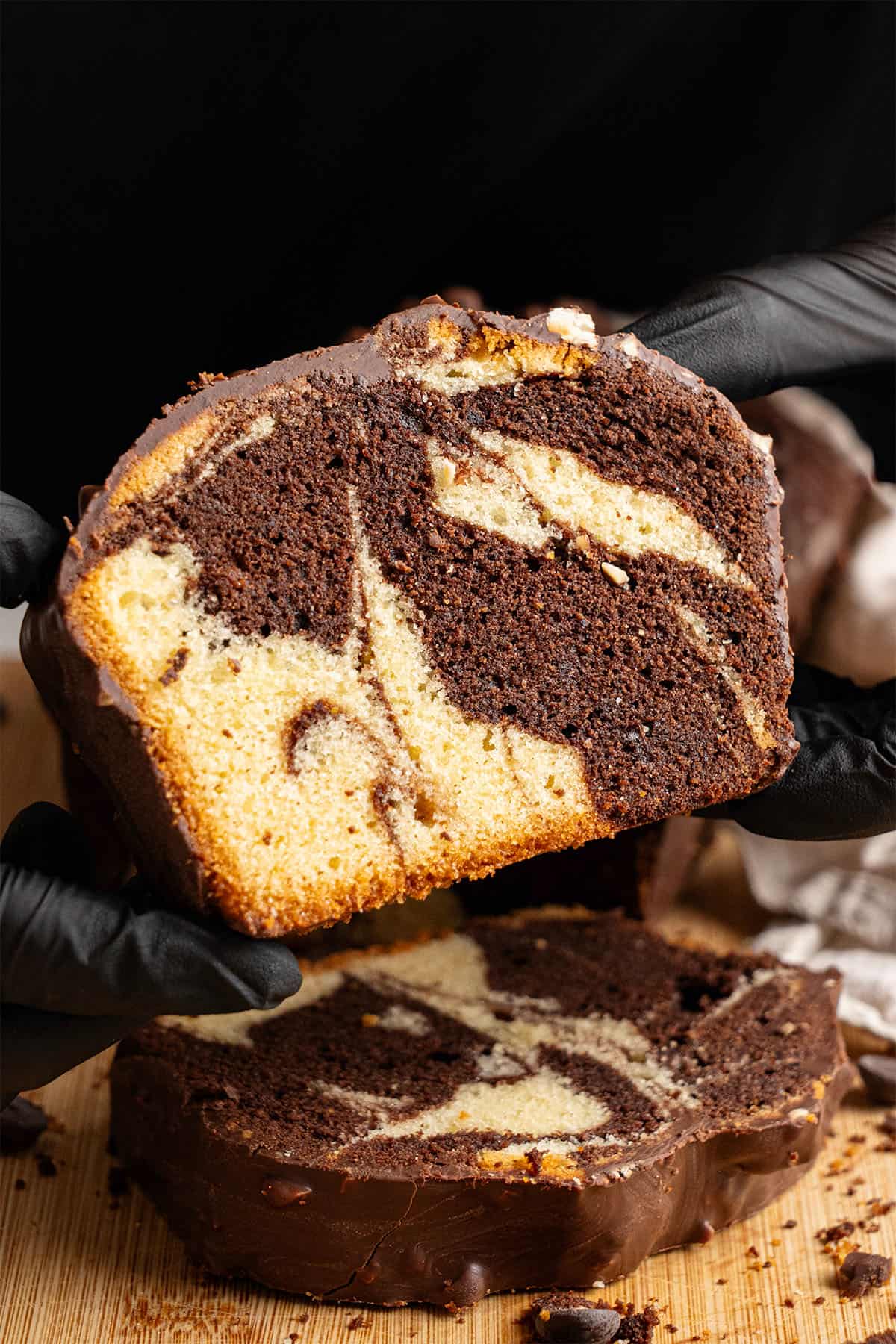
If you prefer to skip the hazelnut, the glaze works just as beautifully plain. Dark chocolate alone at the right temperature gives a glossy, smooth finish. Alternatively, use milk chocolate for a softer, sweeter glaze.
If you prefer a softer, creamier topping, you can make a simple chocolate ganache instead. Combine equal parts (1:1 by weight) of good-quality dark chocolate and heavy cream, heat the cream until just simmering, pour it over the chopped chocolate, and stir until smooth. Let it cool slightly until it thickens to a pourable consistency, then pour or spread it over the chilled marble pound cake. Ganache sets softer than the tempered glaze.
For a completely different take, skip the glaze and dust the marble pound cake with powdered sugar.
Ingredient Substitutions
Butter: Ideally, use unsalted butter with 82% fat content. If needed, you can substitute it with margarine or vegan butter.
Greek yogurt: Full-fat, thick Greek or Turkish-style yogurt is what makes this marble loaf cake so moist. You can substitute with an equal amount of full-fat sour cream if needed. Full-fat buttermilk also makes a good substitute. If you have nothing else, whole milk can work, though it will give a slightly less moist result.
Flour: Pastry flour is ideal here because its lower protein content produces a more delicate crumb. All-purpose flour works too. To understand the difference between flour types and how they affect baking, read my flour guide.
Cocoa powder: Use unsweetened Dutch-process cocoa. Dutch-process cocoa has lower acidity and a deeper, darker color than natural cocoa. It gives the chocolate half of this marble pound cake a proper chocolate flavor without bitterness. For substitutes, see my cocoa powder guide.
Vanilla extract: Pure vanilla extract gives the best flavor. For alternatives, see my vanilla extract substitute guide.
There is no egg substitute for this recipe.
Expert tips
- You do not need piping bags. A small spoon works well for layering the batters alternately in the tin. Piping bags give you more control and cleaner layers, but if you do not have them, alternate spoonfuls of each batter and then swirl with a knife as usual.
- If the top of the marble loaf cake starts browning too quickly before the center is cooked through, tent it loosely with aluminum foil for the rest of the baking time.
- The butter line on top of the batter before baking is not decorative. It is functional. It guides exactly where the cake splits as it rises, giving you that clean, even crack down the center instead of a random tear.
- Always insert the skewer into the center of cake, not the edge, since the edges set much earlier.
- If the cake has been refrigerated, let it come to room temperature for 20-30 minutes before serving. Cold mutes the flavors of both the vanilla and chocolate sponge.
Equipment to use
A digital scale is essential. Measure every ingredient by weight for consistent results.
A digital oven thermometer shows the actual temperature inside your oven, which often differs from the dial setting. Always preheat before you start mixing so the oven is at the right temperature when the batter is ready.
An electric hand mixer makes the creaming stage much easier, and a rubber spatula is the right tool once the flour goes in.
A classic 1-pound (9x5 inch (13x23cm cm)) loaf pan is the correct size for this recipe.
Finally, an infrared thermometer gun is the most accurate and convenient way to check chocolate temperature when making the glaze.
Other Pound Cake Recipes
If you loved this marble loaf cake, here are more loaf cake and pound cake recipes to try next:
- Banana Bread without Baking Soda
- Pumpkin Bread with Cream Cheese Frosting
- Cranberry Orange Bread
- Lemon Meringue Loaf Cake
- Cinnamon Apple Bread

Have you tried this recipe?
Please leave a 5-star ⭐️⭐️⭐️⭐️⭐️ rating on the recipe card and consider leaving a comment as well!
Chocolate Marble Loaf Cake (Pound Cake)
Equipment
Ingredients
For the marble loaf cake
- 225 g (1 cup) Unsalted butter at room temperature
- 200 g (1 cup) Granulated sugar
- 4 Eggs at room temperature
- 1 teaspoon Vanilla extract
- 80 g (⅓ cup) Greek Yogurt at room temperature
- 120 g (1 cup) Flour for the vanilla part
- 1 teaspoon Baking powder for the vanilla part
- ¼ teaspoon Salt for the vanilla part
- 90 g (⅔ cup) Flour for the chocolate part
- 30 g (⅓ cup) Dutch processed cocoa powder for the chocolate part
- 1 teaspoon Baking powder for the chocolate part
- ¼ teaspoon Salt for the chocolate part
For the syrup (optional)
- 100 g (½ cup) Water
- 100 g (½ cup) Granulated sugar
For the chocolate hazelnut glaze (optional)
- 250 g (1½ cups) Semi sweet chocolate
- 30 g (2 tablespoons) Vegetable oil
- 30 g (¼ cup) Hazelnut roasted, chopped
US customary cup measurement is an indicative figure only. Measure the ingredients with a digital scale by weight (gram). Baking is art but also science which requires precision and accuracy.
Instructions
For the marble loaf cake
- Heat the oven to 350°F (175°C), no fan. Grease and flour your loaf pan, or line it with parchment paper. Set aside.
- Cream the butter and sugar together for a few minutes, until the mixture is really light and fluffy.
- Whisk the eggs in a separate bowl, then stream them into the butter mixture on low speed, a little at a time.
- Stir in the yogurt and vanilla until smooth.
- Weigh the batter and split it evenly between two bowls. Into one, sift the vanilla part dry ingredients: flour, baking powder, and salt. Into the other, sift the chocolate part dry ingredients: flour, cocoa powder, baking powder, and salt. Fold each portion with a spatula until no dry streaks remain. Stop as soon as the flour disappears.
- Transfer each batter to a piping bag. Working directly in the prepared pan, alternate between vanilla and chocolate layers until both bags are empty. Pull a knife through the batter 4 to 5 times in slow zigzag strokes to create the chocolate swirl.
- Run a thin line of soft butter straight down the center of the top. Bake for 45 minutes, until a skewer inserted in the center of the cake comes out with moist crumbs or clean.
Soaking syrup
- Near the end of baking, bring water and sugar to a boil in a small saucepan. Simmer for 5 minutes to a light syrup. Lift the hot cake from the oven and immediately pour the syrup over in 2 to 3 stages, letting each pour absorb before adding the next. Rest briefly in the tin, then move to a wire rack. Refrigerate at least 1 hour before glazing.
Chocolate hazelnut glaze
- Melt the chocolate in the microwave in 30-second bursts, stirring each time. Once it reaches 113 to 122°F (45 to 50°C), stir in the oil and bring it back to 113°F (45°C), then keep stirring until it drops to 77°F (25°C).
- Stir in the roasted chopped hazelnuts. Set the chilled loaf on a wire rack over a tray. Pour the glaze in one smooth pass and leave it to set for about a minute.
Storage
- Keep in an airtight container at room temperature or in the fridge for up to 3 to 4 days. To freeze, wrap the unglazed loaf tightly and freeze for up to 2 months. Thaw at room temperature, then add the glaze.
Notes
- All ingredients (butter, eggs, yogurt) must be at room temperature before you start. Cold ingredients prevent proper emulsification and result in a dense, greasy crumb.
- Use 82% fat unsalted butter for the best flavor and texture.
- Dutch-process cocoa powder gives a deeper color and smoother chocolate flavor than natural cocoa.
- Full-fat Greek or Turkish-style yogurt is what makes this marble loaf cake extra moist. Do not use low-fat.
- Use high-quality semi-sweet chocolate for the glaze. Avoid cheap baking chocolate or chocolate chips with stabilizers.
- Cream butter and sugar for several minutes until truly pale and fluffy. This step is not optional.
- Add eggs slowly while the mixer runs to keep the batter from splitting.
- Switch to a rubber spatula as soon as the flour goes in. Fold gently until just combined.
- Four to five zigzag knife passes are enough for the chocolate swirl. More and the batters blend together.
- Apply a thin butter line along the top of the batter before baking for a clean, even crack.
- Do not skip the soaking syrup. Pour it over the hot cake so it sinks in completely.
- Use a thermometer when making the glaze. 77°F (25°C) is the correct pouring temperature.
- Only glaze a chilled cake, never a warm one.
tony
I've tried someone else's recipe for marble loaf cake before, and it always came out super dry. Yours is sooo good and moist, plus the two different flavor "marbled" so well together. I am saving this.
Dorothea
can I change yogurt with mascarpone?
Katalin Nagy
I haven't tried making this with mascarpone, but in general, when substituting ingredients, think about whether it matches the original ingredients in terms of: 1. taste, 2. consistency, and 3. fat profile. Mascapone is not a bad idea, but it will miss the tang, so perhaps a few drops of lemon would help. It also has more fat than yogurt, which might not be an issue.
Mandy
Idea for a quick glaze, just use Nutella on a slightly warm cake. Pretty much the same thing in a pinch.
Belinda Brooks
I have a question: the version of this cake that is listed on the Microsoft Bing screen has 230 gm of sugar while the version on your website is 160 gm. That is a considerable difference. Thank you.
Katalin Nagy
Use the one in the recipe card.
Rebecaa
Hi can you tell me what a butter line is. Is it butter or is it batter that i should have set aside?
Thanks.
Katalin Nagy
It is just a very small amount of butter on top of the butter you will need to make the loaf cake:)
Chey
If I use non-fat Greek yogurt, will that have a negative affect on the loaf? Thanks! 🙂 I look forward to making this.
Katalin Nagy
Non fat or low fat products contains more water and their texture is less creamy therefore will impact the outcome of this dessert.
Susan Mallinder
Hello Kata,
Just wanted to let you know that I made the marble loaf cake in a 9” round cake pan and it worked beautifully. I baked it for 28 mins and put the sugar syrup on and it turned out really well. Thank you for your help and advice.
Kata
so happy to hear!
Hamid
Thank you for sharing your experience
Noemi
This is the only recipe you will need for marble loaf cake, the taste is amazing, the layers are perfectly marbled together and the glaze is really a nice addition too!! Definitely making it again.
Ed
Hello! I’m Ed again, sorry I write spatula in my last comment instead of Pipe, do I have to use a Pipe to do it or just divide the two mixes ? Half and half ? Thanks!!!
Kata
You do not need to use a piping bag, perhaps a smaller spoon would work somewhat place the cake batter into the pan then apply some swirl with a knife:)
Ed
Do I must use a Spatula to do the Loaf ? Or can I put the two mixtures half and half side by side and then marble the Loaf ? Hello From Mexico 🇲🇽
Kata
Hey not sure I understand this part: "put the two mixtures half and half side by side and then marble the Loaf " - but for the marble effect pls follow the recipe for the best result:)
Sirpek
This cake turned out wonderful thanks to you baking tips! What a wonderful blog, I love all your recipes 🙂
Sarah Alsulaiman
The best marble cake I have ever made..nice texture and a yumy flavor.
Thanks
Ghazal Shams
THE BEST recipe for a beautiful marble cake! Loved everything about it. Katalin’s measurements and tips are just so to the point. Would absolutely recommend this anyone who wants to make a quick, yet impressive, cake.
Susan
Where can I find a conversion chart for the marble cake? I want to use a 9” round tin.
Kata
I don't have a direct conversion chart from this loaf cake to a round cake pan but you can make your own calc by taking the volume of ingredients and comparing it with a 9 inch cake and multiplying it accordingly.
June N
Made this the other day and followed every step (excluding the chocolate coating). Very delicious - the crumb is perfect, the texture is so soft and great flavor. Will certainly make this again. Thank you for sharing the recipe! June