
Almost everyone has cried over an onion at least once. It can happen while prepping dinner or slicing a single onion for a quick sandwich. The tears feel dramatic for such a small task, yet the reaction is universal. For many people, cutting onions is one of the most annoying parts of cooking, not because it is difficult, but because it can feel uncomfortable and unavoidable.
The good news is that reducing onion tears does not require gadgets or paid tricks. With a few simple adjustments to how onions are handled and cut, it is possible to make the process far more comfortable without spending a single dollar.

Why onions make people cry
To understand how to avoid crying, it helps to know why onions cause tears in the first place.
Onions release a chemical irritant when their cells are damaged. When a knife slices through an onion, enzymes in its layers break down sulfur compounds, producing a gas, propanethial-S-oxide, that rises. When that gas reaches the eyes, it reacts with the eyes, prompting the production of tears to wash the irritant away.
The more onion cells that are ruptured, the more gas is released. That means the knife's sharpness and even the onion's freshness can influence how intense the reaction becomes. While the process is scientific, the takeaway is simple: less damage and less exposure to the gas usually mean fewer tears.
Use a sharp knife, not a dull one
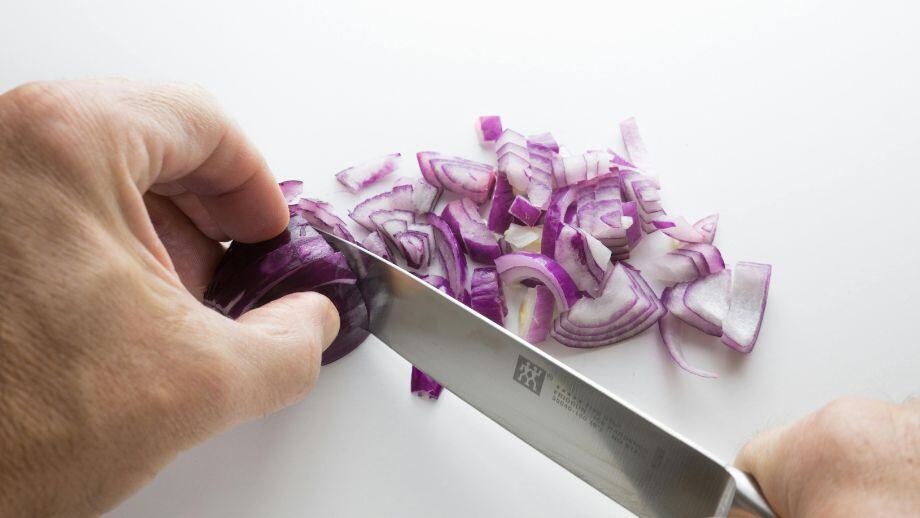
A sharp knife is one of the most effective ways to reduce onion irritation, and it costs nothing if you already have one in the kitchen. A dull blade crushes onion cells rather than slicing them cleanly. That extra crushing releases more irritants into the air.
A sharper blade creates smoother cuts, limiting the amount of the onion’s chemical defense released. It also makes cutting faster, reducing the time eyes are exposed to the gas.
Chill the onion before cutting
Cold temperatures slow down chemical reactions. Placing an onion in the refrigerator for 20 to 30 minutes before cutting can reduce the amount of irritant released.
A chilled onion still cuts the same way, but the compounds responsible for tears react more slowly. This gives the gas less time to reach the eyes before dispersing. Even a brief chilling can make a noticeable difference.

Keep the root end intact as long as possible
The root end of the onion contains a higher concentration of the compounds that cause irritation. Cutting into that section early can release a stronger burst of gas.
A simple strategy is to leave the root end attached while slicing the rest of the onion. Cut around it and discard it once most of the onion has already been chopped.
Improve airflow in the kitchen
Tears worsen when onion gas lingers near the face. Better airflow helps move the irritant away from the eyes before it reaches them.
Turning on a range hood or positioning yourself near a fan can help. Even standing slightly farther back from the cutting board can make a difference, since the gas rises upward as it disperses.
Some people prefer to cut onions near a running sink or under a gentle stream of water, though this can make the board slippery. The main goal is to keep air moving so the gas does not collect near eye level.
Slow down and control breathing
When chopping quickly, it is easy to breathe in more of the irritant gas. Slowing down and breathing through the mouth rather than the nose can reduce exposure. Keeping the face slightly angled away from the onion can also help.
Taking short breaks between cuts allows the gas to dissipate rather than building up in front of the eyes.
Avoid rubbing the eyes mid-prep
If irritation starts, rubbing the eyes makes it worse. Onion residue on fingers can transfer to the skin and intensify the sting. Washing hands before touching the face helps prevent that problem.
If the eyes begin to water, blinking naturally and stepping away for a moment can help calm the reaction without spreading irritation.
Choose fresher onions when possible
Older onions tend to release stronger odors and may produce more irritating gas as they break down. Fresher onions often have a milder reaction when cut.
Rinse hands and tools after cutting
Onion residue on knives and cutting boards can continue to release odors and irritants. Rinsing tools promptly helps prevent lingering smell and reduces the risk of transferring onion compounds to the face later.
Washing hands right after cutting also prevents irritation if the eyes are touched afterward.

Accept a small amount of tearing as normal
Even with the best technique, some tearing may still happen. The goal is not always to eliminate tears entirely, but to make the process more manageable.
The our best tip
Wear contact lenses or a tight-sealing mask you already have at home. Contact lenses block the onion fumes from reaching your eyes, which often prevents tears entirely. A snug snorkel mask or similar face mask works the same way by creating a seal, unlike regular glasses, which don’t help much.
Leave a Reply