
Cooking dinner day after day for a partner or family takes time, effort, and a fair amount of pressure to make something everyone will enjoy. Most people appreciate a simple “this was great,” but few expect their meals to be quietly graded behind the scenes.
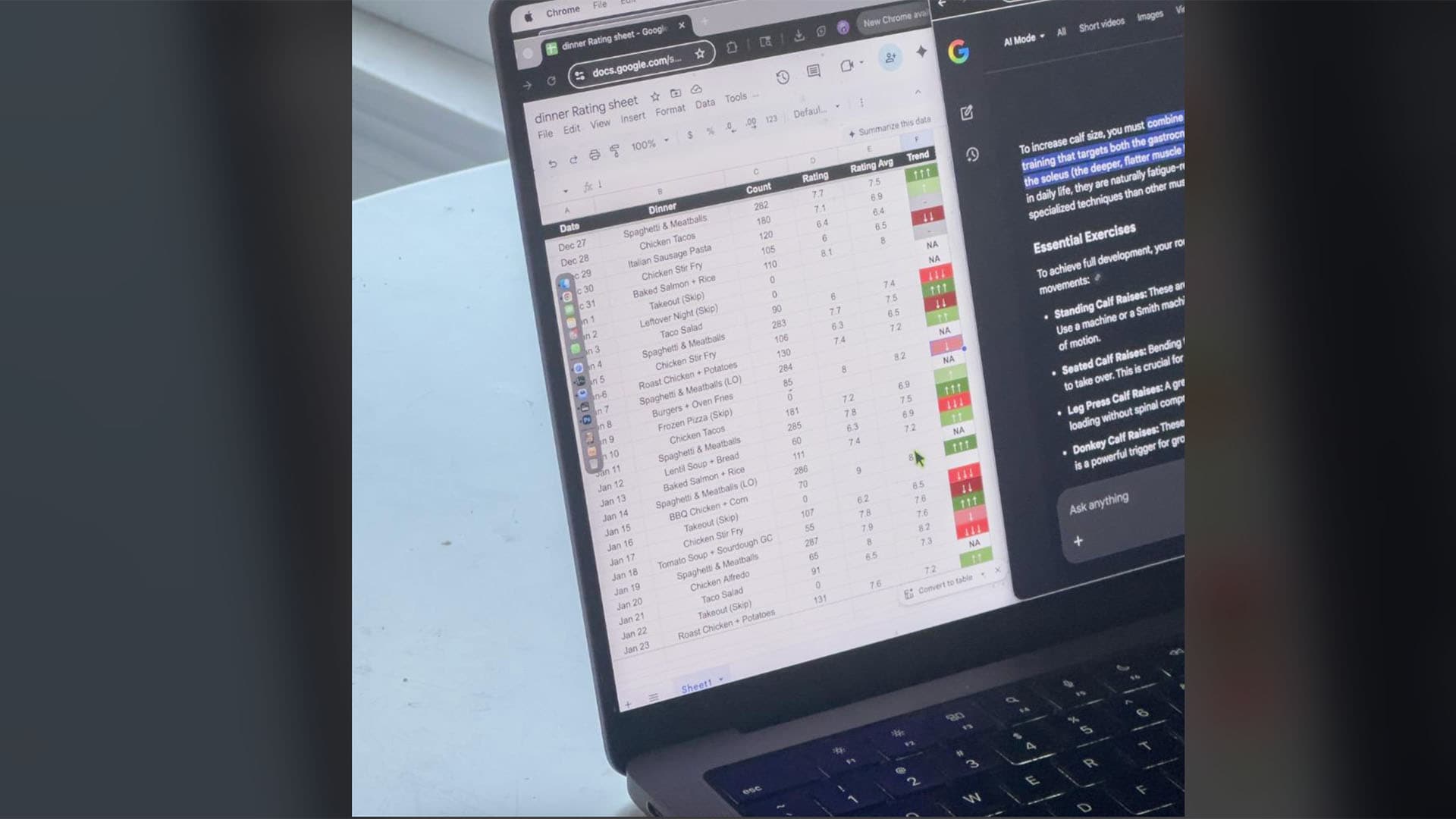
That’s why one woman was stunned when she discovered her boyfriend had been keeping a detailed spreadsheet rating every dinner she made. When she shared the story online, thousands of people had opinions about where appreciation ends, and evaluation begins.
The story
In a recent Reddit thread, a girlfriend showed off the spreadsheet that her boyfriend made, rating the dinners that she's made for him. She went on to say that when she saw it, he got flustered, and she was speechless, and not in a good way. She stated that the spreadsheet makes her feel judged. She's asking who does this, and the internet does what it does best: chiming in.
The responses
Over 6,000 people shared their thoughts and opinions on the spreadsheet.
One person wrote, "All of your meals are at a 6 or above, which is a great score.... your cooking must be good!"
Is it? Would you be happy with that? It is stressful to make dinner every night, and seeing someone actually rating it without letting you know must be weird, too. It can bring in a bunch of mixed emotions.
Another person had a silver lining thought. "I don’t think he’s judging. I think he genuinely enjoys data and logging. If you like to cook, you could cross reference what you’re doing differently on certain days with his data to improve your overall skills for your own satisfaction. Then this becomes a joint effort."
This could be a great way to connect and figure out how to make the best dinner possible for both of them. Plus, it means that they're both giving feedback and working on communication skills at the same time.

Someone else related. "I actually started a list where I track meals and recipes and add comments about how my husband and kids liked or didn't like them. I know it's a weird habit. But I'm storing the recipes anyway, and this way I can remember whether it's worth making again."
There are some people who just really like spreadsheets as a way to stay organized.
Another wrote, "My first thought was maybe he's a data nerd."
Some people really like numbers and tracking, and he might be one of them. Others find it calming to keep everything organized in one place.

One man was intrigued. "This is amazing. I'm the cook in the household, but if my wife had this much data on my dinners I'd want to see it all."
Same, honestly. If someone took the time to track all the meals and rate them, it'd be hard not to want to see!
This person said, "Sounds like it's his turn to cook! At least your ratings look pretty solid on average. But still I wonder what he hoped to accomplish by this?"
It is a good question. More than likely, he didn't think anyone would ever see this spreadsheet, and he was just keeping track as a way to keep himself occupied or to look back on.
Another person wrote, "Honestly, as someone on the spectrum, I could see myself doing this so that I have a reference if my partner asks me what I would like to eat."
This might be his reason as well, but the explanation doesn't go into it further.
Someone else pointed out, "Partners are allowed to have their own thoughts and opinions on things and are allowed to have ways to express them in their own form."
He literally logs every dinner, then rates and color-codes it. That takes a ton of time and planning to make it a habit.

The takeaway
What stood out in the discussion wasn’t just the spreadsheet itself, but how differently people interpreted the same behavior. For some, rating meals felt unnecessarily critical, especially when cooking for someone is already an act of effort and care. Seeing numbers attached to that effort can make it feel less like appreciation and more like evaluation.
Others saw it through a completely different lens. To them, the spreadsheet looked less like judgment and more like a personality quirk. Some people genuinely enjoy tracking information and organizing everyday details into data. In that context, the ratings may have been less about criticism and more about curiosity or habit.
The moment also highlights something many couples run into: the gap between intention and impact. What one person sees as a harmless organization can feel very different to the person on the receiving end. Without a conversation about it, small habits can easily be misunderstood.
In the end, the internet debate shows that relationships often come down to communication. Whether someone loves spreadsheets or hates the idea of being scored, understanding how actions land with a partner matters far more than the system used to track dinner.
Leave a Reply