Carefully organized, labeled containers, and leftovers are still going bad before the week is out? The problem is not the containers or the labels. The shelf where leftovers land matters more than almost anything else.
Most people treat the refrigerator like a big, cold room where food goes to survive until it is needed again. But a refrigerator is not a uniform environment. Temperature varies dramatically from shelf to shelf and from door to interior, and that variation is exactly what determines whether last night's roast chicken makes it to Thursday or starts to smell by Tuesday.
Why fridge temperature vary

A standard refrigerator is set somewhere between 35 and 38 degrees Fahrenheit, but that setting reflects an average, not a constant. The coldest zone in most fridges is the back of the bottom shelf, closest to the evaporator coils. The warmest zone is the door.
Every time the refrigerator opens, warm air rushes in and settles near the top because warm air rises, displacing cold air downward. The upper shelves, closest to that influx of warmth, fluctuate the most.
This temperature cycling is normal and mostly invisible. But bacteria notice. The range between 40 and 140 degrees Fahrenheit is what food safety professionals call the danger zone, and even brief, repeated excursions into the lower edge of that range accelerate bacterial growth in ways that compound over days.
The shelf that is working against your leftovers
The top shelf is where leftovers go to die early. It is the most convenient shelf to reach, which is exactly why it gets used so instinctively, and it is almost always the warmest interior shelf in the refrigerator.
There is also the issue of proximity to the light and motor housing, which generates a small but real amount of heat near the top of the cabinet. Combined with the warm air exposure each time the door swings open, the top shelf creates conditions where leftover proteins, cooked grains, and dairy-based dishes break down faster than they would even two shelves lower.
The door shelves are a separate problem entirely. Despite what refrigerator designers seem to suggest by molding egg cups and butter compartments into the door, the door is the least stable and warmest storage zone in the entire unit. Condiments survive there because of their high salt, acid, or sugar content. Cooked food does not have those built-in defenses.
Where leftovers actually belong
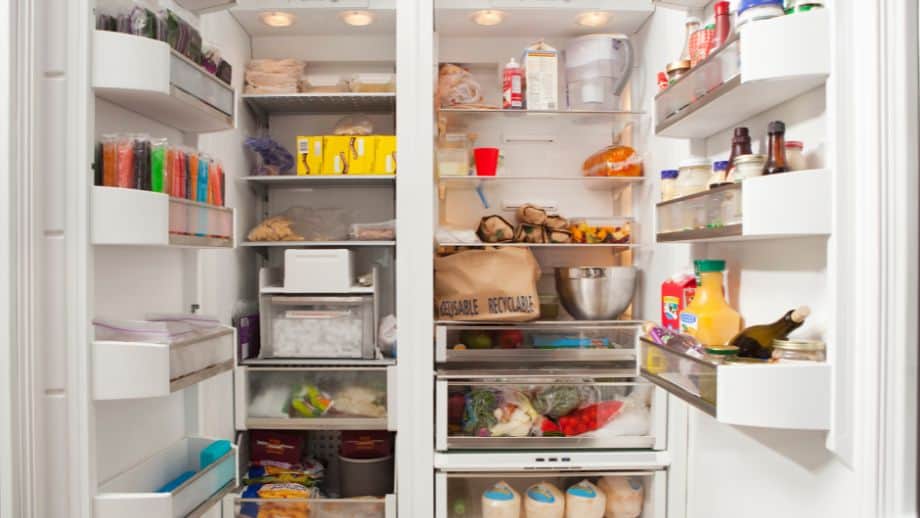
The bottom shelf and the lower middle shelf are the right places for leftovers. They stay coldest, experience the least temperature fluctuation, and offer food the best possible environment for keeping it at a safe temperature between meals.
There is one exception worth knowing. Raw proteins should be kept on the lowest shelf of all, directly above the crisper drawers, so that any drips or leaks cannot contaminate cooked food below. That puts leftovers on the shelf just above. The middle-to-lower range of the fridge, away from the door and away from the top, is the sweet spot.
What the top shelf is actually good for
The top shelf is not useless. It is the right place for foods that are already shelf-stable or that benefit from slightly less aggressive chilling: drinks, packaged items that need refrigeration after opening, and foods going out the same day. Ready-to-eat items like yogurt, hard cheeses, and leftovers headed to a lunch plate within hours can stay there without issue because the short window does not give temperature fluctuation time to cause problems.
Reorganizing a refrigerator takes no more than 10 minutes. Leftovers go down, raw proteins take the bottom, and the top shelf holds drinks and grab-and-go items. The fridge already in the kitchen will perform meaningfully better without a single new purchase.
Leave a Reply