
GLP-1 is changing not only diets but also how much people spend on food each month. According to a new national survey, Americans who use GLP-1 medications are spending significantly less on food. This trend aligns with emerging evidence that GLP-1 users are shifting their consumption patterns by reducing their intake of impulse snacks, high-calorie processed foods, and takeout meals.

What is GLP-1?
GLP-1 medications are a class of drugs developed initially to help manage type 2 diabetes, lower blood sugar levels, and are currently promoted for weight loss. They work by mimicking a natural hormone that slows down digestion, regulates blood sugar levels, and reduces appetite. In recent years, they have gained significant popularity and are often prescribed for weight management.
The survey results
The survey states that those on GLP-1 drugs are making adjustments in everyday choices. Some reported skipping snacks altogether, while others said they spend less on restaurants or stretch a single grocery haul across more meals.
Key Findings:
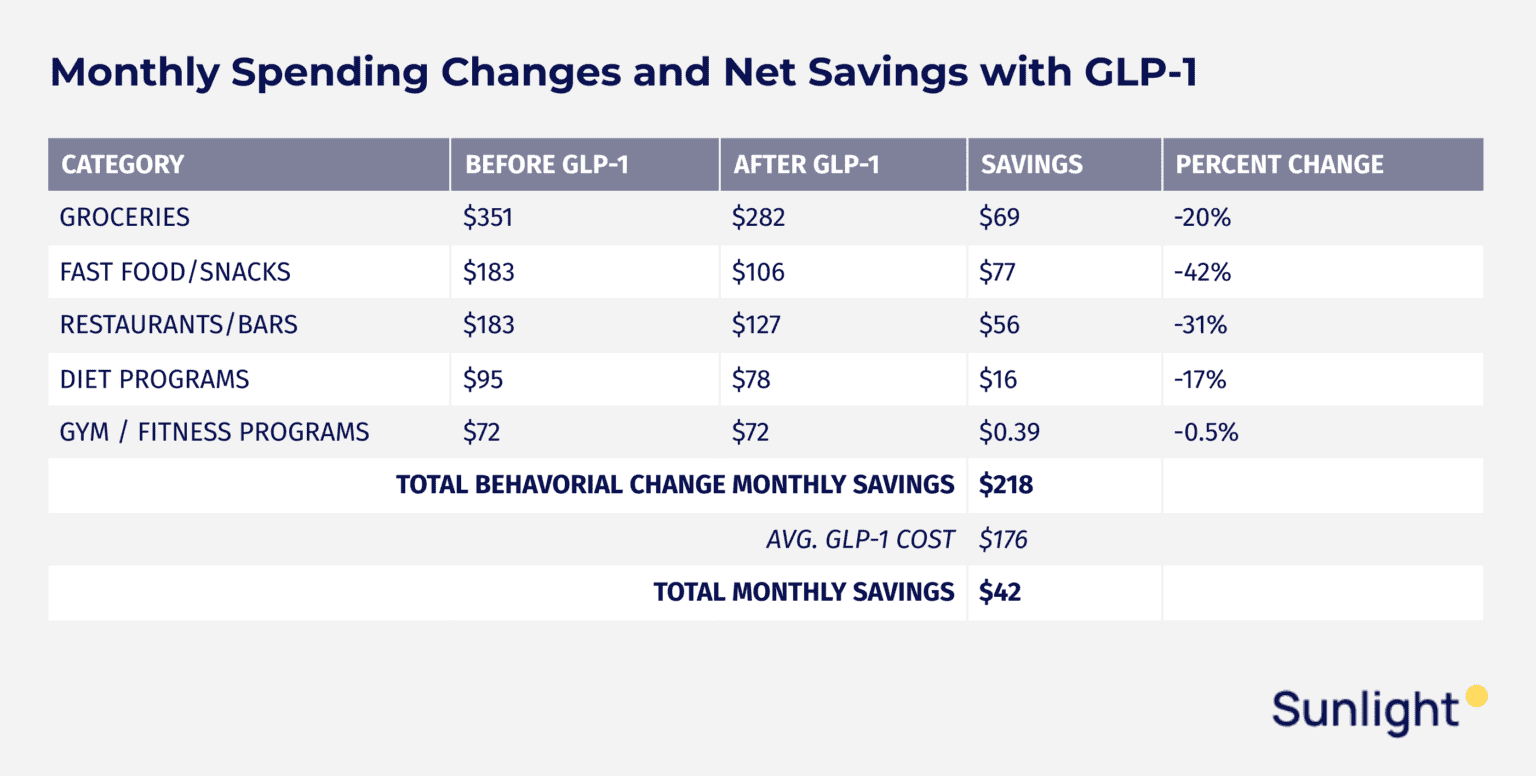
- GLP-1 users spend $218 less on groceries, fast food, snacks, dining out, and diet programs.
- The average GLP-1 user surveyed saves $42 per month compared to their pre-GLP-1 spending, including the cost of the drug.
- One in three users reports that anticipated cost savings were a factor in their decision to start GLP-1. Gen Z was more likely to state cost savings as a reason for starting a GLP-1.
“It’s certainly the new GLP-1 economy, as we call it,” says Dr. Angela Tran. “On average, GLP-1s can lead to 15% or more body weight reduction, and for those who have lived with obesity for years, their lives will change dramatically.

Grocery Spending
Since starting GLP-1, the average respondent’s personal grocery bill decreased from $351 to $282 monthly, a 20% reduction. That’s nearly $69 in monthly savings.
Snacks, Junk Food & Fast Food
One of the most noticeable shifts was in spending on snacks and fast food. Respondents reported that they no longer crave fast food or sugary foods as they did previously. As a result, respondents' spending on fast food, junk food, and snacks decreased from $183 to $106 per month, a 42% decrease and a monthly savings of $77.
Restaurants & Bars
Dining out has also slowed down. Many survey participants reported eating at restaurants less frequently and ordering fewer items when they do. Restaurant and bar spending decreased from $183 to $127 per month, representing a 31% reduction. That amounts to $56 in monthly savings.
Overall, the respondents' food costs decreased from $717 to $515 per month, representing a nearly 30% decrease.
Diet Programs
Diet programs have also seen a decline in spending. Because GLP-1 helps control cravings and portions on its own, people felt less need to pay for structured weight-loss plans. The survey indicates that spending on diet programs declined from $95 to $78 per month, a 17% decrease, resulting in $16 in savings.
Fitness & Gym Memberships
While food habits changed significantly, most people reported that their gym memberships and workout routines remained relatively unchanged. Users still view exercise as necessary, regardless of changes in their eating habits.
Impact on the food industry

Companies across the food sector are paying close attention as consumer habits shift. Grocery retailers, in particular, may see a complicated picture. Shoppers are buying less overall, and money once spent at restaurants could move back toward meals prepared at home.
At the same time, snack makers are preparing for slower growth. A survey estimates that the rise of GLP-1 drugs could reduce future sales of salty and sweet snacks by as much as $12 billion. Users are focusing on healthier options and reducing their consumption of chips, candy, and similar treats. Companies may need to adjust their marketing strategy or reformulate their recipes to focus more on healthier options.
Takeaway
GLP-1 drugs are usually talked about for their role in weight loss, but they have also started to affect household food budgets. The survey found that users were cutting their food-related spending by almost a third, a change significant enough to matter for both families and the businesses that serve them.
For restaurants and food companies, this could mean finding new ways to attract more customers to dine out.
Methodology
This survey was commissioned by Sunlight.com in September 2025 and conducted through Pollfish. A total of 1,200 U.S. adults currently using GLP-1 medications completed the survey. Screening questions ensured respondents were active GLP-1 users, and Pollfish applied quality controls to exclude fraudulent or low-quality responses. The margin of error for the full sample is approximately ±3 percentage points at the 95% confidence level.
Leave a Reply