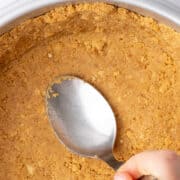
Graham Cracker Cheesecake Crust
My 2 ingredient Graham Cracker Cheesecake Crust recipe will take your cheesecakes to the next level!
Servings: 8
Calories: 125kcal
Ingredients
Graham Cracker Cheesecake Crust
- 300 g Graham Cracker Crumbs 300 g = 10.5 oz = approx. 20 sleves
- 120 g Unsalted butter
- Pinch of salt
Instructions
- Melt the butter gently in the microwave or on the stove until fully liquid, then set it aside to cool slightly.
- Biscuit/cookie crumbs can be made in a food processor or by placing the crackers into a zip bag and using a rolling pin to crush them. Crush the graham crackers into fine crumbs using one of these two methods.
- Mix a pinch of salt into the biscuit crumbs, then pour the melted butter over the crumbs and stir until the mixture looks evenly moistened and resembles wet sand.
- Pour the mixture into an ungreased 8-inch or 9-inch pringform pan. Begin pressing it into place starting from the sides, working the crumbs up gently with the back of a bent spoon or the bottom of a straight-sided small measuring cup. Once the sides are even, press the rest across the bottom of the pan. Apply firm, even pressure without over-packing, so the crust holds together but doesn’t become too hard. Once the crust is evenly distributed, place it into the freezer or fridge to chill while preparing your filling of choice.
- For baked cheesecake: Bake the crust in a preheated 350°F (175°C) oven for 8–10 minutes, until lightly golden and set. Remove it from the oven and let the crust cool completely in the pan before pouring in the cheesecake batter.
- For no bake cheesecake: Chill the crust in the refrigerator for at least 30 minutes, or in the freezer for 15 minutes, until firm before adding the cheesecake filling.
- Storage in the fridge: Cover the pan tightly with plastic wrap or aluminum foil and keep the crust in the refrigerator for up to 3 days before filling. This keeps it fresh and prevents it from drying out.Freezing: Once the crust is pressed into the pan, wrap the entire pan well in plastic wrap, then add a layer of aluminum foil to protect it from freezer burn and odors. Freeze the unfilled crust for up to 3 months. When ready to use, transfer it to the refrigerator and let it thaw overnight before adding the cheesecake filling.
Notes
INGREDIENT NOTES:
- Measure your ingredients with a digital scale for accuracy.
- Do not skip the salt; it will balance the flavors.
- Use good quality 82% unsalted butter (European style).
- Feel fee to substitute Graham cracker with Digestive biscuits.
- The crust is sweet enough but for people with extra sweet tooth, feel free to add 1-2 tablespoons of granulated sugar to this recipe.
- Make sure you read my step-by-step instructions in the post above with all the details of how to make this cheesecake crust. A short recipe alone is not able to cover all the necessary details and science behind baking.
- Heat butter in the microwave on low power so it does not explode. Alternatively, use a saucepan on the stovetop.
- The butter should be fully runny so it mixes well with the crumbs, but not hot, otherwise it can make the mixture greasy.
- When processing graham crackers in a food processor, stop as soon as you have fine, sandy crumbs. If you overprocess, the crackers can release too much fat and turn pasty, almost like cookie butter.
- While preparing the crust, make sure that you press the crumbs firmly and evenly into the side and the bottom of your spring form.
- To avoid a crust that’s too hard, don’t over-pack the crumbs. Firm pressure is enough — pressing too tightly can make it difficult to cut clean slices later.
- Respect the chilling time. Chilling time is needed for the crust (butter) to set.
- Once you are a pro at making this cheesecake crust, feel free to experiment with flavorings e.g., adding cinnamon, roasted chopped hazelnuts, freeze-dried berries, or making it with browned butter etc.
Nutrition
Calories: 125kcal | Carbohydrates: 1g | Protein: 1g | Fat: 14g | Saturated Fat: 9g | Trans Fat: 1g | Cholesterol: 38mg | Sodium: 2mg | Potassium: 4mg | Sugar: 1g | Vitamin A: 437IU | Calcium: 4mg | Iron: 1mg
