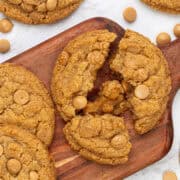
Butterscotch Cookies
Butterscotch cookies made with brown butter have a deeper, richer taste that brings out the caramel notes in every bite. The edges bake up beautifully crisp and chewy, the centers stay soft, and the butterscotch chips melt into little pockets of sweetness.
Servings: 10 cookies
Calories: 319kcal
Ingredients
- 170 g Unsalted butter to make 140g brown butter
- 75 Brown sugar
- 75 g Granulated sugar
- 1 Egg at room temperature
- 185 g All purpose flour
- 1 Teaspoon Salt
- 1 Teaspoon Baking soda
- 170 g Butterscotch chips
Instructions
- Begin by making the brown butter. Place the butter in a saucepan over medium heat and let it melt. Continue cooking until it begins to foam. Watch closely and stir often. The butter is ready when the milk solids at the bottom turn golden brown and release a rich, nutty aroma. Remove from the heat right before it starts to burn, and let it cool to room temperature.
- Using an electric hand mixer, cream the room-temperature brown butter with both types of sugar for a few minutes, until the mixture becomes fluffy.
- Next, mix in the room-temperature egg and continue whipping for about a minute, until fully incorporated and smooth.
- Using a rubber spatula, gently fold the sifted dry ingredients (flour, salt, and baking soda) into the wet mixture. Mix only until the ingredients are just combined, being careful not to overmix.
- Fold in the butterscotch chips, reserving a small handful to add on top of the cookies just before baking, and then again, halfway through baking.
- Line two baking sheets with parchment paper. Divide the dough into 10–12 equal portions using a digital scale or an ice cream scoop. Arrange the dough balls on the prepared sheets, leaving enough space between them for spreading. For the best results, bake no more than 5–6 cookies at a time.
- Chill the cookie dough in the refrigerator for one hour. Near the end of the chilling time, preheat the oven to 350°F (175°C), no fan.
- Press a few more butterscotch chips onto the surface of the dough just before baking, then bake at 350°F (175°C) for a total of 15 minutes: bake for 10 minutes first, add the remaining butterscotch chips on top, then continue baking for another 5 minutes.
- If the cookies have spread slightly during baking, use a round cookie cutter to gently swirl around each cookie immediately after removing them from the oven to help shape the edges neatly.
- Let the cookies rest for a few minutes, then carefully remove them from the parchment and let them cool.
- Storage: Once completely cooled, store the cookies in an airtight container at room temperature for up to 4–5 days. Keep them in a cool, dry place away from direct sunlight to maintain their texture and flavor.Freezing: To freeze unbaked cookie dough, shape it into balls and place them on a parchment-lined tray. Freeze until solid, then transfer to a freezer-safe bag or container for up to 2 months. Bake directly from frozen, adding 1–2 extra minutes to the baking time. For baked cookies, allow them to cool completely before freezing. Place parchment paper between layers to prevent sticking, and store in a freezer-safe container for up to 2 months. Thaw at room temperature before serving.
Notes
INGREDIENT NOTES:
- Measure your ingredients with a Digital scale for accuracy.
- Do not skip the brown butter step, as it gives the cookies their deep, rich flavor. Use high-quality 82% European-style butter for the best results when making brown butter.
- Make sure to read the Expert Tips section above to ensure the best results. A short recipe alone cannot cover all the essential details and baking science involved.
- When making brown butter, cook it over medium heat and keep a close eye on it to prevent burning. Use the brown butter before it solidifies, but not hot straight from the saucepan.
- Do not skip the chilling time, as it helps prevent the cookies from spreading too much and becoming flat. If you’re short on time, you can chill the dough in the freezer for about 20 minutes instead.
- Avoid overbaking if you prefer soft, fudgy, and gooey cookies.
Nutrition
Calories: 319kcal | Carbohydrates: 44g | Protein: 3g | Fat: 15g | Saturated Fat: 9g | Polyunsaturated Fat: 1g | Monounsaturated Fat: 4g | Trans Fat: 1g | Cholesterol: 54mg | Sodium: 419mg | Potassium: 41mg | Fiber: 0.5g | Sugar: 29g | Vitamin A: 466IU | Calcium: 16mg | Iron: 1mg
